
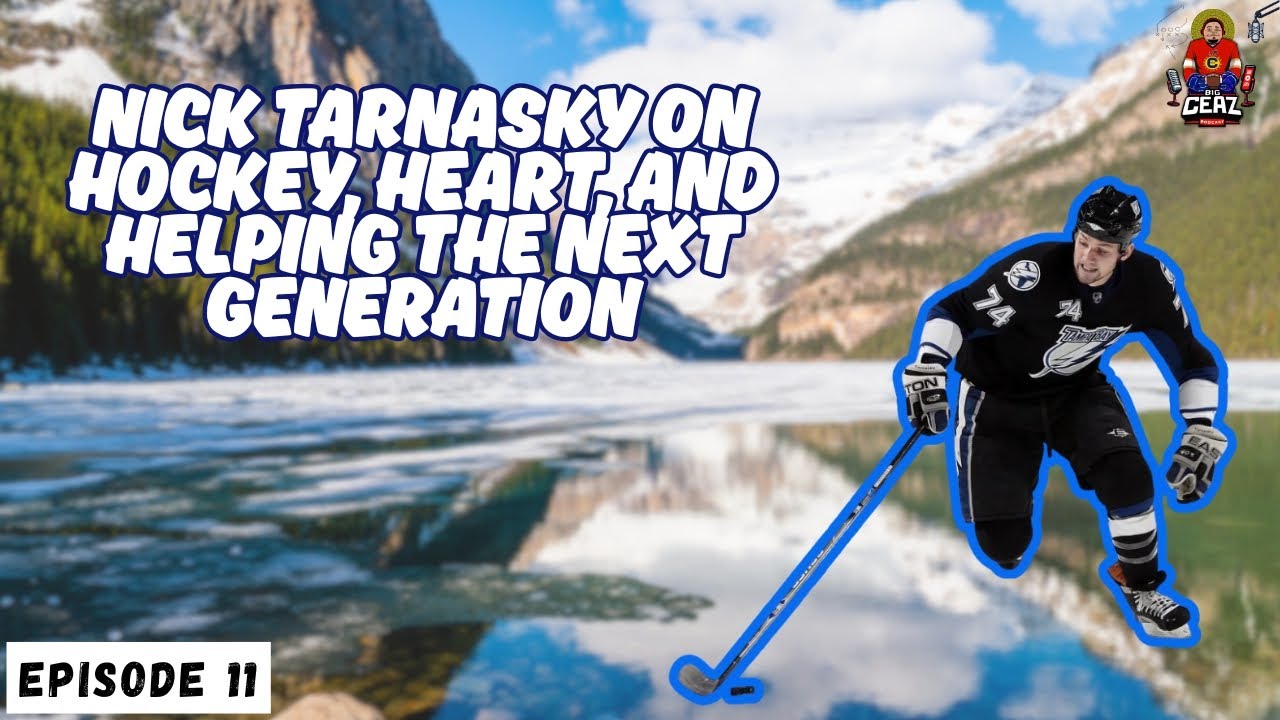
Nick Tarnasky: 4th Line Badass, World Class Person, and Coach | Episode 11
[Music] and welcome to the Big C Show. This is episode 11. That’s right, episode 11. And on this episode of the Big C Show, we are joined by none other than former NHL forward and enforcer Nick Tarnaski from Dropping the Gloves and chasing his his hockey dream across the globe. Nick shares what it really takes to battle through the highs, the lows of being a pro hockey athlete. So, you won’t want to miss this. I’d like to introduce you to the one and only Nick Tarnaski. Hope you guys enjoy. And we are here with the one and only Nick Tarnaski, former Florida Panther and Tampa Bay Lightning. How’s it going, Nick? I’m doing well, thank you. Appreciate you having me on. Thanks for coming on the Big C Show. Man, it’s been a crazy last few weeks for you, hasn’t it? Yeah, unfortunately uh chain of events kind of escalated there online and turned into kind of a bit of a circus. So been a lot uh heard from a lot of people, touched base with a lot of people, caught up with a lot of people. So all in all kind of turned out good to uh kind of relive some of the glory days of some of the boys. Awesome, man. And I know you kind of want to put it to bed and I don’t want to get too much into the fight, but uh Sierra, do you have a question on for Nick here? Yeah, I just wanted to see how how are you doing now? Have things has the dust settled? Are you kind of cooling down after all that? Yeah, I think so. I I I feel like it’s, you know, that Coldplay thing comes out and then uh obviously the three unfortunate celebrity deaths this week. So, it’s the internet, right? It’s one thing’s cool for two, three days and it’s like just like a kid in in Toys R Us. You see a toy and then you see a cooler toy or more important toy. So, uh, it’s kind of, you know, like I I’ve said along the way, everybody kind of had a good laugh, kind of enjoyed a stupid video there for a couple weeks and, um, then something else happens that everybody’s more interested and it’s great. It was, uh, kind of a thing to to enjoy and move on from. So, it’s it’s been fine. Um, last couple days have been a lot quieter and everybody’s kind of moved on from, it seems. So, um, yeah, it’s been it’s been pretty good to kind of let it get get put by me in the dust a bit. Nice. Nice. That’s good. Um, and for those of people that are watching the Big C show, Nick Tarnasti is a former Florida Panther player who was drafted by the Tampa Bay Lightning. U, let’s kind of go back a little bit before you were playing uh, and in the NHL. Kind of get to know Nick Tarnaski. Um, tell us a little bit about you, where you’re from, and uh, what how did you end up playing hockey? How did you end up getting the love for the sport? Yeah. So, I’m from Rocky Mountain House, Alberta. Um, just a small town, like five, six thousand people. Um, kind of central Alberta, West Central Alberta, I guess I should say. So, um, pretty nice little town. Great place to grow up, great place to uh to be a hockey player. Um, it’s it’s really all in in the 80s and 90s, it’s really all there was in town. So, um, like you go to the rink, you go to the oval, you go to the outdoor rink, every little every little group of houses had a an old basketball court that would be flooded over. And then my dad always made sure we had one in the back in the back that was always flooded with boards and nets. So, um, at an early age, he understood that I loved the game and he gave me every opportunity to, uh, basically excel at my own pace. If I wanted to go out and shoot, there was always an opportunity. There’s always that. There was always pucks. There’s always sticks. There was always a light. So, um, growing up in Rocky, yeah, I just kind of started shooting pucks, loving shooting pucks, and just never really stopped shooting pucks till she just I mean, I’m still shooting pucks. Just I’m showing kids how to shoot them now versus uh trying to put them through a goalie. So, that’s awesome. And and I kind of want to get to how you talked about it on the spin checklist with Biz and how you use roller hockey to improve your uh skills and how talk about how roller hockey helped you uh playing in the NHL or in in the Junior League or in general in hockey. Yeah. So I and I maybe I’m off off base with it, but I mean I feel like in those days like I never really went to the gyms. I’d go rollerblade around like we had a bike path around town. So I’d hit the bike paths for hours every night and you know you you basically go and train on your rollerblades and just emulate the uh stride. Um Brad Stewart, Stanley Cup champion from town. We’d have roller hockey at the rinks in Rocky and we’d we’d be there every I think it was Tuesdays and Thursdays like he and I and anybody else that wanted to be playing junior. He was playing for the hitman at that time and we’d be there always playing, always practicing, always trying to get better. Um, and then I played in the competitive roller hockey for like two or three years. And it’s like exactly one of those things like you’re always you’re always working on your hands. You’re always working on the hand eye coordination. You’re always I mean, right, that’s hockey is trying to do more than one thing at once and become the best at doing it. So, if you can skate and handle the puck and shoot and see, you’re doing pretty good. So, um, yeah, like roller hockey, rollerblading is a good opportunity to get in in shape and uh, obviously work on the skills that you can when the ice is out in the small town. So, growing up in juniors, um you said in on spin chicklets with biz that you didn’t really necessarily um train to become a professional hockey player until maybe what 18, 19. Talk about that moment where you decided that okay, maybe this is a career that I might be able to do. Yes. Yeah. So, it’s it’s one of those things when you’re coming out of minor hockey, you And in those days, too, it wasn’t like every town didn’t have like 15 uh camps, right? Every player didn’t have a skills coach. Every player didn’t have an academy. Every player didn’t have all these abs and C’s that I feel like every kid now growing up minor hockey has. They’ve got everything at their fingertips instead of just going out and playing the game. So, um, I just felt at that time like I’m going to go play the game and didn’t really focus on doing the extra stuff. So, um, yeah, 17 17-year-old junior season, I think I maybe worked out like six times and still made the team, but like not in good enough shape, not in nearly enough like, you know, you skated, you did your workouts on the ice, but I didn’t work out off the ice, wasn’t in good enough shape to actually be an impact player in the West Hockey League, which, um, then going home, played junior A, uh, understood where kind of what those older junior A players are doing. I’m like, okay, like that might be an opportunity here for me to, uh, to learn. Um then yeah, I got serious that summer with a personal trainer in Calgary. You know, worked on your uh your nutrition kind of and like I’ve said before, you have to understand why you’re doing it. It’s easy to tell someone to do something, but in those days, I didn’t understand why and and obviously didn’t understand what the outcome would be. So, it was good to learn from people that were, you know, I worked a lot with with Martin Jalon a ton and Haley Wickheiser a ton um in my my my late junior years and early pro years. So, they were fantastic athletes in those days. like Marina also a former Panther that I think you anybody that would still see in this league can still play the game now like one of the probably you know besides like Rendamore the top shape players to ever play the game so got to spend a lot of time with him um worked out with him and and you know we always pushed each other so as as that progressed in juniors and then you know into a draft year and that stuff you understood why you’re doing it and what you need what more you need to do what you should shouldn’t eat how you need to behave off the ice on the ice what you can like it all goes hand in hand with becoming a professional and when you learn you know the working out and the discipline and being on time and how to eat you know getting to bed and it’s all stuff you learn from people and help you know mom and dad putting you in an opportunity to learn from those people um and then those people being good mentors to you and making sure that what they’re doing is good for the younger group and to make sure that everybody grows together. So, um, for me, yeah, it was a big it was a big step and it was a really good opportunity right from 18 till like till 33 of always learning from somebody else and always doing something different to try to do to do better. Yeah. Being from central Alberta, who is your favorite hockey team to watch in the NHL? Oh, the Lightning. Oh, nice. Okay. I was not expecting that. I was We were kind of arguing here before you got on. Um, who I I kind of picked Calgary. Sierra thought you might have been an Edmonton fan. So that’s pretty interesting. Tampa Bay. It does that have to do anything with them drafting you or Yeah, 100%. I mean, I love I love watching McDavid. Um, but my heart’s always with the Lightning. My daughter was born in Tampa, so um, Tampa ultimately became a second home for me kind of forever. I’ve got tons of friends from the community, so uh I can’t jump ship on them. Even though I ended up playing for Nashville and Florida along the way and tons of, you know, minor league teams and exhibition with with, you know, several NHL teams, I think for me, the my heart always kind of belongs to the team that got me first and always have good experiences and always a great fan base there. Yeah, that makes total sense. Do you have things that you miss or hated or loved about Florida and Tampa? I mean, I loved everything about Tampa. Um, now I think it’s gotten really busy, but in those early 2000s, um, and and same with Sunrise, right? It’s gotten so busy now that I I wish people could understand how great it really was in 2005, 2006 to be to playing on a Lightning. And they’re still fresh off a cup win, which there was a great buzz, but you can still walk around town and drive around town without any traffic and without the the whole glitz and glam now. It’s kind of like a, you know, it’s ultimately both parts of the of of, you know, Tampa and South Florida like junior Miami, right? So, it’s the whole growth of hockey, which is fantastic, but I loved it when I played there and it was quiet and small and that hometown feel. So, I kind of missed that. But, I mean, going back, my daughter still lives in um she lives in Fort Myers, so I’m there all the time and it’s always great to catch up with people. Um there’s never a person that doesn’t pick up the phone when I’m there. So, still love that about Florida. Obviously, the golf is is unbelievable in Florida and uh I really it’s hard to say a bad thing about a place that’s ultimately become my second home. both close to the you know my best friend Chris Moody lives right there in uh Coral Springs that was the uh the equipment manager with with me with the Panthers. So it’s it’s always going to be a home for me and there’s always you can’t make fun of it. You can’t chirp it because it’s always somebody else’s home that’s important to me. So it’s uh it’s always a great place. I do miss it, but it’s also nice being home and having a little bit more moderate climate here in the summer. And uh obviously being the hockey families, we love the winter, so it’s pretty tough to complain about that, too. Right. And the last six years, I mean, Florida has hosted the the Stanley Cup finals, so you know, they can’t call us losers anymore, right? No way. Awesome. So, kind of go back a little bit. Uh, Nick, how have your parents been such a big impact in your life to making you the person that you are or how have they helped you growing up playing hockey? Yeah. So, like they always it was never pushed, right? It was what you want to do and we’ll support what you want to do if you want to, you know, we’ll rent the ice to five if you want to go, you know? So, I’m going to rent the I’m going to get the ice, but then we’re going. So, um, it was it was nice. We always had the rink in the backyard. We always had the opportunity. Like I have two brothers, two sisters. Everybody played. So mom and dad didn’t have any free time. They donated anything they had to us. Every, you know, dollar they had went to hockey. Every single tank of gas went to the rink. Like you you can’t And I I think that’s you’ve heard it from a lot of players when they get the opportunity to thank their parents that those parents ultimately sacrificed the rest of their life for the kids to to chase out their goals. Um, so for me that was everything that my parents did was literally sacrifice everything. Make sure I had all the top gear, all the top sticks. Didn’t I worked once in a while growing up, but it wasn’t like I had to go to work and didn’t have the opportunity to train. They paid for the training, paid for the gas to get the training. They they literally gave me everything I could ask for on a a template and all I had to do was put in the work. So, um, pretty cool that I was fortunate enough to have a a family at home that was able to provide that for me and kind of just those footsteps to, okay, you know, here’s your shoe, put it on. Um, and it it wasn’t uh there wasn’t ever a yelling, you know, and never there was never any disappointment. It’s like, hey, if you didn’t put the effort in, Nick, that was your own fault. It’s not, well, you know, I paid for training and you didn’t you didn’t work hard enough. It was like, you know, you didn’t you didn’t work hard enough, you don’t get the benefit. So, it was tough lessons versus anger. Um, and it was always awesome to kind of make sure that I knew what mom and dad were sacrificing to make sure I had an opportunity to get to the next levels. So, it always made me a lot more conscious of putting in the effort to make sure that like, hey, you know, dad’s probably wearing the same shoes he’s had for 4 years so I can go and train this summer. I better get my ass there on time and I better work my ass off to make sure that, hey, he’s sacrificing. I need to sacrifice because it’s what he is allowing me to do. So, it was it was a great way to grow up. I mean, I I I think that any hockey parent deserves nothing but pats on the back and praise because um you know, just being a, you know, a softball parent now, you understand a little bit of what goes into the sports and and hockey is I I it has to be one of the tougher sports to try and watch your kid grow at and financially support your kid at. and and mom and dad were always there, always had the time to, you know, my dad would always be out there passing pucks, always passing pucks, always flooding rinks, you know, um all that stuff that there was never there was never a dirty sheet of ice in the backyard in the winter because he didn’t even come in for dinner, right? He went out and flooded the rink so that when I got out after dinner in minus 30, it was already hard and ready to go. So, um, awesome, awesome, you know, way to grow up in Rocky Mountain House and couldn’t thank my parents more for the effort they put in and the support I had growing up. So, your parents or your dad actually made a rank in your backyard. Oh, yeah. Full boards, two nets. It was unbelievable. Like, it it was probably it would have been about 60 60 80 feet by like 25 30 ft. So, would the neighborhood kids like come over and want to play with you guys? Yeah, we always hosted games and hosted That’s so awesome. tournaments and um we put up a flood light and eventually the neighbors were starting a phone at 10 10:30 at night saying like, “Can you tell the boys to go to bed?” Because we’re trying to sleep. They’re thinking there’s gunshots in the neighborhood. But just us taking snapshots. So, um no, it was awesome. We always every year you had the rink, you kind of looked forward to it. Now I look the opposite. I can’t wait for golf season. And in those days, like you couldn’t wait for Halloween to get over so that it was going to be freezing time and you’d get your rink in the backyard and start uh fiddling and working on your game. That’s awesome. How many broken windows? Oh [ __ ] Luckily for we the the rink we got was out of the way, but I remember I put one through my dad’s picture window and in the front of the house and I kind of pond that off like I didn’t know. And he’s like, you know, Nick, any idea what happened to that window? It wasn’t like that yesterday. Nope. Eventually I had to admit to it and like Okay. Well, I think I’ll probably I’ll probably be digging ditches here for a couple summers to pay that back, but um no, not too bad. Two or three. And I I guess the the garage doors, they always took a beating and the the drywall. We had a we actually had an unfinished basement there for a couple years, so the drywall got destroyed down there. But it’s just those things like my dad didn’t care. He was a construction worker. um builds houses, builds ultimately just build everything. So if I break something, he would just fix it and I’d try to he teach me how to fix it so that when it’s uh happening again, I can go fix it myself. That’s so awesome. That kind of reminds me of my family. My dad was always a handyman. So anytime me and my brother would break something around the house, he’d be like, “Get your asses over here. You’re going to learn how to fix this.” So that’s a perfect example of what u my parents did as well. So that’s pretty cool to hear. And how competitive were you and your brother? Uh, so my brother was actually My older brother is a goalie, so it was perfect. So Oh, cool. I’d force him to get in the net and I’d go and shoot pucks. So we’d always play games. So it was a great way to to learn how to score on a goalie. My I mean my dad had built us the the wooden shooter tutors and that for the other net, but then once my brother got older, I had a full-time goalie at home, too. So that that obviously didn’t hurt. Who holds the alltime in wins, you or your brother? Do you guys keep tabs? I think it I think it’d probably be him, but that’s only because 10 goals is a lot harder to get than 10 saves. That is true. That is true. Any particular bets that you guys made that you guys would have like any embarrassing bets you guys made against each other? Yeah, we’d bet like for cutting the lawn or doing the weed eating or taking out the trash or we do, you know, just like silly things like that, you know, just all, you know, play oneonone for who does the dishes or just silly stuff like that. Nothing serious, nothing nothing too uh too crazy to write home about, but just fun stuff that it was always there would always be a series and then whoever lost game three would always make it a game five and it would always be one more game, one more game. So, no, it it was just good, you know, good oldfashioned fun. Nobody had cell phones. Nobody had like iPods and nothing. It was just literally outside playing, being kids. So, just good oldfashioned fun. I kind of miss those days. I tell a lot of people all the time, it’s like I miss going out in the neighborhoods and just listen watching kids play uh sports and just being outside. Uh, I remember my parents used to always tell me, “Go outside, go go go get into trouble, but not in too much trouble, right?” And I feel like this generation doesn’t really know too much about that with the our technology. So, it’s kind of cool to hear from you on how it was growing up back then in the day. Um, so yeah, that’s that’s something I really miss as well. Um, let’s kind of go into uh getting drafted by the Tampa Bay Lightning. Talk about that moment. Uh, I know you said on with Biz with Spin Chicklets that you weren’t really expecting to get drafted. You did see your name on the card. Um, how was that moment being drafted by the Tampa Bay Lightning? Yeah. So, ultimately, like I said, it’s like I thought it was a joke at first and then as time went on there, the the Lightning head scout did call me. So, I thought, okay, this is pretty legit. like and uh it it was cool because I think the moment meant more to mom and dad that their boy got drafted versus I was kind of thinking okay like ninth round and um like when Brad Stewart got drafted from my hometown he went third overall right behind Vinnie and Dave Languan and it’s kind of like okay that’s a it’s such a different draft story because you’re probably going to make the team the next year. Mine’s I mean I still got to make my junior team. So um it was you know it was rewarding. It felt cool. you know, they they treated me just like they treated the first rounders. They sent out a jersey and a, you know, the bag and the hat and and did all the the welcome calls and everything kind of as the week went on. So, it was really cool. I thought it was a obviously even to this day, I think it’s got to be one of the most first class organization in sports. Um, so they treated all of us well that got drafted and uh brought us into Traverse City that summer. So, it was a good it was a good like it just it’s really hard to describe because it’s also part of that feeling where you didn’t really think you’re getting drafted. I think I was like I I think I said a biz it was I was kind of in that 160 180th North American. So you don’t really know the central scouting how that works at that time. Like you know there’s not going to be 360 kids drafted. So you kind of need something to change to get into that first 300. And even at that like at 300 you’re like the last ones. And like I’m pretty sure there were teams that had passed uh previous to my pick. So, it’s still cool, but it’s you don’t really it doesn’t really sink in cuz it seems like such a a long shot that you’d still like, yes, it’s maybe the first step in moving forward um from Junior, but you’re also it’s seemingly 100 steps behind from those first round kids, those second round kids that were so touted and obviously now the teams are going to pay more attention to. And that was I think the best part about getting drafted at the Lightning. Um was their merit-based and I got the opportunity not because of where I was drafted but because of the effort you put in after the draft to jump the sixth round or to jump the second round or you know to jump those players. I don’t think there was a first round of that year but you you got what you earned and whatever you worked and put yourself you got exactly what you put in from that organization. There was never a you’re a ninth round. we just took it because we had an extra pick. It was nothing like that. And and I think looking back on it, like it was surreal and it was it was a very cool accomplishment, but I don’t I think getting drafted by that team at that time with their mentality, it couldn’t have worked out perfect for me any other way. Um they they just treated you so good for your effort and your attitude and ultimately that’s I believe that’s kind of getting drafted by the Lightning even those late rounds. That’s why I got to play because they let me earn it versus a ninth rounder that just always was looked to the side. So, um definitely pretty cool. I I I’m so thankful that it was them, the staff, the group we had at those times. Like, it’s uh it’s something you can never replace. And, you know, people always kind of say, you know, stars align and it ultimately hit a line for me in those years. And something I always get to be proud of and kind of look back on, especially having a daughter now. She get, you know, she gets to go to the lightning games once in a while and she’s super proud to wear my jersey to the rink and and you know, my daddy got to play here. And it’s not because I was drafted first overall. It’s because I got drafted and earned a way found a way to get there because there were people that let you work your way. So, pretty cool. Um, obviously something I’ll never forget about. So, that’s awesome. That is remarkable. And and Tampa Bay Lightning is truly a worldclass organization. And we’ve I mean we’ve based our franchise of what we want to look like off of Tampa Bay Lightning. So we always have to give credit to them for sure. Especially um you know we wanted to set be the standard that Tampa Bay was winning um the first Florida or Stanley Cup in Florida. You know when Matthew Kachchuck came to Florida three years ago, he even said, you know, I hate Edmonton, but I hate Tampa Bay more because he wanted to be that standard, right? And I think we needed to set the bar high and in order for us to win a championship team or be a championship team, we needed to be just like Tampa. So that’s awesome. And kind of going into here real quick, uh, Nick, how was playing in junior or or how was your first year in development camp in Tampa? Um, describe that moment just hitting the ice, being drafted by Tampa. How did that feel like being being able to be like, “Hey man, I’m living a dream. I can’t believe I’m here.” Yeah. So, we didn’t even do like so long ago. We There wasn’t even development camps or else like our first camp, the first time I got to to interact with anybody from the organiz organization in person was actually rookie camp and I think they still do it. It was in Traverse City. Um, and there was us, Detroit, I think it was Atlanta, Washington, and it was all the young kids that went and you just played tournament like you did a tournament. It was unbelievable because you didn’t we were all nervous. We’ never been to a camp before and the Lightning actually didn’t have a a farm system at that time either. So, there wasn’t like a group of AHL kids that we got to kind of learn from. It was all of us coming from junior. Nobody had any pro experience. A few of the teams had even a guy or two that played NHL games that were 18 19. Um, so it was it was kind of just feast or famine. Like you you go there, you show up like, “Hey, we no one no none of us knew what was going on.” So it was kind of just, “Hey, go be yourself. Do the best you can.” Um, and like I said, like Nigel Cronin and Jeff Reese were there on the bench. They were the head coaches for the development camp. And then the staff kind of just watched from the from the crowd. So um, and like I don’t even think Torch was there cuz he was getting ready for the main camp um, in Tampa. So, we were with a lot of the like the help staff, the I mean the trainers there, Jim Picard was there from uh the Islanders days. He was unbelievable getting the gear all sorted out and that kind of stuff. So, you got to meet some really cool people, but it was just you come you you do the best you can and you show why you’re here. I I it was so much fun and I don’t know any kids I don’t know I hope they do get to have that much fun because there was no pressure whatsoever. It was a camp, but it was a tournament and we had I mean I was with one of my best friends there, Blake Robson, that was on a on a try out and so we flew there together and got to go to this together and kind of figure it out and meet, you know, the the Mike Edgars and the those other guys that were drafted that I kind of knew from the Western League and um we kind of all just went through it together. So, it was it was awesome. We had the best time. like the tournament format that they had in those days. It it just took so much pressure away from you from squeezing your stick in a practice with John Torrell staring at you. You didn’t have to worry about that at 18, 19 years old. You went, you enjoyed a tournament. You had team dinners. You just, it was like a little junior team that went and played a tournament and you got to know the boys real quick. They didn’t make anything weird. It was just go meet your teammates, try the gear on, and go play a tournament. Like, just go play hockey. There was one practice and a tournament. like there was no no fitness testing, no [ __ ] stuff that you just went and played. And I I it was so enjoyable that I I honestly couldn’t wait. And I didn’t go to main camp that year, but I could not wait to go the next year back to Traverse City and do that all again because it was so fun and such a great way to meet people and see like a a beautiful city and enjoy kind of the next level without being stressed out to the point where, you know, you you’ve actually lost the ability to show what you can do because you’re so nervous because there was no reason to be nervous because it’s just two great guys behind the bench just saying go play. So, um, yeah, my my first experience was the one of the better, probably one of the better experiences that anybody ever might have as a first time on the ice with the Lightning jersey or any NHL jersey because it was so relaxed and it was literally just go and play. And for a person like myself in in, you know, that kind of that lower end prospect role, you couldn’t have asked for a better setup. Unbelievable. That’s great to hear, especially, you know, being drafted, you don’t have all that pressure on you and just being able to just have fun, play the game that you love. And I think ultimately that’s what you want. Especially, you know, being in the NHL, you want to make that jump, but you also want to do it in a way where there’s not so much pressure. Oh, I think that’s awesome. I was just thinking how all even now throughout the playoffs, they’ll say like, “We just need to play our game. We just need to play.” Like, that is what it comes down to. So, I think it’s really cool that that was your first experience doing it. Um, and I just want to know too, what is one of your favorite memories of your time in the NHL with whoever that may be? I mean, that rookie party in Calgary was by far one of the best times. Um, pretty tough to put a cap on that, but um, I mean, honestly, like playing for Florida, we had such a great group there, too. Um, one of the best times I think was actually a Super Bowl party and I think we were in Rally Rally, North Carolina and we watched the Super Bowl at a at a restaurant and then we all went bowling after and I I swear it was the best bowling game I’ve ever been a part of. It was me, Thomas Vun, Brian Allen, Brian McCabe and Scott Clemenson and Nathan Horton and it was like I it was like 200 bucks a pin or something and like nobody could miss. Like I swear we all shot like 300s. It was the greatest thing ever. Like you couldn’t you couldn’t emulate it. It’s like 200 bucks a pinwood at the end. Like nobody won anything because it was like everybody shot like 288 or something crazy. Like it was just that was one of my best times. It was the whole group. Everybody was like watching everybody. It was like uh you know watching the episode from um what’s that? What’s the uh the Bill Murray movie there? It was like watching that. Everybody was just ripping strikes and everybody was cheering. And it was that was one of the best times when we had the you know the staff was there everybody was there and everybody was just ripping strikes having the best time. That’s probably one of the best memories I have definitely from playing with with Florida. Um, you know, even with Florida too, you had like Cory Stillman and and guys like that around the the room that he was one of the better ones that would take us young guys, me, Anthony Stewart, Nathan Horton. We’d always go for dinner with him and just talk about growing up and, you know, hearing from a guy that had won a couple cups, how, you know, his experiences, kind of what he had done. Um, so you know, aside from like the off ice kind of antics and having a good time once in a while with the fellas, like the the good the good dinners with great people there, the Keith Ballards, the Nick Boon, like we had such a great group there of people to play with that it’s hard to say one or two good memories because even though we weren’t as successful as we all wanted to be as a team, like, you know, I got to go to to spring training with JBM, you know, stuff like that where that’s just cool memories and you you always you see those guys around and you always have a good memory. you can always, you know, shake hands and have a good laugh because you did have some good times. Um, yes, unsuccessful unfortunately. However, it it didn’t stop us from being good people and, you know, making good memories and creating good relationships. That’s so great. I That’s why I love the hockey. The hockey community is just so um amazing. It’s it’s second to none. um the hockey players in general, the families, the the fans, everybody is just, you know, they really gather around the community and they really um have a great time and and it’s really awesome to see. Uh especially with me this year, you know, with Matthew Kachchuck bringing me in to 11 getting waterboarded or even being part of the parade and stuff just shows how amazing the hockey community is. and you know you being a player and playing with Nathan Horton and Jay Bowister and all these players like who was your favorite alltime Panther teammate if I don’t mean to put you on the spot there. I think all time favorite Anthony Stewart and Nathan Norton but by far my favorite two we had the best times. Yeah, they were great. We’re similar age. So any particular moment that you guys had that you want to share with us? Favorite memory moment? Me and me and Horty were big into the the uh into the uh poker on the on the on the plane. So we we had a lot of fun battles with the poker and both of us are terrible players. Just have bigger balls than the other guys. So um we had a ton of fun. Um Scott Clemenson, Brian McKay, me Horty. Uh it was always a blast on the plane. So um that’s yeah, those two guys still, you know, touch base with Stewie once in a while every couple weeks, make sure everything’s going good. I know he’s really big in the community there in Ontario for the uh the minor hockey and the the you know inclusion and all that stuff. So, it’s great to see him being a big ambassador of the sport even after you know the the great career he had. So, um yeah, those guys were great. I mean, it’s hard to say a bad thing about any of my teammates with Florida. It was, you know, Steven Weiss was great. He was he was a awesome player, too. Um yeah, like Brian Allen was a fantastic teammate. There’s so many guys that still keep in touch once in a while and you see him and it’s great to run into him and you know JBO was one of the better players at the time in the league and he he never you never have a clue you know how fantastic of a hockey player how great this guy was cuz he just treated everybody the same. So um it’s another one of those experiences where everybody was so good that you you just can’t it’s hard to pick a guy but those two definitely two of my best buddies. Who’s a better golfer out of who? Out of all your Florida teammates or Lightning or any teammate that you’ve ever had, who’s a better golfer? Uh, I think Brad Richards is pretty good golfer. I believe Keith Ballard’s a pretty good golfer. Um, Vinnie Lavier a pretty good golfer. those those guys they get to kind of play at the little bit nicer courses they tend to somehow be pretty good golfers. So that crossbow actually nasty golfer. Okay. Okay. Um that’s awesome man. That’s that. How do you um which one of your coaches or teammates had a big influence in your career in the NHL? I think it’d be Tors for sure. Um, it’s one of those those guys like everybody in the the world knows him and he demands like he you he he he demands it. But how how do you put it? Like he gets you to do things that he knows you’re capable of because he know he understands how it works and he’s he gets results. And it was stressful at times, but if if you put the work in and you made sure you did the video, you did the workouts, you listened, you’re tentative, you’re prepared, you’re on time, he was willing to work with you and demanded what you could give every day. Like you didn’t get a night off with tors or you’d sit like and and he held everybody accountable the same way. He’d scratch Ren Fenotenko. He didn’t care. He scratched Brad Richards, I think, in New York. Like, he didn’t care if you weren’t pulling your weight. You You were made an example of, and that happened to me once in a while in Tampa, but I would, like I’ve said, you also you go fight that night, you block shots that night, you get pucks out that night, you get pucks deep that night, you’re rewarded. So, it was always he treated me more than fairly. And like I’ve said about that organization, they allowed me to earn everything I got. and and he was unbelievable for my success and for my, you know, ultimately for to me to be in that league at that time. And he was very patient. I mean, hard but patient. And it it it was it was it was hard for me to play for other coaches after that because I missed having those eyes staring at me, knowing exactly what he wanted me to do and how was he going to make me do it, but in a positive way. So he he’s one of he he has to be one of the best coaches of all time in my opinion. And he knows the game. He’s prepared for the game. He understands the change of the game. Um he was great for me. He was great for for all of us young guys there just to to kind of show especially with that NHL or sorry with that Stanley Cup group there. Um with all those Hall of Famers or future Hall of Famers. It was great to have him um to to make sure that I was held accountable for the way I was acting, for the way I was practicing, the way I was preparing. You really couldn’t take it off. You couldn’t miss a day. You couldn’t be unprepared. You watch what you eat, you know, watch what you say, watch what you do and learn to be a pro. He was by far the best. That’s great to hear because there’s a lot of negativity sometimes towards tors and how he coaches, especially in this generation. I don’t feel like he gets enough credit of what he’s done in the NHL, right? And I think he’s such a great coach like Paul Maurice. Like he demands the best out of you. Like if you don’t do your job, you don’t you’re not going to expect to be in the lineup. And I think um that’s one thing that I truly respect to um for and I have a lot of respect for him and Paul Maurice. So that’s awesome. Yeah. I guess kind of starting to transition outside of your time in the NHL and hockey in general, are there like works or habits or things that you picked up or traditions that you did then that you still kind of hold on to now? So like like just kind of going hand in hand with with TORS and like I talked about I’m spitting shakes there with with Mark Habshide. So Mark Habshide prepared me to play for TORS. Uh you know not on purpose but it was perfect. Um and then so for me the my biggest habit is being on time. I I don’t I’m never late. I always have my things. I’m always prepared. You know, I’m not packing before like everything’s at the door. We’re ready to go at if I if you know, if a tea time’s at 9:12, I’m not showing up at at 9:13. We’re there at you know, 9:00 loaded up waiting. You know, you’re not packing your golf bag. You’re not packing up your you know, your your whatever you’re bringing, your towels and your markers and your balls and your TE’s. That’s all ready. Don’t forget your shoes. I have no patience with tiacy and so my little girl is 13 and I’m having a hard time learning how to be like, “Hey, you need 45 more minutes than me, so I need to have some patience.” So, um, just kind of, you know, building off of that, I’m very um time motivated and understanding time management just because of playing for those high-end coaches and being expected, always be prepared, always on time. So I that’s like one of my biggest pet peeves is being late and being tedious. So patience isn’t also my virtue. I’m trying to learn how to adapt. So you know when my little girl is doing her hair, I obviously don’t do my hair. So we need to learn time management with her. So give yourself 45 more minutes. If I need 7 minutes and you need 52, you be ready 52 minutes before I’m getting ready so that we can leave at the same time. So no, that was just kind of one of the things. It’s, you know, not like it’s military, but it was one of those things that the the best habits, I think, are always being prepared and always being on time. Super disciplined. I’m sure your daughter is like, “Dad, but it’s great for her, too, to learn, honestly. I mean, it’s it’s a sign of respect. It’s it’s having it all together.” So, that’s great that it’s it’s held on for so long and now you’ll pass it on to your kids, too. Yeah. That’s awesome. What what’s something that you’re deeply invested in these days? Whether it’s family, business, hobbies, playing uh golf. What are you doing now? Yeah, I mean golf, like I I don’t have my daughter full-time, so um don’t get to be as invested in that as I’d like to be. Um so when I have my free time, like I’m golfing, especially with the short golf season here in Canada, I’m golfing five, six times a week. So I can, you know, kind of build on that craft. Not that I’m thinking it’s going to be a new career, but um just with the fellas, you always want to be the best golfer in the group. So, I try to kind of work on that craft and work on the golf game as much as I can, enjoy the outdoors. Um yeah, that’s kind of the main I go to work, I sell cars, but when I’m done at work, like I cannot wait to get to the course. Um you know, obviously if there’s not an activity with the the little ones. So, um that’s definitely one of my passions, kind of one of the things I’m invested in by most days of the week. Um, how has hockey impacted your life? Like it’s been, like I said, just learning the the time management, the uh the respect, you know, interacting with others like throughout a 13 year career. I I don’t even know if I could name I put a number on how many players and staff like that. That has to be close to a thousand throughout, you know, the minor leagues and being on two teams in a year has to be a thousand or more people. You’ve got dentists and the best part of hockey is is meeting people and having the network of of friends and family that are involved. Tons of my friends in Tampa and in Florida still like I golf with them every summer I go I don’t go a time in Florida without reaching out to five or six buddies and making sure we do something whether it’s a dinner or just grab a beer go or go hack it up. It’s having people in your life that you’ve met through the game. Walking through Walmart and Red Dear, I’ll probably run into one of my teammates uh that I’ve either played with or coached. Like you go to the golf course, you know, somebody like there is the network of it’s it right. Hockey is such a small world that you always know somebody. There’s always somebody that needs help or can give help. It’s it’s that to me the the the family aspect of hockey and the community, the group, the people. There’s there’s always something going on. Hockey tournaments, raising money for charities, everybody’s always giving back. I I think that’s the the biggest impact for me is is that is that personal aspect and that group aspect that you’re never alone. There’s always somebody that But even you, I haven’t ever met you, but this is a great chat, right? We met through hockey. Uh both of you guys, right? So, um, meeting people, hanging out with people, helping people, being helped from people, mentoring people, people, uh, mom and dad got to watch how many NHL games live because of hockey and me being involved in hockey, you know, brothers and sisters, everybody got something, uh, memories, stories, meeting, you know, Vinnie Lavier for the first time. It’s all because of hockey, right? And so it’s it’s a little bit magnified when you actually get to play in the NHL and get to to kind of be a a belister amongst those A-listers. Um but it’s definitely that’s that to me that’s the best part. And you know when when you get a text message from Brad Richards once they always feels pretty good to to have him reaching out, right? And you know, someone like that or a Brian McCabe or anybody that’s pretty cool person, you know, obviously accomplished a ton and they’re they’re still people and still your friend like that. The friendships and the memories and the the you know, just the group of of people. That’s by far the best part of it. It really is. It’s it’s something that I really enjoy about the hockey community and just being able to spend time with the Spit and Chicklets crew, you know, Paul Bisnet, uh, you know, RA in my interview with RA last week was um, so incredible. He’s such a great guy. um getting to know him off the ice and knowing his story and you know how he had to take some time off and he talking about how the hockey community’s been there for him and how his family’s always been there for him. You know it truly shows a lot of you know what we go through sometimes and you know for for you guys as well. I kind of wanted to talk about how um with everything that comes in recent years with CTE and mental health struggles um what how do you see or how do you take that role or how do you think that role is compared with you now um to one when when you played back in the day? Yeah. I mean it it looked like it was being phased out and then it kind of got brought back and like you still got like the Revos and the you know the rampes and those guys that are still like that Deloreier like they’re still guys that are fighting like unbelievable fights. Mroth like those guys are they’re not those are not any different from the fights we used to have back in you know the 80s 90s early 2000s and like it you look at those guys fighting and the size of those guys and the shape they’re in versus the the guys that like the proberts and those guys are nails scary tough fighters but now you got guys 6’8 that are shredded fighting each other like so I I mean the role is still very prominent in the game um and it’s it’s good to see it I think there’s always going to be a place for it Um, the CTE stuff some sort of not something I really I kind of try to avoid that topic just because you never really know. Um, and I I feel like that’s also one of those things you can watch the Aaron Hernandez documentary and you can you can freak yourself out about it and you it could be from hockey, it could be from something else. Um, okay. I I I I just if you look at how many people used to get in like brawls at school in the 80s and 90s at young ages, undeveloped brains, it could be a very similar situation, but you just really don’t know. So, I try I I don’t know enough about it to say um but I I don’t really like to talk about it just because it was part part of my role and you just really never know. Um, I wouldn’t change a single thing from from the way I played. I think it was a a very honorable way to play the game and there was a role and time and place for it. So, um, it’s I think it’s great that you see those big boys still doing it. Um, you know, that Lombberg kid, he had a couple great years for Florida and he’s nails little little nail gun, right? So, um, you know, it’s a very prominent role. It’s a it’s a it’s a thankless role, but like you you always hear the guys saying it’s it’s it’s how that affects the group and it’s you you can’t you really can’t describe those feelings of having a big fight and having having the boys go nuts um regardless of kind of how the future holds. It’s just something you just never know. So, you kind of just have to embrace it. And I’m glad it’s still kind of shaking its way back to the game and then and those big boys are still able to be part of the game and do that do that role and do a hell of a good job at it. And no, I totally agree. I think that’s something that uh been lost a little bit here in the last couple years, but I think with Florida winning the Stanley Cup the last two years, you kind of see that they have those type of players, the Gajovich, uh the the Greers, uh last year with Lombberg, right? So, you know, it’s always good to see those players are still in it. um how do you fit yourself mentally? Um being on the fourth line knowing that you have one thing to do and that’s to you know hype up the team or you know you’re going to have to like there’s a moment in time on the game that you have to go out there and you have to fight that guy just to turn the game around. How do you mentally um prepare yourself for that? Yeah, you just it’s you pretty much think about it all day. um probably thought about it the night before like I said like the Kopcoins we knew we knew were fighting just kind of went um he also looked down the lineup and you know there’s like a colton or over there where you’re just like dreading like having to line up with them cuz if he wants to go it’s like oh man like okay but I’m not loving this because it’s those guys were so tough that like I just I couldn’t really compete with them in those days but um you know there’s some good fights we had but you always you you try to prepare. I don’t even know if you can prepare because every fight’s different. You can slip, you can fall, you can get caught. I I mean, you just mentally I would always just kind of think about think about think about it. It’s like jumping off a diving board for me. You’re nervous, nervous, nervous. And at some point, you just got to dive in, right? So, just like, okay, you want to go? Okay, 1 2 3, let’s go off. And then you just kind of get lost in the moment. And then, uh, my fights were never real long. So, um, never really had that chance. like it always happened so fast for me that he didn’t really have a chance to be too scared in the moment and then uh just kind of throw hands and see if hopefully do good and get the boys riled up. And even like I’ve said like even if you you lose the confidence bu you know [ __ ] footing around being afraid to get involved. It always built confidence always got the boys going. Um, it’s one of those things you just I I don’t think you can really teach that emotion. It’s either you can do it or you can’t. Um, and if if you’re able to do it, yeah, you dive you dive in with both feet and you just square off and go. So, um, I’m glad I don’t have to think about it most days anymore because there were some days that like that those days going into the spectrum in Philly, boy, you you had those tough three guys and you knew you were fighting one of them and you had to sit there all day being like, am I am I getting codes or am I getting eager? Who am I getting? Right. Then I remember, okay, I got grats. Great. So, no, you can’t. It’s just it’s just part of it. you just you you you just you can do it or you don’t you don’t and it uh I I was fortunate enough that I did have support like my dad would support it my mom hated it but you know dad helped out just mentally to to be prepared and obviously you always have another buddy or two that you can talk about it and like that Moody Chris Moody there I’d always talk with him about the fights and we’d watch the videos together like how can I do better like you know but just had to be prepared and be ready to go pretty much every That’s great. And talk about how like that first fight that you were ever in. Like you must have been like did you know before the game started that this was going to be the moment that you started the fight or did it just happen? My very first fight. I think it just kind of came out of nowhere. Barely even remembered. It was like it was when I was 17. So that one I barely remember. And then I remember playing Junior A was like my second ever fight and I like got kind of jumped by their tough guy and like absolutely beat the wheels off him like busted his face all apart and it guys were like whoa like what was that I I honestly didn’t even it was another like I ended up with a broken nose but like I don’t think he was in playoffs and he never played again that series. I don’t know why. I’m not sure if he could like, but it it was one of that was a good coming of Jesus moment and then uh those those fights like I talked about with Habshide where it was kind of like yeah like I know I’m capable of it but I was trying to think that I was a player and not having to get involved and he just said you know said hey you you need to find that way and that was definitely the way and it’s the feeling like I’m it’s unescribable how that changes your mindset and confidence just by getting involved physically in the game and like win or lose those fights, I didn’t care. It was going to change my my mentality and my emotion towards being a better hockey player and having more confident base and being more productive and being better part of the team. So, yeah, it’s just those those days like those first couple fights, you just you really don’t know what you’re doing and I don’t even think I ever saw video of them because I don’t even think we had video at the game. So, I’m not even sure how they went or what happened, but I the emotion and the memory will stick with me forever. That’s great. That’s great. And kind of go into like you playing in the KHL. You said on spin checklist that was probably one of the best moments of your career. talk about how being in Russia, getting to be like one of one of the main guys, getting to be I guess you were known as like a celebrity hockey player in Russia. Talk about that moment. Yeah, it was like like I said, I I can’t say a bad thing about that community, that team. I understand it was a little different with the fighting and you know, the kind of the antics that we were kind of getting up to. Um, but like I said, uh, the the way we were treated there and you, my dad came, we s, you know, you sit down in the one of the three restaurants we have in town and there’s automatically a bottle of wine pops on the table and like someone’s just waving at you and no one ever wanted anything back. They never, they never wanted anything. They just wanted to do some like a nice gesture for us to visit in the community. Um, like walking around town, people just hopping out of cars to shake your hand, hop back. They don’t they didn’t want pictures or anything. They just hopped out to say hello. you you go in uh in the grocery store and we had like a Blackberry that we try to do the the like to translate on and to show the people in Russian and then they’d come and walk around the grocery store with us and find stuff and like they treated you so good be and and I I guess and they probably treated any people the same way but just being like these vitas check off like kind of I guess somewhat celebs around town where there was only I think there’s only like eight or 10,000 people there. So, we stuck out and we’re always the four of us were kind of always traveling together around town. So you you always had the uh the opportunity to run into one or more of us at the same time. And people were just so cool, always like high-fiving or you know the you know the someone and their you know their daughter their the mom would always kind of give you a hug and like you just felt like honestly it felt like being a Rocky Mountain house like where you you know everybody like it’s your neighbor where the people are just so cool to you and they just treat you so good and they it was a you know you walk by the outdoor rink and all the kids just stop and everyone just waves when we’re walking by and it’s just they treated you so cool and they made you feel so good about yourself that it was nice to give back to that community and kind of be part of that for the year. It was it was very cool. Um, obviously another unforgettable memory that I got to to to be through um and have a great one year kind of stint as part of my 13 uh my only overseas year and I’m glad it was that one cuz there was a ton of good memories, ton of good laughs like especially with that group of guys that you know we had just a blast and again like you one of those kind of stars aligning moments like you really couldn’t ask for a better situation for me personally um to play with other tough guys and with you know Paneran and these other young skilled Russians and and Yes, again unsuccessful but learned a lot and and made good relationship with with great people. So, um yeah, it’s just another one of those ones where it’s it’s hard to bad talk a losing year because of so much positives that came from it. You have so much unique experience that is so cool and to hear as like just a hockey fan who doesn’t necessarily know the ins and outs of the KHL and whatever. It’s really special to get to hear more about what that was like for you. So, thank you for sharing that. And do you take all of your expertise and are you mentoring and coaching and sharing that with others now? Yeah, so I coached locally here in Red Dear um U7A. Um this will be my second year with with the organization. So um it’s nice. I did junior B before and kind of did a little stuff with the older kids, but now it’s nicer to be working with the the 15 16 year olds that are actively trying to get better, actively trying to play junior. Um, and a lot of them are are are happy to after practice or text me or call me just questions that you don’t get to ask or you can’t really Google, right? Like how’d you do this or would you do this or when in practice I try to show them things that you need to have this skill like it isn’t so much about shooting the puck 100 miles an hour. It’s this is how you soft chip a puck and this is how you tape to tape pass because having the essential skills now we can all skate a million miles an hour in you in U7. But if you can’t make a tape tape pass or you can’t put a puck into an area and have someone skate into it, you’re going to have very little success. So work on all the little things that like the Dave Anderucks and you know the uh the Cory Stillmans and those players that I got to play with the things that we worked on for hours we do it in our limited time at the end of practice. We’ll always work on something that’s an essential skill and a lot of them reach out to me to talk about you know not so much skill related but what you do when you’re my age you know and now they get to find out when I was their age I didn’t do enough. So, um I think it’s pretty cool now that when when moving forward with my groups of of of teams to say, “Hey, yes, enjoy your summers, be at the lake, be doing roller hockey, but you do need to work out if you want to make major junior. You got to be in shape.” Especially now with with the cameras and the fitness testing and all the different speed testing, all the stuff they do now. You can’t hide. So, you’ve got to be in tip-top shape and and you got to have a great attitude and you you need to be prepared and you definitely need to be on time. So, it’s all that stuff that I try to preach, just the little things that always make a difference. Um, and give back as much as I can to the community when people need help. uh when other teams need, you know, people to run the benches or the the U8 teams need help on the ice, whatever I can do in the community to help out, we we try to do it as best we can and kind of interact and hopefully the the groups that we can mentor and help and coach then get a chance to move on and play some even Junior A Western League. Obviously, everybody’s goal is to play in the NHL. But if I can get kids one level ahead, one step at a time, you know, it’s it’s fantastic. It’s a pat on my back to be able to help them. That’s amazing. It’s invaluable and that’s really what it’s all about. So, thank you for doing that and helping our future generations. It’s incredible. So yeah, it’s especially with now with like Sierra and I were kind of talking about it before here, how AI is slowly taking over and you know those those moments that you talked about how how to shoot a puck, how to make a wrist shot or how to like those little things that you know not necessarily um a computer or learning online can teach you, right? So those one-on-one mentorships with the players can definitely help and I think that’s really awesome. Um, how do you approach managing player parent relationships and and fostering like the supportive professional dynamic with the team? So I I I try to keep the parents separate as best I can. Um, I want the boys to be to be understanding that they can ask the same questions that their mom and dad can at this age. So, why did why is a 16-year-old’s mom asking me why they aren’t playing? So, yeah. And that’s something that from the boy. Yeah. Yeah. I want to hear that from from the athlete and then I want the athlete to go home and tell the folks, well, this is what he said and this is why. Okay. Then if if it becomes an issue, then we can have a meeting uh with with the president of the organization if there’s an issue. Um, but I think at this level you need to prepare yourself much like Mark Habshide prepared me for tors. I want to prepare these young athletes for the next coach. And I want them to understand that you need you you have to someone that can go and say, you know, hey coach, what’s going on? What can I do? What happened last game? Why did I sit? The beauty of it is it’s all on video in our league and I can say, hey, you know what? I love that you came to talk to me. I’ll see you tomorrow. You go watch the video. I’ll watch the video. You watch it with your parents so everybody’s on the same page. If there’s an issue, you make your notes, I’ll make mine, and then I’ll show you why. Okay? So, it’s fantastic. We have such great uh like what we have uh at our fingertips now with the video and the uh and the the replay and all the stuff. Now, we can watch it and I can go and say, “Hey, this is why you sad.” Okay? So, even though mom and dad are upset, this is why. And I told you several times. Now, I showed you on the video on Tuesday last week. You did it again this Friday. Okay, we need to continue working on it. But at some point, there has to be a little lesson learned, right? Another one of the things where I’m still learning patience with youth. Um, but that being said, the coaches I had demanded everything that you could give. So, I don’t take excuses. I don’t take tardiness. We work together and we always make sure that everybody’s on the same page and we’re getting better as a group. And I I love it when the kids come to me so I can show them the little things. I’ll watch a full game with the kid and say, “Hey, this is what you need to change. This is what when you when you think the Vancouver Giants are here to watch you, this is what you need to do so that they are happy with what they saw. You you know, it’s just the little things and the kids don’t understand at 15 16 what they’re doing wrong. So for me to be able to to help them and go through video with them and show them exactly and it’s not on a whiteboard, it’s watching yourself. So I love helping them every anybody. I’ll never turn down a kid for for help if they want video, if they want to go through the games because that’s to me is what I can give back to make sure that they become better players and obviously that’ll be for them to move on. They’ll always remember those little things be because they got it from me that I probably got it from Torsch. So if it came from TORS, it probably works or worked. No, I totally agree. And I think that’s something uh I used to coach high school football, so just trying to make sure that we’re on the same page. Me, the athlete, is on the same page. That way we can talk with parents afterwards because a lot of the times these parents, they they think their athletes are the world class or the best player on the on the field or on the ice, right? So being able to communicate with both of them and make sure they understand what is it that they need to do to get better to help the team because ultimately it’s team sport and we need to work together to make sure that we win together ultimately. So that’s awesome. Is there anything else that you want you want to say? Um so I kind of started this platform just to kind of get people to know um how has sports improved their lives? how has it made them better? Or um it’s not always about winning or losing, but it’s about learning the the discipline, learning how to be better people, how to be better teammate, how to be a better parent, how to be a better friend. How has sports impacted you in a positive way, Nick? Yeah, and that’s just like you said, the the group aspect and the learning from different people, but that’s one of our our philosophies with my group is did you hold the door for the lady behind you at the grocery store? You know, did you did you cut somebody off in traffic? Like, you never know what someone’s going through on a daily basis, you know? Don’t throw something out the window. Like, let’s always be working on becoming better people. You’re going to become a better athlete just by coming to the rink and putting your your work boots on. I promise you that. But when you leave the rink, how are you acting? How are you acting at school? How are you treating the kids in your class? How are you treating the teachers? So, and I’m learning too, right? Because I’m I’m not to say I’m perfect. I’m the the judge of how we should treat people. But I can try to help them. And in helping them, I help myself. So, that’s one of our main philosophies here is yes, become better players, but become better teammates and become better people in the community. And when we go, you know, go out in the community and go to restaurants, is your hat on backwards, you know, are your shoes done up? How are you acting? How how is the how is the person that served us our our meal today going to react when we leave? Are they going to say that was a respectful group or or are they going to be negative and think that we had a you know a bunch of clowns in there joking around and making a scene? So that’s all stuff that I learned from Mark Habshide in those early days of junior that it it impacts every part of life just like you know I understand that it’s changed and and there is a little more uh laxibility in in moving on in life but you go for a job interview are you wearing a t-shirt or did you put on a suit and a and a tie? What are you wearing? You know are you wearing shoes or are you sandals? Did you are you able to take your hat off at your grandma’s house? just do things that I I mean you grow we grew up with in the 80s and 90s that I still think are still it’s still part of part of a respect thing growing up and that’s that is the main thing when I you know when I see my my young players at the golf course how are they interacting with the person at the cashier right it’s got to be polite and respectful and as long as they’re doing those things that they’re going to then regardless if it’s in sport or in in life what it is if you’ve got that little bit of basis for respect and and uh the way you treat people, you’re always going to have a step above because the person is treated well is going to treat you back and see and entertain while you’re there. So that’s one of our main things is continue to become better people. Always treat our our families, always treat our staff, treat everybody with respect, and at the end of the day, we had a successful year because we all came together and we all learned and became that group doing good things together. And I I think just that’s like a how that’s impacted my life. This is how it’s impacted my life now is teaching my daughter the things I teach you know my young athletes and teaching all the people around me like you know my nieces and nephews little things that I got to learn through sport through big time athletes through you know junior B players through it doesn’t matter but you learn something from everybody and just being able to give that back. it’s hard to put uh you know a price on on those stories and on on the uh the education he received and trying to be every day a better person myself right so um I I couldn’t be more happy with the opportunities and career I had because of the career and opportunities it’s given me postgame and given me opportunity to meet so many people and have so many relationships and you know continue learning every day so that’s how it’s impacted my life I mean got to meet you guys is great I hadn’t played sports would never meet you guys, right? It’s you get an opportunity every day because of something you did in the past, but you can also close the door by something you did in the past. So, you have to keep that in mind moving forward. And and especially for the young kids, like we’re not all going to be McDavid. Unfortunately, 90% of us probably not going to be McDavid. So, let’s make sure we’re doing things that we can do to be become a an athlete and a better athlete maybe on that fourth line role because that’s probably better chance than you know being the best player on the planet. So, just little things. It’s it’s a you know and being a parent and being able to give back some of the the the stories and the just like you know the time management stuff to my little girl. It’s been that’s impactful to me and you know having friends everywhere that’s really the best part of life. No it really is and you know those big Davids those dry idols those players do the same thing right they’re respectful they do all these things as well. So you know what a better way than to learn not just from those players but from people like you from parents and from mentors from coaches you know that’s why I have a lot of respect for coaches and teachers you know um I was able to have a chance of being in a a teacher assistant a football coach and being able to mentor kids and help them make sure they better themselves in life. It’s there’s nothing out in the world that I’d rather do than do those things. So, and we really appreciate you, Nick, and we definitely hope to catch up again sometime here soon and continue doing an amazing job that you’re doing with the community and with the kids and mentoring. And thanks again, Nick. I really appreciate anything, Sierra. Next time you’re in South Florida, let us know. Yeah, for sure. We try to get get together, grab a beer, a dinner or something, and hang out for a bit, get to know you guys a bit. So, appreciate having me on. Um, been a pleasure. So, nice to chat with you guys and uh yeah, we’ll see you guys soon. Like I always say, one shift at a time, one period at a time, one game at a time. Let’s go. [Music] [Music]
After the recent events surrounding Nick Tarnasky, I knew I had to get him on The BigCeaz Show. In this episode, we dive into Nick’s journey, from growing up playing hockey to making it to the NHL. He shares stories from his time with the Tampa Bay Lightning and the Florida Panthers. What those years meant to him, and how he’s now giving back to the game by coaching the next generation of young players. This one’s all about resilience, passion, and paying it forward.
Follow Nick Tarnasky:
https://www.instagram.com/ntarnasky74/
#BANGBANGBANG💥 https://violentgentlemen.com/
00:00 – Intro
01:45 – Dust Settling After the Fight on The Gulf Course
02:45 – Where is Nick Tarnasky From and His Love For The Game
04:10 – How Roller Hockey Helped With His Career
05:30 – How Tarnasky Began Training at The Age of 18
08:20 – Being From Alberta, Who is Nicks Favorite NHL Team?
09:15 – Things Nick Misses About South Florida or Tampa Bay
11:05 – The Impact of Nicks Parents Growing Up
14:15 – Hockey Dad’s Dedication: Building a Backyard Rink!
15:05 – How Many Broken Windows
16:25 – Competition Between Brothers
18:25 – NHL Draft: Tampa Bay Lightning Calling His Number
23:25 – Rookie Tournament Was The Best Experience
27:35 – Favorite NHL Moment
30:45 – Favorite All Time Panthers Teammate
32:35 – Who is a Better Golfer?
33:05 – Favorite Coach?
36:15 – Habits and Traditions
39:40 – What is Nick Tarnasky Doing Now?
43:00 – How Has The Knowledge of CTE Change The Game of Hockey?
45:55 – How Nick Prepares Before a Fight
50:45 – Playing in the KHL Was The Best Time of Nicks Hockey Career
54:10 – Coaching and Mentoring Young Athletes
1:01:40 – How Sports Made A Positive Impact in Nicks Life
#NickTarnasky #BANGBANGBANG #TheBigCeazShow #HockeyLife #FloridaPanthers #TampaBayLightning #YouthHockey #NHLStories #HockeyPodcast #NHL #MotivationMonday #InspiredAthlete #Resilience #HardWorkPaysOff #FromTheBottomToTheTop #MindsetMatters #NeverQuit #LeadByExample
#BuiltDifferent #SportsInspiration #JuniorHockey #YouthHockey #HockeyDevelopment #NextGenHockey #HockeyCoach #HockeyMentor
#GrowingTheGame #FutureStars #HockeyFamily #GrassrootsHockey #HockeyTalk #HockeyCulture #HockeyGrind #NHLAlumni #HockeyJourney
#PuckLife #FourthLinePride #IceWarrior #canadianhockey
3 comments
Great interview nicks a beauty hope to see him at a blades game again soon
Loving the show keep it going
I love how it came full circle for him. He grew up with supportive parents and a great hockey community so in turn, he has been there for his own daughter with softball and for his players, helping further build the hockey community that brought so much positivity into his life. Nice episode!