
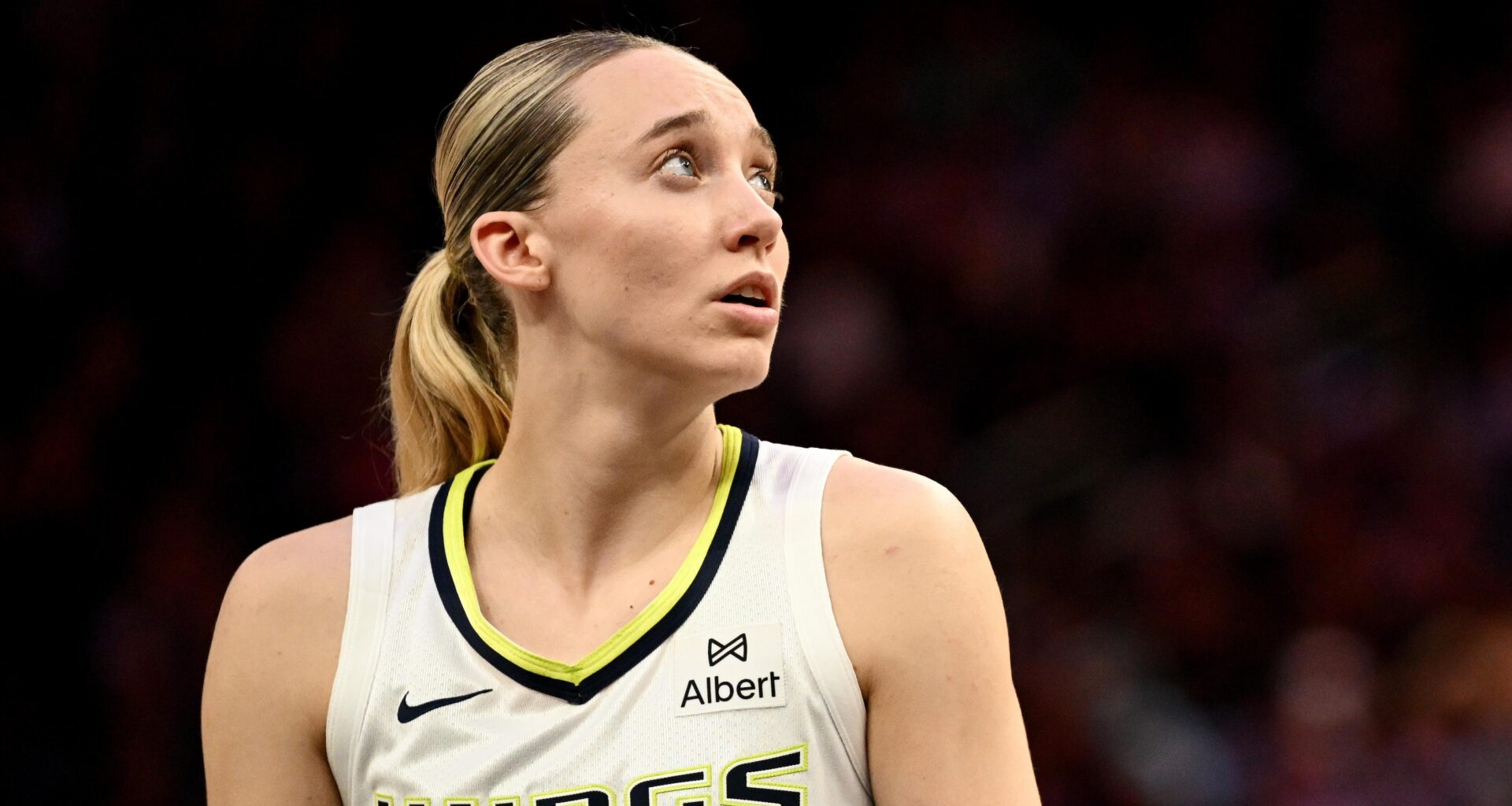
There’s a particular moment from a Dallas Wings game, early in Paige Bueckers’ rookie season, that tells you everything about her style. It’s a mid-June contest against Golden State. The Valkyries show a soft full-court press. Bueckers, bringing the ball up, dissects it like a surgeon: crossover, hesitation, quick burst into the middle third, then a one-handed whip pass to a corner shooter before the help can rotate. Three points.
You can diagram that play a hundred times—2-2-1 zone press into a soft trap—but it won’t capture what makes Paige different. It’s not just the reads. It’s the calm before the dribble, the hesitation that pulls defenders just a half-step too far.
The Wings haven’t started off the way anyone has wanted. They sit at 8-19 but are 2-2 over their last four games. Statistically, Bueckers is hovering around 18.1 points, 5.6 assists and 3.9 rebounds per night. Good numbers. Great, even. But to reduce her to box scores is to misunderstand the role she’s already playing in the WNBA, on the floor and off it.
Now, as her pro career unfolds, fans project onto Bueckers what they want to see: queer joy, white saviorism, quiet rebellion, veteran-level court vision. And maybe all of it is true. Or maybe she’s just a basketball player trying to run the offense in peace.
In many ways, Bueckers is entering a lineage of elite white guards whose narratives have been shaped by visibility and marketability as much as performance. From Sue Bird’s reign as the league’s poised floor general to Diana Taurasi’s edgy iconography, the WNBA has long held space for white excellence, albeit on tightly controlled terms.
Savior, Star, Symbol
Brian Spurlock/Icon Sportswire via Getty Images
This past weekend, Bueckers became the first player in league history to total over 350 points and more than 100 assists in the first 20 games of her career.
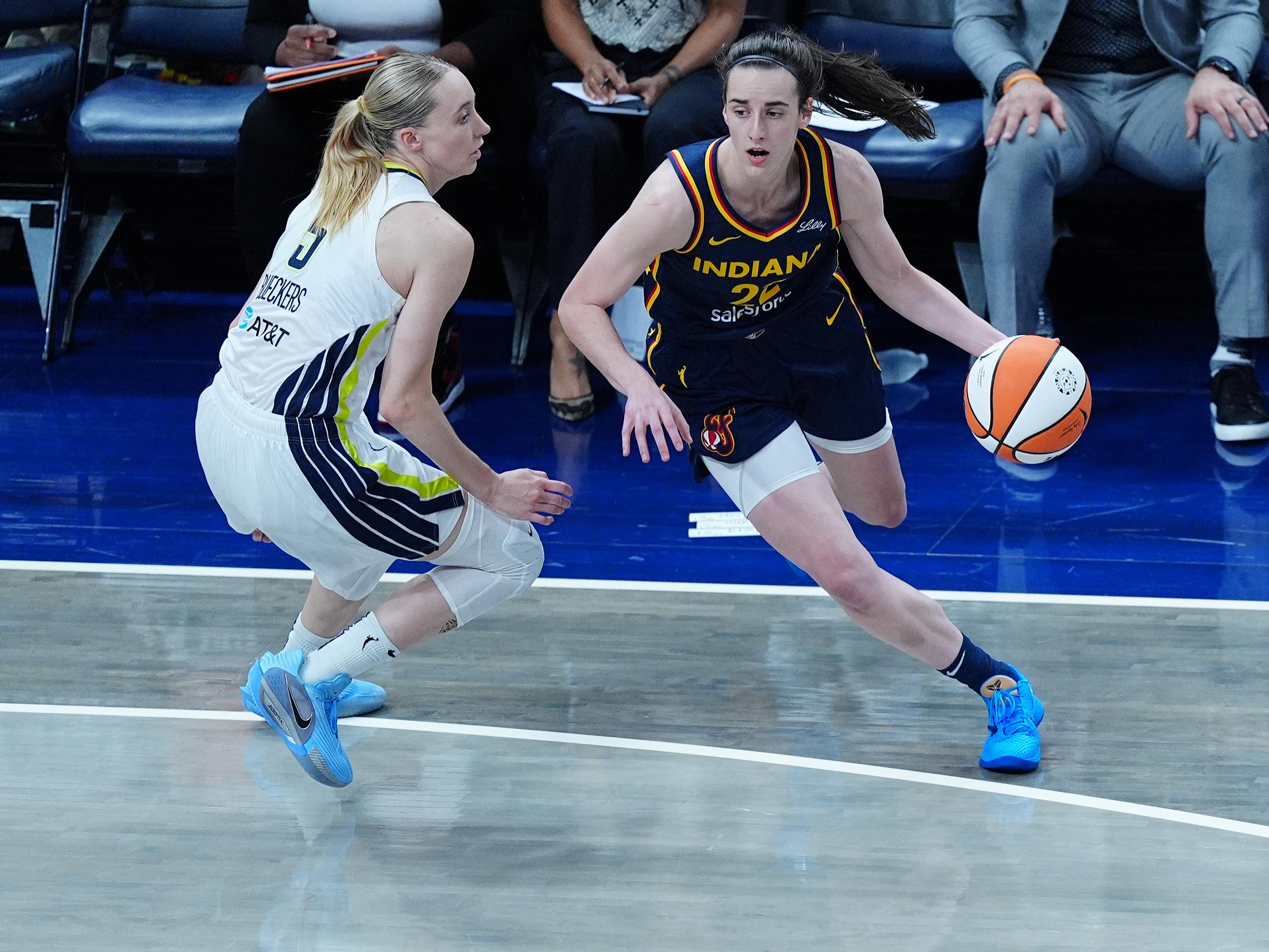
Her emergence hasn’t been as explosively loud as Caitlin Clark’s, but it’s just as culturally complex. Like Clark, Bueckers is a white woman excelling in a predominantly Black league. And like Clark, she’s benefited from a system that elevates white femininity, palatable queerness and marketable cool above the raw excellence of many Black players who’ve never gotten the same push.
But to her credit, Bueckers has not ignored the dissonance. She’s spoken directly to it. As she said during an ESPYs speech: “Black women have carried this sport for so long, and they don’t get the media coverage or the shine that they deserve.” That statement matters. It doesn’t erase the privilege she still benefits from, but it suggests an awareness of it.
The difference from Clark is striking. Where Clark often feels like she’s playing against the narrative, Bueckers seems to float above it as a less polarizing, more protected avatar. Whether that’s by choice or by optics is another question.
Closet Doors
The Hapa Blonde/GC Images
Unlike Clark, Bueckers doesn’t play the heteronormative “good girl” media game. Quietly, and then more openly, she’s embraced queerness as an identity, and part of her aesthetic.
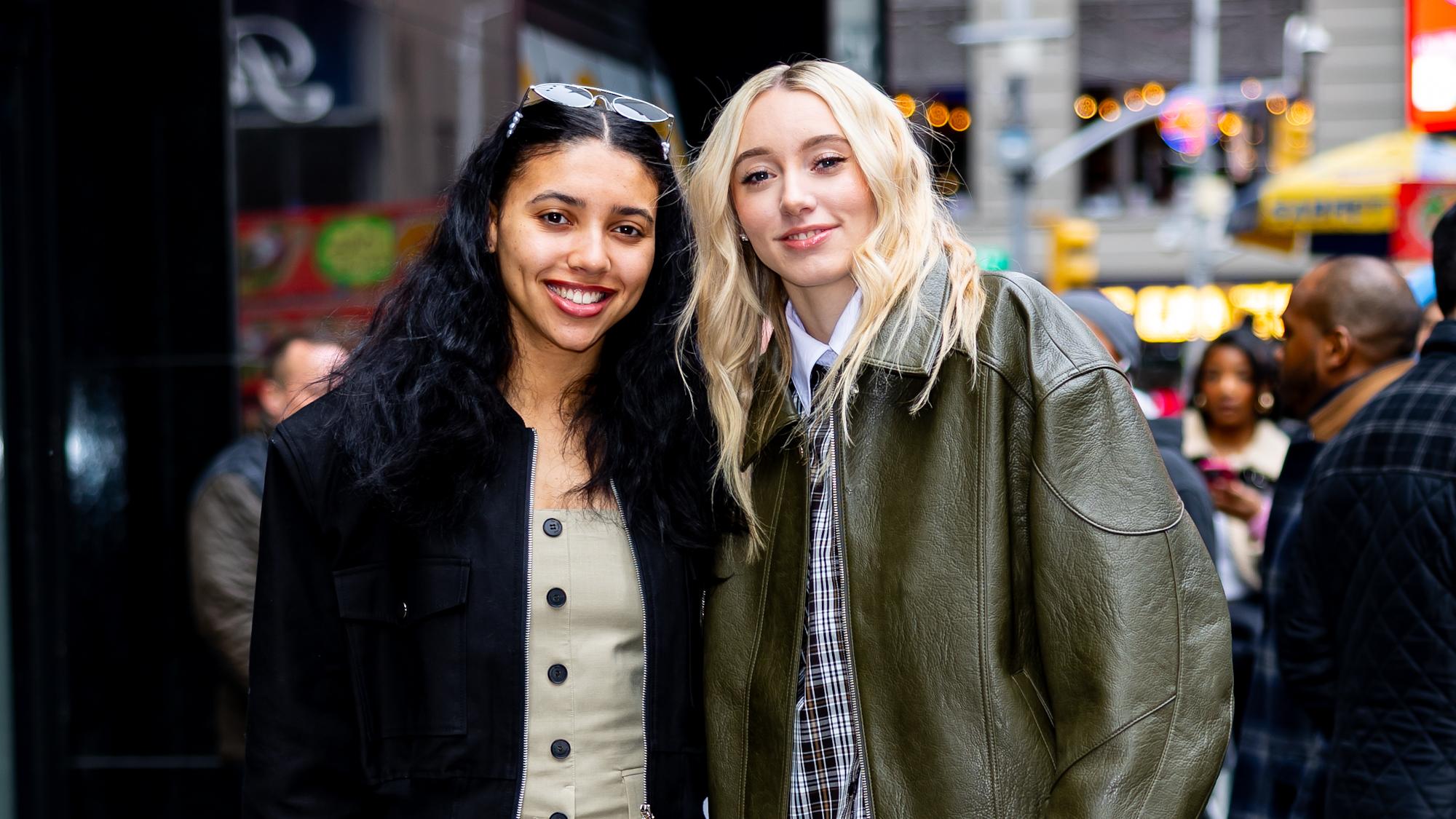
She recently confirmed a long-rumored relationship between herself and Azzi Fudd. The two were teammates at UConn and are now tied by more than shared accolades. The relationship had been intentionally kept private, perhaps out of protection or strategic discretion. When it arrived, the revelation was met with less controversy than curiosity, maybe even relief.
In a league where queerness is present but still marginalized and where players like Layshia Clarendon and Natasha Cloud have fought for visibility, Bueckers’ presence matters.
By virtue of her whiteness and brand appeal, she is a more “acceptable” queer figure in mainstream sports media. Paige’s rise, while affirming, also reflects what cultural theorist Lauren Berlant might call a cruel optimism, a feel-good visibility that soothes without challenging the system that keeps others unseen.
Contrast that with Clarendon, the league’s first openly nonbinary and trans player, whose career has often been framed through controversy. While Clarendon’s identity challenged institutional norms and demanded recognition on their own terms, Bueckers’ queerness is received as palatable. This storyline flatters the WNBA’s progressive self-image without disrupting it.
The media reaction to Bueckers’ coming out was telling. When the relationship between Bueckers and Fudd was quietly confirmed, there was a flurry of quote-tweets, TikToks and affirming headlines that treated it as a celebration of modern sportswomanhood. For many fans, particularly on WNBA X, romance, friendship and queer joy were finally recognized. That reception speaks volumes about whose queerness feels “safe” to amplify.
Reading the Floor
Thien-An Truong/Getty Images
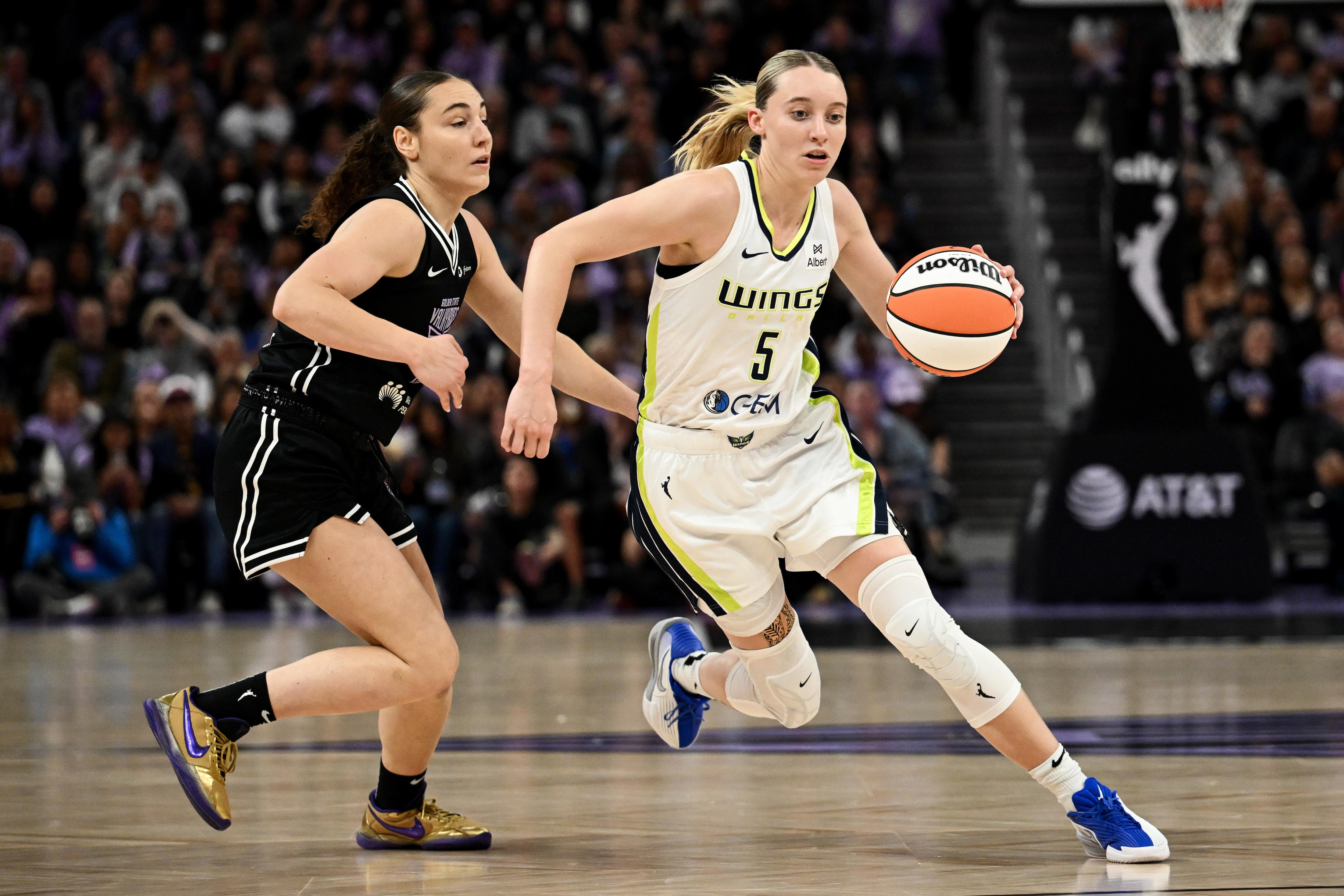
On the court, Bueckers’ game lives in the subtleties of angles, footwork and shoulder fakes. She’s not blowing by defenders like Chennedy Carter or punishing switches with size like Alyssa Thomas. But in terms of half-court orchestration and decision-making, she’s already reading the floor well for a rookie.
But there are areas of improvement. Bueckers is shooting 45.0 percent from the field and 32.9 percent from three-point range on more than five attempts per game. Her true shooting percentage of 48.8 percent reflects a balanced shot diet but also reveals an opportunity for growth.
Turnovers and ball control remain key areas for growth. Her assist-to-turnover ratio sits around 2.41, which lags behind the league’s most efficient guards. But remember, she’s a rookie just 20 games into her career. Among players averaging five or more assists per game, names like Natasha Cloud (3.21), Courtney Williams (2.64) and injured teammate Tyasha Harris (4.33) have set the standard for elite ball security and decision-making.
Bueckers ranks near the top of all rookies in offensive rating, and she consistently demonstrates efficiency in spot‑up and movement scoring. Her offensive rating (112.9) and top PER rating (20) among rookies suggest the potential of sustainable, elite-level production.
She does this by showing an evolved ability to create space, swing the extra pass and run weak‑side action with precision—proof that Wings head coach Chris Koclanes trusts her as a cerebral decision‑maker, not just a scorer.
While much of the attention falls on her offensive IQ, Bueckers’ defense is equally nuanced. At UConn, she was a havoc-creator by jumping passing lanes with anticipation, rotating instinctively from the weak side and consistently disrupting pick-and-roll actions with active hands and quick feet.
UConn head coach Geno Auriemma often trusted her to guard the opponent’s best perimeter player, citing her “feel for timing and angles” as elite. That’s carried over in Dallas, where she’s quietly posted a 105.6 defensive rating.
She ranks top-five among WNBA rookies in both defensive win shares and steal percentage. The eye test backs it up: ducking under screens to beat shooters to spots, tagging rollers on help rotations and forcing turnovers with well-timed digs.
The Paige-Arike Dynamic
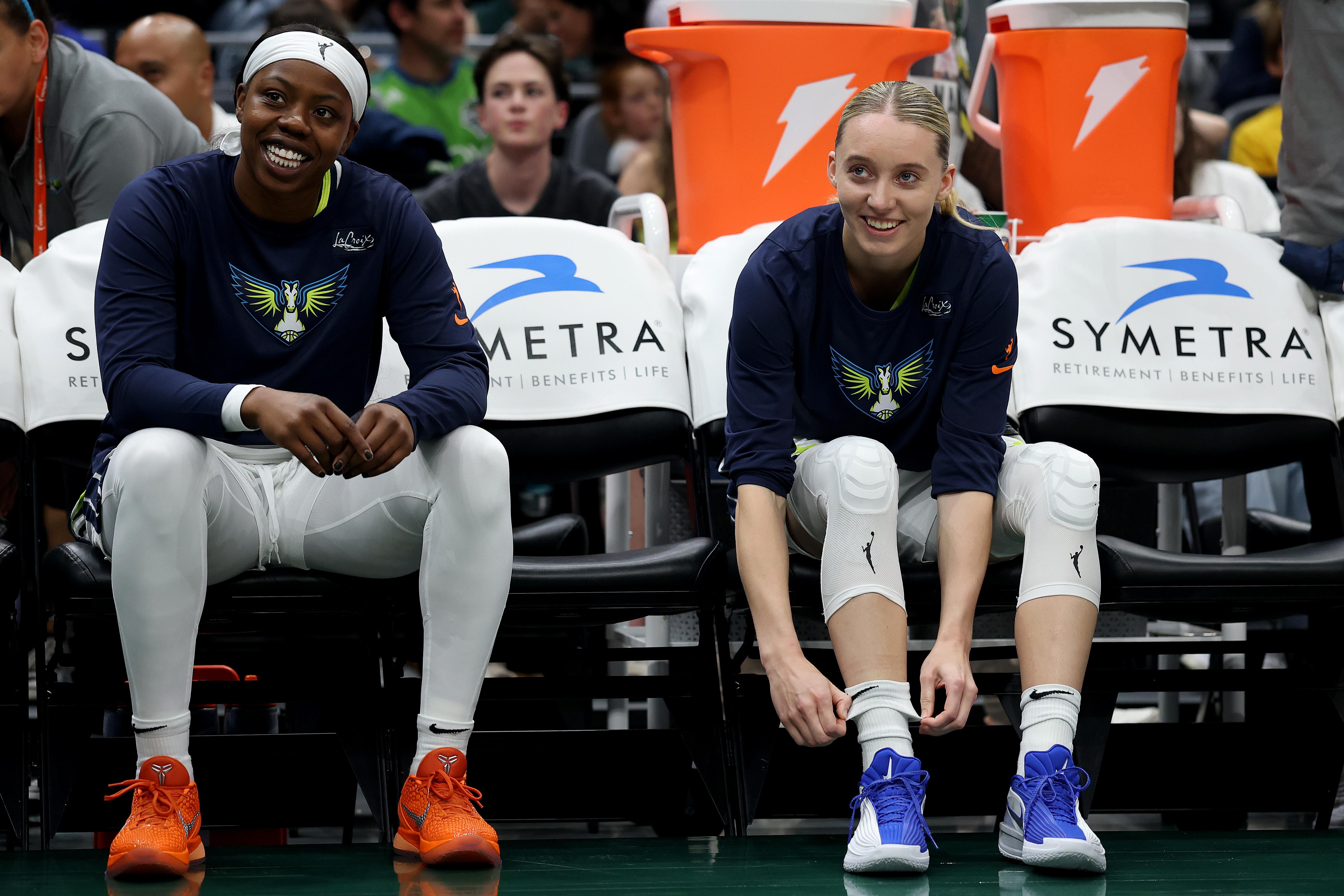
It took just 17 games for Bueckers to notch her first 30-point performance, making her the fourth rookie in Wings franchise history to do so. The last to hit that milestone? Arike Ogunbowale in 2019.
Now, they’re doing it side by side.
Steph Chambers/Getty Images
On paper, the pairing could’ve raised spacing questions. Two ball-dominant guards, each used to initiating offense, each lethal in isolation and both needing touches to thrive. But what’s emerged is a kind of rhythm-based backcourt where the ball finds whoever has the advantage, and the reads come fast.
In a midseason matchup against Seattle, the duo put on a masterclass in shared gravity. After a defensive rebound, Bueckers initiated a secondary break, passed ahead to Ogunbowale on the right wing and then cut hard into the slot. Ogunbowale hit her with a give-and-go. Bueckers caught on the move and floated a runner just before the help arrived.
In a postgame interview, Bueckers spoke to the growing partnership: “We’re learning each other’s rhythms. She’s so dangerous, I know when I cut or relocate, eyes are always on her, which frees me up too.”
They’ve begun to stagger sets between them. One initiates the high pick-and-roll while the other relocates or fades into a screen. In dribble handoff action, like one against Phoenix, Bueckers curled into the lane, drew help and then snapped the ball back to Ogunbowale for a clean pull-up three. The two elite guards bend defenses in opposite directions, and it’s working.
Even when they’re off-script, they’re dangerous. In a late-clock possession against New York, Bueckers took a dribble handoff from Ogunbowale on the wing, pump-faked and then hit her partner on a backdoor cut. It was a rare moment when both guards worked off-ball to exploit mismatches in motion.
The Weight of the Pick
Being a No. 1 overall pick in Dallas carries the responsibility of leading a city still aching from losing its last basketball demigod.
And this year, the fanbase got two of them.
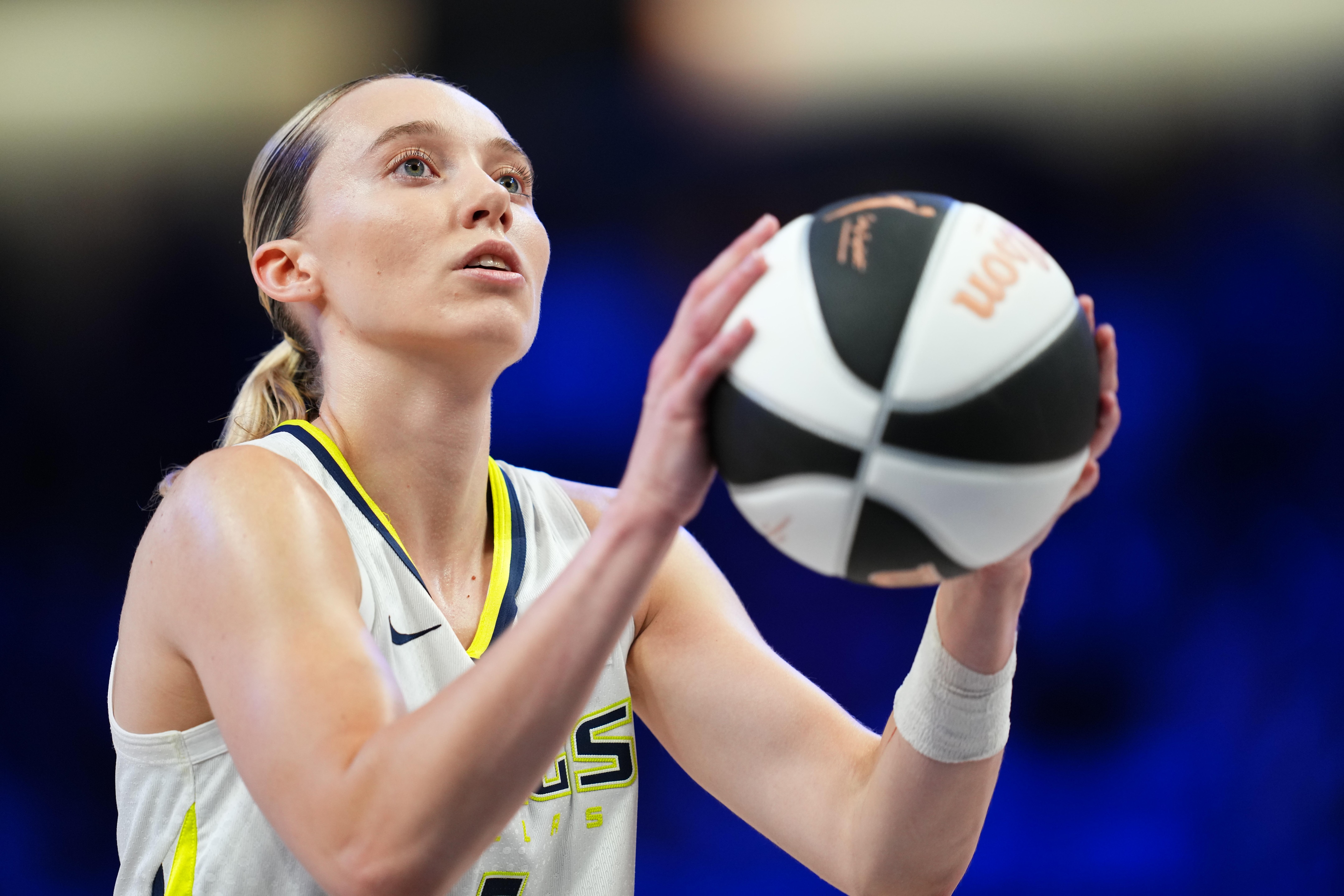
Bueckers for the Wings. Cooper Flagg for the Mavericks. Two white players projected to be generational talents. Two young stars asked to replace Dallas icon Luka Dončić as the city’s basketball lifeblood before they’ve even played a full season.
Cooper Neill/NBAE via Getty Images
And that’s the double bind: Bueckers isn’t just tasked with running the offense. She’s the savior, the superstar, the soft reset. Never mind that she’s just a rookie.
Before Bueckers ever took the floor in a Wings jersey, she’d already lived through five college seasons of pressure that would’ve cracked most stars. At UConn, her brilliance was often matched by misfortune: the pandemic season, the knee fractures, the ACL tear that stole her junior year. She missed more games than she played in a two-year stretch, and still, she came back to cut down the nets her final season.
The burden of the “Great White Hope” isn’t new, but it’s newly intensified in an era of racial hyper-awareness and TikTok virality. When white players dominate Black sports spaces, there’s always a second storyline beneath the stats: Why them? What do we want from them? What are we really celebrating?
Final Play
Let’s get back to the game. That’s why we’re all here.
In a matchup against the Seattle Storm in mid-July, Bueckers received the ball on the wing. One hard dribble, a faint stutter, and then it comes: a no-look bounce pass, skipping between defenders. The cutter scores. The crowd exhales. The camera catches up.
It’s an apt irony because that’s how Bueckers moves through this league. She doesn’t need the spotlight. Just daylight, a hesitation dribble, a moment of misdirection. And suddenly, the whole play opens up. Because she saw it before we did.
Statistics via WNBA.com and Basketball Reference unless otherwise noted.