
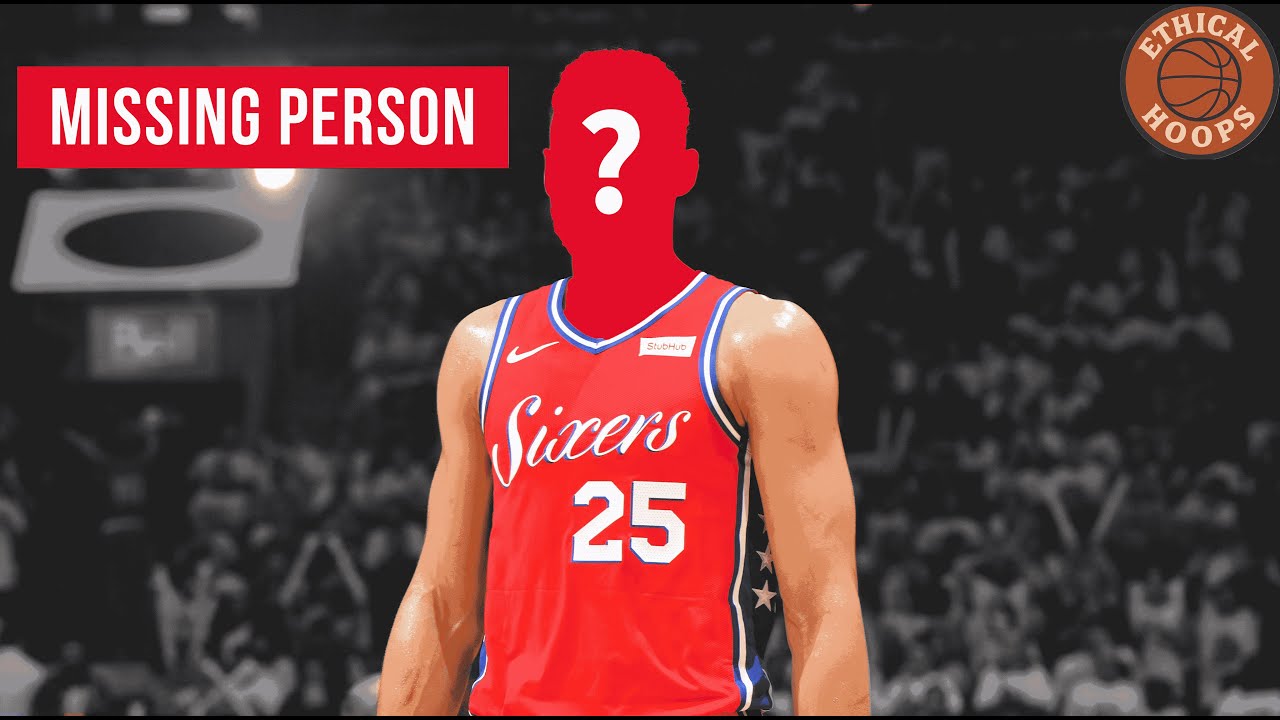
The Disappearance of Ben Simmons
[Music] So Ben Simmons just he has to go to the basket on get it and go. Nobody is worse than Ben Simmons. Ben Simmons might also be the weakest, most pathetic excuse for professional athlete we have ever seen. In the hood, we call this a punk move. Ben Simmons can can still be a point guard for for a championship team like the one you guys want to be. You know, David, I don’t know that question or the answer to that right now. Uh, [Music] listen, I think the guy’s lost all credibility. Period. End of story. First of all, it’s everybody’s fault. Ben Simmon deserves number one to blame. [Music] When Ben Simmons entered the NBA, he was looked at as the best prospect in NBA history. Before Flag, before We WBY, before Zion, there was Simmons, a point guard who stood at 610, a player with the skills of a guard at the size of a power forward. NBA media build him as the next LeBron James, the future of the league. That rare blend of athleticism and size made Simmons feel like a once in a generation talent, maybe even an all-time great. But after a promising start, everything began to unravel. Injuries, criticism, and controversy all taking their toll. Trade Ben Simmons. Trade Ben Simmons. Trade Ben Simmons. Man, you’re a bum. You’re a bum. Nobody likes you. Nobody likes you. Ben Simmons at 610 from LSU in Melbourne. Number 10, Ben Simmons. In a short few years, Simmons faded into obscurity and many fans were left wondering what the hell happened to Ben Simmons. To figure that out, we have to look back through his entire career and understand every single moment that brought us here. Was it injuries, a crisis of confidence, or did you just never care in the first place? In this video, I’m going to attempt to answer that question. This is the story of Ben Simmons, the rise, the fall, and everything in between. Ethical Hoops presents the disappearance of Ben Simmons. [Music] When Simmons joined LSU in 2015, he was already seen as the best prospect in the nation. After an illustrious high school career with Montver Academy, Simmons was listed as a five-star recruit and the number one power forward and player in the nation. Simmons was an athletic freak, strong, fast, and agile. At 610, he can guard 1 through five. He could dig down in the post or step out and lock down on the perimeter. Offensively, he was gifted. He could handle and pass like no other player at his size, and he could finish around the rim as well as the best forwards. There was a caveat to his game, though. Simmons was missing a jump shot. Simmons’s inability to reliably hit a jumper was certainly a concern, but many scouts believe that Simmons would be able to develop a jumper in college or once he reached the next level. After high school, Simmons could have picked any program in the nation, but he ultimately settled on LSU, a school known much more for football than basketball because his godfather, David Patrick, was the assistant coach for the team. Simmons’s year at LSU was a confusing one. LSU as a team wolffully underperformed. In February, the team went on a three-game losing streak that basically knocked them out of the NCAA tournament. In this stretch, LSU made only 48 of their 80 free throw attempts, was outscored in second halves by a cumulative 40 points, and allowed opponents to hit 51.8% of their shots. In the SEC tournament, LSU’s season ended at the hands of the Texas A&M Aggies, who destroyed LSU 71 to 38. An absolutely miserable showing from the Tigers. After such a disappointing season, especially with how hyped up LSU was following the arrival of Simmons, Simmons faced a lot of the blame, some deserving and some undeserving. Simmons had his moments throughout the year. He led the team in all major statistical categories other than three-point shooting and free throw shooting, averaging 19.2 points, 11.8 rebounds, 4.8 assists, two steals, and 0.8 blocks in 34.9 minutes per game. He also scored 43 points against North Florida to break LSU’s three-game slide, the most points for the Tigers since Shaq scored 43 in 1991. While Simmons posted impressive stat lines, they were sometimes hollow. The Aussie freshman tended to stat pad in blowouts and at times looked for home run plays at bad times, looking more for a highlight than to help his team. Additionally, Simmons wasn’t always giving all of his effort on the defensive end, often failing to close out on shooters or put a body on an opposing big man. Also, Simmons and LSU did not work on developing his jumper, and it remained inconsistent and an unviable option. These things began to raise questions about Simmons’ character and his commitment and desire to win. Character concerns surrounding Simmons were not a new thing. Players and coaches for the Australian national team did not speak about him in flattering terms after his time with them. Simmons also had off-the-court issues at LSU. He struggled academically, failing to earn even a 2.0 GPA during his freshman year. In February of the season, he was benched because of his poor grades. Simmons’s year at LSU ultimately did him more harm than good. Whether he deserved the criticism or not, he got all of it. His decision to join LSU because of his godfather was a decision made out of comfort and ease rather than development and winning basketball. Many other programs in the NCAA would have handled Simmons better and worked to develop him and resolve the few shortcomings he had as a player. After missing the NCAA tournament, his position as the number one overall pick in that year’s NBA draft was called into question. Only three players in history had been picked first after not making the tournament. And of every top three recruit in the last decade, the only one to miss the tournament was Nerland Noel, who was sidelined in 2013, causing Kentucky to miss the tournament. Simmons’s seemingly innocent decision to have his godfather as his coach had jeopardized his position as the number one player in the nation. While Simmons’ talent was undeniable, the red flags were starting to appear, and for some, the questions about his motor, leadership, and love for the game were just beginning. In 2016, the Philadelphia 76ers were deep into the process era, an era of long-term tanking in hopes of landing a generational franchise player. Their drafting during this time was inconsistent, hit or miss. In 2014, they drafted Joel Embiid, who would go on to be an MVP for the team, but the next year they drafted Julio Okafor, third overall. The Sixers won the lottery ahead of the 2016 draft, and despite the controversy and criticism Simmons faced in college, his talent was simply too much to pass up on. Head coach Brett Brown had also already spent time with Simmons as the Australian national team head coach and was a friend of the Simmons family. The Sixers drafted Ben Simmons number one overall, becoming the third Melbourne Born number one overall pick. Following in the footsteps of Andrew Bogat and Kyrie Irving in the 2016 NBA summer league, Simmons showed exceptional court awareness and passing ability for a player of his size. Despite shooting the ball poorly for his first three summer league games, he was named all Las Vegas summer league first team with averages of 10.8 points, 7.7 rebounds, and 5.5 assists per game in six games. On September 30th, Simmons turned his right ankle during the Sixers final training camp scrimmage. After an X-ray and MRI, Simmons was diagnosed with a fractured fifth metatarsal in his right foot. After the initial diagnosis, Simmons was estimated to miss three to four months of his rookie year. On February 24th, 2017, after additional tests revealed the broken foot was still not healed, Simmons was ruled out for the rest of the season. After a year on the sidelines, many people doubted that Simmons would be able to immediately return to form. After being the consensus number one pick a year before, he was looked at as only an outside chance for rookie of the year. In only his fourth game in the league, Simmons recorded his first triple double, putting up 21 points, 12 rebounds, and 10 assists, becoming only the third rookie to ever record a triple double in his first four games. After 10 games, he was the only player in NBA history to have 170 points, 100 rebounds, and 80 assists after his first 10 games. On February 22nd, Simmons scored a career-high 32 points, including two free throws with 5.6 seconds left to cap off Philly’s five-point comeback in the final minute of the game. On March 15th, after another triple double, Simmons joined Magic Johnson and Oscar Robertson as the third rookie to reach 1,000 points, 500 rebounds, and 500 assists. Simmons finished the regular season with 12 triple doubles, the team rookie record for assists, four Eastern Conference Rookie of the Month awards, and one Eastern Conference Player of the Week award. With averages of 15.8 points, 8.1 rebounds, and 8.2 assists per game, Simmons had just completed one of the most impressive rookie seasons in league history. He was the perfect point guard for the Sixers. strong, fast, an excellent passer and an even better defender. His shooting, however, was still troublesome. In his rookie year, Simmons attempted only 11 threes and made none of them. Additionally, he shot 56% from the free throw line, a poor showing compared to the league average 76%. Despite these shortcomings, Simmons was still dominant in his rookie year. Philly front office and fans alike were celebrating, believing that they had just landed the guard of the future. In game four of the Sixers first round series against the Miami Heat, Simmons recorded a triple double, 17 points, 13 rebounds, and 10 assists, becoming the first rookie since Magic Johnson in 1980 to have a playoff triple double and becoming only the fifth rookie ever with a playoff triple double. After winning the series in five, Philly moved on to play the Boston Celtics in round two. The Sixers were quickly dispatched in five games. In a five-point loss in game two, Simmons scored only a single point while missing all four of his shots. While being only a rookie, his team relied heavily on him. And when they needed him in game two, he disappeared. At the end of his season, Simmons was named Rookie of the Year and named to the NBA All rookie first team. After two years full of questions and concerns, it looked like Ben Simmons had finally arrived. The player that had been hyped up as the best all-around player since LeBron James. Hey, LeBron. Ben Simmons is here. We’re all good. Was here and he was ready to dominate. In the offseason, Simmons announced that he begun working to improve his shot with his brother Liam. This would begin the yearly tradition of offseason videos coming out of Simmons nailing threes and jumpers in an empty gym or open run. Everyone was excited seeing these videos, thinking Simmons had finally fixed his one flaw as a basketball player. If Ben Simmons had a jumper, he’d be unstoppable, right? In his second season, Simmons picked up right where he’d left off, dropping 19 points, 15 boards, and eight dimes in the Sixers season opener against the Boston Celtics. Two days later in Philly’s home opener, he recorded his 13th triple double, becoming the first sixer to have one in a home opener. Later in the season, on January 15th, 2019, Simmons became the second fastest player ever to reach 2,000 points, 1,000 rebounds, and 1,000 assists. The only player faster, Oscar Robertson. On January 31st, Simmons was named an all-star for the first time in his career, being named an Eastern Conference Reserve player. After his offseason shooting practice, many expected Simmons’s shooting ability to take a jump. But that wasn’t the case. Simmons only attempted six threes, five less than the season prior, and again missed all of them. He saw a minor improve in his free throw shooting, shooting 60% from the line, better than the 56% he shot a year ago, but not much. In game one of their first round series, the Sixers were upset by the Brooklyn Nets on their home court. Philly fans being Philly fans, Raiden boosted down on the team, namely Simmons, who finished the game with only nine points and three assists. again coming up short when the team needed him. In game two, he came back and played his ass off. Simmons put up 18, 10, 12, and two, helping push the Sixers to a 22-point win over the Nets. In game three, Embiid sat out because of knee problems, and Simmons picked up the slack without him, dropping 31 points and nine assists and helping Philly get the win. Philly won the next two games comfortably and advanced to the second round. In 2019, the Toronto Raptors were Destiny’s team. The acquisition of Kawhi Leonard and emergence of players like Fred Van Vleet and Pascal Seakum turned them into a juggernaut in the East. Sixers in 2019 were anything to be laughed at either. A starting five of Simmons, Embiid, Tobias Harris, Jimmy Butler, and JJ Reic was one of the best in the league and one of the best in Sixers history. Against Toronto, Simmons’ flaws were exposed. Without a jumper, Toronto could sag off him and clog the paint, taking away Embiid and Butler’s room to work. Additionally, he was passive, not looking to attack the rim or score in the half court. Because of this, Simmons was moved off ball in crucial situations with Jimmy Butler becoming almost the full-time point guard in fourth quarter situations of the series. When the Sixers were eventually sent home by one of the greatest shots in NBA history from Kawhi Leonard, questions began to be raised about Simmons. Was it possible for him to run the offense on a winning team? Was he up to the task, or would he fade into the back like he did against Toronto? In the 2019 offseason, Simmons and the Sixers agreed to a $170 million 5-year contract extension. Philly had made their decision. Despite shooting struggles and problems in the playoffs, Simmons’ talent was undeniable and he was here to stay. After another offseason of questions for Ben Simmons, he had the best season of his career. On December 7th, Simmons dropped a career-high 34 points in a 141 to 94 win over the Cavs. In his game, Simmons hit his first ever career three-pointer, rising up in the corner midway through the first quarter. Later on in the year, Simmons was named to his second straight all-star team, being drafted by team LeBron and going on to score 17 points, five assists, and six rebounds as team LeBron got the win. On February 22nd, in a game against the Milwaukee Bucks, Simmons left the game with a back injury. Later, it was revealed that Simmons had a nerve impingement in his lower back and was reported to miss an extended period of time. After the NBA season was restarted in the Orlando bubble, Simmons returned to action, but missed time again, sitting out of the playoffs due to a knee injury as the Sixers were swept by the Celtics. At the end of the year, Simmons was named to the AllNBA third team and the NBA AllDefensive first team, as well as being named the 2020 NBA Steels leader. After the season, head coach Brett Brown was fired and replaced by former Clippers head coach Doc Rivers. The 202021 season was standard for Simmons. Offseason videos of him training and practicing his shooting, exciting fans in the NBA media. But then, when the season came to an end, Simmons had only attempted 10 threes and made three of them. On February 15th, Simmons dropped a new career-high 42 points against the Utah Jazz. He was named an all-star for the third consecutive year and finished the season second in defensive player of the year voting and first team all defense. Simmons finished the year with averages of 14.3 points, 7.2 rebounds, and 6.9 assists per game. The Sixers finished the year number one in the Eastern Conference. The first round against the Wizards was the beginning of the end. In game one, Simmons drove 15 assists and 15 rebounds, but only scored six points, scoring three of nine from the free throw line. This rough free throw shooting was about to become a trend. In game two, Simmons responded to the critics, attacking on both ends, scoring 22, 9, and eight. In game three, Simmons played well with 145 and N, but went 0 for three from the line. Late in game four, the Wizards began intentionally fouling Simmons because of his poor free throw shooting. This worked. Simmons shot 45% from the line, making only five of his 11 free throws, and the Wizards won the game. After the game, Doc Rivers defended his decision to keep Simmons on the floor despite the Wizards playing hack Simmons. Rivers said, “You want me to take Ben Simmons off the floor? I’ll pass on that suggestion.” In game five, Simmons bounced back, playing center for large sections of the game with a beat out. Simmons dropped a triple double, scoring 19 points, 10 rebounds, and 11 assists. And the Sixers were on to the second round. In this series, Simmons shot an abysmal 36% from the free throw line. In round two, the Sixers met the fifth seated Atlanta Hawks. The Hawks stole game one in Philly thanks to strong games from Trey Young, Bob Don Bondanovich, and John Collins. Simmons primary defensive matchup was Trey Young. And in game one, Simmons struggled with foul trouble and late game defense. In game two, Simmons’s focus shifted purely to defense. His scoring disappeared, dropping only four points, seven assists, and three rebounds. Critics began to again question if Simmons was up to the task, wondering why his offensive aggressiveness seemed to wne every year in the playoffs. Before game three, Doc Rivers challenged Simmons to be more aggressive, telling him he passed up too many good opportunities in the fast break in the post. So Rivers made an effort to feature Simmons in the post, and it worked. Simmons put up 18 points, four rebounds, and seven assists as the Sixers got the win and took a 2-1 lead. In game four, Atlanta used the hackaben strategy and Simmons went four for 14 from the line, missing important free throws and being pulled from the floor in clutch time as Atlanta tied the series. In game five, the Sixers infamously blew a 26-point lead on their home floor. Simmons again was passive, passing up open looks and only scoring eight points as the Sixer lead slowly dwindled. After this game, criticism for Simmons grew even louder. The Philly Faithful was quickly losing belief in Ben Simmons. In game six, Simmons remained passive, reluctant to score. additionally dealing with foul trouble, but his defense helped the Sixers get a big win to force a game seven. Game seven is infamous. He would be hardressed to find an NBA fan who didn’t know what happened in this game. The game went back and forth, both teams battling for a spot in the conference finals. Simmons was again timid, scoring only five points and attempting only four shots. Then late in the fourth quarter, Simmons posted up Denell Galinari. Simmons spun off Galinari and found himself wide open under the basket. The only defender near him, the 6-1 Trey Young. Simmons had a wideopen dunk, an opportunity to score a muchneeded bucket that would have tied the game. All he had to do was go up and dunk it, but he didn’t. Instead of taking the gimme, the easiest two points of the entire game, he passed the ball, throwing it to Matis Thyball, who was fouled, splitting the pair of free throws. On the other end, Atlanta scored, and it was in that moment that Philly’s season ended. Atlanta never gave up the lead, upsetting the number one seated Sixers on their home court. Philly fans left the stadium enraged, blaming Simmons for their loss. On the street interviews after the game captured the anger of the Sixers fans. Thoughts for the Sixers future? [ __ ] them. Okay, Ben Simmons for a bag of [ __ ] right now. Bye, Ben. Any thoughts from the Sixers? [ __ ] Ben. There you go. We’re about to look worried about the little kid. Kid’s like four years old getting a [ __ ] Ben Simmons from his mom. Welcome to Philly. Get Ben Simmons out of Philadelphia for the love of [ __ ] God, man. Man, listen to me close. I wore this jersey for you, my guy. I lost my money and my voice for your [ __ ] ass. You ain’t [ __ ] You can’t shoot. Tell talk to your mother. I can’t. My voice gone. You got five points in the game seven. You [ __ ] weak, bro. $130 million. You got five points in the game seven. You weak. Yo, Ben, if this your last Thank you for coming out. God bless. Good night. You a [ __ ] scrub. [ __ ] you, Ben. All of that for one passed up dunk seems like a lot, but it wasn’t just one passed up dunk. Simmons vanished in the series. In the 56 fourth quarter minutes he played through these seven games. He took three shots. Three shots. That is completely inexcusable. You can’t have the supposedly second best player on your team disappearing late in games. Also, Simmons set a record for the worst free throw shooting postseason in NBA history. Worse than Shaq, worse than Rodman, worse than Giannis. He shot 25 for 73 in the playoffs. That’s 34%. meaning that when he got fouled and went to the line, statistically he wasn’t going to make both free throws and he might not even make one. It’s fairly easy to see what happened here. Simmons has always been an inside scorer. Without a jump shot, he has to be. As a rim runner, you’re going to play through a lot of physicality and get fouled more often than a perimeter player. Simmons, after struggling with his free throw shooting, lost confidence. He was afraid to attack the rim because he might get fouled and was more likely to miss his free throws than make them. By the end of the series, he was completely in his own head. And at that moment in game seven, he melted down, passing up an easy dunk for fear of being fouled and missing the free throws. After the game, the media and fans were already ripping Simmons to shreds. After an incredibly difficult playoffs mentally, Simmons needed support, but his head coach and his star counterpart didn’t offer that. After the game, Doc Rivers was asked if Simmons could still be the point guard for a championship team, and Rivers responded. Ben Simmons can can still be a point guard for for a championship team like the one you guys want to become. Yeah, David, I don’t know that question or the answer to that right now. Um, you know, so I don’t know the answer to that. Joel Embiid was also asked in the postgame presser what happened at the end of the game and Embiid replied, “Man, I’ll be honest. Um, I thought the turning point was uh um you know when um we um I don’t know how to say it. U but I thought the 30 point was just you know we had an open shot and you know we missed we made one free throw and we missed the other and then they came down and scored and uh we didn’t get a good uh possession on the other. Rivers and Embiid threw Simmons under the bus when the truth is this series loss was as much on them as it was on Simmons. One player doesn’t blow a 26-point lead. One player doesn’t lose in seven to a five seed. While Embiid didn’t intend to blame Simmons, that’s how his statement was taken and at that point it was too late. The city of Philadelphia had turned on Ben Simmons and there was no going back. After two-monthlong media [ __ ] storm where every pundit, Twitter user, and disgruntled Sixers fan repeatedly dunked on Simmons, he requested a trade. Despite having four more years on his contract, he decided that he didn’t want to be in Philly anymore and was willing to miss training camp to show he was serious. He intended to never play another game for the franchise. Simmons and the Sixers had been working on finding a trade room since the end of the playoffs, but weren’t able to find anything that they thought was worth it for the Sixers. Philly hoped that Simmons would play at the start of the season and play well enough to improve his trade value, but Simmons wanted nothing to do with that. After Simmons requested a trade, Rivers tried to walk back what he said after game seven in hopes of fixing the divide that had slowly grown between himself and Simmons throughout the offseason. On September 22nd, Rivers said on the same day, Warriors owner Joe Leica was fined $500,000 for violating the league’s anti-tampering rule. In an interview with the San Francisco Chronicle, Leup stated that the Warriors were unlikely to acquire Simmons, saying, “In some ways, it doesn’t really fit what we’re doing.” A few days later, Embiid spoke about the Simmons situation, calling it disappointing and borderline kind of disrespectful to the rest of the team. Shortly after Embiid’s comments, a report was published by The Athletic that Simmons felt his partnership with Embiid had run its course. Simmons still hadn’t reported to camp. On October 1st, the Sixers owed Simmons $8.25 million, 25% of his contract. The Sixers, however, did not pay Simmons and instead placed the money into an escrow account, planning to deduct any fine Simmons received during the season from the account. and if or when he showed up to camp, he would be given the remaining money. On October 11th, discussions surrounding Simmons returning to the team began to gain momentum. Doc Rivers was in talks with Simmons’s agent, Rich Paul, working towards a resolution that would get Simmons to report. On October 15th, Simmons cleared the NBA’s health and safety protocols, but did not play in the Sixers final preseason game. He was listed out for reconditioning. On October 19th, Simmons was suspended one game after being kicked out of practice by head coach Doc Rivers. Simmons reportedly refused several times to sub in for a drill and Doc kicked him out, telling him he was a distraction. Simmons was suspended for the season opener for conduct detrimental to the team. After the suspension, Embiid came out and said he hasn’t spoken to Simmons and it wasn’t his job or his teammate’s job to babysit anyone. A few days later, Simmons left the practice facility without working out again and was expected to meet with the organization the next morning to discuss his status. On the same day in a radio interview, general manager Daryl Mory states that his hold out could take a long time, saying, “You think I’m kidding? You’re gonna think I’m kidding. I’m not. This could be four years.” Like the the the conditions that I’m pointing out to you don’t change. Unless Ben Simmons is traded for a difference maker, we’re in the prime of Joel’s career. We have to get back either Ben Simmons playing well for us who helped us win the championship or we have to get back a different figure for Ben Simmons or this could be four years from now and we’re still like hey we took the best shot at it we could. So this could be four years. This is not a dayto-day. This is like every day we’re going to expect Ben Simmons to be back here or we’re trading him for a difference maker. There’s no other outcome that doesn’t materially hurt our chance to win the championship in Joel Embiid’s prime. Later in the same day, Eagles center Jason Kelsey shared a message for Simmons. I’ll tell you guys, you write your own narrative. I don’t want to crush any other players, but what’s going on with the 76ers, Ben Simmons, stuff like that. All that is because of a lack of accountability, a lack of owning up to mistakes, and a lack of correcting things. Kelsey said, “If all that got corrected, if you’re fixing free throws, if you’re getting better as a player, none of this is happening. So, everybody can [ __ ] and complain about how tough the city is to play in. Just play better, man. The city will love you.” In his meeting with the team the next morning, Simmons informed the team he wasn’t mentally ready to play. Simmons planned to meet with medical professionals for an evaluation and to formulate a plan to help him. Through this whole process, the Sixers had been finding Simmons for missing games, practices, and meetings. The fines at this point had reached around $2 million. However, in the collective bargaining agreement, players salaries were protected for failing to render services if such a failure had been caused by the player’s mental disability. When the news broke about Simmons not being mentally ready to play, many fans and members of the media thought that this was just a scheme to make sure he got his money. After the Sixers game on the 22nd, Tobias Harris stood up for his teammate, saying, “At this time, we have to respect his privacy, his space, and we’ve got to be there for him with what he’s going through and his process.” Harris said, “It’s easy to look at something on the surface and come to assumptions on a lot of things, especially athletes. So, at this time, he needs more support. I just think we have to be there for him as a team.” And I relayed that to the group. Come November and the Sixers were losing patience. Simmons was refusing to meet with team organization medical professionals for his mental health troubles, opting instead to work with mental health professionals via the NBA Players Association. On November 5th, Simmons was fined his $360,000 game salary for missing the Sixers game against the Pistons, and the organization would continue to find him until he cooperates with team physicians for his mental health. A few days later, after some resistance, Simmons met with a team recommended medical specialist to discuss his mental health. Throughout this process, the Sixers had been working trying to find a suitable trade for Simmons, but they had yet to find any takers. Philly was in talks with Portland, but after Portland made it clear they would not trade Damen Lillard, talks ended. Later on, the Kings, one of the most aggressive buyers that season and at one time a big fan of Simmons, ended trade talks because they believed that Philadelphia was just asking too much for Simmons. Just hours before the trade deadline, after months and months of negotiations and animosity, Ben Simmons was traded to the Brooklyn Nets along with Seth Curry, Andre Drummond, and two first round picks in exchange for James Harden and Paul Milsap. This trade meant the end of the arduous saga that had begun the summer before. In the end, Ben Simmons got his wish and after game seven against Atlanta, he never played another game for Philadelphia. Unfortunately for Nets fans and fans of Simmons, the saga was far from over. On March 21st, Simmons was diagnosed with a herniated disc in his back and was rolled out for the rest of the regular season and the playin tournament with the belief that he would make his Nets debut during the playoffs. In April, Simmons filed a grievance against the Sixers to challenge the nearly $20 million of his salary the organization had withheld from him earlier in the year. The Sixers claimed that Simmons breached his contract by failing to show up to training camp and refusing to play in preseason and regular season games. The grievance went through a long arbitration process with the league before finally reaching a settlement late in 2022. Although the amount Simmons regained from Philly was never publicly revealed. In round one, the Nets faced the red-hot Boston Celtics, who shockingly jumped out to a 2-0 lead behind their smothering defense. After game two, it was reported that Simmons planned to make his debut in game four against Boston. But then, Brooklyn lost game three, falling down 3, which is a death sentence in the playoffs. Before game four, it was announced that Simmons wouldn’t play in game four due to more back soreness. The Nets lost game four. The Celtics ended their season in a sweep. The immediate belief was that Simmons decided not to play because the season was already a lost cause. The idea was that after game two, Brooklyn still had a fighting chance in the series, but after game three, their chances were almost zero. Reactions online were deafening with people calling Simmons weak and unmotivated. A few weeks later, Simmons underwent back surgery, vindicating him and his fans that his injury was real, and he sat out of game four for legitimate reasons. Later in the year, in September, Simmons went on JJ Reick’s podcast, The Old Man in the Three, where he talked in depth about his hold out with the Sixers, game seven against the Hawks, his shooting struggles, and his first season with the Brooklyn Nets. an all-star. You’ve been on all the defensive teams, but that that narrative around the shooting is so constant. How frustrating is that? Um, I think for a while was just it’s so repetitive. You’re hearing it all the time from everybody. You’re like, “Fucking hell.” Like, just get off my case. Like, I do other stuff, too. Like, I’m guarding the best players. And that’s one thing I don’t I don’t think people respect that enough, like what I’m bringing to the court, cuz it’s a lot of [ __ ] I’m bringing to the court. Um, and for me, I just want to win. So people also don’t understand my goal is to purely win. I don’t go out there. I’m not trying to have this many points, you know, whatever it is. My goal is to win. So I’m trying to do whatever I can during the game and make the right plays, the right reads to help my team um win. But that is for sure frustrating. Um but it’s also one of my weaknesses. So it’s like what am I going to get mad at people for saying I’m not good at something? Okay, yeah, cool. I’m practicing, get better. It is what it is. It was like, you know, you’re you’re I’m already dealing with a lot mentally just in life as a lot of people do. But it got to a point where after that series, I’m getting the it’s like from the people that you’re supposed to have the support from or or that, you know, that comfort from. And I wasn’t getting that either. So, it was just a lot. It was a toll on me. And then mentally, I just it killed me. I was like, [ __ ] Like no energy for anything. Like I was in a dark place. Um and it took me a long time. The first thing for me was like really identified like okay I got to really you know I got to get right and it’s not a physical thing it’s mentally um and just I think that first thing of acknowledging it is like a huge step for me and I was like okay like I need to address this I need I need help in these areas um and being able to do that that was the start of you know getting to where I’m at now. I’m like in a great place and I feel comfortable talking about it now but those are some dark days for me. Um, and especially, you know, [ __ ] everything’s public. Like that’s the crazier part. Um, but yeah, it’s it’s it’s something that’s like everyone goes through different struggles. Um, some bigger than others, but yeah, it’s everyone, you know, has their own battles. And I think that was tough for me just knowing like I didn’t really have that support either from teammates or whatever it was at that time. No, call it like it is. I remember watching this interview as soon as it came out. I’d been following the Ben Simmons saga closely for a few months now, and I wanted to hear what he had to say. For me, what he said made a lot of sense. For others, it was all too convenient, that he was just making excuses. We’ll never know the true intention of his words. Everything he said in that interview was polarizing. I’ll take his word on most of what he said because I don’t think he had a reason to lie in that interview. What I don’t like about that interview is his explanation for the passed up layup. Um, now in the moment I just spun and I’m assuming Trey’s going to come over quicker. So I’m thinking he’s going to come full ball and I see Matis going. You know, Matis is athletic and get up. So I’m thinking, okay, quick pass. He’s going to flush it not knowing how much space there was. It happened. It happened so quick that you just make a read. And in the playoffs, you need to make the right decisions majority of the time. And for that moment, um, I mean, [ __ ] bro. It happened. And I was just like, “Okay, [ __ ] Now we got to go make another play.” That’s how I’m thinking. Then I didn’t realize how, you know, everyone’s posting. I’m like, “I was that big?” Like, “Yeah, it [ __ ] looks terrible.” I was like, but when I look at it now, I’m like, man, I should have just punched that [ __ ] But it didn’t happen. And I was okay with that. I can live with that. I can live with, okay, I made you’re everyone’s trying to kill me over one play. Like, I could you does everyone want to watch film with me? Like the whole arena? And we could I could dissect everything if you guys want. Uh, but that’s not, you know, it’s not realistic. It’s the playoffs. It’s game seven. You need to be able to make the right read in that situation, and he didn’t. There’s no excuse for that. He just didn’t make the play. And that, along with a few other things, ended the Sixers season. I don’t want to nitpick, but him saying that he’s okay with that play, that he’s okay with what happened is a bad look. He doesn’t need to be hung up on it. He doesn’t need to be losing sleep. But when people have questioned how important winning is to you as a player, question if you care enough about the team around you, saying that you’re okay with that is terrible. The biggest thing that interview with JJ Reic proved was that in some people’s eyes, Simmons was beyond forgiveness. Simmons finally made his Nets debut on October 19th, 2022 against the New Orleans Pelicans. He put up four points, five rebounds, and five assists before fouling out as the Nets lost by 22 points to the Pelicans. Simmons looked passive, but it was only his first game back after a full season on the sidelines. Show he would be back to form soon. On November 17th, Simmons scored a season high 22 points in a win over the Grizzlies. A few months later, Simmons recorded his first triple double as a net, scoring 10 points, 10 rebounds, and 11 assists. In his first season playing for the Nets, Simmons had flashes of his former self, but overall looked passive. He often didn’t even look to score and passed up many opportunities at the basket. Simmons, however, was still dealing with injuries. In February, Simmons had his knee drained and received a PRP injection for left knee soreness, which had bothered him all season. In March, an MRI revealed that Simmons had inflammation in his back, and it was later diagnosed as a nerve impingement, which would shut him down for the rest of the season. Before being shut down, Simmons averaged 6.9 points, 6.3 rebounds, and 6.1 assists per game, career lows for all three. The next season, Simmons missed the first 38 games of the season. When he returned, he didn’t look good, putting up career lows in minutes per game, points per game, rebounds per game, assists per game, and free throw percentage. After playing only 15 games, Simmons was sidelined by a second back surgery due to another nerve impingement. At this point, it was clear that Simmons of the past was gone. Whether it was caused by injuries or confidence issues, Simmons was no longer the all-star player he used to be. This last year, Simmons was healthy for most of the season, playing 51 games, the most he played in a single season as a net. Despite being healthy, Simmons again averaged career lows in points, rebounds, and assists, putting up five points, 4.7 rebounds, and 5.6 assists per game. On February 8th, 2025, Simmons was bought out by the Nets, making him a free agent. On February 10th, 2025, Simmons signed a one-year 1.08 million contract. Simmons played 18 games for the Clippers, coming off the bench, and playing around 15 minutes a game. In his games with the Clippers, Simmons was almost non-existent. He averaged only 2.9 points, 3.8 rebounds, and 3.1 assists per game. As of now, Ben Simmons is a free agent, and his future in the NBA is uncertain. He’s only 28 years old and still has enough skill to contribute on some level to an NBA team. The question is, does he want to? I’m sure there are a few teams in the league that would still sign him if he wants to continue to play. But the truth is, he’s made millions of dollars already. If he’s not committed to continuing to play, he doesn’t have to. He could retire tomorrow and live comfortably for the rest of his life. So now we wait and see. As I’m writing this, NBA free agency is a week away. We’ll see then what’s going to happen with Ben Simmons. Will he give it another go? See what he still has left in the tank, or will he call it a career and go on to other things? Only time will tell. For the first part of the video, I’ve spoken mostly objectively, sharing the facts and timeline of Ben Simmons’s career. At times, I’ve shared my opinions and feelings on the situation when I felt I should. For the rest of the video, I’m going to share my opinions on what really happened to Simmons. Ultimately, this is subjective. I’m sure 100 people could come up with a hundred different conclusions when presented with the information in the first half of this video, but I’m simply here to share the conclusion I came to after researching and writing all about Simmons for the past week. Ben Simmons was a star at a young age, and growing up, he was always given the tools to succeed. With a professional basketball player as a father, a basketball was in his hands almost immediately. Simmons is athletically gifted. At 610, with his skill set, he never really had to try to be good at basketball. It just came easy. And that would become a pattern. Easy. When Simmons selected a college, he could have picked any program in the nation. Duke, Arizona, Kansas, UNCC, Kentucky. He could have gone anywhere. But he didn’t go anywhere. He went to LSU, a school that was mediocre at best when it came to basketball. Why? Because his godfather was a coach there. He went somewhere comfortable, somewhere easy. And ultimately, his year at LSU did him more harm than good. After missing his first year in the league due to injury, his next few went off without a hitch. He was good. He was really good. He was one of the best young players that the league had ever seen. But things began to pile. He couldn’t shoot the ball. Simple as that. He couldn’t shoot. In high school and college, he hadn’t needed to. He was the best player in the nation and the consensus number one pick without a jump shot. He never worked on his game because that wasn’t easy. He took on his brother as a shooting coach, another relative, because he didn’t actually want a coach or someone to keep him accountable. He wanted a yes man. He never developed his shooting. And over time, as NBA fans and the media made more and more of an issue out of it, his confidence dropped. The 2021 playoffs were where it all fell apart. Simmons struggled shooting free throws, and the more he struggled, the more he was in his own head. And the more he was in his own head, the more he struggled. This continued in a horrible spiral until game seven. Simmons lost so much confidence in his free throw shooting that he wouldn’t even dare to drive to the rim in case he got fouled and would have to shoot free throws. This led to the infamous passed up layup. At this point, Simmons had lost all confidence in himself as a basketball player. And after coaches and teammates made statements throwing him under the bus for Philly’s collapse in the playoffs, he was completely alone. After the media torn to pieces over the offseason, I do believe he wasn’t mentally ready to play. His mental health struggles were real and the Sixers and everyone else handled them horribly. Once Simmons arrived in Brooklyn, however, we again saw the side of Simmons that wanted everything easy. I do not believe that the backer injury was what kept him out of game four against Boston. He was ready to play until it turned out Boston was too good. Then he decided to take the easy route, blaming his injury and sitting out the deciding game four. This seems like a good place to talk about another one of my criticisms of Simmons. He doesn’t seem to care about winning. He didn’t care about winning in college. He didn’t care about winning on the Sixers. And sitting out of game four proved that he didn’t care about winning ever. Simmons was always more focused on his stats, scoring his points, getting his assists, and if they won the game, great. But if they were in a situation where he needed to step up for them to win the game, you rarely saw that happen. He just liked things easy. He was naturally talented enough for him to breeze his way through the game, but when things got serious, he usually vanished. Once he made his debut for the Nets, Simmons was a completely different player. There are a few different factors that caused this. The damage done to his confidence during and after the 2021 playoffs was probably permanent. He’s been completely passive. His confidence in the scoring ability is gone. He doesn’t even look at the basket anymore, opting instead to set up his teammates. He’s unselfish to a fault. Additionally, in his three years in Brooklyn, Simmons had two back surgeries. Back injuries and surgeries wear on a player, and I’m sure Simmons was always thinking about his back, afraid to injure it again by driving into contact or taking a nasty fall in the paint. In the end, Simmons’s downfall was the fault of many. While Simmons deserved a lot of the blame, what happened does not rest solely on his shoulders. Simmons always took the easy route in college and NBA, and that was ultimately his biggest mistake. He never worked to improve his game, and he let the words of random people get to him. He was talented. He was an incredible basketball player and he had the potential to be even better, but he didn’t care. He didn’t care about winning or getting better. He was fine just being the same player that he had been since high school. Someone like that, no matter how talented, will never succeed at the highest level. Eventually, the cracks begin to show like they did to Simmons. And at some point, it’s just too late. The Sixers, the team, and the organization mishandled the situation at almost every turn, and the NBA media never gave him a chance, immediately disregarding his real mental health struggles. The NBA doesn’t have much of a precedent when it comes to mental health. There’s language in the collective bargaining agreement designed to protect players who are struggling with mental health. The teams, fans, and the media aren’t equipped or aren’t willing to accommodate a player’s mental health. Mental health in the United States is still incredibly stigmatized, especially in the world of sports. During the Tokyo Olympics in 2021, when gymnast Simone Biles withdrew from competition, citing mental health as her reason, the reaction was gross, to say the least. Many people said she let her team down and that mental health wasn’t a real reason to not compete, that she should have just toughened up. The reaction for Ben Simmons was the same. In NBA history, this is the most extreme example to date of someone sitting out because of mental health. The NBA community didn’t know how to handle it. And unfortunately, I don’t think they learned the right lesson from this saga. Mental health in sports is just as important as physical health, and athletes should be given the respect and help they need to recover from it, just like any other injury. The story of Ben Simmons is ultimately a tragedy, a fall from grace that seems like it was always destined to happen. Once hailed as the future of the NBA, Ben Simmons story has become one of the most polarizing in modern basketball history. From top pick to rising star to a cautionary tale. His downfall wasn’t just about mystery throws or passed up dunks. It was about pressure, confidence, accountability, and the brutal spotlight that comes with expectations. Whether Simmons stages a comeback or fades from the league, his legacy is already etched in the minds of fans. Not just for what he was, but for what he could have been. And maybe that’s the hardest part, knowing the talent was real, but the fall was, too.
Once hailed as one of the NBA’s brightest young stars, Ben Simmons’ rise was meteoric — but his fall has been just as dramatic. From his dominant rookie season with the Philadelphia 76ers to his infamous 2021 playoffs collapse, injuries, holdouts, and criticism, this video dives deep into how one of basketball’s most promising talents seemed to vanish from the spotlight.
We’ll explore:
His early dominance and All-Star seasons
The turning point in the 2021 playoffs
His trade to Brooklyn and ongoing struggles
What’s next for Ben Simmons
If you enjoy in-depth basketball stories, don’t forget to like, comment, and subscribe for more content like this!
Fair Use Disclaimer: This video may contain clips/images for commentary, criticism, and educational purposes under Fair Use (Section 107 of the Copyright Act).
1 comment
16:16 THE WORST PLAY IN NBA HISTORY.