
New President Of Baseball Ops PAUL TOBONI Joins The Show
Honestly, I think more than anything I said it in the press conference like you win with people, right? And uh you can talk all you want and I’m a big believer, right, in like driving process and having really good, you know, system set up uh around the operation at the same time and culture, right? Like huge believer in all that. At the same time, like it’s people that drive all that, right? And so getting the right people in the door with the right values. Um maybe you heard me talk about it like I want people that that come in and add energy into the room. uh whatever room they’re entering, people that are humble and open-minded and and then you know folks that are competitive and folks of high integrity like uh those things are also really important to me. So uh I’ve talked about it like you know it’s it’s a line that I’ve stolen from someone I’m sure. Um but making the scoreboard visible like I think that’s a really good thing and I think like there’s some people that are scared off by it and some people that are you know driven by that like oh I got to compete and like that’s what we want. What’s up everybody? Welcome back to the 11th inning podcast with Koko and Zim. Dan Koko, Ryan Zimmerman putting the finishing touches on the 2025 regular season and looking ahead to 2026. Zim, we did it. We made it through 162. We made it through all season. The National’s new president of baseball operations, Paul Tabone, joining us a little bit later on. excited to talk to him about his vision for this nationals organization and how he plans to implement that vision. A lot of big decisions to come. Uh one big decision already handled with ownership hiring Paul and uh we’re very impressed by him and excited to chat with him. Uh but first Tim, let’s put the finishing touches on 2025 and just kind of recap some of the things that we saw and some of our takeaways from this year. Obviously not the season that the Nationals wanted to have. 66 wins and uh a last place finish in the National League East. Not the expectation that anyone here has for for where this organization should be. Um there were some positives, however. Obviously, James Wood, an all-star season north of 30 homers, mid9s on the RBI’s, and despite all the ups and downs, a full season in the big leagues and his age 22 23 season, Dalen Lyall finishes off 2025 by winning uh National League player of the month, not just rookie of the month, but player of the month in September. Both of them. Two two in one month. That’s right. Uh so, what an impressive start for Dalon Lyle in his rookie season. Dylan Cruz, we saw some positive things. The numbers overall not where he wanted it, but uh more on Dylan in a little bit. Mackenzie Gore an all-star season kind of tailed off in the second half, but we know the the high level that he can pitch to. Brad Lord, there there are a lot of positive things in a losing season. What are your overall takeaways? Yeah, I mean, I think, you know, my overall takeaways is we have a lot of talent and it’s time to assess kind of that talent and move forward with who we want to move forward with. But uh you know I think the most important thing is a lot of these guys like you said played an entire season and you know obviously James Wood was unbelievable in the first half and everyone says oh he struggled in the second half he did like that’s an important part of growing especially as a young player is learning how to play through September. Learning how to play when you’re a little banged up. Anyone can play when they feel good. Anyone can play when when their body feels good and they’re seeing the ball well. Like if you want to be a star in this league and play 155 games a year, you got to learn how to play when you’re at 80%. Because your 80% is better than a lot of people’s 100%. So I think for a lot of these guys to learn to play a whole season, to learn to go through the ups and downs, to learn what it takes to always play at this level, to come out here with the media, with the, you know, hopefully in the near future, the expectations of winning. Um, you know, so for me, obviously the record wasn’t what anyone wanted. You know, everyone wants to win. I think, um, you know, we had realistic expectations this year. I think obviously the talent is here, but playing a tough division, you know, so I’m not saying we didn’t envision winning, but, you know, I think it was more important this year for those kids to develop, to get into what it takes to play a whole year. That’s, you know, the Dylan Cruz thing. I think he played well. The hard the hardest part for me is he missed such a big chunk of time. So I’m excited to see him next year be very, you know, healthy, play the whole year. So, you know, for me, like you said, a lot of positives, obviously some negatives, but I think good developmental years for a lot of our top guys. Cool. Good stuff. Yeah. But, you know, fun to go through, fun to see. And, uh, what do you got for me to start it off? We’ll go to you. We’ll go to you. Okay. Um, what I got is something from Dylan Cruz after game 162 met with the media inside the clubhouse reporters asking him questions and I think what we saw from Dylan this year we talked about it on and off over the course of the season was beyond the onfield production we know he’s got ability in the batters box we know he’s got ability in the outfield his base running all of that is there’s the added kind of leadership it factor component with Dylan that maybe was just inherent in him maybe comes from progressing through a collegiate program like LSU that has such high expectations and winning a national championship and being a leader on that team. I I don’t know the the chemistry of it all exactly, but there’s something about this kid. He had this quote at the end of the season. It all starts with day one next year coming out in spring training and setting the tone, setting the standard right away and really holding each other accountable from the start. I think a lot of times this year we were able to brush things under the rug and should have said something. I think from the start next year, we really need to hold each other accountable and set the tone, find the standard for next year. That quote to me speaks volumes about who Dylan Cruz is and about where this organization needs to get to. I I think that we’ve talked about this too, Ryan, like you want talent, you want high-end ability, but you also want culture, and you want guys holding each other to a high standard. And I think when you hear that, not just from Paul Tabone, who I’m sure is going to say it in a few minutes when he joins us on this podcast, not just from whoever the manager is, but from your what 23year-old outfielder who doesn’t have a year of I guess he does have a year of full service time by now. That to me is something and I think should excite Nationals fans about what’s to come is yeah things were not great this year but there’s an expectation now that things will turn because there’s an understanding that there needs to be a new level set from the top down but also inside that room. Yeah. And I think it starts with the top obviously with ownership with GM president of baseball with the manager whoever it’s going to be. They all need to be in alignment. And I think your core group of players have to mirror whatever that philosophy is. And you know, hearing that from Dylan, my thing is the accountability part. And I think players have to hold each other accountable. And you have to create a culture and an environment where it’s okay to go up and challenge someone and say, “Hey, you didn’t run that ball out.” Or, “Hey, you need to do this.” Or, “Hey, I saw you do this.” and that person has enough respect for the other person to to take it in and then have a healthy conversation because that’s the only way to get better. And you know to hear like you said a 23 year old who barely has a year in the big league say something like that I think shows how we’re going. Um now the next step is to basically identify that core group. you know, build off of these six or seven young guys that you want to build off of and then take the next steps to move forward and get them some veteran leadership and surround them with some people that can help them take the next step. So, exciting times like you said, what an awesome quote and basically just a an awesome self-reflection by him. And, you know, I was around a little bit, not a lot. You were around a ton. I think you know I think you would agree a lot of things were swept under the rug and you know in order to be successful at anything whether it’s sports or business or whatever it is you have to be able to face obviously the things you do well but more importantly I think the things that you don’t do well and you know it’s going to be interesting to see how all these guys grow with another year but uh you know definitely exciting to hear that and uh you know he’s already thinking about day one and spring training next year so that’s uh it’ll be fun I’m sure There were hundreds of times in your playing career where something like what you were describing happened where a teammate challenged another teammate on something or called out another teammate in in a you know sometimes in a positive way, sometimes negative. And I think there’s a specific negative that pops into a lot of people’s heads when I talk about that. But can you recall a very positive instance that that stands out in your mind where something like that happened? No, I mean I think you know the good thing is the positive ones I don’t want to say they don’t stand out because they just it happens seamlessly and you know the negative ones like you say but even the negative ones have positive outcomes when you look back I think you know a lot of these players when there’s fights or scrums or I think you know a month two months later you look back and both of the people involved or whoever was involved would say hey honestly I think a lot of us are closer now because of So sometimes you just have to do it. And I’m not saying you should fight your teammates or you should do anything crazy, but you know, I think conflict leads leads to to resolution a lot of the times. And you know, if you just let it fester and if you just let it grow and grow and grow, then it becomes a problem that really should have never existed. So you know, communication and accountability to me are, you know, two of my favorite words when you’re talking about successful sports teams. Awesome. Yeah, that’s good stuff. What do you got? What do you got this week? I mean, I think it’s boring, but I think I’m just I got the same thing you got. Like, it wasn’t a positive year as far as wins and losses. Obviously, you know, some of the young guys had great parts of the year. And I I just want to I hope people understand how hard it is to be consistent at this level and have consistent good years. And I think as much as we want to take negatives out of it, I think there were a lot of positives like the Daleen Lyles and I think, you know, Brady House came up offensively. I think he was searching a little bit, but I think he showed he can play third base at the big league level. Um, you know, so for me, I think whatever you want to call it, rebuild, revamp, I don’t know, some people don’t like to say rebuild. Um, you know, we’re we’re a few years into this thing now, and I think the important thing now is we have a good group of young players at the big league level, and there’s there’s a handful more at the minor league level that that are on the way. Um, so I think this off season’s important to now assess what you have, identify your core group of people, which the guy we’re going to talk to later is going to be great to ask questions about that. Um, but I think as an organization, you have to have the ability to assess your own talent. You have, you know, that you’re the only people that get to see these guys every single day, you know, from the time they’re in low A to high A. And more more importantly, you can assess the person. And everyone talks about talent. But I think what we’re talking about now and what we’ve talked about a lot is culture. And the only way to build culture is to have good people that want to win, want to work hard, and want to do the right thing. So you have to find the talent, but you also have to find those people. So I think this year, you know, Paul and whoever’s in charge, need to find that core group of guys. You need to empower those guys and whoever the other guys aren’t. I don’t want to say you need to get rid of them, but you need to figure out what you want to do with who you have. Move forward with your crew group of people, and then surround them with some veterans. I’m not saying you have to go out and sign crazy people, spend tons of money, but you know, I think it’s time to get this young core group of people, some veteran leadership to kind of take that next step. And then from there, you see what you got. And then from there, maybe you go and do a little bit more. But, you know, it’s exciting for us because I think we’ve seen all these young guys develop a little bit. And I think we’re to the point now where you can assess and you can point out who the main six or seven guys are. And it’s time it’s time to move forward with those guys. It’s a business. You know, you’re going to have to make some tough decisions. I’m glad I don’t have to make those decisions. But uh for me it’s exciting because I think we’re getting to that point now where the young core is going to be identified and from there then it’s up to ownership and the people in positions of power to say who do we need to go get to fill in the gaps but more importantly fill in those leadership roles with some veteran guys to take this young core group to the next level. And the thing about culture that you describe is you can’t create it by just saying that you’re going to create it. It happens organically and it happens through effort and you know Paul in his press conference said that one of his tenants is investing in people. Yeah. And I think when you do that people then invest in you and that creates that sort of culture that creates that trust and that desire to all pull on the same side of the rope. And there have been a ton of people that have worked in sports or worked in business, any element of business, and said, “I’m going to create a great culture around here.” And it’s easy to say, “Yeah.” But in order to accomplish it, you have to put in the work and you have to identify the right people. And then it can kind of foster itself organically, it seems to me. Well, and you have to be true to your values. Anyone can say they’re going to create this great relationship or this great atmosphere, this great culture, but when hard times come, you have to stick with your values. You can’t abandon them when things get tough. And you know, the other thing I say is that where that’s where the human element of baseball and sports in general comes in. Everyone, you can’t put culture into an algorithm. You can’t put veteran leadership into an algorithm. So that’s where like all this statistical data analysis obviously has a place in all of sports and I think it’s incredibly valuable. But like Paul was saying like the human being still exists. Mhm. Like you have to be able to communicate and speak and talk and empower human beings and that you know I don’t care what Ivy League degree you have or what you you you can’t put in you can’t just create it. You have to know people. So I’m excited to see what this offseason brings. Um you know I’m I’m really happy that they got this done early. Yeah. so that he has a whole month of the postseason to really get his team together, get a plan together. So that first day after the World Series, I envision this guy like coming out hot. Coming out hot and I think that’s the way to go. And you know, hopefully uh we’ll have some fun stuff to talk about. Still a lot left to do. Paul in his press conference talked about other front office roles that he might be looking to address. There’s a manager to hire. There’s a coaching staff to fill out. There’s, you know, minor league positions, there’s R&D, there’s like so many different components to this thing, but getting Paul signed, announced, joining us here on the podcast early, uh, will allow things to funnel from there. So, looking forward to what is yet to come in the offseason for sure. And when we come back on the 11th inning podcast with Koko and Zim, we’ll be joined by Paul Tabone. We’ll get to know the human being a little bit more. It’s been a busy day for Paul. Uh he’s had to answer a lot of questions, but we’ve got a few more for him here on the 11th inning podcast with KCO and Zim. Welcome back to the 11th inning podcast with KCO and Zim, Dan Kulko, Ryan Zimmerman, and joined now by Paul Tabone, the Nationals new president of baseball operations. Paul, you’ve been through the car wash today here at Nationals Park. You had the press conference, you had a radio interview, you met all the local media, and now you’re sitting down with us. H you all right? We good? I’m all good. I’m I’m ready to go. This is like playing games in like late August, early September. This is the spot I’m in. But, uh, all good. Yeah. So, excited to do this. It’s great to have you here at Nationals Park. You’ve been here the last couple days and, uh, settling into the new role and meeting a lot of people and probably drinking through a fire hose right now, but uh, we appreciate you taking some time and sitting down with me and Ryan. Yeah, anytime. Looking forward to uh, getting to know you guys and uh, happy to be on. Yeah, I think it’s a fun time. Um, obviously you have watched the club from afar and you know know how talented we are. Young talent. It’s a I think it’s a a cool group to be involved with cuz they’re still up and coming. We just talked before you came on about how like a lot of these guys it’s their first full year. And you know they were developed they came through the system. Some of them maybe came through a little bit faster than than normal, but you know, a guy like James Wood has a huge first half and then fans are like, “Oh, he’s struggling. What do you do?” It’s like, “This guy has never even played.” Yeah. Like, I don’t think fans understand like August is tough. Pitchers figure you out. For them to just play the whole year healthy, to learn what it’s like to play at 80%. To learn that, hey, I’m James Wood. My 80% is as good as, you know, you have to learn how to get through those things. So yeah, obviously we’re excited to have you. I think you’re a great guy to take this kind of organization to the next level or the we say nobody likes to call it a rebuild anymore. Whatever it is, you know, you have a a good core group, good young core group of guys like as an executive is think what what in your eyes do you think takes those young guys to the next level? Do you surround them with veteran guys? Do you let them just keep going? Do you you know what are your philosophies on you’ve seen so many young guys go to the next level? What what in your mind thinks takes them to that next step? Yeah. So uh obviously I I didn’t play in the big leagues, right? Uh you could probably speak to it a lot better than I could, but you know how I think about it is like uh honestly I think about the Boston team this year, right? And we had so many young guys coming up. Similar deal like Roman first year, Marcelo first year, even the pitchers, Connelly Early, Payton Tully, all these these guys. And um you know, I think it starts with the staff, right? Having a staff around them that can really support them, but then the player group like they’re all aligned on like how you should carry yourself, how uh you know, you should not only hold yourself accountable, but hold others accountable, right? Um, and then you mentioned the veteran president. It’s like, uh, I think a lot about Bregman and what he’s brought to that group, right? And, uh, you know, you don’t know what you don’t know. I think when you’re young in the league, right? And once your eyes, uh, start to open a little bit, uh, just break me, but Trevor Story or whoever it might be, right? Like, hey, you know, this is this is my Trevor’s routine, right? And I get here at this time and this is how I go about my work. And uh, sometimes you make the assumption that the young guys know that, right? or even like the the more veteran guys, some of them don’t, right? And so, uh, allowing them to to see that and, uh, you know, folding it into their routines or their games, I think, is a huge thing. So, um, yeah, I mean, I think you nailed on the head, like we talked about this, too, like adding some veteran guys and teaching it’s it’s unfair to ask James Wood or Dylan Cruz or these guys to thrust them into a leadership position in year one. Yeah. Like these guys are just trying to figure out how to stay stay in the big leagues. Like it’s hard to get here. It’s even harder to stay here. They’re adjusting as the league adjusts to them. So to have them try and teach other people how to carry themselves or you know create a culture that you know you need guys like Bregman, you need guys like Trevor Story that have been through it and you know in my opinion that’s the biggest thing that needs to happen. Like you can’t win with just talent. And we always say too like you can’t put culture or character into an algorithm. Yeah. Right. And you can’t buy it either. So you have to do your research and get good guys. Obviously talented players, but people that are willing to create that culture. And once you create the culture, we always just say you could bring in one or two guys that are a little Yeah. Outliers that might be super talented and they’re almost forced to conform and become part of the part of the group. and you include them and you make them feel comfortable and then a lot of times you see those guys even get even better because they start to have fun. And you know I just love what he said about Bregman and and Story and those guys cuz I think people discount leadership especially in in baseball. We’re here every day. Yeah. We spend more time here than we do with our family for basically eight months. Y and you really have to care about the people that you play with. Yeah. And that’s the only way to win. So yeah. Hey, can I add one more thing? Yeah, Ryan, like you can have whatever you want, buddy. On that point, like I think there’s another like really important element and that’s like when you have the veteran guy that you know is is aware enough to realize that whoever it is, whether it’s Dylan or James or Dalen or whoever, right? And like empowering them to be comfortable being leaders even though they’re young, like I think that is big because sometimes those guys that come in are on, you know, one or two year deals, right? And they’re going to be gone after a year or two. But, you know, making sure that that uh given their like standing and their presence, right? Like they feel um like they’re, you know, encouraging and empowering like other young guys to to really be leaders in the clubhouse. Like sometimes that’s all it takes for for whoever any of those guys, right, to say like, “Okay, I can take the bull by the horns here and be a leader here.” Yeah, we’ve talked about that quite a bit as well. Um I’m curious, we’ll we’ll get into kind of your organizational philosophies and all that that stuff in a second. I’m curious though um just about your upbringing. Uh you’re you’re from the Bay Area. You played variety of sports growing up. You played uh baseball collegiately, but tell us about yourself growing up and why baseball became this love and passion of yours when there were other elements in the mix that maybe could have steered you in another direction. Yeah. Um I guess going way back like my grandfather and my grandfather’s brother um played in the PCL like way back in the day. So, um, those teams like with Deaggio and Dolph Camille and like the San Francisco Seals, Mission Reds, like I don’t know if those team names ring a bell for you, but um, it was funny when I was young, like I remember reading a biography on Joe Deaggio and uh, hearing that you see my grandfather’s name in the book and hearing that like he taught him how to tie a tie. Like my grandfather was kind of like the older guy around doing that sort of stuff. So, to some extent like I guess it’s in my blood, so to speak. Um that said, when I was young and you know, my brothers were here today, my you know, one of my sisters, like sports was just everything we did. Like I maybe not all that similar from you guys, but um baseball like I honestly I didn’t spend the majority of my time playing baseball. I played a ton of hoops. Um I was just playing whatever season it was. I was playing that sport, you know, and what a concept. Yeah, exactly. We need a little more of that in this day and age. That’s for another podcast. Yeah. Yeah, we can do that, too. Um, yeah, but no, I like I thought I thought I was uh honestly uh I knew I want to play in college. Um, I thought I was going to be playing hoops in college. And uh I was a a good hooper, not a great hooper. And so, you know, I I could have gone and played in like the Ivy League or like low to mid majors. And I was like, you know what, if I’m going to be a professional athlete, like I should probably try and play at a high major, and baseball is probably my chance to do that. But, uh, on the baseball field, I think I was like a pretty good athlete that was just super green. like I didn’t know how to play the game. Um and uh and so I went to Cal and ended up having a few hip surgeries and uh didn’t get on the field a ton, but uh but had a blast. I had honestly I had a blast until uh so we went to the College World Series in 2011 and uh and Zim’s UVA Cavaliers uh fed us both of our losses in the College World Series and we were on we were packing just got awkward. Yeah. No, but it was a great experience and and met a ton of friends and um and I look back on on that time with a lot of fond memories. So So when did the the focus shift from I want to be a pro alete to all right that that door is closed? Yeah. I I want to attack this from a different perspective. Probably too late to be honest. Like I think like you know when you’re like that young like you just I think you have this naivity about you like it’s still going to happen, right? I was like I was probably a senior with like whatever 25 or 50 total played appearances and I like thought I was like still going to be drafted or something, right? So, uh, senior year I was kind of like that oh moment where it was like I got to figure my, you know, what out. So, um, you know, I I liked school. Um, I was always, uh, you know, I I, uh, was always like intrigued by going to a school outside of the Bay Area. Uh, I spent my whole life in San Francisco and then at Cal and Berkeley and um and I I was interested in business. So I ended up going to the University of Notre Dame which was like exactly what I was looking for, you know, like big football school at Southbend’s great, you know, and uh so I went there for for two years and um I was interviewing for a bunch of jobs and I found myself checking box scores in the morning. I love baseball and so I was just like I I got to get back into this. I don’t know how it’s how it’s going to look, but I got to get back into it. Well, I don’t think you started too late. you’re 35 and you’re and you’re in charge of a team. So, I think I think you made a decent decision. Um, you know, you were with Boston for a while. This could be a tough question, but I think it’ll lead to a lot of like what are some of the most important things you learned from your time there? Obviously, starting from down low all the way up to where you were, like what are like some of the key things you learned how to run an organization? What what matters most? you know, what are like kind of I guess your main values that that you’ve seen breed success because that’s a great organization. Yeah. Uh honestly, I think more than anything I said it in the press conference like you win with people, right? And uh you can talk all you want and I’m a big believer, right, in like driving process and having really good, you know, systems set up uh around the operation at the same time and culture, right? Like huge believer in all that same time like it’s people that drive all that, right? And so getting the right people in the door with the right values. Um maybe you heard me talk about it like I want people that that come in and add energy into the room uh whatever room they’re entering. People that are humble and open-minded. And I was joking with Francon. I was like man like having people in the building that can like give a jab and take a jab and not you know not get uh hurt over it. Like that’s important to me right. It tells me you don’t take yourself too seriously right. So, um, and then, you know, folks that are competitive and folks of high integrity, like, uh, those things are also really important to me. So, uh, I talked about it like, you know, it’s it’s a line that I’ve stolen from someone, I’m sure. Um, but making the scoreboard visible, like I think that’s a really good thing. And I think like there’s some people that are scared off by it and some people that are, you know, driven by that like, oh, I got to compete and like that’s what we want, you know? So, um, so yeah, just, you know, it’s not just about getting people that fit those values. It’s about creating the environment where they can thrive in those those areas. It’s funny because a couple podcast recordings ago, Zim was talking about how uh like winning and losing is important and the people I think you said the people who don’t care about losing or if they lose they’re losers. And you know, maybe maybe a little harsh, but also some truth to that. Like the goal here is to win, is to be the last of 30 teams left standing. And it seems to me like that it goes on a large scale but on a small scale too. If you care about winning the little things on a day in and dayout basis and you whatever your task is in whatever role of the organization you want to win that day that and you care about winning that task that day that that will breathe that sort of competitiveness that can lead to organizational wins on the field and then hopefully in October. Yeah. No doubt. Like and even like when you’re not having like the best year that you can have, right? Like uh let’s say you’re eliminated from playoff contention, right? Like that drive should still be in you, right? Like you should still be going out there and working your you know what off to um you know to to break up a double play or get down the line or whatever those things are. Like that’s being a competitor and like that’s uh that’s what we want here in in all of our players, but also our staff members too. Like uh you know, could you imagine playing for a coach that wasn’t competitive? like you’d be like what is going on here, right? So, um those things are really important to me and um and uh you know it’s it’s just one of the many things I think we’ll prioritize here going forward. Also, not to like suggest that like this hasn’t been prioritized in the past. I haven’t been here. I don’t know. But um just moving forward like those are going to be things that we uh we prioritize. Yeah. And I think, you know, I think every big league organization has certain standards and, you know, sometimes you just need a refresh and things like that, but accountability, I think, is huge. And I think it’s super important for the players to hold each other accountable and, you know, there was a lot said earlier in the year about how the coaches are doing this, coaches aren’t doing this. Like, coaches are great and especially at the big league level, but like there’s something to be said for a player saying something to a player and a coach saying something to a player. And I think it always is more heavy when it comes from another player. Not that coaches aren’t the same, but you know, a manager has a job, a hitting coach has a job and all that, but when your peer, when your when your teammate comes up and says something to you, and also like you said, you have to be able to take that as a man and be able to receive the criticism, but also go back and not not become contentious, respond positive. I think the best the best teams are able to do that and have some conflict cuz conflict is good. But, you know, I think accountability and like you said, the competitiveness is what breeds success and maybe a young team like we did and you’re out of the playoff contention. Like those guys, a lot of these guys had the opportunity of a lifetime this year to play a full season in the big leagues. Not that they didn’t deserve to be here. Nobody gets called up to the big leagues unless they deserve to be here. But whether you’re in the playoffs or not, you’re competing for a job next year, your livelihood, and just the ability to play in the big leagues. Like, you should never take for granted. There’s always someone that wants to take your spot. That’s what my dad always told me. He’s like, “Yeah, you’re playing third base, you’re playing first base, whatever. You’re in the big leagues. There’s only x amount of people that get to do that. Like, don’t let anyone take it from you. If someone comes and takes it from you, you should be able to go to sleep knowing that I did everything I could.” So, I love that sort of philosophy and breeding competitiveness is what makes organizations I think take the next step. Yeah, absolutely. I’ll say too like I think it starts really early like and uh yeah, you might not see the fruits of it for for years, right? But, uh we talk about the draft like yeah, we can all evaluate tools and you know, performance in college or in high school, whatever it is, right? But like really going the extra mile to learn what the kid and the family is about like yeah it might not pay dividends right away but you know 2 3 years down the line like I think you’re going to be happy if you have a lot of like the right character guys in in the building um that can kind of drive that winning culture that we’re talking about. What I think is interesting about you as a president of baseball operations a lot of times these days it seems from the outside and not to speak about this negatively but uh people who hold this role might have an analytics background or they have an Ivy League education um but they don’t they didn’t play the game at the at a certain level the collegiate level in your case um they might be into the data components of the game technology but they don’t maybe have as much scouting or or one of one or the other. You have a blend of those things. You did play collegiately. Uh you do have an NBA from Notre Dame. You were an area scout. You modernized the Red Sox draft and development uh operations over there. How do you think that that maybe uniquely positions you to not just handle your responsibilities as president of baseball operations, but also coordinate through all these other elements of the organization? Yeah. So, uh I think first and foremost like it allows me to uh maybe empathize with everyone in their positions. Maybe not everyone, but like, you know, I know the feeling of like driving the six or seven hours out to Leick, Texas to go see a junior college player that’s probably not going to be a top 10 round pick, right? And uh I know the feeling of like, you know, hey, you feel like you’re uh on an island, right? Like as an area scout doing all this work, no one’s seeing you do the work and you’re not having all that much communication with folks in in the office, whatever it is. Like those can be uh tough feelings, right? So like you empathize with the job, you also empathize with how important the work is, right? Um, and I would say the same thing about all our analysts and and those in the R&D department as well. Like, uh, I can imagine what it feels like if you’re, you know, working really really hard to help gain an edge for us and no one’s hearing you. Um, that’s, uh, it’s important for me to foster an environment where like whatever everyone’s role is, right, they’re two things. They’re really challenged in the role, right? But then they’re also really supported. like they feel like, hey, I’m pushing them or leaders are pushing them, but uh they feel like we got their backs. Like that’s uh I think that’s true for hopefully every uh position across the organization. Yeah, it’s like the hybrid that we always talk about and you know, I think that’s what we’re starting to see. Baseball, everything kind of goes in waves and it swings back and forth. And I think, you know, we went super data analytical, which there’s a place for that. And I think there’s, you know, there’s tons of value in numbers and statistics and you can gain edges and even if it’s a 3% edge, it’s 3% that you didn’t have before. But you know, to hear you talk about the human element, you know, being empathetic, challenging people, like actually communicating and talking to people and um you know, I think that’s what combi the combination of both of those is what makes you successful. And I always say you can’t put character, you can’t put that in, you know, things like that into an algorithm. Yeah. And I think sometimes people forget that obviously human beings play on the field, but human beings also run everything that you see as well. And if you’re just pounding away or you know, like you said, that guy that’s doing the data analysis for like hours and hours and hours and never gets to talk Yeah. to another human being like you just get burnt out. So, I think having the human element and hearing you talk about relationships and communication and to me that’s what’s kind of been lost in the last few years, communicating, like going out to dinner with people you work with. Like, and we both have young kids. My my oldest girl is about to be 12. So, now it’s like into like they don’t know how to talk to people. It’s like they they they know how to text. they know how to like and it they like go talk to someone like get to know your classmates or in this get to know your co-workers or get to know your teammates like that’s what I tell a lot of these young guys too it’s like go out to dinner with someone that you don’t know on your team like get know where they came from know what they like have a beer with someone and just hang out like you’ll be surprised what you get to know so it’s really refreshing just to hear and it’s coming back I’m not saying it’s just you but like just to hear people like get back to sort of not the way baseball used to be or sports used to be because obviously the stuff we’ve learned in the last 10 years is groundbreaking. I think it’s made the sport infinity times better, but like I think just going back to like being human beings again is I think in my opinion a great way to run an organization. It’s it’s kind of nice to hear it. Yeah, it is. Um, you mentioned in your press conference that you want to build a scouting and development monster, which sounds really cool. Like I like that. I think a lot of people like that. Um, what what is that to you and how do you go about accomplishing that on a more granular level? Yeah. So, I think like what it looks like at the end of the line, right, is like you see Dalen and James and CJ and all these guys, right? Like graduating to the big leagues and having success, right? Like imagine where it’s just like uh you know they’re like being turned out like year over year after year where you have all this young talent just non-stop coming up to the big leagues, right? Like that’s what we want to get to, right? The unsexy part of it is like what takes place before that, right? Like entering the draft like it’s not chance that some of these organizations that are really good in the draft, right, like are really good and they’re really good over sustained periods, right? And if they’re drafting at the back of the first round pretty regularly. Yeah. Right. So, um, you know, so much of it to me, like I think circles back to like understanding the things that are are important and then having, uh, leadership in place that can really align the group on, hey, these are the things, these are the expectations out of everyone in their roles and my job is to hold you accountable to that, right? And like we talked about, like, I’m going to challenge you, but I’m also really going to support you. Um, and uh, and you know, I think if we do that, like uh, I keep saying the line, but like the score will take care of itself. Like don’t worry about that, you know, just worry about the process piece. No different than if you’re a hitter, like if you’re, you know, looking at your, and I get it, there are times when you do this, but if you’re looking at your slash line on the scoreboard every day, like it’s probably going to wear you down, right? But if you uh are sitting there really locked in on on the work you’re getting in every day and you’re staying disciplined of the things that are going to keep you good, like you’ll be fine, right? Just let your numbers be your numbers. It’ll work out in the long run. So, yeah. And I just love, you know, going back to the draft and you’ve said this too, like the philosophy of this is how our entire organization works and you’re going to hire coaches, you’re going to hire developmental people that all align with that philosophy. and from the top all the way down to the bottom. When we draft a kid and he goes to wherever he goes, from that point, he’s going to learn what the Washington Nationals expect of their players, how we develop, you know, in low A, when you go up to high A, the system’s going to be the same. Like, it’s hard. is I don’t think people understand like a young pitcher or a young position player can go from spot to spot to spot and he gets two or three different places and is told two or three different things like and not all organizations are like that. I’m not saying we were like that before either, but like like it’s just hard for a young player to do that. Like when everything’s aligned and your philosophy is everyone knows what it is, not only is it easier for the players, but then talk about the draft too. like we all know what types of players the Washington Nationals now like and it’s easier to make them successful if you’re drafting players that fit into that profile and you’re not just like throwing darts at a board and everyone talks about the first two or three picks and those are great and you know those are obviously the fun picks that everyone talks about but I think the really good teams like you’re talking about if you’re going to churn players in in in like it’s got to be those sixth through 10th round picks where obviously They’re all talented, but I think like you said, you do the extra work to find out what type of person they are. You want the guy that like, you know, maybe you’re up 10 to four, but it’s his last at bat and he’s two for four and, you know, instead of going two for five, he wants to go three for five. Like those are the people you want in your organization. Yeah. And you know, if you build that, it’s just then you develop those players that, you know, man, how do they keep doing it? It’s like, well, they hit on like their late round players as well. Yeah. Yeah. No doubt. Like, and what I will say too, like for for those that are in the organization, I what I think a lot about is uh you know, I I tell our coach or I told our coaches when I was in Boston, like if I were to just like randomly pluck any minor league player, right, from any team and just ask them, hey, what are your two or three top priority goals, right? Like the player should be able to recite them like that, right? Like, uh, I need to control the zone better, right? And I got to work on my range defensively. Like just keep those things front of mind, right? Like so when I say like hey yeah we have to align across the organization 100% like from like a hitting pitching catching standpoint like you have to be aligned on like what we value but it’s also like what are the process pieces to make sure that like all these players are individuals right and like to get the most out of each and every one of them like we got to be locked in uh on communicating with them and educating them on what is going to help them get up here and be successful up here right so it takes a lot of work and a lot of energy and honestly I think that’s why a lot of people shy away from it, right? Which highlights the importance of um, you know, having the right people surrounding these players. Do you have a drafting philosophy of the type of player or the characteristics of actual onfield play that you’re looking for? Uh, you know, I I have like probably profiles that I prefer, but you know, I don’t think you want to stay too rigid to them, right? So, like you don’t want to I love like up the middle athletic guys, right? You don’t want to keyhole yourself, oh up on this guy, right? like that’s uh that wouldn’t be smart, right? So, um I think uh yeah, like there are certain attributes that uh we will value, right? And a lot of the times that lines up with like uh how informed we are on like what we can develop uh once they’re with us and what we can’t with our feelings, right? And like ideally, if it’s working really well, we’re selecting on the traits that we have a really tough time developing, right? and then pouring ourselves into the areas where players might be deficient in these areas, but we’re pretty confident we can push guys in the right direction here. Right. So, uh that’s like a way simplified way of putting it. It’s not that easy obviously, but just generally speaking, like I think that’s how I think through it. Yeah. What’s next? What What are the You have a lot of things on your plate. You have a lot of things you need to accomplish. What are the the biggest things that you hope to accomplish in the next week, two weeks, three weeks? Uh, so there’s the whole like baseball side of it. Then there’s the whole family side of it, right? So, uh, I haven’t seen my family much, so I’ll probably take a little bit of a a breather and spend some time around my wife and kids, but, uh, you know, the baseball side of it, like I really just, uh, need to spend time around people and, uh, you know, learn who makes up the organization, right? And then, uh, I think just learn how we do things here, right? Like I, uh, I don’t want to, you want to balance two things, right? like you don’t want to rush to judgment uh on on certain things or in certain areas, right? But you also want to be pretty uh quick and decisive if there are areas that you think you can improve right from the get-go, right? So that’s a challenge of a leader. Like I think a lot of those times like that’s it’s not terribly easy, right? But uh but uh I think it all starts with just getting to know people and how we do things. Yeah. Awesome. So yeah, good stuff. favorite thing that you said was I believe in looking at the scoreboard and I think you know every winning and losing isn’t everything but I think even in the minor league level like valuing winning like teaching those young kids that winning is fun and like to work together to win and we’re all here to grind together and you know individually like you said you’re going to you’re you’re developing in the minor leagues and that’s important and we should do everything we can but like learning to win at the minor leagues I think has been discounted for a while and everyone’s worried about developing, which I get, but like winning like a double A championship. Oh, whatever. That matters. Like those kids get to like spray champagne and that’s what you want them. You want to have those kids want to do that. Like there’s nothing like it. So yeah, you know, I think the scoreboard teaches you a lot of lessons. It teaches you how to play the game. It teaches you situations, but getting back to like, you know, winning and losing, like it’s a it’s just great. It’s so simple, but like I think kind of lost its way for a little while there. Yeah. Yeah. I’ll take that one step further because I like wholeheartedly agree. Obviously said part of that, but the uh you know like there there’s been so much attention paid to uh development, which is the right thing, right? Like we got to develop these guys, right? A huge piece of that is placing uh emphasis and a level of importance on executing when you need to execute, right? So, if you’re in the game and uh the situation calls for you to execute, right, and you don’t execute, like that should hurt you. You know what I mean? Like, you should really feel that. And like when you walk back into the dugout, like you should feel like you let your teammates down. Like, and it’s not like I’m not saying you should sulk over it, right? Or you shouldn’t get over it, but like it should be really important to you to execute for all your teammates, right? Um because like that’s a part of what drives winning and winning is really important, right? So, uh, you know, I think there are different layers to it, but yeah, at the tip top of the pyramid, it’s it’s that like winning is is so much of why we’re in this. So, and the big wins and the little wins. I tell the story all the time, Daniel Murphy in the dugout, I would hear him all the time. If a guy would be fighting through a long bat and he’d foul off a pitch, he’d go, “Yeah, win another one.” Like, you won that pitch, now go win another one. Like, those are the sorts of little wins that can lead to the big wins. Um, I love hearing that. Let’s get to some rapid fires. You ready? Yeah. All right. For every guest, Paul, for every guest that we have on the podcast, we end the interview with what we call five walk-off questions from the guy that we around here call Mr. Walkoff because he had 11 walk-off homers in his career. So Ryan has five walk-off questions. So the idea is here to to answer them quick. Yeah. Yeah, you can answer them quick. But you’re the president of baseball operations and they’re nothing crazy. So I do the first and the last I ask everyone. So the first one is like a motto you live your life by or something you learned along the way that has really had a huge impact in your career like you know something just a saying or something I said it in in the presser but uh it’s a Greg Papovich line like get over yourself right like you’re not that important man so I tell myself that and I think like I don’t know if you’re looking for an explanation here but I think like the reason why it’s so important it goes back to what we were talking about right like being able to like give a jab and take a jab like if you think you’re too important important, man. Like, you can’t laugh at yourself like you can go play for the other team, you know what I mean? So, 100%. Uh, and I think just that humility and that open-mindedness, like it blends in or it bleeds into other things as well, right? Like, uh, so yeah, I think humility is a big part of, uh, you know, hopefully what I try to embody. Um, but obviously what we want the group to embody going forward. Love it. Yes, sir. So, you’re new to DC. First place you want to go or first thing you want to see? can be you, your family, like what? There’s a lot of cool stuff to do here. Uh, okay. So, there’s monuments areas. So, the my my challenge is I’ve already been to a lot of the different monuments here. So, I spent a decent amount of time here. All right. So, what’s your favorite DC thing? I mean, I think just going down to the mall and like running along like like running the stairs and you know, you get there early in the morning and the sun’s coming up like that’s a cool feeling, you know. Um, but uh I think that’s a good answer. No, it is. Okay. You you know what you’re doing. You know what you’re doing. Running running on the mall is it’s a pro move. Yeah. I don’t know anything about running uh crack of dawn. So, I I won’t speak to that, but uh you you athletes about that. You know, you got four young kids. What’s your favorite activity or trip or what’s what’s the favorite thing you’ve done with your family lately? Oh, man. um coming to the yard is is up there, you know what I mean? Um my oldest is six and he’s starting to really get into it and and that’s fun. Um he was it’s funny they were wearing jerseys today and it said Taboni on the back and he was kind of pissed off that his didn’t say would, you know, like he’s nice. So I don’t know what that means, but that’s uh that’s one. But I mean, we’re pretty we’re pretty uh easygoing folks, you know, like we uh I grew up going to Lake Tahoe. Uh I don’t know if you ever been to Lake Tahoe, but like we you know, being on the lake and just spending time with family and friends like that that’s important to us. So awesome. So yeah, I know that’s kind of a boring response, but it’s good. It’s great how I feel. Um all right, a lot of good food scene in DC. Now, what’s your favorite type of restaurant or what what’s your go-to when you uh when you go out to eat? Okay. So, um I feel like I know this scene here a little bit. Uh I’m not really gonna answer your question, but I’ll tell you what I’m really excited for and related to all this. Uh Jose Andreas has a restaurant, right? That uh he was on the podcast earlier this year. Was he really? Yeah. Oh, that’s awesome. You two are in some uh pretty special company. Sweet. I love it. Podcast guest. So, doesn’t he he just opened up a new one, right? And isn’t it like a 12 person like uh I’m So, he has a bunch of them here. Okay. Yes. There’s Mini Bar. Mini Bar is the TW. It’s like a 12C. That one’s awesome. Um, he’s got a bunch of places. So, okay. Dan Dan knows everyone. He’ll hook you up. Yeah. I don’t know him personally, going back to Jose, but he just seems like a great dude. And Ryan does. Uh, he will actually hook you Ryan actually. He’s one of the best humans you’ll ever meet. His food and his places are incredible. And um, but yeah, that’s that’d be a fun one to go to. Yeah, I think too. Like I mean we work in baseball, right? Like what that guy is doing with you know the stuff away from his restaurants like is is much bigger than baseball and pretty darn cool. Just seems like a great guy. No doubt. Yeah. I mean nominated for the Nobel Peace Prize if you’re into that sort. That’s kind of cool. Kind of cool. Um all right, last one. We asked this to everybody. What’s your go-to karaoke song? Oh man. You’re not going to make me sing it, are you? No. No. No one. Not yet. Actually didn’t. Someone sang one, but we don’t need it. Uh, probably Tom Petty, Free Fallen. Yeah, solid. It’s a people pleaser. Yeah. Yeah. Solid. Yeah. Some people lock up. That’s good. I like it. All right, Paul. Uh, awesome having you here, man. Congratulations on the job. Welcome to DC and thank you for joining us on the podcast. It’s been really cool learning about you and we looking forward to uh learning more about you in the weeks, months, years to come. Yeah, sounds good. Appreciate it, guys. Looking forward to getting to know you better over the course of the next few months, years. So, um, thanks for having me on. Awesome, man. Take care. Good time. Paul Taboni joining us on the 11th inning podcast with KCO and Zim. Welcome back to the 11th inning podcast with KCO and Zim. Great stuff there with Paul Tabone. Really excited to have him leading the Nationals baseball operations staff and he’s got a lot of work to do. So, we got him out of here and he’s headed right to the office, I’m sure. Um, all right, let’s get to our final couple fan questions. Uh, went long with Paul. A lot of stuff to discuss. So, we’ll just have a couple here. This one comes from Sarah from Navyyard, who says, “Dear Koko and Zim, I attended my first Nats game in 2010, and my family has been avid fans ever since. Fast forward a dozen or so years. Now, I live within walking distance of the stadium and attend games frequently. My 10-year-old self wouldn’t believe it.” Anyway, on to my questions. Zim, why number 11? Personally, it’s been my favorite number for a few reasons. One, double number one is better than just one. That’s solid pointally correct. Solid point. Number two is you Zim. Okay. And number three is Sarah says my birthday. So Zim, question for you. Why number 11? So number 11. So growing up I was always number one. The lesser number of number 11 I guess according to Sarah. But uh I was number one because Anthony Hardaway Penny was my favorite player growing up. Nice. Um, I’ll never forget the day I got his shoes for like youth basketball. You know, they had like the little penny commercials and you know, I just the Orlando Magic, all that. That he was my guy. So then I just started wearing number one and then it just kind of that was my number all the way up. Then I got to UVA and they just give you a number. And there was a guy in my freshman class, Matt Dunn, who was smaller guy, this second baseman from Georgia, who still a great friend. They gave him number one and I randomly just got number 11. So I was like, well, at least I don’t, you know, like Sarah said, it’s two number ones. It’s even better. Um, so that’s how number 11 started. But number one was my first number was Little Penny. And then and then in September of05, I was number 25. That’s right. Cuz Junior Spivey wore number 11. And then obviously in 2006, you couldn’t just knock Junior Spivey out of that number 11. I was 20 years old in the big league. So I couldn’t do anything. Dan, I showed up and I didn’t speak and I followed the rules and I did what they told me to do. Um, but that’s where 11 came from. So it started with uh Anthony Hardway who was my guy growing up. Do you have that original Nationals jersey like from your debut game or you like a non number 11? Oh yeah. Zimnats jersey. I believe I have the actual number 25 jersey that I was given. Yeah, I have it I have it that day or I have it framed in my house. Nice. Yeah, you have to come over sometime. I’ve been there once. Haven’t been invited back since. Yeah, you probably don’t remember cuz there was a little bit there was a little bit of bourbon consumed. All right. Uh, thank you Sarah for that question. Last fan question of uh the quoteunquote in season podcast. I wonder who it’s from. It has to come from our guy Vic, right? Like this is the way that we have to end it. Vic says, “Now that the season has ended, when, what, and how do players start preparing for next season?” Now, it can vary by player, but how much time do players take off before they start to train? How often and long how long do they train weekly? Do coaches keep in contact with players? Do players have a dietary program, etc., etc. How does that go from a playing standpoint? Yeah, I mean, I think the answer to all that is yes. And it’s crazy to see how much it’s changed since the beginning of my career to now. And um, you know, the answer to like each player, I think it’s different. Um, and it’s also different as you age as well. Um, you know, when I was younger, I would take a couple weeks off and then train and um, you get right back into it. I think then you kind of go through this period where you’re getting a little bit older. So you’re like, I’m going to take a month or so off and then you do that and then you realize it’s almost harder if you’re not hurt, if you’re healthy and everything like to almost just keep going a little bit because if you take that month or month and a half off, it’s almost harder to get back in shape than it is to just stay in shape. I mean, you’re not going to go crazy. And so for me it was like whenever the season ended the first month I would just kind of I would keep doing things but it would be very casual and then like after a month or so passed that’s when I would really start getting into like the hardcore baseball preparation for next year. Um, you know, and as far as how much you do a week, I think, you know, you’re you’re it’s four to five days, at least in my my opinion, that’s what a lot of people are doing. I would really not hit or throw until I got to Florida. Um, a lot of these guys hit all year now. For me it was, you know, I’m you’re doing so much rotational, you’re doing so much sport specific work, you’re getting that stuff in. Um, and now also I would go to Florida like at the beginning of February. So I would have two months in Florida. So I could start at the beginning of February, you know, swinging, throwing very light and then ramp up. But, you know, so that’s kind of what I would do. And I think a lot of players are similar. Like some probably do more, some probably do less. But um the other aspect of that question I think is the nutrition and I think that the whole wellness nutrition space in all the sports but in baseball specifically has gotten so much more advanced than it ever has been. I mean these guys know their body. you know, they’re doing, you know, just like blood testing that everyone else can do to realize if they’re deficient in anything, if they’re food sensitive, if you know, this supplementation works better to prevent inflammation. Like, there’s just so much science out there now that you’d be kind of dumb not to use it. So, the nutrition aspect has really grown to try and keep these guys healthy. I mean, when you’re playing every day and you’re working out 10, 11 months out of the year, I mean, you’re putting your body through it. So, um, you know, I think it’s a great question. You could have a hundred guys on here and you would have a hundred different answers. Um, but it’s, uh, it’s become, I don’t want to say the most important part, but, a very important part of baseball is how you keep yourself healthy. because they always say what the most important ability is avail is availability. So as a player you want to do everything you can to keep yourself healthy. It’s interesting spring training is as long as it is because back in the day players used to not work out so much in the off season and then they needed that time in spring to get themselves in playing shape and the game has just revolutionized so much and just an addendum. I mean, you said that we could have a 100 players here and a 100 players could have different takes on how they approach their off seasonason. Josh Bell, who’s not a young guy anymore in the game, told me something late in the season. It’s just interesting hearing how offseason training and preparation can be very specific to specific goals. Josh has been a slow starter in his career. He was a slow starter this year. And so, in an effort to not start slow next year, he told me he’s going to hit all off season. He’s not going to take a break. He’s not going to dial it back and give his body a refreshing. He wants to because he found something with this swing the final few months. He wants to keep that going. So, he’s just going to keep hitting and keep hitting. And he said, “If I need some soft tissue work over the course of the winter, I’ll get it.” Yeah. But he wants to keep rolling and not take down time, which I think is really interesting. Yeah. I mean, know thyself. You know, whatever works for you. There’s no right way to do anything. And you know, if I was swinging like he was for the last Yeah. couple months, whatever it was for the season, I’d keep hitting, too. I That’s pretty fun. No doubt. Vic also asked, just quickly, same question for Dan. Not maybe as much about the dietary stuff, but what is your off season like regarding work? Yeah, I’m in the gym uh four to five days a week. Uh just hitting and hitting and hitting. Um, no. I It’s uh what’s interesting about my work schedule is it’s like a 100 miles an hour for seven months out of the year and then very close to zero miles an hour for the other five. Uh, I’m still working some events for the Nationals. Uh, and I’m around for various press conferences and needs. I do some college basketball broadcasting. Um, but more than that, I kind of hit the reset button on the family time, spend time with the wife, the family, the friends, remind them that I’m I’m still alive. um watch some football and uh just kind of unwind a little bit and recharge the batteries and get ready to go again. It’s nice to wake up some days and not have anything on the schedule. Yes, it is. Yes, it is. All right, Zim, the inseason, quote unquote, portion of the podcast is done. We’re going to keep these up once a month for you guys throughout the off season. We’re going to have plenty of stuff to discuss. We’ve got a new manager to hire. Uh we’ve got coaches. We’ve got other front office positions. We’ve got uh potential free agent additions. We’ve got all sorts of stuff that’ll be coming at us over the course of the next few months. So, we’ll chime in once a month to keep people posted. Send in the emails obviously with questions, but also if you want to request people to have on or people we should talk to, um you know, we have lots of good ideas, but you know, we love to hear what you guys think. You guys make the show what it is. So, keep those emails coming in and we look forward to uh doing some fun stuff in the offseason. Appreciate it. As always, thanks for listening to the 11th inning podcast with Koko and Zim.
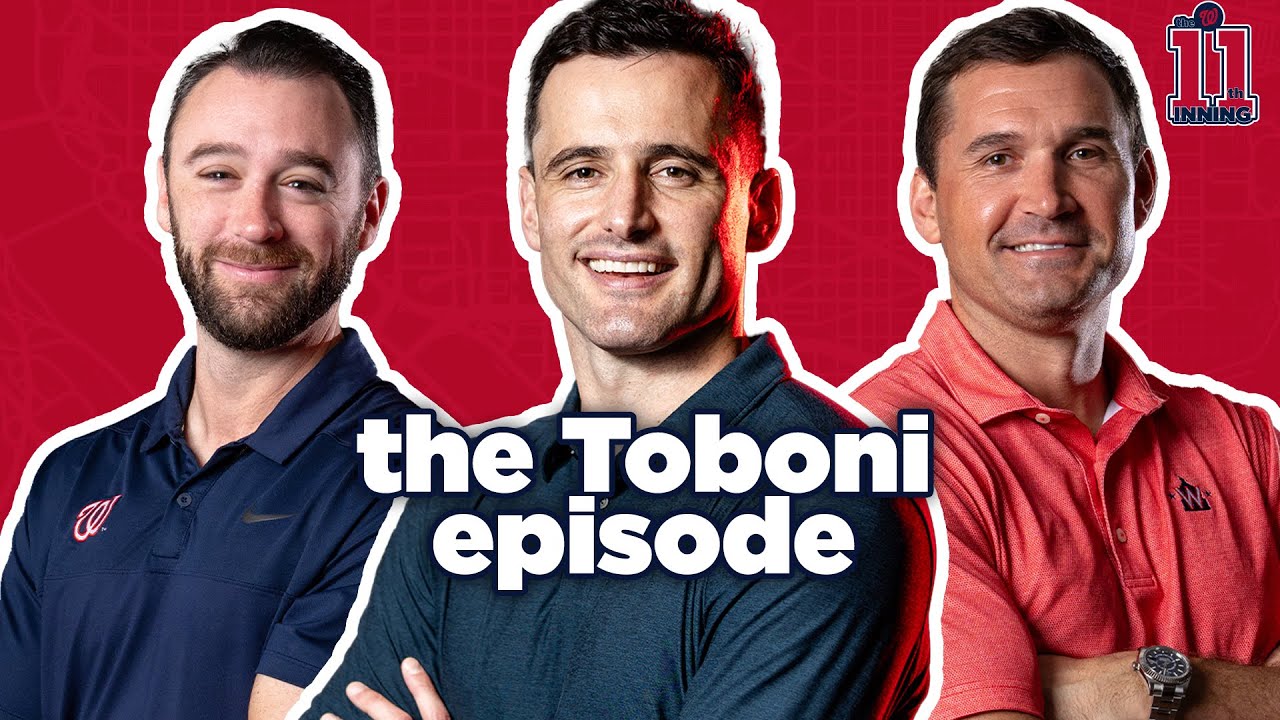
Episode FIFTEEN of The 11th Inning podcast with Dan Kolko and Ryan Zimmerman is here with brand new Washington Nationals President of Baseball Operations Paul Toboni–MLB’s youngest president of baseball ops.
The guys talk to Paul about his background, organizational philosophy, building a “scouting and development monster,” his approach to developing young talent and leadership, and his family.
Listen to the full podcast on:
Spotify: https://open.spotify.com/show/1iJD2NLqdqQqMVLuSCI1gu?si=mow6HBhDQry3F-QTqEWbXg&nd=1&dlsi=0d8e7969f7544c48
Apple: https://podcasts.apple.com/us/podcast/the-11th-inning-with-kolko-and-zim/id902526402
Megaphone: https://cms.megaphone.fm/channel/ENTDM3016621476
_____________________________________________________________________
Make sure you don’t miss any of your favorite videos from the Washington Nationals and subscribe now!
Make your way to Nationals Park to see all your favorite Nats live at nats.com/tickets.
Follow us to keep track of everything happening on the field, and off:
Twitter: http://twitter.com/nationals
Facebook: http://facebook.com/nationals
Instagram: http://instagram.com/nationals
6 comments
lets go, he knows what to do!
It is nice – we can actually hear him this time 😂
Ryan Zimmerman should be the next manager of the Washington Nationals.
Man, after what we been through, I'm really excited about this guy: what he says, how he acts, and his vision for the organization.
LFG
Hearing Bregman–a cheater–referred to as a role model is like fingernails on a chalkboard.
How do I submit a question?