
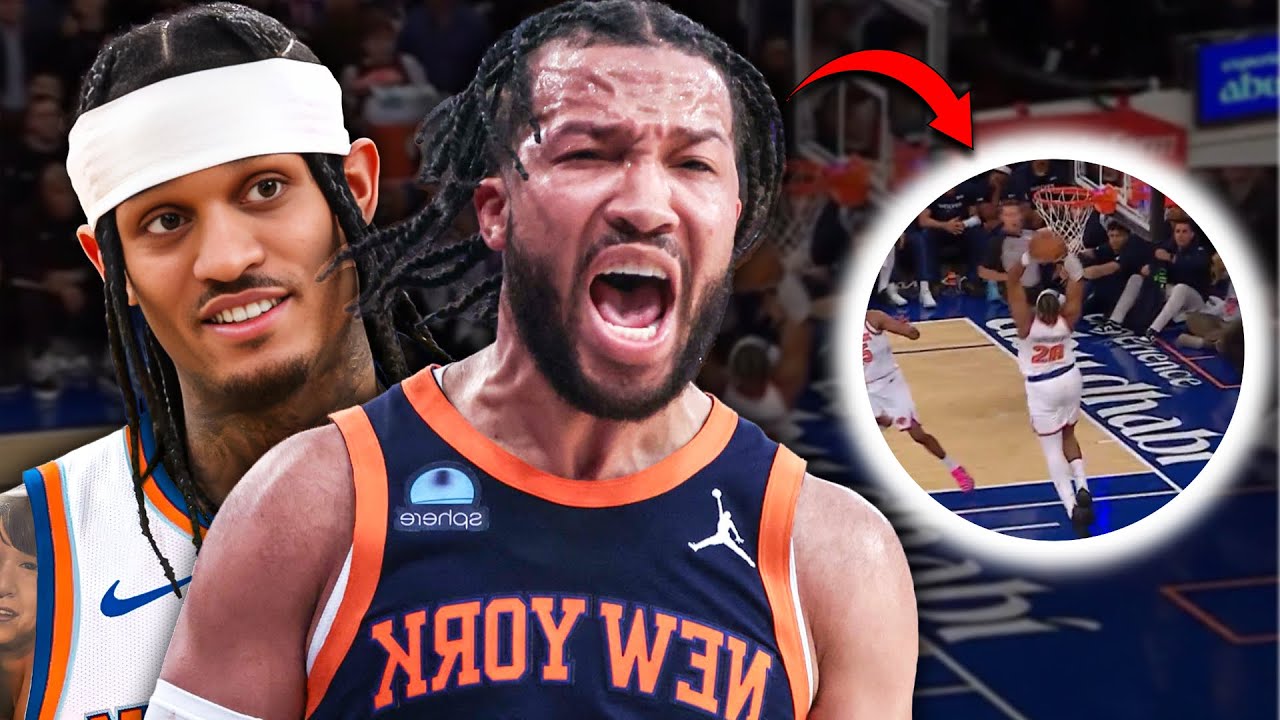
The Hidden Genius Of New Look Knicks…
The Knicks look insane right now. They’ve already played three games and they’ve won all three. The Knicks went undefeated in the preseason. And even though it’s only three games, that kind of momentum can be worth something when there’s a new coach in town. They took down Philadelphia twice and Minnesota once with the last game needing overtime. That one ended 100 to 95, and it showed that even when the offense drags early, they’ve got enough in the tank to close late. The biggest statistical standout has to be Mitchell Robinson. He averaged 10 rebounds in just under 15 minutes per game. That’s ridiculous production in short bursts. In the first matchup against Philadelphia, he grabbed 16 boards in only 18 minutes. That’s overkill in the best way. And out of those 10 rebounds per game, three were on the offensive glass, which tells you he’s not just camping under the basket. He’s active, aggressive, and timing it well. They also got consistent defensive activity from Miles McBride and Bridges. Both averaged 1.7 steals per game. That kind of pressure on the perimeter adds up fast when you’ve got length and quickness. OG also deserves credit for shooting 45.5% from three on five and a half attempts per game. That’s not just solid, that’s reliable perimeter production. Bridges wasn’t far behind, shooting 53.8% from the field overall. Now, offensively, they’re still trying to figure some stuff out. Against Minnesota, they scored only 63 points in the first three quarter. That’s a red flag for slow starts, execution issues, or maybe both. They needed overtime to break the 90 point mark, and that’s not exactly lighting it up. From deep, they were 15 for 57, which is about 26%. That’s a lot of bricks. So, the shooting’s been inconsistent, even though the effort and spacing look better. Josh Hart missed time with back spasms and got ejected in the opener, so his presence has been limited. Malcolm Brogden barely played in the opener and didn’t check in until the second half. That tells you Brown is still working out his rotation. Jordan Clarkson and McBride had stretches with Brunson in three guard sets, so there’s experimentation happening already. Mike Brown isn’t wasting any time trying to change the identity of the team. Under the previous regime, they were one of the slowest teams in the league, ranked 26th in pace. Brown is pushing to speed things up. He wants more ball movement, more spacing, and more threes. Under the last coach, they average around 34 three-point attempts per game. Brown’s talking about pushing that and into the 40s as long as the shots are good. That’s a philosophical shift and it shows in how he’s already mixing up lineups and not locking into a fixed starting five. Even Pakoma Daddyier, who’s still unproven, isn’t being guaranteed minutes. Everyone’s earning their spot. That’s how you build competition and accountability early. And Brown’s not just saying he wants pace, he’s backing it up, by pushing tempo and trying the new combinations in preseason. Even if the results aren’t all polished yet, it’s easy to focus on the perfect preseason record, but the margins matter. That first game was a win, 99 to 84. But the Sixers shot 3 for 36 from three. That’s more of a meltdown on their part than a defensive masterpiece from the Knicks. Still, you take what you can get. Defense was clearly a focus. And in the Minnesota game, the Knicks held Carl Anthony Towns to two of 11 shooting and forced three turnover. That’s strong team defense, especially since Towns isn’t exactly easy to contain. Now, let’s look at the guy running this operation. Mike Brown was officially hired on July 7th, and he’s the 31st head coach in team history. His resume isn’t just long, it’s packed. He’s a two-time coach of the year, and the second time in 2023, he won it unanimously. That’s never happened before. Over his head, coaching career, he’s got 454 wins and 304 losses, which is a win percentage just under 60. That puts him in pretty elite company. In the playoffs, he’s won 50 and lost 40, which is solid considering the teams he’s had. And when it comes to rings, he’s got four. One with the Spurs back in 2003 and three with the Warrior, 2017, 2018, and 2022. That experience matters when it comes to dealing with stars and adjusting mid-series. In Cleveland, he took the team to their first finals in 2007. That’s not nothing. They also went 66 and 16 in 2009, which is still their best record ever. more recently with Sacramento. He snapped a 17-year playoff drought and got them into the postseason. That was the longest playoff absence in the league, and he ended it in year 1. He’s also coached internationally, leading the Nigerian national team from 2020 to 2022, including at the Tokyo Olympics. So, when it comes to coaching in different environments, dealing with pressure, and getting the most out of rosters, he’s checked those boxes. Now, it hasn’t all been perfect. Sacramento let him go mid-season after starting 13 and 18 last year and in Los Angeles he didn’t last long with the Lakers. So there are reasons to be cautious, but every coach has stretches like that. The key is how you bounce back and right now Brown seems focused on building something more flexible and more modern in New York. One of the biggest questions is how well his system fits the current roster. Jaylen Brunson, Carl Anthony Towns, and OG are the core guy. None of them are crazy athletic run and gun types. So Brown’s going to have to tweak his pace and spacing goals to fit their styles. Still, having players like Mitchell Robinson on the inside and a deep bench with Brogden and Clarkson gives him options. If he can get the most out of the bench unit while managing the star minutes, they’ve got a chance to be more consistent over 82 games. He’s also emphasizing read and react decision-making on offense, which means fewer scripted sets and more player movement and autonomy. That takes time to install, but it could pay off if the players buy in. The defensive side is already showing signs of strength. Rebounding has been elite. And the perimeter pressure from guys like McBride and Bridges is giving opponents trouble. Even when the offense has stalled, the defense has kept them in games. Now preseason isn’t the best predictor of regular season success. These games are shorter in intensity. The lineups are rotating constantly, and a lot of stars are taking it easy, but the signs are still useful. What’s clear is that Brown is pushing tempo, shaking up rotations, and establishing a tone early. That tone looks a lot different from last year. With the new structure, if the shooting improves even a little bit and the stars stay healthy, this team could be a top tier contender in the East. The pressure is real, though. New York doesn’t wait long to turn the temperature up. But based on the preseason numbers and the early adjustments, they’re ahead of schedule. Brown’s not just another recycled hire. He’s got real credentials. And more importantly, he’s already doing things differently. Now, the challenge is translating all of that into regular season wins. They’ve started strong. Even if the shooting’s been uneven and the offense is still in progress, if the defense keeps holding strong and the pace starts paying off, they could surprise a lot of people. There’s a long way to go, but through three games, the numbers say they’re on the right path. But then I want to talk about the projected starting lineup of Jaylen Brunson, Bridges, OG, Carl Anthony Towns, and Mitchell Robinson isn’t just a talented group. It’s a unit stacked with complimentary skills, shooting balance, defensive range, and highle experience. It might not be the flashiest five in the league, but it might be one of the most functional on both ends. Each player brings a very specific tool. And when you lay the numbers out, it’s pretty obvious this group is built to win. Now, let’s start with Brunson. 26 points per game last season. That alone is enough to lock him in as the focal point. But it’s not just the scoring. He also averaged 7.3 assists, which means he wasn’t just putting up numbers, he was setting the table, too. And he did all of this while hitting 38.3% from beyond the ark. That kind of efficiency and playmaking from the point guard spot gives the Knicks a legit floor general who doesn’t need constant micromanaging. Brunson’s also got chemistry with Bridges and Hart from their Villanova days, which adds a layer of cohesion that most starting lineups don’t have built in. Now, Bridges is a little different. He’s not going to lead the team at scoring, but he doesn’t need to. He averaged 17.6 points, 3.2 rebounds, and 3.7 assists last season. He also shot an insane 50% from the field. That’s not a typo. He hit half his shots. And he’s versatile enough to guard the other team’s best wing while also spacing the floor. He fits like a puzzle piece. Bridg’s presence opens the lane for Brunson, especially if the three-point shot continues to fall. His length, athleticism, and ability to run the floor match perfectly with the faster tempo Mike Brown is trying to implement. Speaking of spacing and defense, OG adds a massive amount of both. 18 points, 4.8 8 rebounds, 2.2 assists, and 1.5 steals per game. That last stat’s key. OG’s defensive instincts allow the team to throw him on bigger wings, and even some stretch bigs without sacrificing helpside protection. He also shot 37.2% from three, which means he doesn’t need the ball to be effective. You can put him in the corner, let the offense operate through Towns or Brunson, and still trust that he’ll punish defenders who sag off. That combination of low usage scoring and high usage defense is rare. Then there’s Carl Anthony Town. He averaged 24.4 points, 12.8 rebounds, and over three assists last season. That’s a monster stat line. And just for good measure, he shot 52.6% from the field and 42% from three. That’s not normal for a guy his size, Towns gives the Knicks a true stretch five or stretch four, depending on how they use him, who forces Bigs to leave the paint and opens up cutting lanes for Bridges, Hart, and whoever else is slashing. The guy is a walking mismatch. You can’t put a traditional center on him without getting burned outside. And if you go small, he’ll eat you alive in the post. Lastly, Mitchell Robinson is the opposite of flashy, and that’s why he works here. He only averaged 5.1 points and 5.9 rebounds per game. But those numbers don’t tell the whole story. He shot 66.1% from the field and was one of the best offensive rebounders in the league. He’s the cleanup crew. He’s the rim protector. He’s the guy who doesn’t need plays called for him, but still changes the game by making opponents second guessess every drive. With Robinson anchoring the paint, Towns has more freedom to step out, and the Wings can gamble a bit more on steels, knowing there’s a 7-footer behind them. This message is sponsored by Raycon. It’s Raycon’s anniversary, and what better way to celebrate than with a deal on the Everyday Earbuds Classic. They’re now 20% off, so it’s the perfect time to grab a pair. Reliable, super comfy, and easy to take anywhere. You’ll see why they’ve been a fan favorite since day one. The Everyday Earbuds Classic are loaded with upgrades. Active noise cancellation, multi-point connectivity, so you can pair two devices at once, and an ergonomic fit that actually stays put no matter what you’re doing. The new colors are a total vibe. I went with cool mint, but you can pick your favorite. They feel less like earbuds and more like an accessory that matches your style. They’ve got everything you need. Quick charge, 10 minutes, gives you 90 minutes of play time. Up to 32 hours of battery life with the case and awareness mode perfect for when you’re walking the dog or running errands so you stay tuned in to what’s around you. Plus, Raycon backs it all up with a 30-day happiness guarantee. So, if you don’t love them, returns are easy. You’ve got nothing to lose. I use these and you should, too. Go to byracon.com/modernjam to get 20% off the Everyday Earbuds Classic. Now, in the small playoff sample where this group played together, the numbers weren’t perfect. 65 minutes, net rating of minus 3.7, but context matters. The previous starting lineup with Josh Hart instead of Robinson posted a worse net rating over 335 minutes, minus 6.2. That’s not a fluke. Swapping Hart for Robinson balanced the lineup defensively. It gave them a true interior presence, something they were missing when Hart had to play up a position. The net rating isn’t stellar yet, but this group is still new together. The spacing, defensive roles, and rhythm will improve with time. Mike Brown’s new system is going to push this lineup further. The Knicks were 26th in pace last season. That’s not just slow, that’s molasses. Brown wants to crank that up, get the ball moving, and get more shooters involved. The goal is over 43-point attempts per game. Last season, they averaged 34.1. So, this isn’t a tweak, it’s a complete makeover, and this lineup is built for that. Brunson can run the break. Bridges thrives in transition. OG is a finisher. Towns can pop or trail. Robinson grabs the board and gets it out quick. Everyone’s role gets elevated when the tempo goes up. Another interesting wrinkle is that Brown is using Robinson in the high and pinch post during preseason sets. That’s not something you’d expect from a guy with limited offensive creation skills, but it’s working. He’s making quick passes, setting hard screens, and letting the offense run through movement rather than isolation. that helps Brunson conserve energy and gets everyone involved early in the shot clock. It also helps that the team finally has a real bench. Josh Hart coming off the bench is wild when you consider he averaged 13.6 points, 9.6 rebounds, and nearly six assists per game. Most teams would start him and feel great about it. The fact that he’s a second unit guy shows how strong the starting five is. And when you’ve got bench players like Jordan Clarkson and Miles McBride into you, bringing scoring and pressure, it means the starters can play more defined minutes and stay fresh. Rotation wise, Browns got options. But what makes this group special is that they don’t need to all have the ball. Brunson’s the main creator. Towns is the secondary option. Bridges an OG playoff ball. Robinson just eats on the glass. It’s a clean hierarchy. That’s rare. Most teams are still trying to figure out roles. Five games into the season, the Knicks have those roles locked before opening night. One underrated stat is rebounding. Between Robinson, Towns, and OG, you’ve got a trio that can close out possessions on the defensive end. And with the increased pace, every board matters. Second chance points go up when Robinson’s on the floor. Defensive rebounding limits transition against. Every detail matters in close game, and this lineup has a ton of little advantages. Shooting wise, they’ve got enough spacing to keep. Defense is honest. Towns at 42% from three is a cheat code. OG at 37 keeps the corner locked. Brunson at 38 from deep forces the bigs to hedge higher and pick and roll. Even if Robinson isn’t a shooter, his gravity on the offensive glass means defenders have to account for him. That opens lanes and resets possession. Defensively, the combination of Bridges and OG on the wings is brutal for opposing scorers. One’s long and twitchy, the other strong and smart. Together, they make life miserable for perimeter creator. Then you’ve got Robinson protecting the rim and Towns doing just enough to be a factor. add in Brunson holding his own on the point of attack and you’ve got a top 10 defensive unit on paper. Brown’s track record supports this, too. His teams have always emphasized communication, rotations, and help defense that plays to the strengths of this group. They don’t need to play gambling defense because they’ve got solid stoppers and reliable help inside. It’s the kind of structure that doesn’t just look good, it travels. This lineup should hold up on the road just as well as at home. The Knicks haven’t had this kind of flexibility in years. They can go small by sliding towns to the five and bringing in heart. They can go big with Robinson and towns together. They can run, slow it down, switch everything, or hedge and recup. That’s a nightmare for opposing coaches. And it all starts with having a starting five that isn’t built around one star carrying the load. They’ve got five guys who all play different roles, all capable of playing 30 minutes a night, all fitting into the system Brown’s installing. That kind of balance is rare, and the numbers back it up. Scoring, rebounding, shooting percentages. Every guy in the starting lineup brings efficiency in at least one area. If this group stays healthy, the rest of the league better hope their chemistry takes time to build because if it clicks early, it’s going to be a long year for the East. The defense is already solid. The offense is a work in progress, but the ingredients are there and unlike past Knicks teams, this one doesn’t need one guy to play hero every night. They’ve got options. They’ve got balance. They’ve got a starting five that actually makes sense. But then we can talk about the bench. The Knicks bench for the 2025 to 2026 season might finally be more than just a breather unit. For once, the second unit isn’t just a pit stop before the starters come back in. It’s a weapon. The combination of Malcolm Brogden, Miles McBride, Jordan Clarkson, Josh Hart, and Gorchon Yabisella gives the Knicks versatility, shooting, veteran composure, defense, rebound, and yes, actual scoring depth. It’s a miracle. Starting with Brogden, the guy is basically the bench whisperer. He’s done this role before and he’s done it well. He’s a former sixth man of the year and averaged around 12.7 points, 4.1 assists, and 3.8 rebounds last season. That was on a bad Washington team, which makes the numbers even more impressive. He’s not some washed vet hanging on for a check. He’s a real playmaker, a secondary ball handler who can actually run an offense when Brunson sits. That alone already makes this bench more coherent than last year. And he does it calmly without hogging the ball or trying to force highlights. that’s valuable when things get messy. Then there’s Miles McBride. He’s not going to blow anyone away with highlight plays, but he’s exactly the kind of gritty, annoying defender that coaches love, and opposing guards hate. He’s been with the team since 2021, and after signing a three-year deal worth $13 million, it’s obvious the front office sees him as more than just insurance. During the 23 to 24 season, he played all 48 minutes in a regular season game. Not because it was a gimmick, because the coach trusted him that much. Sure, the 2025 playoffs weren’t kind to him. He averaged around four points on 26.9% shooting, but that doesn’t erase the progress he’s made. In the regular season, he was a 9.5 point per game guy with defense that traveled. Now, here comes Jordan Clarkson. And if you’ve watched basketball at any point in the last 5 years, you know exactly what he does. He scores a lot off the bench like clockwork. He leads the entire NBA in points off the bench since 2020 with over 4,500 points. That’s not speculation or narrative. That’s pure math. He’s one of the most consistent second unit scorers in the league. And he’s made a career out of coming in cold and lighting people up. He doesn’t need plays drawn up. He doesn’t need rhythm. Just give him the ball and the scoreboard moves. That’s a massive deal for a team like the Knicks, whose bench scoring has been a punchline in recent years. Josh Hart is the glue guy, not the glamorous title. But without him, everything falls apart. He’s coming off a season where he averaged 13.6 points, 9.6 6 rebounds and 5.9 assists. As a bench player, he also logged over 37 minutes per game, which is absurd and kind of hilarious. The man never leaves the floor. He’s built like a linebacker, rebounds like a power forward, and passes like a wing. He’s also the most flexible player on the roster, capable of guarding multiple positions, and switching on to basically anyone not named Joel Embiid. You want effort, Hart gives you effort. You want toughness, he brings that, too. And when the starters need to sit, having someone like Hart makes sure the drop off isn’t catastrophic. Rounding out the main bench group is Gershon Yabuselli. He’s the stretch big. He gives you front court spacing and shotmaking from the four or five spot. Last year with the Sixers, he averaged 11 points on 50.1% shooting. He’s not a star, but that’s not the assignment. His job is to come in, hit open shots, and keep the paint unclogged for drivers like Clarkson or Hart. He does that. He’s the kind of player who makes it easier for the bench unit to function like an actual offense instead of just surviving. So, what makes this bench group exciting isn’t just the talent, it’s the roles. Everyone has a purpose. Brogden is the organizer. Clarkson is the microwave scorer. McBride is the defensive pest. Hart is the connector. Yabellle is the floor spacer. None of them are stepping on each other’s toes. That wasn’t always the case in past Nick’s lineups. And that’s why this group has a shot at being more than just solid. Now, for the numbers that matter, Clarkson’s scoring speaks for itself, but it’s worth repeating. 4,589 points off the bench since 2020. That’s the top mark in the league. He’s not guessing out there. Brogden’s assist numbers have been solid across multiple seasons, including his time in Boston when he was running point for a playoff team. Hart is posting near triple double averages from the forward spot. And Yabiselli’s shooting keeps defenders honest, which means the driving lanes stay open. Even with those numbers, the defense isn’t being ignored. McBride’s reputation is built on defense. He pressures the ball, forces turnovers, and makes life hard for backup guards. Hart’s defensive versatility means the Knicks don’t need to hide anyone. Brogden is experienced enough to rotate and communicate. And even Clarkson, who isn’t exactly known for lock down, die defense, at least isn’t a complete liability when he’s surrounded by guys who know what they’re doing. The risks, sure, they’re there. McBride shot 25% from three in the playoffs. That’s not ideal. Brogden’s efficiency dipped last year, including a rough stretch from deep. Clarkson’s 33 years old and could show some wear if his minutes get too high. Yabuselli is unproven in high stakes moments, and if Hart has to carry too many minutes again, it could wear him down, but the floor is way higher than it’s been. The Knicks used to fall apart when the starter set. That’s not an exaggeration. It was like flipping off the power switch. Now, they can keep the scoreboard moving and keep the game manageable. That’s not just a luxury. That’s the difference between winning 50 games or sliding into the playin. Rotationwise, Mike Brown has options. He can pair Brogden with Brunson for dual ball handlers. He can go with Hart, Bridges, and McBride for a defense first lineup. He can run small with Hart at the four or go big with Yabuselli next to Robinson. And in lateg game situations, he’s got multiple players he can trust to close if someone fouls out or struggles. There’s also continuity. McBride and Hart have been in the system. That helps when installing new schemes. Brown doesn’t have to start from scratch. Clarkson and Brogden are professionals who’ve played for different coaches and systems. They’ll pick it up fast. And Yaboselli’s role is pretty straightforward. Space the floor, grab rebounds, stay out of the way. Another underrated element, the injury insurance. If one of the starters misses time, this bench group can fill the gap without turning into a disaster. Hart can start at either forward spot. Brogden can run the offense. Clarkson can handle more touches. McBride can shift into the starting lineup and bring the same energy. It’s not ideal, but it’s doable. Bench scoring has killed the Knicks in recent playoff run. That’s just a fact. In the 2025 postseason, the second unit was criticized for disappearing. McBride’s four-point average on 26% shooting was a big part of that. This bench is being built to fix that. Clarkson is a walking bucket. Brogden can hit from deep. Hart is a triple double threat. Yabusel spaces the floor. Even if McBride has another off night, the scoring load doesn’t fall apart. In defense, the starters don’t have to carry it all. McBride and Hart set the tone. Brogden and Clarkson can hold up. Yabisellle can switch and close out. They won’t be top five defensively as a unit, but they don’t need to be. They just need to not be off. And this group looks far from awful. Watch for how Brown staggers minutes. Who gets the six-man minutes? Will Brogden or Clarkson run with the starters? Can Hart give enough front court minutes without getting overworked? Those questions will be answered fast once the season starts. Also, watch the splits. The on-off numbers for Brunson and Towns will show how well the bench performs without their stars. If the bench units can go even or even slightly negative instead of collapsing, it changes everything. The difference between plus two and minus 10 in those minutes is massive. If one or two of these guys get hot in a playoff series, that could swing a game, that could swing a series. The bench isn’t just here to survive. They might actually matter. And for once, it feels like the Knicks planned it that way. And if there’s a year for the Knicks, it’s this one. The Knicks aren’t exactly walking into an empty conference, but for once, they might not be climbing a cliff either. With the injury updates flooding out of the Eastern Conference like it’s some kind of cursed prophecy, New York suddenly has a much cleaner shot at making a real run to the finals. And no, that’s not just wishful thinking or preseason noise. It’s math, health, and timing. Three things that never seem to line up for them, but somehow are doing just that. Now, let’s start with the most basic and most important point. Their own roster is intact. Jaylen Brunson, health, Bridges, good to go. OG on the floor. Carl Anthony Towns still seven feet tall and still bombing threes at a terrifying rate. Mitchell Robinson cleaning glass and swatting shots. The only real issue so far is Josh Hart’s back spasms and even that is being handled with caution, not panic. There’s no ligament tear or stress fracture nightmare happening in New York right now. That’s not a small thing. Now compare that to uh what’s going on around the rest of the Eastern Conference and the difference is staggering. Boston, which was supposed to be a major roadblock, lost Jason Tatum to a ruptured Achilles. That’s their best player. That’s the guy they build around. He’s not just dayto-day. He’s out for most of the season. Chrisaps Porzingis gone. Drew Holiday gone. Luke Cornet also gone, though probably not the make orb breakak guy. Still, the core of what made the Celtics dangerous is now either injured or relocated. That’s a downgrade across the board, and it opens up one of the top seeds in the East for the taking. Indiana, same story, maybe worse. Tyrese Hallebertton blew his Achilles in the finals and might not see the floor at all this year. That’s their engine, their playmaker, their floor gym. Miles Turner left in free agency. That team was a potential rising threat. And now it’s a rebuilding year with no warning. They won’t be pushing anyone out of the way come May. Then you’ve got Cleveland, the one team that could still make things complicated. But even the Cavaliers are dealing with their own injury circuit. Daryus Garland had toe surgery and is expected to miss a little. Max Struce also went down with a Jones fracture and is out for at least three to four months. Their guard depth, it’s paper thin. Ty Jerome is gone and they’re reportedly scrambling to sign Beasley just to have enough playable bodies in the back court. That’s not dominant. That’s survival mode. And while Garland and Struce will eventually come back, let’s not pretend like you can just walk off toe surgery or a fractured foot and instantly play 40 minutes of playoff basketball. These injuries don’t just knock guys out, they linger, they alter rotations, and they break rhythm. So, even if Cleveland looks better by March, they’ll have chemistry issues to work through. Meanwhile, the Knicks, assuming they avoid their own bad luck, will have had a full season to gel, adjust to Mike Brown’s system, and establish a consistent identity. Speaking of Brown, yes, the offense has been clunky in spots. There’s no sugar coating that. They had a preseason game where they scored only 63 points through three quarters and shot 15 for 57 from deep. That’s not good, but the key here is that they still won that game. The defense was tight. The rebounding was solid. The hustle was there. And the offense is going to take time. Brunson has already admitted they’re still figuring it out, but that’s normal when you’re switching from a slow ASO heavy style to a read and react system that relies on pace and movement. And more importantly, they’ve been winning through the growing pains. They’re undefeated in preseason. That’s not championship level validation, but it’s a clear sign that the floor is high. The system is new, but the results are still coming. That means once the offense starts clicking, things could escalate quickly. In terms of seating, the opportunity is wide open. With Boston and Indiana fading due to injury, and Cleveland’s likely limping through the early part of the season, the Knicks can make a real run at a top two seed. That’s not just a nice bonus, it’s a strategic advantage. A higher seed means home court, easier first round matchups, and avoiding the few remaining healthy contenders until the later rounds. It’s also a chance to build confidence. If the Knicks go into the All-Star break with one of the top records in the conference, that changes the narrative. It gives the team belief. It gives the coaching staff clarity and it gives the fan base something that’s been in short supply for well decade hope based on actual results. And let’s talk matchups for a second. The Knicks are built to win playoff game. Their top five can all defend. They can rebound. They don’t rely on one guy carrying the offense every night. and they can survive cold shooting stretches because they’re not built around one gimmick or one matchup. They’ve got layers. They’ve got options. They’ve got a bench that can keep things afloat. And in a conference where teams are losing key players left and right, that kind of balance becomes even more valuable. If they stay healthy, and that’s always a big if, they’re in the top tier, not fringe contenders, not dark horses, legitimate title threats out of the east. The injuries to Tatum, Hallebertton, Garland, and Strus aren’t just unfortunate, they’re game-changing. They shift the balance of power in a very real, very measurable way. And this isn’t just some hype machine spinning its wheels. The facts are the facts. The East lost false stars to serious injury. The Knicks did not. Their coach is healthy. Their starting five is healthy. Their bench is healthy. The system is new, but the infrastructure is intact. That matters more than ever when other teams are trying to duct tape their way through rotation. The Knicks don’t need everything to go perfect. They just need to keep trending upward while everyone else is scrambling to stay afloat. build chemistry, stay healthy, win the games you’re supposed to win, and maybe catch a few of those undermanned contenders while they’re still figuring things out. It’s not a guaranteed run. It never is. But this might be the clearest path they’ve had in years. There’s no LeBron in the East anymore. There’s no fully loaded Celtics team. There’s no healthy Pacers squad or unbeatable Cleveland core. There’s just a bunch of teams trying to patch things together and one Knicks roster that somehow is still standing with all its limbs attached. This season’s not about catching lightning in a bottle. It’s about consistency, timing, and taking advantage of a rare alignment of events. Injuries have knocked out some major players. The Knicks didn’t flinch. They’re still standing. And for once, the path to the finals doesn’t require miracles. It just requires discipline, execution, and staying the course. So, how good are their chances? Vary. Not because they’re flawless, not because they figured everything out, but because everyone else is breaking down. And they’re not. Because the East just got a lot thinner. And the Knicks just might be deep enough, tough enough, and stable enough to walk right through the
Go to BUYRAYCON.com/MODERNJAM to get 20% off the Everyday Earbuds
Classic.
check out the new channel please https://www.youtube.com/@bballexplainedd
subscribe for more nba content!!!!
inquires: ModernJamMedia@gmail.com
2 comments
Excellent analysis.
Great video