
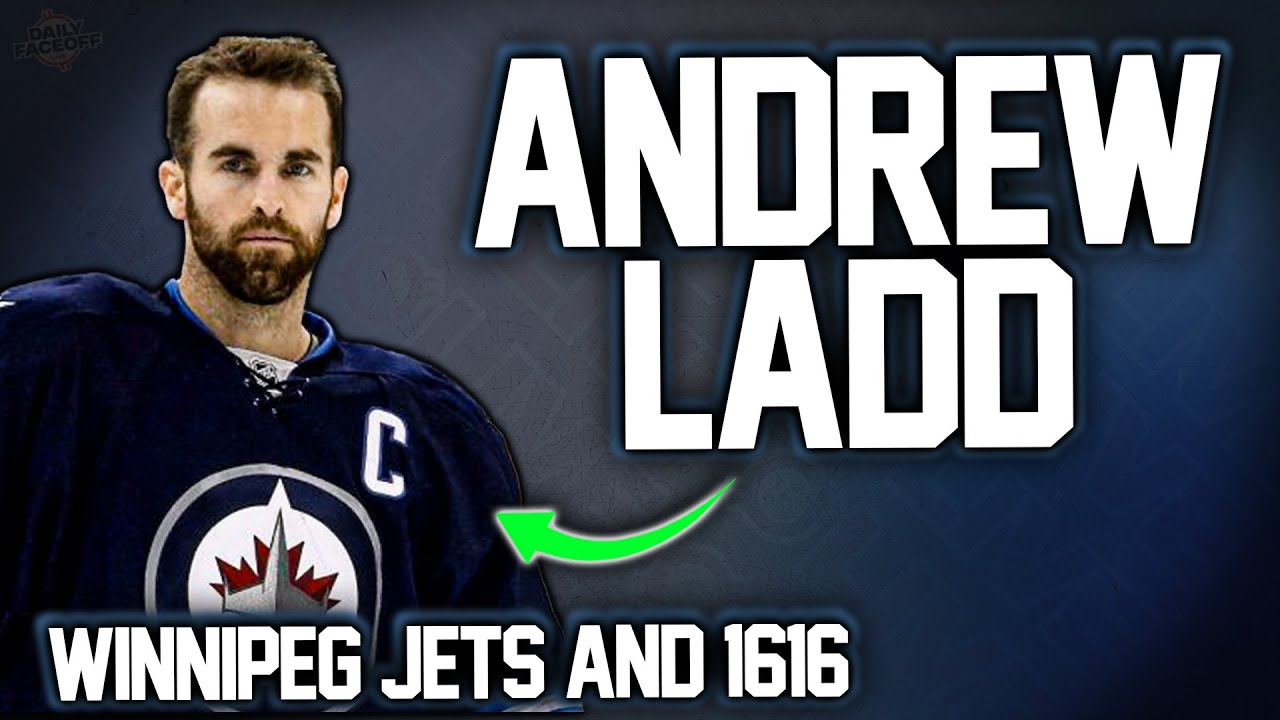
Andrew Ladd Interview | Winnipeg Jets, Jonathan Toews & 1616
Very excited to be joined on the show by a veteran of 1,01 NHL games, two-time Stanley Cup champion, the man whose jersey hangs in the rink in Maple Ridge, British Columbia. Andrew Lad joins us. How’s it going, Andrew? Doing good, guys. How you doing? Fantastic. Uh, we’re going to talk a lot about the 1616 project and the Lad Foundation. But something that happened last night that I’m really curious to get your thoughts on the return to the ice for Jonathan Taves, his first game in 910 days as a former teammate of Taves. I guess how unsurprised are you that he’s able to make a comeback like this? Yeah, I don’t know if I’m surprised. I think you still after taking that long off, you’re wondering how long it’s going to take him to to get back into just the pace of the game. I don’t think, you know, his skill level and his IQ um is always going to be there. I think it’s the pace and getting up to speed with such a fast young game now. So, uh it’s great to see him back and he played a lot last night, so it’s a good way to to get back in it. Yeah, you kind of got to get right back on that horse, right? And you’re a guy just like me. We lasted well into our 30s. It’s it’s hard to play and you know, obviously your ties to Winnipeg, right? Like you know, you played a lot of hockey there. What’s your thoughts on everyone now? Like the big contracts being signed in Winnipeg, keeping Shyley, keeping Hellabuck Kyle Connor the next guy to drop. You know, obviously that was a market where a lot of guys didn’t really want to go to at times. You know, what does that mean to you and what’s your take on the Winnipeg Jets here? Yeah, I think it’s it’s one of those places where you get there and um the organization treats you really well. Uh they got great people. It’s a great community. Uh and once you settle in um you know, it’s a place that that you’d want to stay. So I I think you’ve seen that with with those core guys sticking around. Uh I think that they have a great group that it’s going to be a good team for a long time. And I I at this day and age, I think that that’s the most enticing thing. If you can have uh an organization or a team that is going to have a chance to win every year, then then that’s uh that’s a primary thing for for most guys. I mean, everyone talks about the cold, but you’ll suck it up through the cold if you think you have a shot at the Stanley Cup. You’re spending most of your days in that rink anyways. So, uh you know, Hutzel attest like you’re you’re literally going from the house to the rink and if you have kids, it’s it’s uh there’s not much else going on in in in your life anyways. So, um, yeah, we we had I I had nothing good but good things to say about Winnipeg. We we enjoyed our time there, the community, the people. So, I think people really really feel that when they’re when they’re there. I want to talk a bit about your new venture, 1616. Give me give the listeners sort of the base explanation of what it is and why it’s your passion. Yeah, we’re this is our oh, I think it’s our fourth year. Uh, and we we’ve doubled enrollment every year. So, we’ve gone from 10 teams in a pilot to over 438 last year. Um, it’s a it’s a free digital program that um we try to teach kids the the Buffalo mindset. So, focuses on on uh more of the mental game than the physical game. Uh I think uh this day and age we spend so much time on the uh the physical aspect of sport and we expect kids at such a young age to have um a level of maturity that I don’t know if they’re ready for yet. So 1616 is there to to come in and really teach them some foundational skills in the mental side. Uh and uh in the buffalo mindset, which is it’s called 1616 because that’s when they coined the term buffalo. Um because when a storm hits, uh buffalo is the only animal that doesn’t run away from the storm. So they band together and go into the storm together. So that’s the the mindset we’re trying to teach kids is, hey, when when tough things hit, don’t run away from them. um leverage the people around you and go towards those and and those will make you stronger moving forward. You know, Andrew, how did this come too? Right. Like, you know, for me, I I reflect now as a player with my career and I my kids are in sports, we’re playing and a lot of times it is educating parents too, right? You people get this concept of like what hockey is and you I guess I guess for me as I retired, you reflect on all the things the game taught you like how did this come to fruition that you wanted to be involved in this? Yeah, my my wife and I had always been um supportive of of mental health and I think one of the things we really noticed was uh the space was very reactive and not very proactive. Uh and and you’ll you know Huts as an athlete you get that you you want to build a foundation um that is proactive. So you you know when you get hit wrong or when something happens that your your body’s able to sustain that. So I think it makes makes sense to me for us to get to kids at a young age and build that foundation. Um, and it really was happened to me, you know, I was in with the Islanders. Uh, it was COVID year. Um, and I, so they didn’t want me with the NHL team. They didn’t want me in the minors. So, I was literally skating by myself every day. I I would text Lou at probably, you know, Islanders would play. I’d text him at 10:30 at night and be like, “Hey, Lou, what can I come? What time can I come skate tomorrow?” He, you know, the dot dot dot shows up on my phone. I’m like, “Okay.” He’s gonna answer me. And, uh, he’d be like, “Hey, you can come in at two tomorrow.” Like, “Okay, cool.” So, I’ I’d come in at 2 the next day, I’d work out, skate by myself. Um, and while I was doing that, I was working with a mental performance coach and and he’s like, “Hey, man, like you can you can just keep skating by yourself the whole year, but like, you know, what would you be proud of at the end of this year?” Um, and and that was really the start of of 1616. I was going through something mentally tough and trying to tap into a different purpose and that was really the start. So that catapulted us to with to take an idea into hey how do we actually take take this into action. Um and and that is that is why 1616 exists today. That’s so good. I I I think for me like even reflecting on my time with you in Arizona was a tricky time in my career, right? I had an ankle injury. I came back was hurt again. It was kind of the beginning of the end for me, right? and and as you start to get into that phase of your life when you know hockeyy’s coming to an end, what becomes important for you and you know where do you change right? So I think for you like is this something where you want to keep growing? I know you have a cast of guys involved right you have so many great NHLers you’ve played with that are involved and I I feel like this must be an easy cell to get guys to help out and I’m sure there’s a lot of interest from players as well. Yeah, guys have been fantastic. Um and and I think what makes it unique is we actually use uh the power of story. So we teach all our all of our curriculum which is confidence, connection, and character um through the stories of current and former NHL and PWHL players. So the kids are learning from, you know, uh Mark Gerardano and and how he kind of just kept working on his own game and and and he was a late bloomer and everything wasn’t happening for him when he was 10 and 12. he just kept focusing on, hey, how do I improve every day and what what mindset was needed for that in order to to get to that next level. And obviously, he ended up having an amazing career. So, kids are able to kind of see him and and understand like, oh, like a lot of NHL players, and you’ll know this, is like they’re going through the same thing that that 10-year-old kid is is going through, right? They have confidence issues. They they they wonder, oh, like where do I fit into this group? Um, they have moments of of resilience that they need to tackle. um throughout the season. So, uh the idea that that that’s not happening at an NHL level is is is uh it’s not a reality. And I think the more that we can talk about it as as pros, um the more um kids understand that, hey, that’s just a normal thing that we need to to figure out as human beings. And um and guys understand that at that level, so they’re more than happy to impact that that next generation of players. I’m looking on the site here. First off, it’s totally free, which I think is awesome. That’s such a good little gateway and it just kills one of those barriers to entry. But I’m reading 10-week program designed to engage players, hockey parents and coaches. And I mean a lot of people I mean all the people watching listening to the show are hockey parents. Explain that angle of it. Like a hockey parent who’s signing up for this. What are they going to get from the program? Yeah. I I think first of all there’s that knowledge base that you you acrew over the course of of your career and and by the end of their career you’re like, “Oh, okay.” like I’ve learned a lot from like making mistakes and and and just experiencing all these different things and um we also understand that hey parents parents have young kids and they might not have that same knowledge base. So uh to a understand why those concepts are important and then and then b hey hey how do I actually reinforce those with my kids. So and same with coaches right coaches they’re volunteers they’re trying they’re figuring stuff out at um on the go. So part of it is is for us is really hey how do we how do we get that knowledge and support to those parents and coaches so that they understand a why these concepts are important and then b hey hey how do I support these kids in these concepts ensure that like we’re doing our best to uh to help develop these kids not only as hockey players but as as humans too. Yeah. Oh, that’s that’s great, too, cuz I feel like for me there’s that transition period as a player when you’re done and obviously I’ve kind of got my foot into media and this has got to be rewarding for you, right, with your experiences being able to share them and be around this and you know, is there a plan to continue to grow this or like this is just the initial phase and when do you guys come out? Next Monday, right? Is that right? Yeah. So, it the program opens I I’ll give you a few things on the program. It opens October or 13th. So that’ll open to and it’s any kid um ages it’s you 13 is kind of the age 10 to 12. So if you’re a 10 to 12 year old hockey player um or team like this this program is completely free um and then it’ll stay open until January 1st. So teams can join at any time from from October 30th to January 1st and go through the 10-week program. Um and uh it literally takes 20 minutes per week. So, um, that’s not 20 minutes a day, that’s 20 minutes a week. So, you you’ll watch like a five or six minute video, uh, every week. And, and I did it with my team last year, and we did it as a group. So, before practice, we’d watch the five to to six minute video, have a little discussion about the concept and why it was important, what they the kids were thinking about it. Uh, and then as a coach or parent, you’re just trying to find different moments throughout the week, which, you know, the great thing about sports is there’s lots of those moments to to reinforce those those concepts. I threw the link in our YouTube chat if people want to check it out, 1616.org, uh, if you’re a podcast listener and you want to go find it. I did promise the YouTube chat I’ I’d send you one of their questions, so you got to bear with me here. Bert sent one in. And, uh, he wants to know, “What was your first impression of Dustin Bufflin as a teammate? And do you have a good big Buff story? Oh man, I got lots of Buff stories. Um I mean my my first like I’ll tell you the first time I met Buff or I didn’t meet him. I ran into Buff, I’ll say that, literally on the ice, but he was playing at Prince George and I was in Calgary and and at that time I I was running through everything and um I’d finished all my checks and Buff was playing in PG and I’m like, who is this guy? And he’s just like his looked like he was wearing no shoulder pads and and uh he was playing D and every time first time I I have him lined up and I think I’m like dead to right so I’m going to absolutely bury this guy. and I hit him and I was like, “Oh, just knocked every last bit of oxygen out of my body.” Uh, so that was my first impression of Buff. Uh, and then you get to see him throughout, you know, we play together the same age, so throughout junior and then, uh, into coming into Chicago, just seeing how how he was. But, um, man, what’s a good Buff story there? I I think there’s there’s just like the pure strength of Buff. Like one thing it was funny there was kind of a switch for him when uh in the playoffs in 2010 we won. It was like in the finals he finally figured out how big and strong he was and I think everyone remembers like you know he he buried Chris Pronger in the corner and you know Fran is this massive human being. It doesn’t happen very often to him. So there was like a level of confidence that uh that he he gained from that. And I I still remember I got married the summer after um our year in Atlanta and he was in the pool with probably five massive humans on him and they were just wrestling. It was like it was like Ben Eager and Taves and Sebrook and he was like had all four of them on his shoulders and was just tossing them around the pool. Um and and that was and and the just the biggest smile on his face and that was big buff every day just like this uh big teddy bear but um didn’t truly understand his own strength and when he figured that out he was pretty unstoppable. That’s great. Uh I appreciate the time Andrew. This is great. Again 1616.org a really really cool program for people to go check out. Thanks for popping on. Thanks guys. Appreciate you having me. Hey hockey fans. If you enjoyed that video, then make sure you hit the subscribe button right here on the Daily Face Off YouTube. We have you covered for everything you need. Exclusive interviews on the sheet with Jeff Merrick, all the latest hockey news on Daily Faceoff Live, and you can always get your morning started with Johnny Lazarus and Colobby Con on Morning Cup of Hockey. Don’t miss a minute. Hit that subscribe button.
Andrew Ladd joined Daily Faceoff Live to talk about the return of Jonathan Toews and his time with the Winnipeg Jets!
We also took some time to talk about his mental health and hockey training initiative – 1616.org
#NHL #WinnipegJets #Jets #AndrewLadd #JonathanToews #1616
If you liked this, check out:
🚨 OTT – Coming in Hot Sens | https://www.youtube.com/c/thewallyandmethotshow
🚨 TOR – LeafsNation | https://www.youtube.com/@theleafsnation401
🚨 EDM – OilersNation | https://www.youtube.com/@Oilersnationdotcom
🚨 VAN – CanucksArmy | https://www.youtube.com/@Canucks_Army
🚨 CGY – FlamesNation | https://www.youtube.com/@Flames_Nation
🚨 Daily Faceoff Fantasy & Betting | www.youtube.com/@DFOFantasy
____________________________________________________________________________________________
Connect with us on ⬇️
Link Tree: https://linktr.ee/daily_faceoff
💻 Website: https://www.dailyfaceoff.com
🐦 Follow on twitter: https://x.com/DailyFaceoff
💻 Follow on Facebook: https://www.facebook.com/dailyfaceoff
Daily Faceoff Merch:
Daily Faceoff
1 comment
Nice to see ladder representing jets well.