
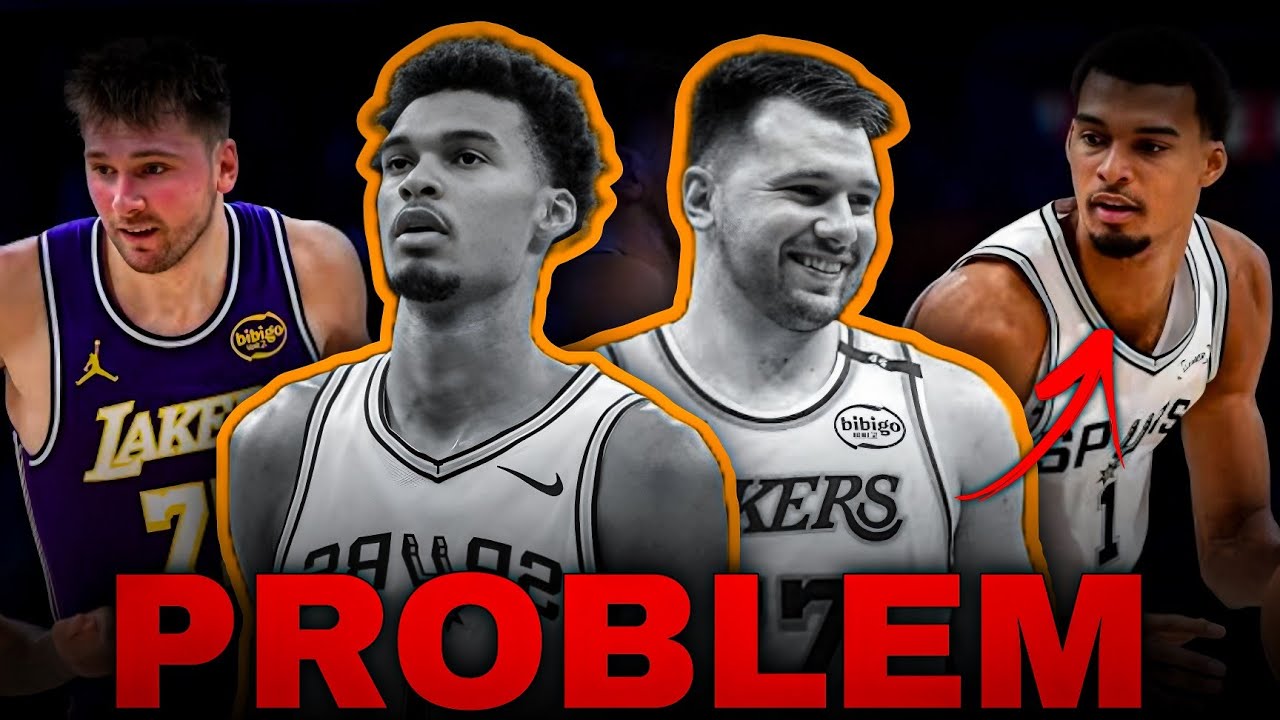
What Went Wrong With San Antonio Spurs And Victor Wembanyama?
The San Antonio Spurs walked into the Crypto.com arena carrying the weight of an unprecedented five-game winning streak. A franchise first that had every indication this might be the season their rebuild finally bore fruit. They left with a 118 to 116 loss to the Lakers. Their second consecutive defeat that exposed vulnerabilities neither the coaching staff nor the players had adequately prepared for. What transpired wasn’t simply a matter of missed shots or unfortunate bounces, but rather a systematic dismantling that revealed how quickly momentum can evaporate when a young team encounters adversity it hasn’t learned to overcome. Victor Webbyama finished with 19 points on five of 14 shooting alongside eight rebounds and five turnovers before fouling out with 1 minute and 40 seconds remaining, marking a dramatic departure from the dominance he displayed during the team’s perfect start. The French Phenom, who had been averaging over 30 points during those opening victories, suddenly found himself grappling with defensive schemes he openly admitted he hadn’t encountered before. He acknowledged that the game feels fast right now and that he personally hasn’t seen this kind of defense from teams, suggesting that opposing coaches had identified a blueprint for slowing him down. The Lakers defensive strategy wasn’t revolutionary in concept, but proved devastatingly effective in execution. They deployed smaller defenders like the 6’8 Rui Hachimura and 6’3 Marcus Smart to check Webyama, keeping him away from the basket and luring him into offensive fouls. This approach borrowed heavily from what Phoenix had implemented just days earlier, where the Suns used the 6’6 Royce O’Neal as the primary defender while sending soft doubles through Ryan Dunn. The effectiveness of assigning shorter, quicker defenders rather than traditional centers to guard the 7 foot4 giant speaks to how teams are willing to sacrifice conventional wisdom when facing unique talents. What made this defensive scheme particularly troublesome for San Antonio was how it exposed their lack of secondary scoring options capable of punishing aggressive attention on their franchise player. One reason teams can defend Webyama so aggressively is the lack of other offensive threats to make them pay. When defenses commit to doubling before Webama even receives the ball, the onus falls on his teammates to capitalize on the resulting fouron-ree situations. The Spurs repeatedly failed this test with all five starters finishing in double figures, but combining to shoot just 33.9%. This inefficiency wasn’t merely statistical noise, but rather a fundamental inability to execute when the game demanded they step forward. The foul trouble that plagued Webbyama throughout the contest represents particularly concerning territory for a player who had built a reputation on defensive dominance without compromising his availability. Earlier in the season, he had been averaging historically low foul rates while maintaining elite shot blocking numbers, a combination that separated him from virtually every rim protector in league history. This marked the second time in seven games that Webyama fouled out, surpassing his total from the previous two seasons combined. The shift suggests either officials are calling games more tightly or opposing players have identified ways to draw contact against someone still learning the nuances of NBA positioning. Smart, the 2022 defensive player of the year, proved instrumental in drawing charges and perhaps exaggerating contact, employing veteran tricks that younger players haven’t yet learned to avoid. When Banyama picked up his sixth foul when he committed a charge drawn by Hachimura, removing him from the game precisely when his team needed him most. The timing couldn’t have been worse as the Lakers trailed 106 to 97 with just over 7 minutes remaining before holding San Antonio without a field goal for nearly 4 and 1/2 minutes. This defensive collapse in crunch time revealed another dimension of what went wrong for the Spurs. After building what should have been a comfortable cushion, they surrendered a 21 to10 run that the Lakers used to close the game. The inability to execute offensively during this crucial stretch stemmed partly from Webanyama’s absence, but also from fundamental execution failures that younger teams often struggle to overcome. Stefon Castle committed six of the Spurs 19 turnovers, exemplifying how mistakes compound when pressure intensifies. Beyond the individual performances and defensive adjustments, the game exposed deeper issues about how this Spurs team responds when their initial game plan proves insufficient. They made sloppy inbound passes that got swiped away, committed turnovers before clearing the ball after defensive rebounds, and allowed offensive rebounds off free throws and long misses. These aren’t sophisticated basketball concepts that require years of experience to master, but rather fundamental aspects of winning basketball that championship contenders execute naturally. The fact that San Antonio repeatedly failed these basic tests suggests their perfect start may have bred complacency rather than confidence. The free throw disparity tells another story about how this game unfolded. San Antonio had three players foul out, while Los Angeles had three players with five fouls, resulting in a combined 84 free throw attempts with the Lakers making 34 and the Spurs making 31. In a game decided by two points, losing by just three made free throws seem significant. But the deeper issue was how the Spurs accumulated those fouls. They weren’t defending aggressively and getting whistled for legitimate contests, but rather committing silly fouls that stemmed from poor positioning and frustration. The closing sequence encapsulated everything that went wrong for San Antonio down the stretch. After Kelly Olen’s putback layup cut the deficit, Marcus Smart committed an inbound violation with 1.2 seconds remaining, giving the Spurs one final possession. This represented the kind of mental mistake that experienced teams simply don’t make in critical moments. The subsequent sequence where Julian Champany drew a foul while trying to tip in the inbound pass but missed his first free throw with nobody able to convert the second miss at the buzzer felt almost predestined given how the quarter had unfolded. What makes this loss particularly instructive for understanding the Spurs current trajectory is examining what went right during their five-game winning streak compared to what faltered against both Phoenix and Los Angeles. During those opening victories, Webanyama was shooting over 56% from the field while averaging more than 30 points and 14 rebounds. Opponents were still trying to guard him conventionally, assigning traditional centers who lacked the foot speed to stay with him on the perimeter or the physicality to contain him in the post. Once teams realized smaller, more mobile defenders could disrupt his rhythm while sending timely doubles, the entire offensive ecosystem collapsed. The adjustment period required for Webanyama to counter these new defensive looks represents a critical juncture in his development. He spent the preseason fixated on playmaking and playing every role besides center, but largely abandoned that since the start of the regular season by playing primarily in the post. This shift toward a more traditional big man role has made him predictable when defenses commit multiple bodies. The solution likely involves reverting to some of those preseason principles, using his ball handling and passing to attack doubles before they fully form rather than catching the ball in the post where help defenders can easily converge. The personnel issues plaguing San Antonio cannot be overlooked when assessing this loss. They entered the game missing key rotation players who would have provided both depth and specific skill sets needed to counter Los Angeles’s defensive strategy. The absence of these players meant extended minutes for less experienced options who weren’t ready for the moment when the game hung in the balance. Championship teams overcome such obstacles through veteran leadership and systematic excellence. Young teams trying to establish their identity often crumble, which is precisely what happened. Looking at what the Spurs could do right moving forward requires understanding that this loss, while disappointing, provides valuable information about areas requiring immediate attention. First and foremost, they must develop counters to the double team strategies that will now become standard operating procedure for every opponent. This means drilling specific actions where Banyama receives the ball in advantageous positions, ideally at the elbow or in short roll situations where his passing angles remain viable. When doubles arrive, predetermined rotations must occur without hesitation. With shooters relocating to open spaces and cutters attacking the scrambling defense, the three-point shooting must improve dramatically for this offensive system to function against sophisticated defenses. The best way to punish double teams on Webyama is to make three-pointers when the French big man kicks the ball out, and they simply haven’t done that. Until perimeter shooters consistently convert these open looks, defenses will continue sending aggressive help without fear of consequences. The coaching staff needs to emphasize shot preparation, ensuring players are in their shooting pockets when catches occur rather than needing extra dribbles to get comfortable. Addressing the foul trouble requires both technical adjustments and mental discipline. Webyama needs to understand that officials will call charges when he lowers his shoulder or creates contact on drives. His size advantage means he doesn’t need to initiate contact to score. Yet, young players often force issues when frustrated. Learning to use his length for finesse finishes rather than power moves will reduce foul calls while maintaining offensive efficiency. Defensively, he must recognize situations where veteran players like Smart will sell contact, avoiding questionable challenges in favor of contesting without fouling. The late game execution must be drilled relentlessly in practice until it becomes automatic. Champions don’t commit inbound violations with the game on the line. They don’t miss crucial free throws or fail to secure offensive rebounds on intentionally missed attempts. These are coachable moments that separate good teams from great ones, installing specific actions for end ofame situations, complete with multiple options depending on defensive alignment, removes decision-making pressure, and allows players to execute predetermined reads. What happened against the Lakers wasn’t a fluke or simply bad luck. It was a calculated defensive approach that exploited specific weaknesses in San Antonio’s offensive structure. The loss stings because it revealed how much work remains before this team can legitimately compete with championship contenders. However, experiencing this adversity early in the season provides opportunities for growth that might not exist later when games carry greater playoff implications. How the Spurs respond in their next contest will indicate whether this was merely a learning experience or a sign of deeper structural issues that might define their
The Los Angeles Lakers and San Antonio Spurs just delivered an unbelievable showdown! Victor Wembanyama went head-to-head with LeBron James in a battle that showcased generational greatness, clutch defense, and pure dominance. Wemby showed why he’s the future of the NBA, while the Lakers proved they’re still a serious threat. Full breakdown, stats, and reactions to every major play from this epic matchup!
Disclaimer:
This video is made for commentary, news analysis, and educational purposes under fair use. All rights belong to their respective owners.
Title:
Lakers vs San Antonio Spurs November 5, 2025 Match Review
#Lakers #Spurs #VictorWembanyama #LeBronJames #AnthonyDavis #AustinReaves #NBA #NBAGameReview #NBANews #Basketball #LakersVsSpurs
2 comments
Once healthy they'll be no less than 3rd seed
Thank you. People really writing bro off after two bad games saying he’s overhyped and just tall. When the reality is everyone has watched his first five games and teams are now super afraid of guarding him One on One or they’ll be on his highlight reel. So now they’re saying send pretty much the whole team at him and push him away from the rim and force him into a shooter to wear him down and neutralize him. This ain’t a lack of hunger with Victor nor a regression in his game to wanna win, it’s the FEAR he’s struck into everyone around the league and now they have to do everything possible to stop him. This is a new challenge for him and he needs to adjust just like how all the best players get over adversity. But he’s fine bro