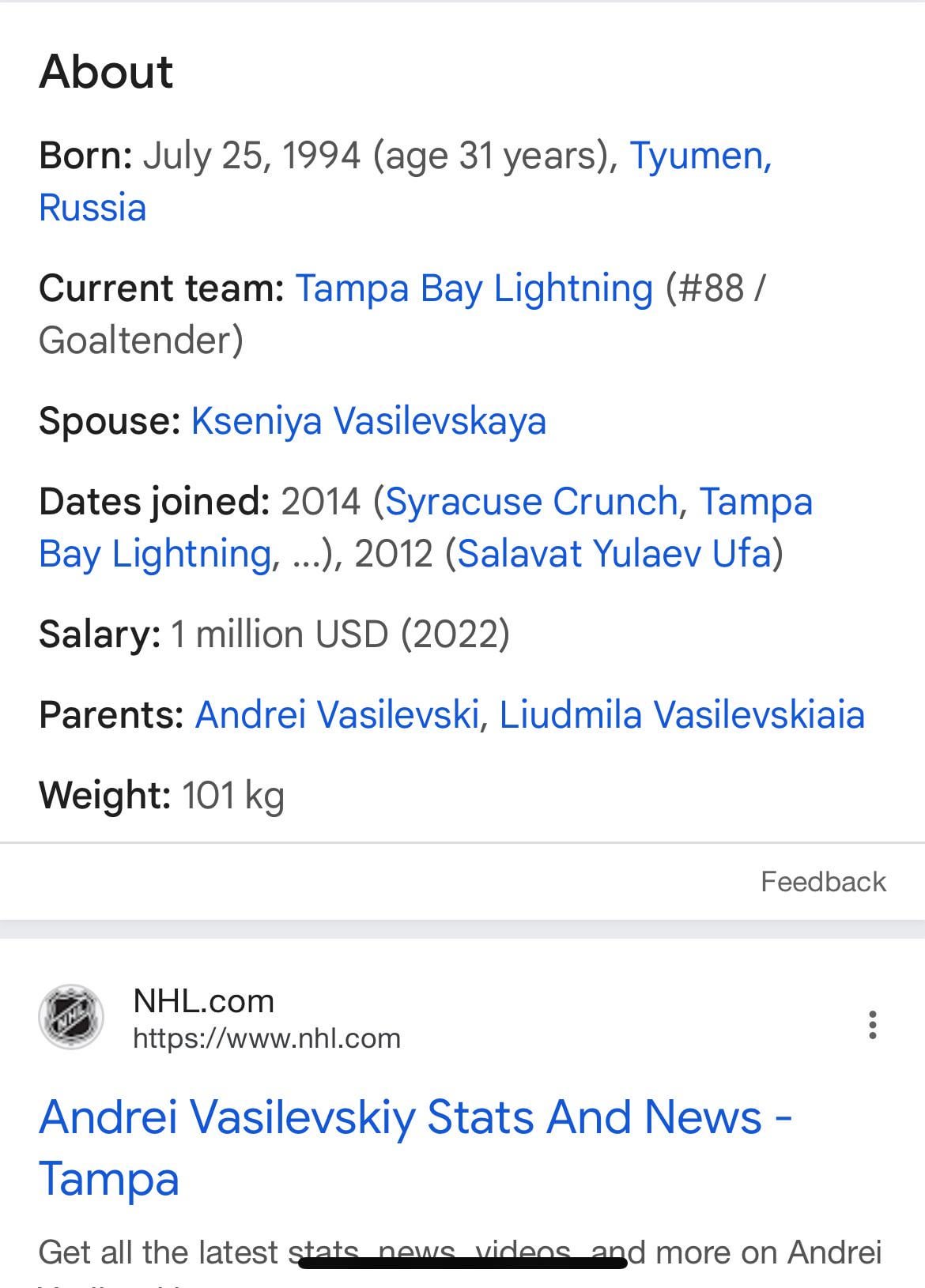
Why does Vasilevskiy’s wife’s name spelled Vasilecskaya, Dad Vasilevski and mom Vasilevskiaia??
December 6, 2025
Why does Vasilevskiy’s wife’s name spelled Vasilecskaya, Dad Vasilevski and mom Vasilevskiaia??
7 comments
Russian naming conventions use a three-part system: a first name, a patronymic, and a surname. The patronymic, derived from the father’s first name, acts as a middle name and has different masculine (e.g., -ovich) and feminine (e.g., -ovna) endings. While the full name is used formally, informal situations often use shortened or diminutive forms.
The three parts of a Russian name:
– First name (имя – imya): The given name, similar to Western countries.
– Patronymic (отчество – otchestvo): A name derived from the father’s first name.
Masculine: Adds suffixes like -ovich or -evich to the father’s name. For example, a son of Ivan would be Ivanovich.
Feminine: Adds suffixes like -ovna or -evna to the father’s name. For example, a daughter of Ivan would be Ivanovna.
– Surname (фамилия – familiya): The family name, typically passed from the father.
Gendered surnames: Female surnames are often created by changing the ending of the male version. For instance, a surname like Ivanov for a man would be Ivanova for a woman.
I believe it’s a patronymic which is a part of the name derived from their father. Google Russian naming conventions for more.
A lot of Russian last names are like that. Vasilevskiy is the masculine form and Vasilevskaya is the feminine form.
The differences in spelling between him and his dad and his wife and his mom are because it’s just a transliteration of the original name (Василевский/ая), so it can be done differently in different places. Idk if Vasy and his people are citizens or not, but lots of people standardize their names once they get their citizenship. Before my family got ours, we had two different spellings of our last name and my dad had like three different spellings of his first name lol.
Vasi is 10 days older than me
Vasilevskiy spent some time playing for Salavat Yulaev Ufa in the KHL, and while having the same first and last name as his father (Андрей Василевский), wanted to distinguish himself from his father, who played for Salavat Yulaev Ufa in the Russian SuperLeague.
If I am recalling it correctly, IIHF transcaption allows players to translate ий into three variants depending on the simplicity; -ii, -iy and -i. This mean Andrei Vasilevski refers to Andrei Leonidovic Vasilevski, the Russian goalie who played in the top Russian leagues for 2 decades, and Andrei Vasilevskiy refers to Andrei Andreyevich Vasilevskiy, the son of the aforementioned Russian goalie who plays for the Tampa Bay Lightning in the NHL.
Others mentioned the difference in his wife’s and mother’s names, it’s down to normal Russian surname conventions which adds a gendered partial to the end of the name. The difference is most likely down to different transcriptions but effectively are the same when spoken.
It’s a feminine suffix, it essentially means “of” or “belonging to”. Joined in marriage and sharing his last name now.
i have a similar surname, hence the t-shirt pun, and it spells just like that (though the y/i variation has no specific rule, -ая can be either -aya or -aia). it’s a feminine derivation, both patronymic and surname change based on gender.

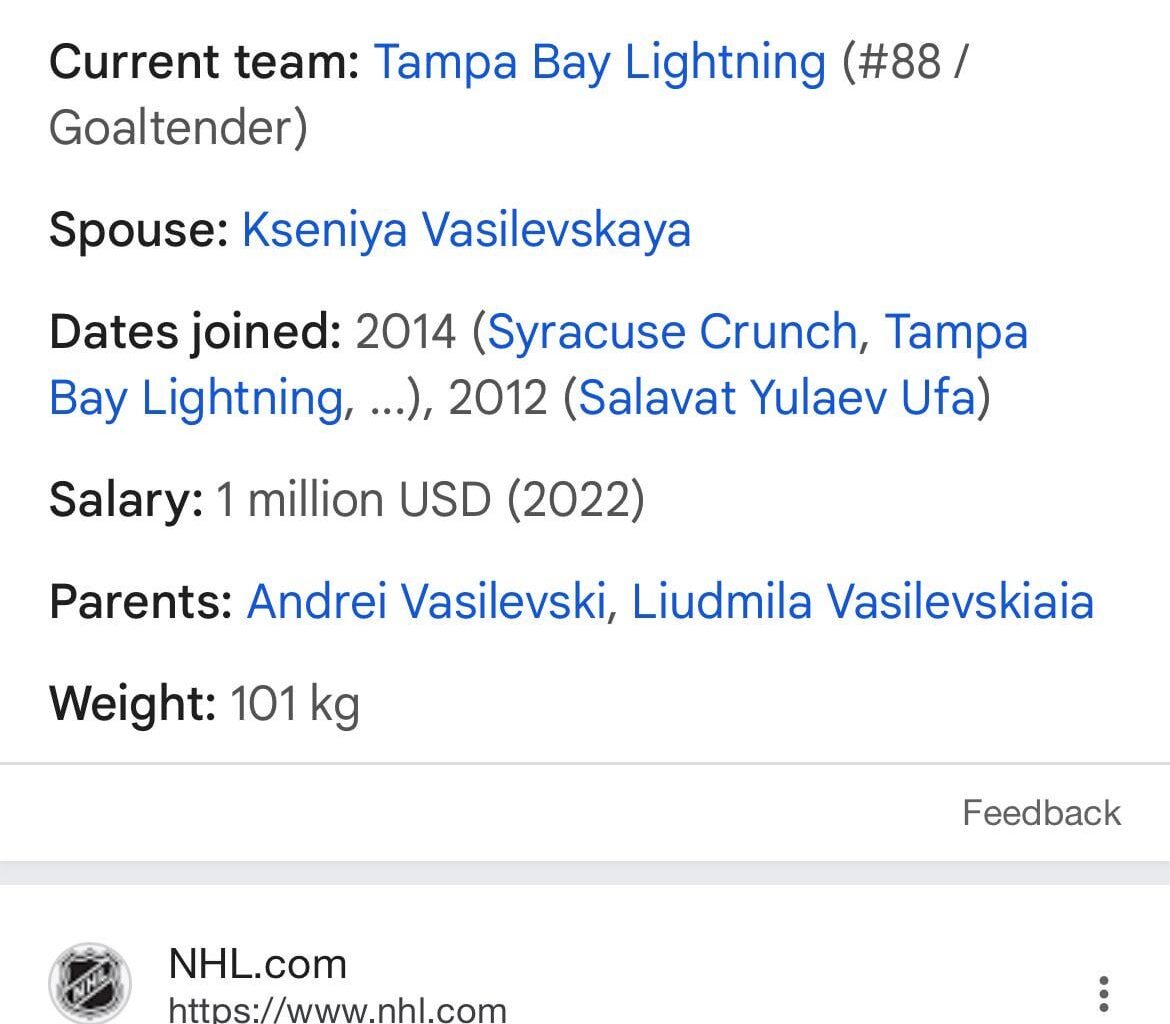
7 comments
Russian naming conventions use a three-part system: a first name, a patronymic, and a surname. The patronymic, derived from the father’s first name, acts as a middle name and has different masculine (e.g., -ovich) and feminine (e.g., -ovna) endings. While the full name is used formally, informal situations often use shortened or diminutive forms.
The three parts of a Russian name:
– First name (имя – imya): The given name, similar to Western countries.
– Patronymic (отчество – otchestvo): A name derived from the father’s first name.
Masculine: Adds suffixes like -ovich or -evich to the father’s name. For example, a son of Ivan would be Ivanovich.
Feminine: Adds suffixes like -ovna or -evna to the father’s name. For example, a daughter of Ivan would be Ivanovna.
– Surname (фамилия – familiya): The family name, typically passed from the father.
Gendered surnames: Female surnames are often created by changing the ending of the male version. For instance, a surname like Ivanov for a man would be Ivanova for a woman.
I believe it’s a patronymic which is a part of the name derived from their father. Google Russian naming conventions for more.
A lot of Russian last names are like that. Vasilevskiy is the masculine form and Vasilevskaya is the feminine form.
The differences in spelling between him and his dad and his wife and his mom are because it’s just a transliteration of the original name (Василевский/ая), so it can be done differently in different places. Idk if Vasy and his people are citizens or not, but lots of people standardize their names once they get their citizenship. Before my family got ours, we had two different spellings of our last name and my dad had like three different spellings of his first name lol.
Vasi is 10 days older than me
Vasilevskiy spent some time playing for Salavat Yulaev Ufa in the KHL, and while having the same first and last name as his father (Андрей Василевский), wanted to distinguish himself from his father, who played for Salavat Yulaev Ufa in the Russian SuperLeague.
If I am recalling it correctly, IIHF transcaption allows players to translate ий into three variants depending on the simplicity; -ii, -iy and -i. This mean Andrei Vasilevski refers to Andrei Leonidovic Vasilevski, the Russian goalie who played in the top Russian leagues for 2 decades, and Andrei Vasilevskiy refers to Andrei Andreyevich Vasilevskiy, the son of the aforementioned Russian goalie who plays for the Tampa Bay Lightning in the NHL.
Others mentioned the difference in his wife’s and mother’s names, it’s down to normal Russian surname conventions which adds a gendered partial to the end of the name. The difference is most likely down to different transcriptions but effectively are the same when spoken.
It’s a feminine suffix, it essentially means “of” or “belonging to”. Joined in marriage and sharing his last name now.
https://preview.redd.it/x0n6khdk1j5g1.jpeg?width=1536&format=pjpg&auto=webp&s=03d80ffe4e1c61360db0f4c32eed6cafce1a0f8e
i have a similar surname, hence the t-shirt pun, and it spells just like that (though the y/i variation has no specific rule, -ая can be either -aya or -aia). it’s a feminine derivation, both patronymic and surname change based on gender.