
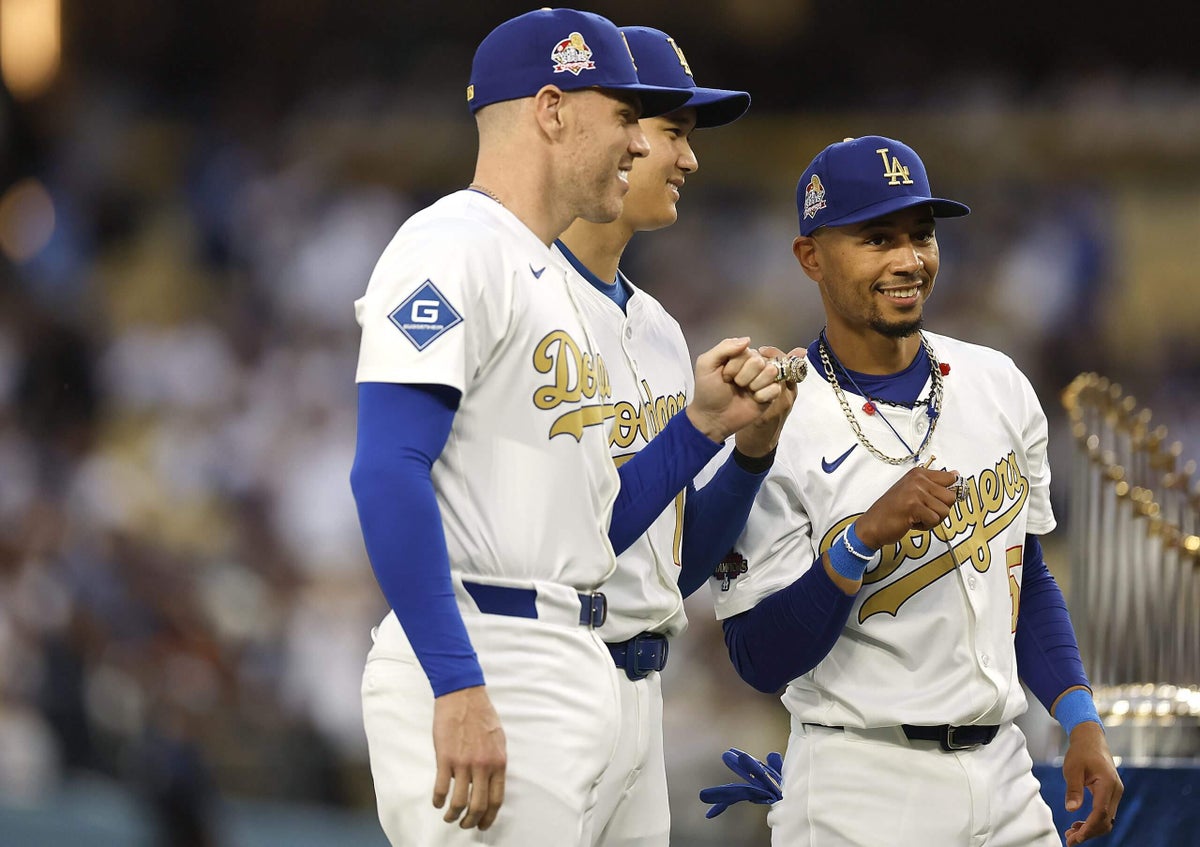
When this offseason began, the notion that Kyle Tucker would be paid the highest present-day annual value in MLB history was, at least, conceivable. That it would be the two-time reigning champion Los Angeles Dodgers furnishing the offer, though, seemed too outlandish, even for them.
Only 10 position players have accumulated more wins above replacement since 2021 than Tucker. Three of them are now his teammates: Shohei Ohtani, Mookie Betts and Freddie Freeman. Here’s a star in his prime signing with a juggernaut at the peak of its power, and he may not be a top-five player on the roster. For Tucker, it’s a chance to disappear into a forest of future Hall of Famers. For fans of other teams, it’s an infuriating concentration of talent.
And it’s largely without precedent.
Others across sports have spent lavishly, amassed talent, and won consecutive championships. But how many have done it like this? How many have repeatedly enticed the best talent on the market to join up, to the point of roster redundancy?
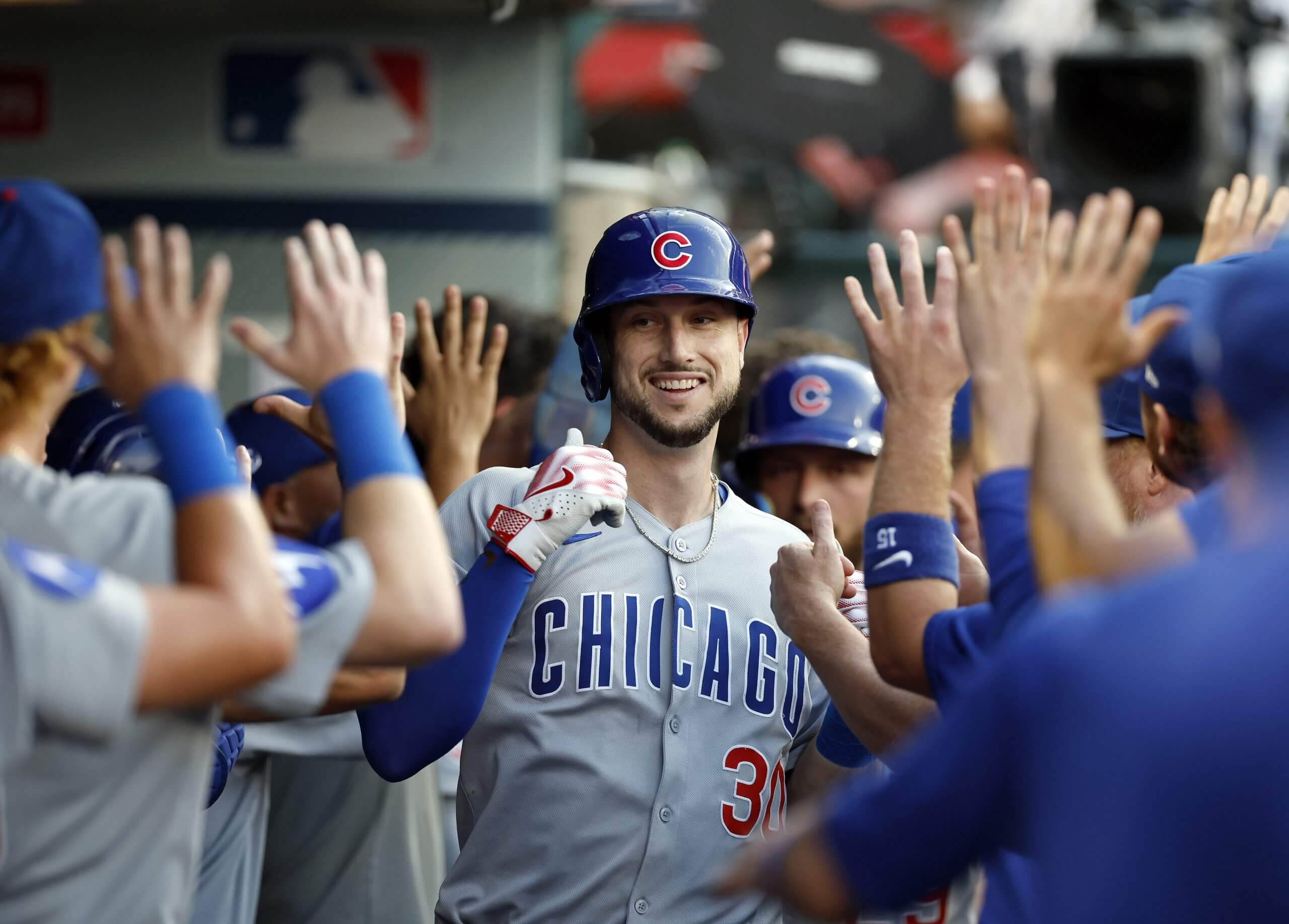
Kyle Tucker was happy to join the defending champions, even if he wouldn’t be the biggest name on the roster. (Ronald Martinez / Getty Images)
It’s not simply a question of star power. Pre-free agency juggernauts like the Murderers’ Row Yankees or the 1970s Montreal Canadiens were mostly homegrown, and didn’t splash cash to attract the biggest names out there.
Nor can this Dodgers team be compared to LeBron James and Chris Bosh joining Dwyane Wade with the Miami Heat in 2010. Bosh accepting third billing has some similarity to Tucker playing behind Ohtani, Betts and Freeman, but that was a third-place team becoming a high-profile favorite overnight. Similar superstar energy, but not the same rich-get-richer formula.
Baseball isn’t a salary cap league, so most other North American sports usually can’t mimic the Dodgers’ aggressive win-at-all-costs spending. But even in a world of apples and oranges, there are some analogues to Tucker-to-the-Dodgers, and we’ve put together a collection of similarly seismic transactions — the type in which stars chose to share the spotlight for a chance to join a dynasty.
Early 2000s: Yankees go “Evil Empire”
This is the most apples-to-apples comparison. The Yankees dynasty of the late 1990s was built differently — a homegrown core supplemented by aging superstars and high-upside role players — but in the early 2000s, the Yankees built their Evil Empire reputation by continually adding high-priced, high-profile players that other teams simply couldn’t afford.
They’d already traded for Roger Clemens in 1999, then they signed former Orioles ace Mike Mussina in 2000 and former A’s MVP Jason Giambi in 2001. When the Yankees signed both Japanese slugger Hideki Matsui and Cuban ace José Contreras in the 2002-03 offseason, it was Boston Red Sox president Larry Lucchino who compared the Yankees to Darth Vader and his “Star Wars” henchmen. “The Evil Empire extends its tentacles even into Latin America,” Lucchino said.
That line lived on as the Yankees kept adding marquee players: Gary Sheffield, Alex Rodriguez, Randy Johnson, Johnny Damon. The steady flow of stars kept the Yankees in the playoffs, but they didn’t win another championship until 2009, when — immediately after splurging on CC Sabathia, Mark Teixeira, Nick Swisher and A.J. Burnett — the Yankees won their first World Series since 2000. They haven’t won another since.
2016: Kevin Durant joins the Warriors
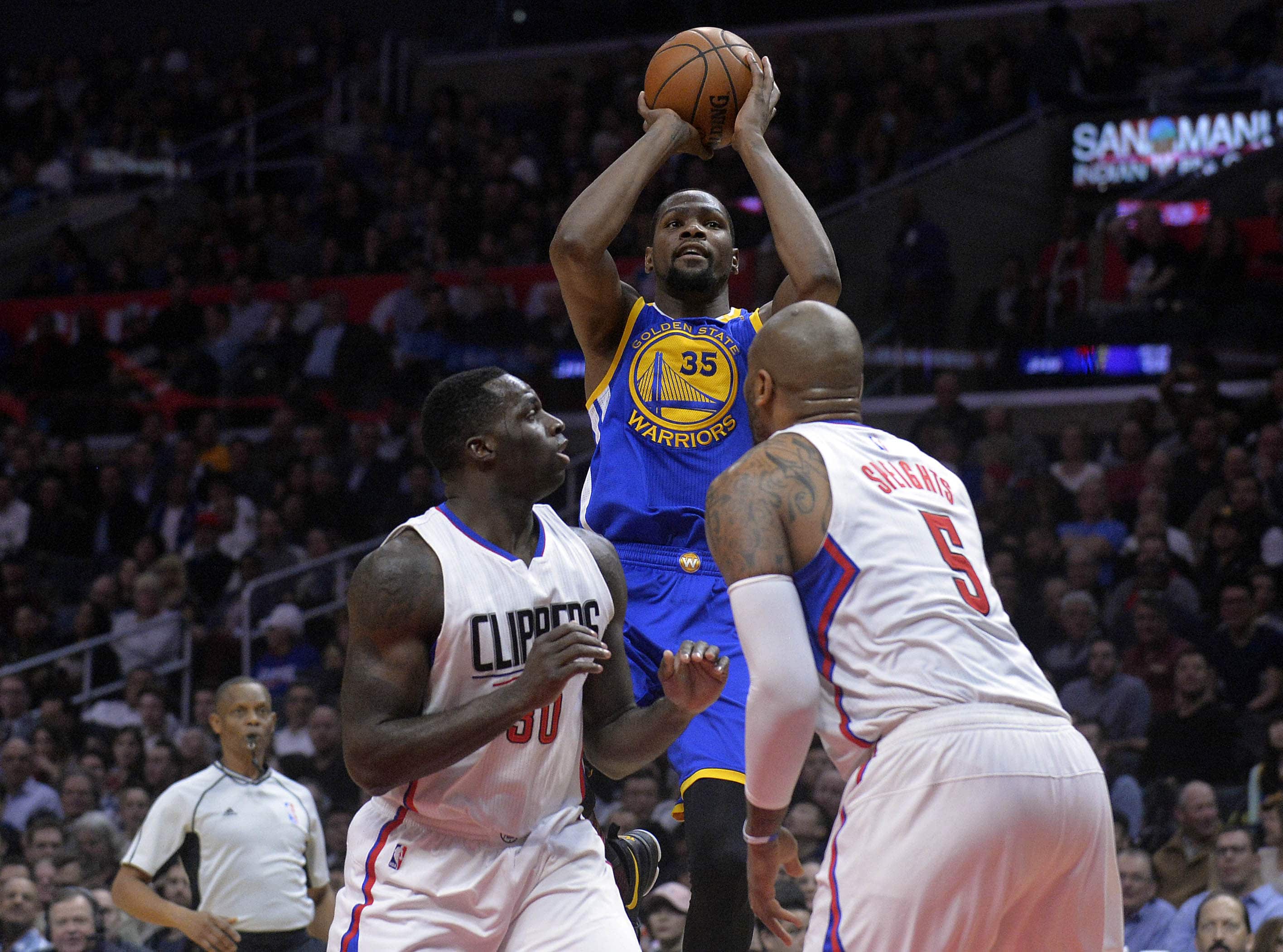
Kevin Durant joined the Warriors and helped take them to another level. (Gary A. Vasquez / USA Today)
Durant was a perennial NBA MVP finalist in his prime when he hit free agency in the summer of 2016. The Golden State Warriors were on the front end of their dynasty years. They had won the NBA Finals in 2015 and lost in seven games in 2016, and Steph Curry won MVP both seasons.
Rather than sign a max deal with Boston, Miami, Oklahoma City or another organization where he’d be the face of the franchise, Durant signed a two-year, $54.3 million deal with the Warriors. The decision drew the ire of many who felt Durant was taking the easy route to a title by making a superteam even better. And that criticism wasn’t exactly disproved.
Durant won NBA Finals MVP in 2017, took a pay cut to re-sign and allowed the Warriors to keep their core intact, then won Finals MVP again in 2018. Durant signed another reworked contract with the Warriors before the 2018-19 season, and Golden State added to its star-studded starting lineup by signing DeMarcus “Boogie” Cousins. Durant’s time with the Warriors — and their quest for a three-peat — effectively ended in Game 5 of the NBA Finals when Durant, who’d missed the previous nine games with a calf strain, ruptured his Achilles tendon.
2001: Red Wings add three future Hall of Famers
After crashing out in the first round of the 2001 playoffs, Detroit’s earliest playoff exit in seven years, Red Wings GM Ken Holland strengthened an already robust core by adding Dominic Hasek, Brett Hull and Luc Robitaille. Those three are now among the 10 Hall of Famers on the 2001-02 Red Wings roster, along with Hall of Fame head coach Scotty Bowman.
Hull and Robitaille, two of the greatest goal scorers in NHL history, were overqualified for second- and third-line roles, yet eager to play for the Stanley Cup favorite. That season, Hasek won a career-high 41 games, Hull and Robitaille scored 30 goals apiece, and the Red Wings were the NHL’s best team in the regular season — by six wins. They came from behind against the rival Colorado Avalanche in the Western Conference Finals and then rolled the Carolina Hurricanes in the Stanley Cup Final.
Afterward, when Hasek (briefly) retired, Holland followed a familiar script and replaced “The Dominator” with another aging, expensive star with a cool nickname: Curtis “CuJo” Joseph.
2000-06, 2009-18: Real Madrid’s “Galácticos” pursuits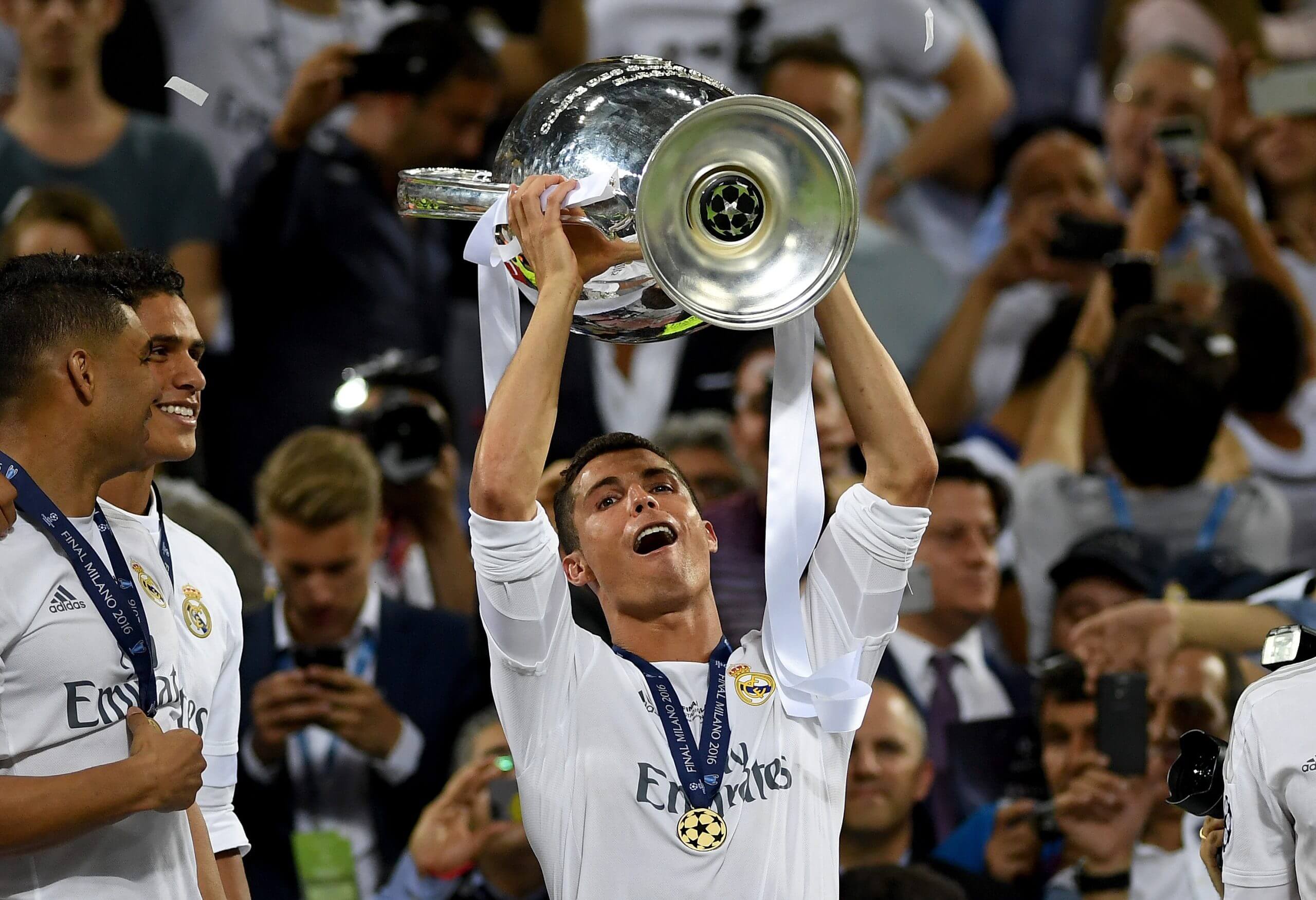
Real Madrid’s second Galácticos era saw Cristiano Ronaldo lift the Champions League trophy four times. (Laurence Griffiths / Getty Images)
The Dodgers could learn a thing or two about branding from former Real Madrid president Florentino Pérez. Because the best name baseball writers have mustered is “Death Star Dodgers.” And that’s nothing compared to Real Madrid’s “Galácticos,” the policy the club operated under when Pérez set out to bring the biggest soccer stars to Spain.
Pérez signed one star each year from 2000 to 2004 — Luís Figo, Zinedine Zidane, Ronaldo, David Beckham and Michael Owen — and two in 2005: Robinho and Sergio Ramos. That spending resulted in two La Liga championships and a Champions League title, one clinched on Zidane’s wondergoal, a stunning left-footed volley, against Bayer Leverkusen.
Twenty years after Pérez resigned in 2006, that first Galácticos era is not remembered entirely fondly. The stars did not always play well together, or play defense, and the big wins dried up. Yet Pérez returned in 2009 and resumed his Galácticos ways. This second era, headlined by the arrival of Cristiano Ronaldo, was dramatically more successful than the first, with Real Madrid winning four Champions League titles in five years.
2023: Aces land Candace Parker
Rather than retire after two seasons (and a title) with her hometown Chicago Sky, Candace Parker extended one of the greatest careers in WNBA history by joining the reigning champion Las Vegas Aces in 2023.
Parker was 36, yet she had still been named to her 10th All-WNBA team the previous season and finished fifth in voting for MVP, an award she won in 2008 and 2013. In Las Vegas, Parker joined a starting five that included two fellow No. 1 overall picks — now-four-time WNBA MVP A’ja Wilson and now-four-time All-Star Kelsey Plum — and Finals MVP Chelsea Gray.
The move didn’t play out as planned. Parker sustained a foot fracture and missed the playoffs. But the Aces defended their crown anyway, and Parker became the first WNBA player to win a title with three different franchises. Parker re-signed in 2024 but didn’t play in a game. Now, Parker has retired, and the Aces have won three of the past four WNBA championships.
1995: Cowboys win “Deion Sweepstakes”
The Dallas Cowboys had been “America’s Team” for almost two decades, but they were on another hot streak in the mid-1990s. They’d won at least 11 games in four straight seasons, with back-to-back Super Bowl wins in ’93 and ‘94. Quarterback Troy Aikman, running back Emmitt Smith, and wide receiver Michael Irvin were three of the biggest names in the sport, and safety Darren Woodson was emerging as an All-Pro defensive back.
The Cowboys lost in the NFC championship game in January 1995, then entered an offseason that was quickly dubbed the “Deion Sweepstakes.”
Deion Sanders was another of football’s most high-profile players, with a persona to match. He’d just won the league’s Defensive Player of the Year while beating the Cowboys enroute to a Super Bowl win with the San Francisco 49ers. He was highly coveted, and the Cowboys gave him — at the time — the NFL’s largest contract for a defensive player, a deep-pocket splurge for the team’s notoriously aggressive owner, Jerry Jones, who said the deal only got done because other Cowboys renegotiated their contracts to make the money work.
Four months later, the Cowboys won their third Super Bowl in four years, and Sanders won his second in a row.