
Wednesday, Feb. 11, 2026 | 2 a.m.
Editor’s note: “Behind the News” is the product of Sun staff assisted by the Sun’s AI lab, which includes a variety of tools such as Anthropic’s Claude, Perplexity AI, Google Gemini and ChatGPT.
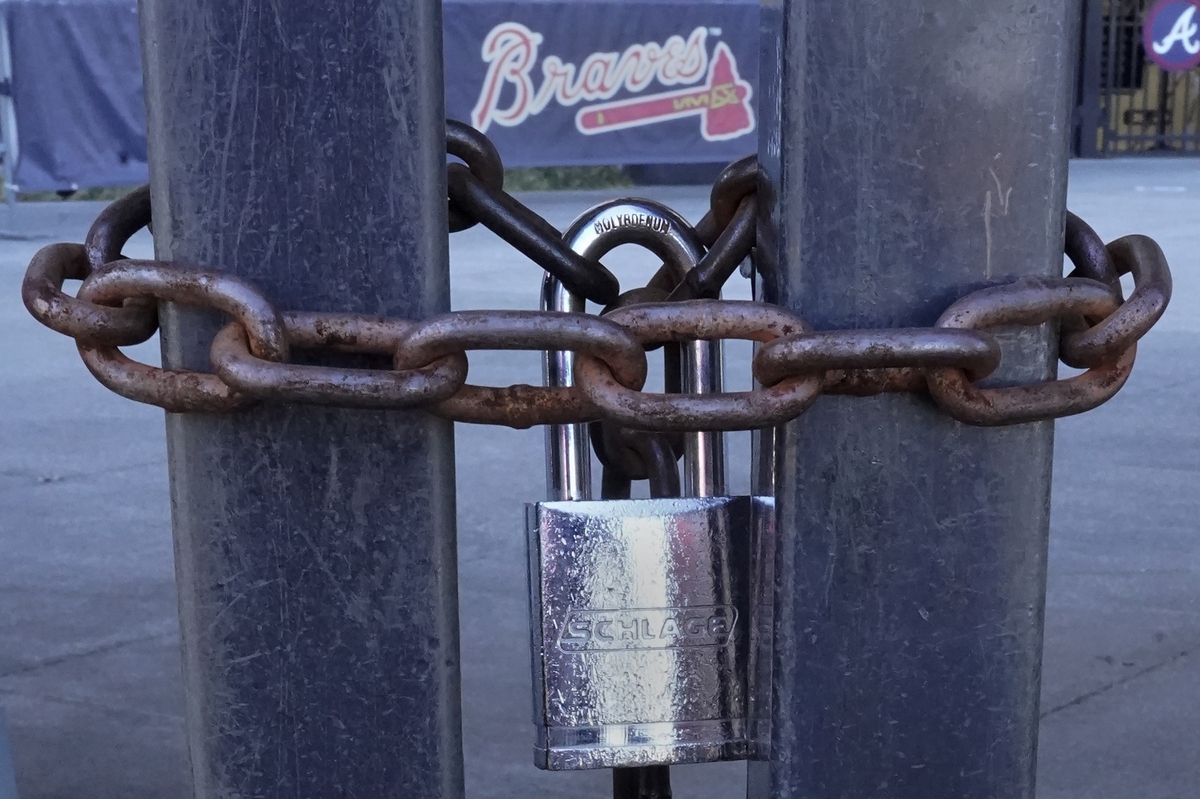
Pitchers and catchers are reporting to spring training facilities this week amid sunshine and optimism, but storm clouds gather over Major League Baseball’s 2026 season. The current collective bargaining agreement expires Dec. 1, and negotiations between owners and the players union have reached what many describe as an impasse over the sport’s economic structure [1].
The central dispute centers on a familiar flashpoint: owners advocating for baseball’s first salary cap, while the MLB Players Association has firmly rejected the proposal. Commissioner Rob Manfred has openly discussed the “leverage associated with an offseason lockout,” comparing it to using “a .22 (caliber firearm), as opposed to a shotgun or a nuclear weapon” [2]. The union expects a lockout after the upcoming season, with executive director Tony Clark stating last year that, “Unless I am mistaken, the league has come out and said there’s going to be a work stoppage” [2].
The ghost of 1994
The current tensions evoke baseball’s darkest labor chapter: the 1994-95 strike that canceled the World Series for the first time since 1904. That strike began Aug. 12, 1994, over owners’ demands for a salary cap, lasted 232 days and resulted in 948 canceled games [3].
The financial toll was staggering. The league lost an estimated $580 million, while players forfeited $230 million in salaries [3]. But the deeper damage was to the sport’s relationship with fans. Average attendance plummeted 20% from 1994 to 1995, dropping from 31,256 per game to 25,008 [4].
The strike’s cultural impact extended beyond empty seats. Television ratings dropped more sharply than after the 1981 strike, and the cancellation of potentially historic achievements — Matt Williams’ pursuit of Roger Maris’ home run record, Tony Gwynn’s .400 batting average chase — left lasting resentment [6]. The Montreal Expos, who had the best record in baseball when play stopped, never recovered, eventually relocating to Washington, D.C. [4].
Understanding the luxury tax
Baseball’s current economic system centers on the competitive balance tax, commonly called the luxury tax. Introduced in 1997 and refined in subsequent CBAs, the luxury tax functions as a soft cap rather than a hard spending limit [7].
For 2026, the threshold is $244 million. Teams exceeding that amount face escalating penalties. First-time offenders pay 20% on every dollar above the threshold, with the rate increasing to 30% for second consecutive years and 50% for three or more consecutive years [8]. Additional surcharges kick in at $264 million (12% extra), $284 million (42.5%-45% extra) and $304 million (60% extra) — the latter nicknamed the “Cohen Tax” after Mets owner Steve Cohen [9].
The tax has done little to deter baseball’s wealthiest franchises. Nine teams exceeded the threshold in 2025, a record [10]. Critics argue the system functions more as a cost of doing business for large-market teams than a meaningful deterrent.
The Dodgers’ spending spree
No team exemplifies the current system’s limits like the Los Angeles Dodgers. The two-time defending champions will pay a record $169.4 million luxury tax bill for 2025, based on a competitive balance tax payroll of $417.3 million — the highest in baseball history [11]. The Dodgers’ total cost, including the tax, reached $586.7 million, more than the entire payrolls of 12 MLB teams [11].
Their 2026 outlook is similar. With the recent addition of Kyle Tucker on a four-year, $240 million deal, the Dodgers’ luxury tax payroll stands at $413.6 million — $96 million more than any other team [12]. They join megaspenders including the New York Mets ($312.5 million projected) and New York Yankees [13].
This spending disparity has intensified calls for reform. The Dodgers spent more on their 2025 player payroll than the bottom six clubs combined [14]. Meanwhile, the Miami Marlins operate with a $79-80 million payroll [15].
Small-market teams say the current system is broken. Colorado Rockies owner Dick Monfort insists “the only way to fix baseball is to do a salary cap and a floor” [16]. Even Yankees owner Hal Steinbrenner, whose team traditionally leads in spending, expressed frustration: “It’s difficult for most of us owners to be able to do the kinds of things (the Dodgers) are doing” [17].
What the current CBA says
The 2022-26 CBA, finalized after a 99-day lockout, runs 426 pages [18]. Beyond the luxury tax, key provisions include minimum salary increases, a prearbitration performance bonus pool for young stars, and revenue sharing where 31% of local net revenues flow into a pool distributed equally among all 30 teams [19].
The CBA includes a Competition Committee with 11 voting members — four players, six MLB appointees and one umpire — to recommend rule changes [19]. It also established protocols for international games and expanded the playoff format.
Notably absent: any salary cap or floor. The previous negotiations saw owners push hard for cap-related measures, while players successfully resisted, viewing any cap as “institutionalized collusion,” in Clark’s words [20].
Expert analysis on negotiations
Most experts expect difficult negotiations, with ESPN’s Jeff Passan writing that the greater likelihood “points toward the league locking out the players Dec. 1, 2026” [21]. Formal bargaining typically intensifies during spring training, with November 2026 considered the most vital month before the deadline [21].
The Athletic’s Evan Drellich reported that while a source confirmed that ownership will push for a salary cap, it is “considered highly unlikely by many in the sport,” with “many player agents and club executives skeptical games will be lost” [15].
Key negotiators include Deputy Commissioner Dan Halem and Manfred for MLB, and Deputy Executive Director Bruce Meyer and Clark for the players [21]. The player side’s eight-member subcommittee includes Cy Young winners Paul Skenes and Tarik Skubal [21].
Some believe a salary floor could provide a path to compromise, forcing low-spending teams to increase payrolls while capping the highest spenders [23]. But the union views any cap-and-floor combination as too similar to a traditional salary cap system, one that would artificially limit player earnings [21].
Complicating matters: MLB’s national television contracts expire in 2028. Owners hope to convince teams with local TV deals to consolidate rights and sell them to streaming services for billions [24]. A lost 2027 season could devastate those negotiations, potentially costing more than owners would gain from a favorable CBA.
Player sentiment reflects deep pessimism. Baltimore Orioles first baseman Pete Alonso, who signed a five-year, $155 million contract with the club in December after leaving the Mets, said last July: “No one’s talking about it, but we all know that they’re going to lock us out for it, and then we’re going to miss time” [20].
Salary caps in other sports
Baseball stands alone among major North American sports without a hard salary cap. The NFL and NHL both employ hard caps that teams cannot exceed, while the NBA uses a soft cap with luxury tax penalties similar to — but more restrictive than — MLB’s system [16].
The NFL’s 2024-25 salary cap is approximately $255 million per team, with a salary floor requiring teams to spend at least 89% of the cap over four years [26]. The NHL’s 2024-25 cap is $88 million with a floor of $65 million [27]. Both leagues calculate caps as percentages of league revenue, ensuring players receive predetermined shares.
The NHL’s journey to a hard cap offers a cautionary tale. Owners locked out players for the entire 2004-05 season — the first full-season cancellation in North American professional sports — before players accepted a cap [28]. The NHL had attempted to impose a cap during the 1994-95 lockout, which resulted in a shortened season, but succeeded only after losing an entire year [28].
Proponents argue that salary caps promote competitive balance. Research suggests caps can actually increase average player salaries by encouraging “have-not” teams to spend, believing they have a fighting chance [29]. The average NHL team payroll rose 138% from 2005-06 to 2019-20 after cap implementation [29].
Critics counter that MLB has achieved similar competitive balance without a cap. Analysis shows MLB has had nearly identical success in terms of variety of teams making the postseason despite having fewer playoff spots than other leagues [26].
The stakes
MLB avoided work stoppages from 1995 to 2021, the longest labor peace in the sport’s modern history. But that 2021-22 lockout, which delayed Opening Day, demonstrated both sides’ willingness to use their leverage [10].
The union has built a “war chest” from licensing fees — from baseball cards, video games and merchandise — to help nonstar players weather a work stoppage [23]. The executive board voted in December 2024 to withhold 100% of licensing money to prepare for bargaining [23].
For fans who remember 1994, the rhetoric sounds familiar. The baseball strike forced cancellation of what would have been Montreal’s best chance at a World Series, ended pursuit of hallowed records, and alienated a generation of supporters. Whether baseball can avoid repeating that history remains uncertain as pitchers and catchers begin another season under a CBA with an expiration date.
Sources
[1] https://www.espn.com/mlb/story/_/id/47108752/mlb-labor-battle-cba-salary-cap-owners-players-union-mlbpa-faq-manfred
[2] https://sports.yahoo.com/mlb/article/mlb-players-union-expects-lockout-by-team-owners-after-cba-expires-following-2026-season-211742786.html
[3] https://sports.yahoo.com/august-11-1994-scenes-from-a-lost-season-042806980.html
[4] https://www.baseball-reference.com/leagues/majors/1995-misc.shtml
[6] https://www.history.com/this-day-in-history/september-14/mlb-cancels-world-series
[7] https://www.mlb.com/glossary/transactions/competitive-balance-tax
[8] https://sports.betmgm.com/en/blog/mlb/what-is-mlb-luxury-tax-bm23/
[9] https://www.cbssports.com/mlb/news/mlb-salary-cap-history-cba-players-union/
[10] https://www.mlbtraderumors.com/2025/12/nine-teams-exceeded-luxury-tax-threshold-in-2025.html
[11] https://www.espn.com/mlb/story/_/id/47360963/dodgers-hit-record-169m-luxury-tax-winning-2nd-straight-ws
[12] https://sports.yahoo.com/articles/dodgers-payroll-breakdown-2026-kyle-143707353.html
[13] https://www.spotrac.com/mlb/tax
[14] https://www.mlb.com/news/mlb-payroll-disparity
[15] https://www.mlbtraderumors.com/2026/01/is-mlb-parity-possible-without-a-salary-cap.html
[16] https://www.espn.com/mlb/story/_/id/46294140/mlb-labor-negotiations-salary-cap-baseball-talks-2027-season-lockout
[17] https://www.cbssports.com/mlb/news/yankees-owner-hal-steinbrenner-laments-dodgers-spending-spree-its-difficult-for-most-of-us-owners/
[18] https://www.espn.com/mlb/story/_/id/37590516/mlb-players-officially-finalize-cba-2026
[19] https://www.baseballamerica.com/stories/details-from-the-new-2022-2026-collective-bargaining-agreement/
[20] https://www.espn.com/mlb/story/_/id/45747008/mlbpa-opposed-installing-salary-cap-cba-ends-26
[21] https://www.espn.com/mlb/story/_/id/47108752/mlb-labor-battle-cba-salary-cap-owners-players-union-mlbpa-faq-manfred
[23] https://www.cnbc.com/2025/04/10/mlb-weighs-salary-cap-potential-lockout-looms.html
[24] https://www.espn.com/mlb/story/_/id/46294140/mlb-labor-negotiations-salary-cap-baseball-talks-2027-season-lockout
[26] https://www.espn.com/nfl/story/_/id/39584679/nfl-salary-cap-rises-306-million-record-2554-million-per-team
[27] https://www.cnbc.com/2024/11/20/how-nhl-salary-cap-works.html
[28] https://www.si.com/onsi/breakaway/news-feed-page/is-nhl-lockout-looming
[29] https://theconversation.com/nfl-and-nhl-salary-caps-have-worked-out-well-for-players-165739
[31] https://www.si.com/mlb/how-did-the-expos-get-to-washington-explaining-their-strange-ownership-swap