
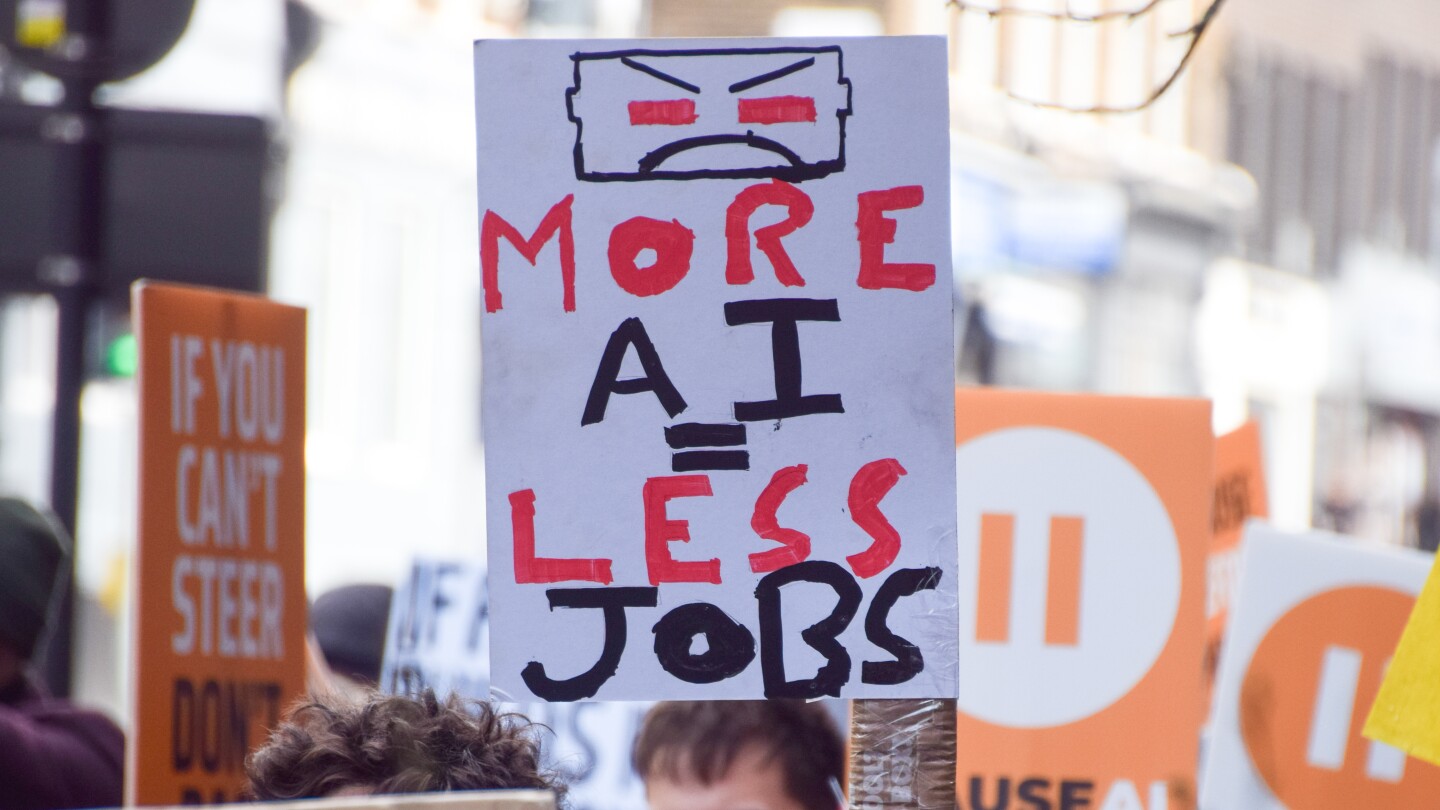
The Artificial Intelligence boom has made its way to pro football. And it’s creating anxiety among those who work for the various teams.
It was one of the hotter topics of the Scouting Combine. During multiple meetings away from the cameras and microphones, folks currently employed by NFL franchises questioned whether and to what extent AI will supplant positions currently held by humans.
The two biggest areas of concern are, for now, scouting and quality control.
Many of the tasks currently performed by a team’s staff of scouts can be performed by AI. As one G.M. explained it, the reports generated by AI based on the various data fed into the program were eerily thorough and accurate.
For coaching staffs, “quality control” is the position typically held by lower-level employees who compile information and clips requested by the head coach and/or the various assistants. Typically, these are labor-intensive exercises requiring more elbow grease than brain power. And it would be very easy to develop an AI tool to pull the same kind of information together without having a quality control assistant in place to perform the work.
The problem (which is a good one for the humans) is that the quality control job becomes the potential springboard for a young coach who has the potential to develop into a coordinator or a head coach. It gives the person a chance to demonstrate football acumen, work ethic, motivation, communication skills, and the other tools needed to be an effective performer in more significant positions.
Still, the lid is lifting on Pandora’s box. Could the teaching that comes directly from coaches be replaced by an enhanced tablet that shows the players the things they need to know? That gives players direct feedback, in real time, as to any flaws in their technique?
Could AI eventually trim, and possibly supplant, the analytics department in each team? If all they’re doing is tracking data and refining percentages and tweaking formauls, AI can do that more quickly, and more cheaply.
Eventually, the head coach could simply become the conduit for the decisions made by an AI program as to every situation that unfolds during a game, with AI taking into account every conceivable factor in the blink of an eye before telling the coach whether to go for it on fourth down, when and where to call a timeout, whether to go for one or two. It can, in theory, monitor the pre-snap and post-snap movements of the offense and defense during a game, spotting the patterns and cracking the code as to what will or won’t work in a given circumstance in the third and fourth quarter.
With all teams competing to win every possible game, why wouldn’t the 32 franchises work to develop the most effective AI tools for pre-game planning and in-game decision making? The team with the best overall AI capacity could be in the best position to overcome a talent gap, winning games that it otherwise should have lost.
The best news is that there’s no way AI can supplant the players. Unless and until someone decides it’s far cheaper to build robots that can block, tackle, run, throw, and catch.