In the NHL, it doesn’t matter if the rules are dumb. All that matters is that they’re enforced consistently.
At least, that’s what I always hear from fans. It’s a near-constant refrain, one that comes up especially often at this time of year. There’s a call, or a non-call, or a referee blinks somewhere and fans are furious about it. But not because the break went against their team, you understand. These fans aren’t raving homers who want every break to go their team’s way. They just want consistency.
Fair enough. Today, we’re going to take that idea to the extreme by figuring out how history would change if the NHL took the single dumbest rule that it has and actually enforced it during the playoffs.
That dumb rule is, of course, the dreaded loser point. (Or bonus point, if you’re one of those people.) Since 1999, the NHL has given teams a point when they lose in overtime. It’s dumb, it always has been, the hockey gods hate it and we could fix it but we shouldn’t. On this, all smart fans agree.
But the bigger issue here, apparently, is consistency. The NHL rewards teams for losing in overtime during the regular season, but then abandons the approach during the playoffs. That doesn’t make sense. After all, the league constantly tells us that the loser point is important because it makes the playoff races closer. Well, the only thing better than a close playoff race is a close playoff series. So let’s start sprinkling loser points around the postseason and see what happens.
Of course, we don’t really have “points” in the playoffs, but that’s an easy issue to fix. Instead of a loser point, we can give teams that lose in overtime a half-win. That’s basically the same thing. And most importantly of all, we’ll finally have some of that wonderful consistency we all crave so much.
Yes, we’re retroactively changing playoff results, again. Did I mention this is going to get dumb? It’s going to get dumb. But you’ve made it this far, so let’s all lose a few IQ points together. Here are five playoff series where the result changes with a little dose of loser point consistency.
Ducks vs. Red Wings, 2013
The series: This opening-round matchup was the sixth playoff meeting between the two teams, though this time with the twist that the Ducks were the heavy favorites.
The real result: The Ducks looked strong in winning Games 1, 3 and 5 in regulation, while the Red Wings continually evened the series with wins in Games 2, 4 and 6, all of which came in overtime. The Red Wings then finished the upset with a Game 7 win.
BUT WAIT: Now that they’re getting a half-win for those OT losses, everything changes. Thanks to already having wins in Games 1 and 3 and half-wins in Games 2 and 4, the Ducks actually hit the magic four-win mark with their Game 5 victory. Enjoy a few days off, boys, it’s your reward for finishing your opponents off quickly.
The new result: Ducks in five, just like we all predicted.
How history changes: We lose a classic second-round battle between the Red Wings and Blackhawks. The 17th — and barring a Stanley Cup Final meeting, almost certainly last — meeting between the Original Six rivals went seven games, with the Blackhawks winning Game 7 in OT on Brent Seabrook’s winner to take the series four games to three. Er, four games to three-and-a-half.
From the Ducks’ side, this was the first of what would turn out to be four straight years under Bruce Boudreau in which a strong regular season was followed by a Game 7 loss in the playoffs. Eventually, that led to Boudreau being fired, and saddled with the reputation he never really shook as a coach who couldn’t win the big one. You wonder how the narrative changes if the story starts with a nice five-game win rather than a heartbreaking loss in a Game 7 they never even should have played, according to loser-point fans.
Blues vs. North Stars, 1968
The series: This matchup came in the semifinals of the 1968 playoffs, which were the first played after the 1967 expansion. Both teams had won their first-round series and were facing each other for the right to get their teeth kicked down their throats in the final, thanks to the NHL’s weird playoff format that guaranteed an expansion team would face an established powerhouse with the Cup on the line.
The real result: The Blues won the opener on home ice before dropping Game 2 in OT. The North Stars romped to a blowout win in Game 3, but the Blues took control of the series with OT wins in both Games 4 and 5. Minnesota won Game 6 to force a winner-take-all showdown, which the Blues won on Ron Schock’s double-OT winner.
BUT WAIT: The North Stars won the second and third games, then earned a half-win in each of the fourth and fifth games. That means they were already at three wins heading into Game 6, which they won. That was their fourth win, meaning they took the series.
The new result: The North Stars win the series in six games, with four wins to just three-and-a-half for the Blues.
(Yes, the two teams end up combining for seven-and-a-half wins in just six games. This makes exactly as much sense as 25+ teams finishing over .500 during every regular season, don’t act like it doesn’t.)
How history changes: As far as that year’s Stanley Cup goes, it doesn’t. The Blues were swept by the powerhouse Montreal Canadiens, and no doubt the North Stars would have been too.
Instead, there are two big losers here. The first is Schock, who no longer gets the chance to become the first player to score a Game 7 OT winner in 14 years, let alone the first to do so in multiple overtime since Pete Babando’s Cup-winner in 1950.
The other loser is trivia buffs, who no longer get to use the Blues as a sneaky “which expansion team made the Stanley Cup Final in each of their first three years of existence” stumper. Who knows, maybe their six-game loss even discourages the Blues so badly that we don’t see them in the 1969 or 1970 final, meaning we also lose the most overrated photo in sports history.
Panthers vs. Devils, 2012
The series: Remember the Southleast Division? Those were good times. In 2012, the mighty Panthers captured the division’s top seed on the strength of (checks notes) 38 wins. That made them the East’s three-seed, and gave them home ice against the Devils, who’d won 48 games while finishing (re-checks notes) fourth in the Atlantic. The NHL is such a cool league.
The real result: The teams split the first four games before the Panthers rode a Jose Theodore shutout to a Game 5 win. But the Devils stayed alive with an OT win in Game 6, then went back to Florida and stunned the Panthers on Adam Henrique’s sudden-death winner in Game 7.
BUT WAIT: This one gets a little tricky, and we need to take a quick break to nail down a key detail. When exactly does the loser point get handed out?
Technically, it’s not until the game ends, because that’s when all the points are officially awarded. But informally at least, most fans and media seem to think that the loser point comes at the end of regulation. If you’re watching a game that heads to overtime, you can bet that you’ll hear the broadcaster tell you that both teams have already earned a point. I’ve tried to argue that that’s not really true, partly because it is possible to lose in overtime without getting a loser point. But I feel like I’m on the losing side of this one.
OK, so we’ll do it your way, for this one post at least. That means the Panthers have three wins through five games, get half a win by losing in OT in Game 6, and then cross the four-win finish line once Game 7 goes to overtime. They win the series four games to three-and-a-half.
The new result: Sorry, Adam Henrique fans. He’s no longer the hero in this one. Instead, that honor goes to Marcel Goc, whose game-tying goal with four minutes left lets the Panthers kill off the rest of regulation and take the series.
How history changes: The big news is that the Panthers actually win a series for the first time since 1996, and don’t have to wait another decade until 2022 as they did in real life. Does that give the once-moribund franchise some momentum that they can ride to some 2010s success? And if so, is that a good thing, since all that failure helped set the stage for their 2020s dominance?
Tell you what. Hold that thought until our last entry …
Nordiques vs. Canadiens, 1985
The series: The two rivals met in the division final for the second consecutive year. The 1984 matchup had been won by Montreal in six games, although it’s better remembered as the series that featured the Good Friday Massacre. This was the highly anticipated rematch.
The real result: The teams split the first two in Montreal, and then two more in Quebec City, highlighted by a wild 7-6 OT win by the Nordiques in Game 3. The Nords took Game 5 on the road, but the Canadiens came back to claim Game 6 and force a winner-take-all showdown back in Montreal. That one went to overtime, where Peter Stastny scored the winner.
BUT WAIT: This is another one where earning the loser point after regulation makes the difference. The Canadiens claim regulation wins in Games 2, 4 and 6. They also get a half-win from the loser point fairy in Game 3. That means they’re already leading the series 3.5-3 heading into Game 7.
And that means that when the clock ticks down at the end of regulation, the Habs bank the half-win that gets them across the finish line to four.
The new result: The Nordiques come out for overtime, only to find the Canadiens are already gone. They’re off to the conference final before Stastny ever has a chance to play hero.
How history changes: The Flyers get a new opponent in the Price of Wales final, having to deal with the Canadiens instead of the Nordiques team we know they’d beat in six games.
But there’s an extra wrinkle that I wonder about. What happens if the Canadiens go on to beat the Flyers and face the Oilers in the final, and pull off the upset to win that? They’d win the Cup a year earlier than they did in the real world, sure. But they’d do it with Steve Penney in net, in what would be his second straight showing of playoff dominance. So what happens to Patrick Roy, the rookie with just one NHL game under his belt? Does he even get a shot at winning the starter’s job as a 20-year-old in 1985-86 if Penney is coming off a Cup ring? Maybe. Penney did run into injury trouble, after all. But maybe the Habs aren’t quite as eager to move on to the Roy era if Penney has just hung a banner for them.
Panthers vs. Bruins, 2023
The series: In one of the most memorable upsets of the modern era, the record-setting 65-win Bruins go in as massive favorites over the Panthers.
The real result: Sure enough, the Bruins coast to a 3-1 series lead. But Brad Marchand misses a buzzer-beating breakaway at the end of Game 5, and the Panthers stay alive with an OT win. Florida wins Game 6 at home, before returning to Boston and completing the shocking comeback when Brandon Montour ties Game 7 with a minute left in regulation and Carter Verhaeghe wins it in overtime. The Panthers win in seven, kicking off arguably the most dominant multi-year playoff run we’ve seen in decades.
BUT WAIT: The Bruins have three wins through four games, then get a half-win after Marchand’s miss in Game 5. That means that Montour’s tying goal doesn’t really cost them anything, since they bank that all-important loser point half-win at the end of regulation to get to four.
The new result: The Bruins win, although just barely, avoiding an all-time upset.
How history changes: Where to begin. Given how easily the Panthers carved through the Maple Leafs and Hurricanes, it feels safe to say that the Bruins probably do, too. That means they’d face Vegas in the final, and I think there’s a very good chance that they win that matchup, and watch Patrice Bergeron spend his final moments in a Bruins’ uniform lifting the franchise’s seventh Cup.
With that recent banner hanging, you have to figure they’re reluctant to rebuild as aggressively as they did just two years later. Maybe they keep Brandon Carlo. You’d have to think they keep Marchand, and maybe Jim Montgomery is still there, too.
On the Florida side, the early exit means everyone concludes that the Matthew Tkachuk trade was a disaster and Dom was right about Paul Maurice, and Bill Zito takes a ton of heat. But we can’t get silly here and start pretending that he’d get fired, or make more major roster moves, or that somehow the Panthers would overreact and tear it all down before they got to their Cup titles in 2024 and 2025. They’d still be satisfied with just making the playoffs. Remember, this is a team that had only recently won its first round since 1996.
Except … well, they did win a round, back in 2012, as we’ve already seen. Expectations are at least a little bit higher than just making it. So maybe they do blow it all up after they lose to the Bruins.
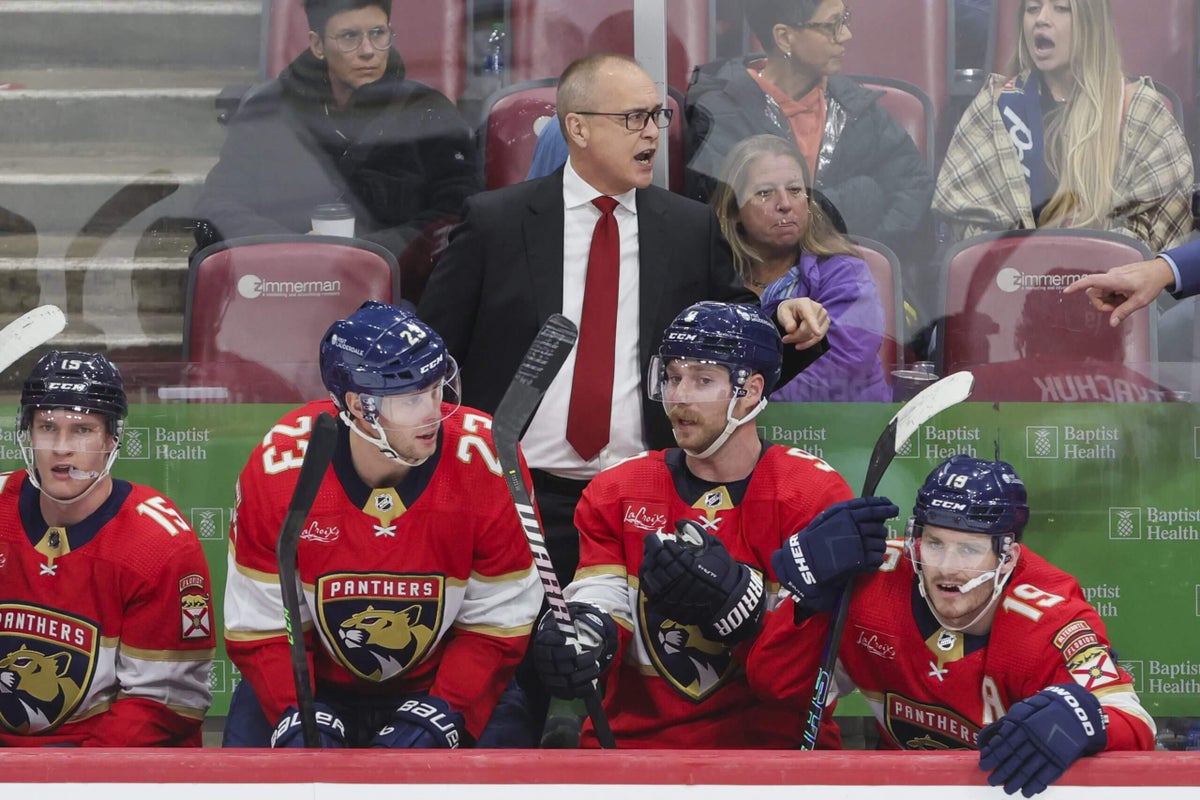
In other words, if the NHL gave out half-wins for losing in the playoffs as they do during the season, there’s a very good chance that no team sees their history change more than the Florida Panthers, who might very well go from a modern dynasty to a sad sack team that can’t ever seem to truly get over the hump.
Huh. Maybe the loser point isn’t so stupid after all.