
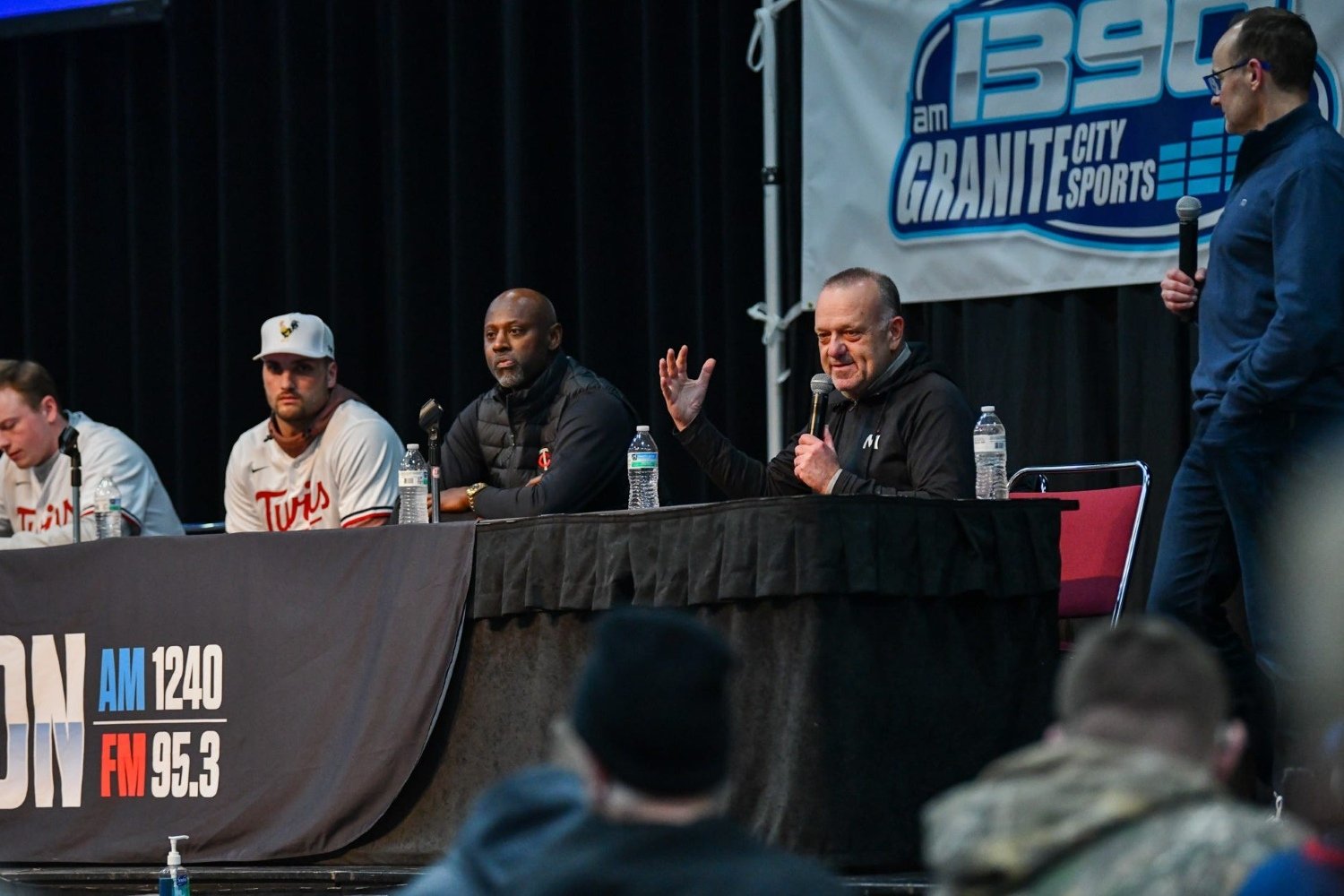
Dave St. Peter’s legacy with the Twins is cemented, and his rise to the organization’s top post is legendary. The North Dakota native went to college at the University of North Dakota and began as an intern with the Twins in 1990. He held many positions with the club, including pro shop manager and communications manager, while continuing to work his way through the organization. St. Peter recently handed the reins over to Derek Falvey, who will be serving in a dual role as president of baseball and business operations.
Here’s what St. Peter had to say about his time in the organization and how he prepared Falvey to take over the organization’s top spot.
Twins Daily (TD): Looking back on your tenure, what are you most proud of accomplishing during your time as president of the Twins?
Dave St. Peter (DSP):
Winning Tradition: So many great on-field moments, teams and players. I’m super proud about advancing to MLB’s postseason 10 times (would have been 11, had Jim Thome’s White Sox not edged us in Game 163 in 2008) with 9 division titles and one 1 Wild Card berth.
Growth of the Business: Fueled by the growth of MLB, the move to Target Field and a more sophisticated brand marketing and partnership development, today the Twins are a much bigger business than we were back in 2002.
Facility Development: When taking over as President in 2002, it became quite evident I’d spend a significant amount of my time focused on facility development.
Being part of the working group that helped secure legislative approval for a new ballpark was one of the absolute highlights of my Twins career—only matched by leadership efforts related to the design, construction and opening of said ballpark, Target Field.
Thanks to the Pohlad family, the following 15+ years would bring incremental investment to the ballpark via the Grey Duck Deck; Truly OnDeck; the Delta Sky360 Suite; Cutwater Cocktail Bar at Minnie & Paul’s; Target Field Station, new video/ribbon boards and other projects aimed at further enhancing the gameday experience.
In addition, it was an honor to be part of efforts in Lee County, Florida to reimagine the Lee Health Sports Complex, resulting in a fully renovated Hammond Stadium and creation of the state-of-the-art Twins Player Development Academy. The same can be said for our vision in the Dominican Republic, which resulted in the opening of a new Twins Player Development Academy.
Talent: While our organization has grown, so have the skillsets and mindsets of our people. There is no doubt in my mind that we have more collective talent working for the Minnesota Twins today than ever before in the history of the franchise.
Community Involvement: The Twins commitment to community never goes into a slump. We placed a high priority on these efforts with a belief that we can make a better tomorrow for everyone. That belief led to ensuring Target Field is the “Greenest Ballpark in America” while also driving monumental growth of the Twins Community Fund and its major impact across Twins Territory.
Franchise Heritage: While we always wanted to showcase the Twins of today, our franchise never will apologize for celebrating the Twins/Senators of yesterday. It’s been an absolute privilege to help shape the Twins Hall of Fame, Twins Alumni Relations, Twins Archives, Reunion Celebrations, etc.
St. Paul Saints Affiliation: MLB’s decision to reimagine the minor leagues provided an opportunity to accomplish something we never thought could happen: make the St. Paul Saints an official Twins affiliate. The highlight of my COVID year was finalizing negotiations with MLB and Saints ownership to bring this long-envisioned partnership to life. As they say, the rest is history.
TD: What were some of the biggest challenges you faced leading the organization, and how did you navigate them?
DSP:
New Ballpark Effort: It was 1995 when Twins ownership publicly uttered the words “new ballpark” for the first time. The following decade was chaotic—filled with the ugliness of failed ballpark financing plans, franchise relocation exploration and the threat of contraction. Things started to change for the better when Hennepin County emerged with a vision for building a boutique downtown ballpark at the intersection of the North Loop and the historic Warehouse District. In 2004, the Twins formalized a public-private partnership with Hennepin that would lead to a successful legislative effort in 2006 and form the foundation for Minnesota’s new ballpark – Target Field.
Baseball Leadership Transition: Dating back to Andy MacPhail’s rise to General Manager in 1985, the Twins had prided [themselves] on franchise stability and continuity. That focus drove highly successful in-house baseball leadership transitions to Terry Ryan (1994), Bill Smith (2007) and again Terry Ryan (2011). However, when the on-field success waned in the early years at Target Field, change became inevitable. Separating from Terry Ryan in 2016, a mentor and great friend, as well as one of the most respected and beloved leaders in Twins history, was perhaps the most difficult task of my career. We’d ultimately embark on a search for a new head of baseball operations, leading us to Derek Falvey and his reimagination of the Twins’ baseball operations.
COVID: There was no playbook for guiding a company through a world-wide pandemic. In March of 2020, we were riding high coming off the successful Bomba Squad season. Our club was poised to repeat as AL Central Champs and pre-season ticket sales made us optimistic about drawing 2.5 million or more fans to Target Field. That all changed when COVID shut down the world. Navigating the realities of a pandemic—combined with the historic unrest following George Floyd’s murder—was a massive leadership challenge. Looking back, I’m enormously proud of how we cared for our employees and stood up for our community. Moreover, I’m equally proud of how in 2021 the Twins and Target Field played a leading role in safely welcoming fans back to downtown Minneapolis.
Local Media: It was 2018 or 2019 when the shifting local media landscape began trending toward crisis mode. The cable/satellite bundle was shrinking as multitudes of fans “cut the cord” on their way to streaming. A few years down road, the well-documented Twins-Diamond Sports (now Main Street) saga was unfortunate for fans and confirmation for teams that a new model was required. While I regret it didn’t happen in 2024, the 2025 shift to Twins.TV is a homerun for our fans and partners as Twins baseball enjoys unprecedented reach, no blackouts and enhanced production.
TD: The Twins have seen a lot of changes in baseball operations, fan engagement, and the business side of the game. How do you see the organization evolving in the next decade?
DSP: I’m 100% bullish on the future of MLB media and the Commissioner’s vision to aggregate all national and local rights following the 2028 season. In my mind, we are not far away from a day when any fan can watch any game anywhere.
Gameday Experience: Ballparks like Target Field will continue to evolve. Look for incremental enhancements in technology, sustainability, experiential ticketing (which has already begun with this year’s launch of MyTwins Membership and Rewards), social gathering spaces, premium clubs and opportunities for fans to come early and stay late.
Baseball Economics: I’m hopeful the partnership with our players will only be nurtured and enhanced as we collectively work to grow our game. That collaborative mindset will be critical as we come together to cultivate innovation while shaping a new collective bargaining agreement following the 2026 season.
Non-Baseball Events: While Target Field remains one of the great ballparks in America, the non-baseball opportunities remain a major focus for the Twins. Look for the ballpark to host more major concerts as well as other full-venue events (hockey, football, etc).
TD: What’s one thing you wish you could have accomplished but didn’t during your time as president?
DSP: This is an easy question to answer: we didn’t win enough postseason games. Despite great teams and players, falling short in October became way too predictable. Looking back, we had our chances. Extra-innings at Yankee Stadium with a chance to go up 2-0 in the 2004 ALDS; not taking advantage of home-field advantage vs. Oakland in the 2006 ALDS, New York in the 2010 ALDS or Houston in the 2020 ALWCS. Thankfully, the 2023 Twins stopped the streak and reminded our fans what postseason success feels like.
One non-Twins-related regret: Not finding a way to showcase the greatest rivalry in college hockey – North Dakota-Minnesota. Playing this game outdoors at Target Field would be absolute magic. Never say never.
TD: As Derek Falvey steps into a larger leadership role, how have you helped prepare him for the transition, and what advice have you shared with him about leading the organization?
DSP: Over the past two-plus years, I’ve spent a lot of time working with the Pohlad family and Derek Falvey on shaping this succession plan. During that time, Derek and I have talked about every aspect of our organization and the best ways to drive our future success. Collectively, we’ve worked together to eliminate silos to ensure one organization (no divide between baseball and business). Since he joined the Twins in October of 2016, Derek has been an incredible partner. Our relationship is rooted in trust and respect. Based on Derek’s dynamic skills, innovative mindset and unquestioned character, there is no doubt in my mind Derek is the right leader at the right time.
My advice to Derek has been rooted in the following areas of emphasis:
Be Yourself: Most importantly, Derek needs to be himself. He’s more than capable of having great success in this role.
Ownership: We’ve both been blessed to work for great owners – the Pohlad family. My counsel to Derek relates to business-side issues and the importance of always ensuring a high level of communication with our ownership.
Time Management: As President of Baseball and Business Operations, Derek has taken on a massive job. How and where he spends his time will be crucial to so many outcomes. My coaching has been geared at certain business-side priorities which will require his time and focus.
External Relations: Leading the business side of the organization requires an investment of time in representing the club and building relationships with a variety of external partners. I’ve focused on helping Derek prioritize these relationships which include but are not limited to civic, corporate, media and community partners.
St. Peter’s tenure with the Twins was by no means perfect. He was candid about the difficulty of having to move on from Terry Ryan and the failures of his leadership to smoothly navigate big transitions in broadcast distribution, or to deliver playoff victories. However, as he emphasized repeatedly in this quasi-exit interview, St. Peter also accomplished a great deal over his time running the team. Now, though he’ll play a different role in it, his focus (and the team’s, itself) seems to be solely on the future.
What will you remember most about St. Peter’s tenure? Leave a comment and start the discussion.