
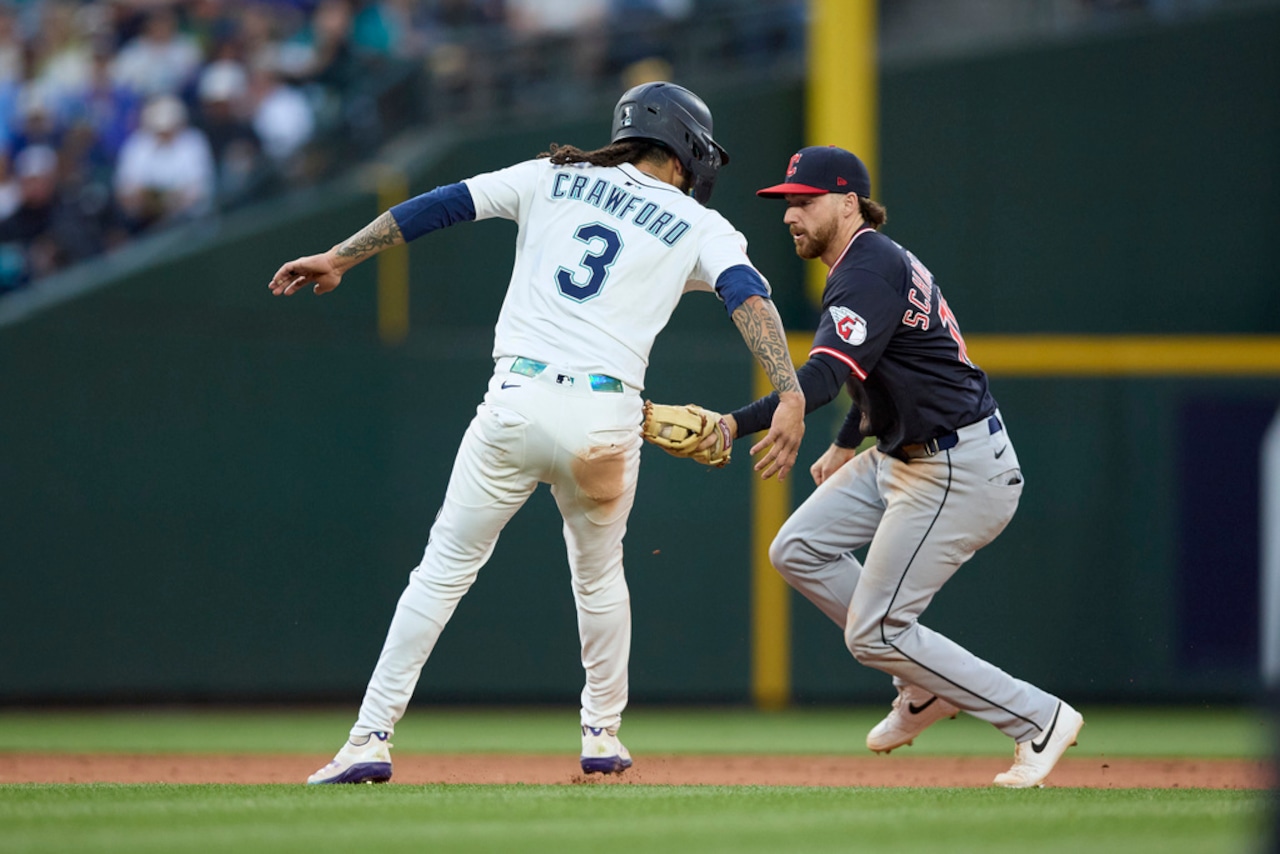
SEATTLE — Data can drive a lot of what baseball players and coaches do from day to day and inning to inning. But the Guardians demonstrated how preparation and execution can come together in the fifth inning Saturday when Tanner Bibee caught Seattle base runner J.P. Crawford trying to steal third at a critical point in Cleveland’s 4-3 loss to the Mariners.
Bibee used an “inside move” to spin and throw to shortstop Gabriel Arias who caught Crawford in a rundown where he was eventually tagged out by second baseman Daniel Schneemann. After the game, Manager Stephen Vogt credited associate manager Craig Albernaz for having Cleveland’s defense ready to make the play.
“(Albernaz) does an unbelievable job with our running game,” Vogt said. “He scouts the other team. He knows tendencies and seems to always find those spots to get us out of big innings.”
A detailed look inside Cleveland’s approach reveals how advanced scouting, regular practice, real-time communication, and player versatility gives the Guardians a competitive edge in executing complicated defensive plays and making strategic in-game decisions.
“Everything, everything comes into play,” explained Albernaz. “The advanced scouting side of things, whether it be video or numbers or data that gives you a thought process and then you kind of see the game and how it’s unfolding.”
The preparation begins long before the first pitch of any game. “We drill it so much in spring training, then even in spring training games, like we rep the crap out of it,” Albernaz said. “And then we actually are pretty active during the season as well. So it’s just something that we’re very cognizant of with all our guys.”
Communication between the Guardians players and coaching staff also plays a critical role in the team’s in-game strategy and execution. Mound visits serve multiple purposes, including giving Vogt and Albernaz time to organize thoughts and relay instructions. That includes pitching coach Carl Willis, who always seems to pick the perfect time to emerge from the dugout.
“Carl is unbelievable,” Albernaz said. “It just buys me time to kind of get my thoughts together, and then (Saturday night) I happened to put the play on.”
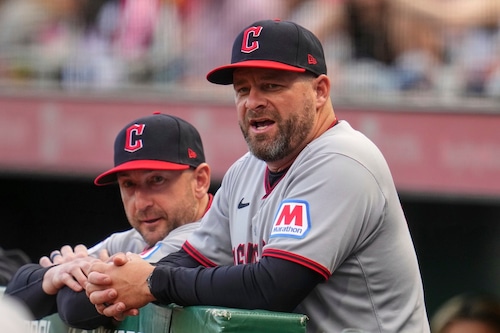
Cleveland Guardians manager Stephen Vogt, right, stands in the dugout next to associate manager Craig Albernaz, left. (AP Photo/Gene J. Puskar)AP
Technology has enhanced communication beyond traditional hand signals, as well. “The beautiful thing is Pitchcom,” Albernaz said. “You don’t have to give it a physical sign, you just hear it in the ear. So it’s a much easier way to process what’s going on.”
But Cleveland’s calling card, or as Albernaz likes to call it the club’s greatest strategic asset, is its defensive versatility.
“We can move guys around,” Albernaz said.
Players like Angel Martínez, transition seamlessly from center field to second base, Daniel Schneemann excels at both second base and shortstop and can move to the outfield for an inning if needed. This flexibility allows for in-game adjustments and creative pinch-hitting strategies.
Guardians coaches work to stay ahead of developing in-game situations, trying to foresee what matchup an opponent will present. This has cultivated a culture where players anticipate strategic moves.
“They’re already accustomed to what’s going on,” Albernaz said. “They see the bullpen, they say, ‘Who’s getting up there?’ They’re already running to the cage to get going.”
Open communication between coaches and players has fostered buy-in, even from veterans who might be pinch-hit for in certain situations.
“(Vogt) does a great job of communicating with the players exactly what we think in the dugout,” says Albernaz. “We tell them this is exactly what we’re thinking, good, bad or indifferent.”
While the coaching staff doesn’t expect players to be happy about being removed from games, the culture of transparency helps players understand and accept strategic decisions. “We never want them happy about it,” Albernaz said. “They might understand, but we don’t want them happy.”
This philosophy extends to players not in the starting lineup. When all 13 of Cleveland’s position players show up to the park, even the guys who are not starting know they can impact that day’s game. The result is a team culture where veterans model preparation and readiness for younger players.
“That’s why we were excited to have David (Fry) back,” Albernaz said. “He’s our bullet against lefties, so we just have to find the right matchup.”
Generative AI was used to organize and draft this post.