
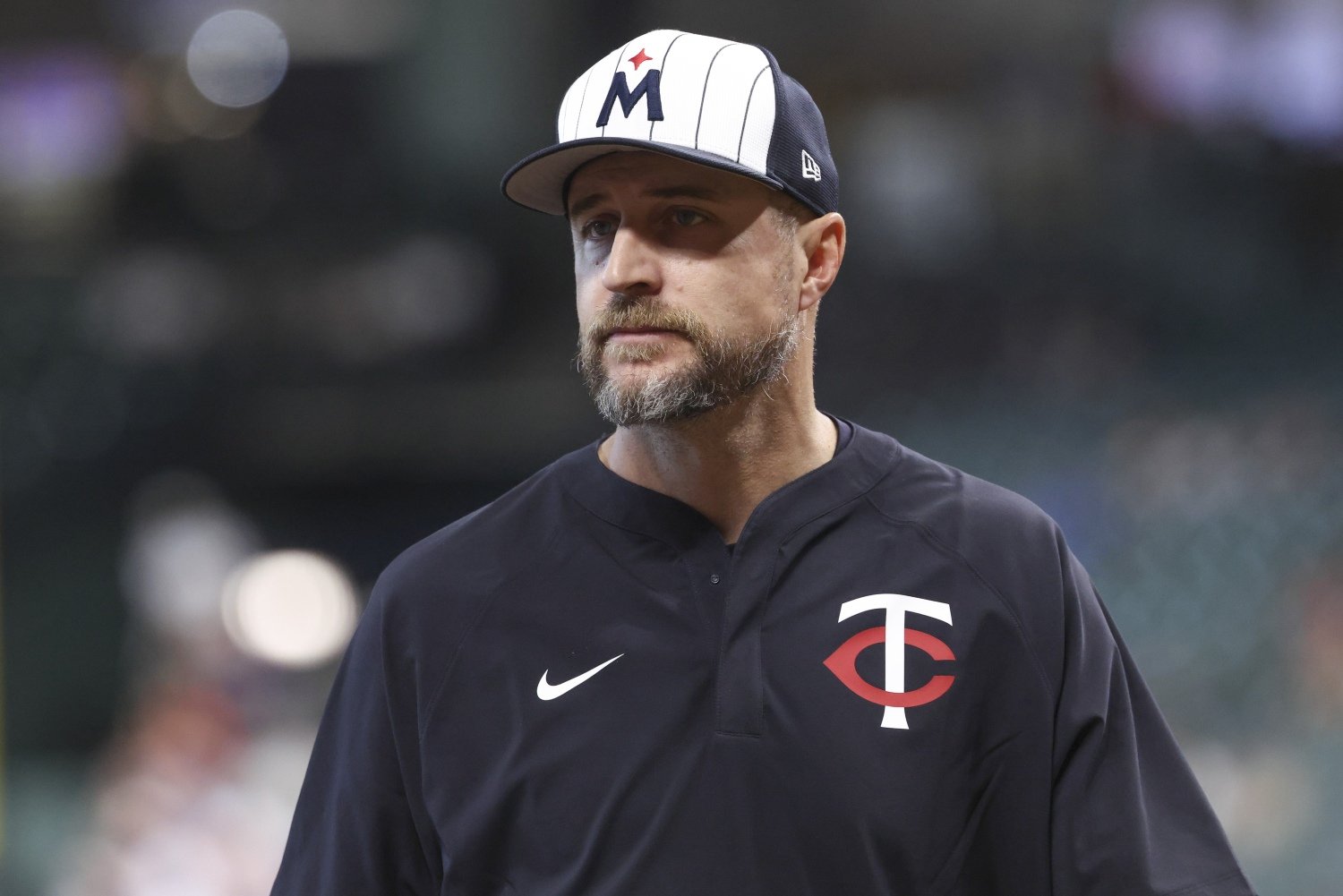
Sunday’s finale against the Astros ended in heartbreak for the Twins. After carrying a 1–0 lead into the bottom of the ninth, the team saw Houston tie the game and force extras. With the new extra-innings rule in place, the Twins started the 10th with a runner on second base. But what happened next raised eyebrows.
Christian Vázquez led off the inning for Minnesota. Facing Josh Hader, one of the nastiest closers in the game, the Twins let Vázquez swing away. He popped up to the catcher, in a non-competitive at-bat: no advancement, no pressure, just an out. The next two batters followed suit with quiet outs of their own, and the Astros walked it off moments later in the bottom of the inning.
On the surface, it might seem like just another missed opportunity. But given the situation, this felt like a strategic failure.
The Astros offense had been nearly lifeless for two games. They managed just four hits on Saturday, and only three through the first nine innings on Sunday. They had scored just three runs in their last 17 innings before scratching across the tying run. The Twins had a great shot to grab some offensive momentum, and one run in the 10th would’ve shifted the pressure squarely back onto a slumping Houston lineup. That made the Vázquez decision puzzling.
Coming into the game, Vázquez was hitting .198, with a .583 OPS on the year. Even with the platoon advantage (against the lefty, Hader), he hadn’t been faring well. Last season, he posted a .200 average and .557 OPS against lefties. This year, that’s dipped even lower to .083 with a .339 OPS. There was little reason to believe he could do damage against a pitcher of Hader’s caliber.
Yes, Vázquez did homer off Hader last season, in a dramatic walkoff moment at Target Field. But he was otherwise 0-for-2 with two strikeouts against him. If the Twins were banking on that one swing happening again, they were chasing ghosts. Vázquez’s hitting profile simply isn’t the type that thrives against a closer the caliber of Josh Hader.
Maybe Rocco Baldelli didn’t ask Vázquez to bunt because he isn’t a great bunter. That’s possible. But at some point, a major-league hitter has to be able to square around and put the bat on the ball. And if the team truly didn’t trust him to do that, they had options. Kody Clemens and Jonah Bride were both available off the bench. Either could have been asked to lay one down. Yes, that would’ve burned the DH, but in the 10th inning of a road game, with the bottom of the Astros order due up and the Twins likely needing just one run to win, the odds of that DH spot coming up again were incredibly slim. That’s a trade you make without hesitation.
And that’s the bigger picture here. Since the ghost runner rule was implemented in 2020, the Twins have consistently avoided bunting in extras. Their six sacrifice bunts in that time rank 13th out of 15 AL teams. They’ve leaned heavily into the analytics that generally discourage bunting—especially for road teams, where scoring multiple runs is ideal.
But this wasn’t a generic situation. This was context-rich. The Twins had their weakest hitter at the plate. The Astros had one of the league’s best closers on the mound. The Twins had their top of the order ready to cash in a runner from third. And Houston had the bottom of their order coming up in the next half inning. Everything pointed toward manufacturing one run.
Instead, the Twins chose to play it straight. They gave Vázquez the green light. It didn’t work, and the game slipped away.
There’s room in baseball for numbers and nuance to coexist. Sunday’s loss was a prime example of where feel for the game, momentum, and matchup context should’ve mattered more than the numbers in a vacuum. And if the Twins want to capitalize on these tight games moving forward, they’ll need to recognize when it’s time to bunt, even if it doesn’t align perfectly with the spreadsheet.
What do you think? Should the Twins have bunted? Leave a comment below.