
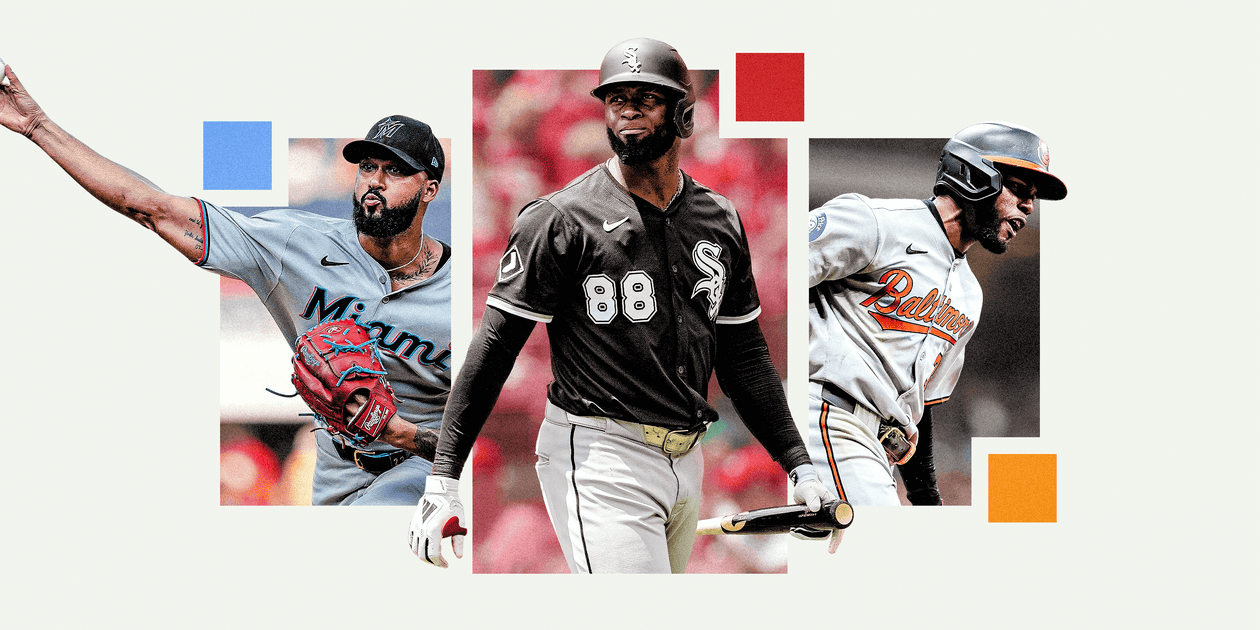
Well, trade deadline season started earlier and louder than expected.
Sunday’s blockbuster sending Rafael Devers from Boston to San Francisco is likely to remain the biggest trade between now and July 31. But that doesn’t mean Devers is the only influential player who will be on the move.
Here’s our MLB trade deadline Big Board — 30 names that could move in the next six-plus weeks and affect a pennant race. This is the first of three Big Boards we’ll run between now and the trade deadline. For now, we’re focusing mostly on players whose teams have less than a 30 percent chance of making the postseason, according to FanGraphs. This is not a hard-and-fast rule, which is good because teams bounce around that threshold daily this time of year.
We’ve also taken into account the teams’ respective histories of deadline action. Milwaukee traded Josh Hader while in first place. Atlanta has moved aggressively to add even when under .500. So there are Brewers on this list, but for the moment no Braves — a dynamic that very well may change for Version 2.0.
Some bookkeeping: The player’s listed age is how old he is on June 30, B/T is the classic bats/throws, the money owed is via Baseball Prospectus and covers only the days after July 31, the WARs from 2023 to present are updated through Sunday, the WARs for ’25 are a projection from now until the end of the season. Both are from FanGraphs.
The likelihood of being dealt is a best-guess projection (from red as unlikely through yellow to green as likely) and the rankings are beyond reproach.
Position 1B 1B/3B 2B 3B CF OF RP SP

Loading
Try changing or resetting your filters to see more.
To be clear: There’s little reason for Boston to even entertain offers for Duran unless the return is substantial. His production has predictably fallen short of his 2024 breakout, but Duran remains a solidly above-average hitter with lots of speed and the ability to play center field.
Perhaps most importantly, he’s under team control through 2028, making him a player teams can build around. Of course, even with a sudden influx of stud prospects joining the lineup, the Red Sox could continue to build around him, too. The Padres have already been linked to Duran and surely they won’t be alone.



The projection systems don’t like the Brewers, basically pegging them as a .500 team that is more likely than not to drop out of the playoff hunt as we go forward. If that’s true, then Milwaukee may consider moving its best trade piece in Freddy Peralta, whose $8 million club option next season would be enticing to most teams. In terms of talent, he’s no longer “Fastball Freddy” and now sports a true four-pitch arsenal with decent command. His top 25-type results by most metrics since he became a starter in 2021 hide some erratic streaks, but overall, he’s a solid number two, and cheap.


Mullins doesn’t hit for high averages, but he has 20-homer power and 30-steal speed, and few center fielders have a more impressive highlight reel of jaw-dropping catches. As a 30-year-old impending free agent, he might not be part of Baltimore’s plans any longer.
Legit center fielders with above-average bats are typically very hard to find at the deadline. But the Orioles could opt to keep Mullins and take their chances with draft-pick compensation via the qualifying offer. Either way, they won’t have much motivation to move Mullins for a marginal return.


Probably the best starting pitcher actually available at the deadline, Alcantara comes with an affordable contract ($17 million in 2026, with a possible $2 million buyout of a $21 million club option in ’27) and team control until 2027, so almost any budget can hold him. The prospect price should be high for a pitcher who can keep the ball in the park and on the ground, but it’s complicated by his lack of command coming back from Tommy John surgery.
Since turfing his slider, though, he’s looked better at harnessing the ball and seems close to being the Sandy of old. He isn’t a pitcher who strikes out the lineup, but he is a potential playoff starter, and the supply of those is very limited this deadline.
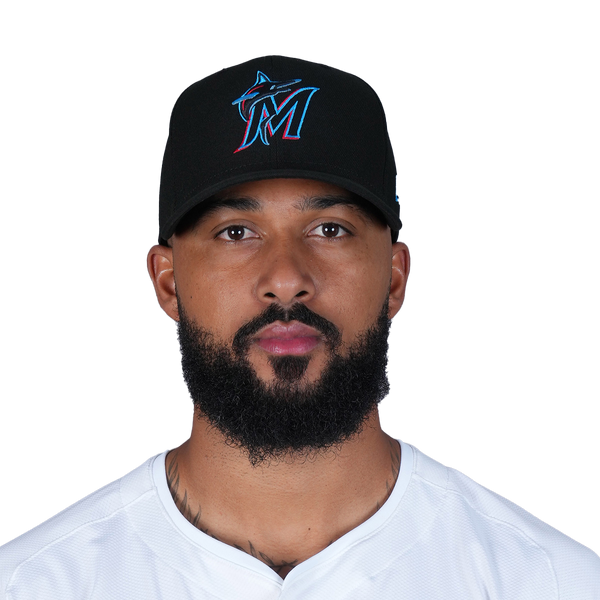

Whereas trading other integral members of the Arizona roster would signal a full sale, the Diamondbacks could conceivably deal Suárez and still maintain they want to be competitive in 2025. They have Jordan Lawlar, a consensus Top 30 prospect in the game, raking in Triple-A Reno. Moving Suárez to acquire future help while maneuvering with other deals to buttress the roster would be the kind of thing Mike Hazen has done before, most notably when he traded away Zack Greinke in 2019 but also brought in Zac Gallen.
Nobody on this list has hit more career homers than Suárez (three shy of 300, through Sunday) or more homers since the start of 2023. Rafael Devers will end up as the best bat moved this season. Suárez has a solid case for No. 2.


After elbow injuries to their ace (Corbin Burnes) and both closers (A.J. Puk and Justin Martinez), the Diamondbacks are in a tough place. They’re competitive, and staying afloat in a difficult division, but they’re also going to have to play the Dodgers, Giants, and Padres a lot down the stretch, which might make it hard to pull ahead of the Wild Card contenders.
Arizona will probably wait until the last minute to make the decision to sell, but when that happens, a pitcher on an expiring deal like Zac Gallen – good, but not great, since his stuff has really regressed – would be the easiest move to make.

Abreu, like Duran, could become expendable in Boston thanks to the wave of young bats. But he’s also young enough (26) and under team control for long enough (2029) to be part of the Red Sox’s long-term plan, putting them in the driver’s seat for any potential negotiations.
Even if the Red Sox are open to trading Abreu, there’s no rush to do so now. He’s putting up very good numbers at the plate that are in line with his strong rookie showing, and he will be in the mix for a second Gold Glove Award and won’t even be arbitration eligible until 2027.

Robert has struggled since being a first-time All-Star in 2023, batting in the low .200s with a sub-.650 OPS and 32 percent strikeout rate. That makes his deadline value tricky to assess in the final guaranteed season of his contract, but the White Sox should be motivated to get whatever value they can.
Any team willing to trade a decent prospect package for Robert would need to see value in his $20 million team options for 2026 and 2027. His defense and speed still shine at 27, and Robert still has plenty of raw power, but his strike-zone control going from bad to worse makes him a deadline wild card.


The Orioles have probably dug too far a hole and have too much long-term work to do on their pitching staff for the organization to hold expiring deals for a slim playoff chance at the deadline. With Zach Eflin, Tomoyuki Sugano, and Charlie Morton all finishing their deals at the end of the season, it behooves Baltimore to get whatever prospect arms it can, preferably on the higher-upside lower-floor spectrum of things. They can always re-sign Eflin later if they still like his medium-stuff high-command type (they do).

Traded last winter to Arizona after making his first All-Star team, Naylor is in the midst of perhaps his best season. His average is up around .300 thanks to some better batted-ball luck and his strikeout rate is way down. Only 14 qualified hitters strike out less often than Naylor, and among them only Mookie Betts and his old teammate José Ramírez hit with his kind of power. (That’s never bad company to keep.)
This is a robust market for teams in need of first basemen, with Ryan O’Hearn, Jake Burger and Rhys Hoskins also potentially available.

Seemingly an annual candidate to be moved at the deadline, Ward is a good right-handed power bat whose late-blooming career path has him under team control through 2026 despite already being 31.
Ward has 25-homer power, generally crushing left-handers and holding his own against right-handers while posting an above-average OPS+ for the fifth straight season. But will the Angels finally decide to move him?


The Marlins don’t have to move Edward Cabrera. He’s under team control through 2028, and his front office would have to hope that the team would’ve made some progress toward competitiveness by then. He’s also made some recent improvements: he dropped his arm slot, added a sinker, moved to the curve over the slider, and is in the midst of his best stretch of command ever. And if he threw this way for an entire season he might just improve the return.
Other teams have to be enticed by the recent form, though, and he has the best stuff of any starting pitcher thought to be on the market.
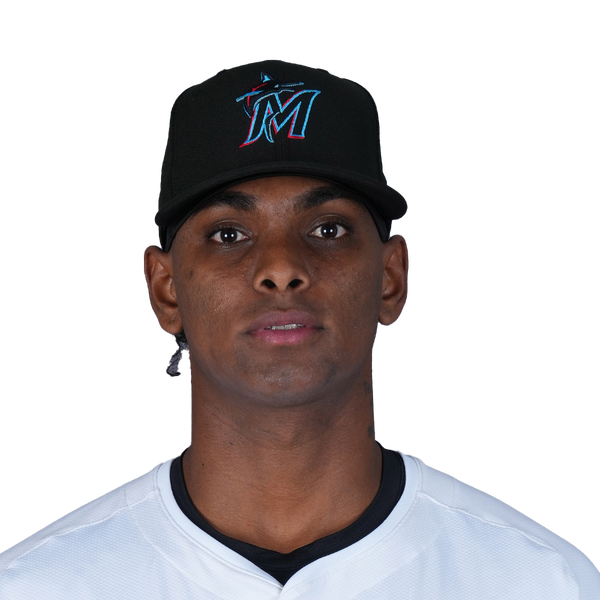
So we’re gonna go out on a limb and suggest maybe, maybe, the Rockies should sell at this deadline. Part of Colorado’s current malaise owes to front office inactivity at prior deadlines, and McMahon might be their best piece to dangle this time around. By now, McMahon is who he is as a hitter, striking out too much and producing at a level just below league average. But he’s an outstanding defender and the kind of complementary piece that could help a contender into October.


Whatever has gone wrong in Baltimore this season, it has not been O’Hearn’s fault. In 2025, the pending free agent has been the best offensive player on this list, putting together a career year at an opportune time. He’s maintained most of the drop in strikeout rate he displayed last season, he’s added to what was then a doubling of his previous walk rate, and he’s performed well enough that his expected numbers align with his improvement across the board. While he’s seen more at-bats against left-handed pitching this season, he’s still much better suited to being the long half of a platoon at first or DH.

You can take the analysis about Zac Gallen and reproduce it here, but there is something interesting in the ranking difference between the two starters. They have almost identical projections despite a vast difference in their on-field work so far this year. Is it because those numbers are reaching back to a Gallen who’s no longer on the mound right now?
Otherwise, Merrill Kelly’s superior stuff, strikeout rate, and walk rate seem to suggest that he’s the guy to get from Arizona.

Chapman’s fastball still regularly hits triple digits at age 37 and he continues to be one of the league’s most dominant relievers, with the added wrinkle that he’s working in the strike zone more than ever.
He’s capable of dramatically altering a contender’s bullpen as a setup man or a closer. And this is nothing new for Chapman, who was traded during the season in 2016 and 2023, winning the World Series with his new team in both years.

Garcia is a below-average hitter for the second straight season, and at 32 it’s possible his middle-of-the-order days are over. But the two-time All-Star still has big power and remains an excellent defensive outfielder with a great arm.
Memories of his amazing 2023 postseason run could convince some teams to bet on there being gas left in the tank. And if Garcia gets back on track in the second half, his new club would have him under 2026 control via arbitration.


Nick Martinez won’t wow you with stuff – his vulcan changeup is the only pitch that’s above average in that regard – but he throws six pitches with good command of each. Despite his poor strikeout rate, he’s been able to limit the walk rate and keep hitters guessing enough that they don’t do lots of damage when they connect. He’s also had a lot of experience as a starter and as a reliever in the same season. His versatility makes him a great pickup for a team that just needs an arm to help them get to October.


The underlying numbers are as much of a mess as the top-line numbers for Buehler right now. He’s showing the worst stuff of his career, but the velocity has been trending up. Through Monday he has four games in which he’s struck out more than a quarter of the hitters he’s faced, and then five games in which his strikeout rate is closer to 10 percent. He’s struggled with walks and homers, and then he’s thrown gems.
Buehler is most interesting to a team that thinks they have a plan for him – to a team that needs to roll the dice and see if it can’t get a playoff starter on the cheap.

Martin is 39, but the long-underrated setup man has shown no signs of slowing down. His ability to relentlessly pound the zone without giving up hard contact is rare and he’d be an ideal plug-and-play rental for almost any contender’s bullpen.

Burger’s struggles this season are not rare among his fellow Rangers. His walk rate has dropped to a dangerous low, in the bottom five in the sport. Only Logan O’Hoppe has more strikeouts per walk among qualified hitters so far in 2025. The good news is that Burger has actually been better in the first half this season than he was last year. In 2024, he turned it around quickly after the All-Star break, at one point hitting nine homers in 13 games.

Andrew Heaney’s best pitch is his fastball. It’s his only pitch that registers as above-average when it comes to stuff at least. The lefty’s response this year has been to throw more types of meh pitches. He’s debuted a sinker and a slow curve this year, and is now throwing three breaking balls, two fastballs, and a changeup. None are great, but all are enough to produce league-average type results.
Heaney can help the back end of a rotation, and then theoretically be a decent lefty reliever in the playoffs, though his results as a reliever have not been great.


Thomas’ middling bat and Arizona’s strong outfield depth could create the right conditions for trading the former Top 100 prospect. He may always be a bottom-of-the-order hitter, but teams that view Thomas as a legit glove in center field will be just fine to fill the position with someone under team control through 2028.

It’s been four years since Moncada was a healthy, productive player — long enough ago that it happened for a White Sox team that won the division. While Moncada has been quite good for the Angels when on the field this season, he’s been on the injured list twice with thumb and knee ailments, the latter currently sidelining him. Moncada thus represents a risk/reward play in this market.
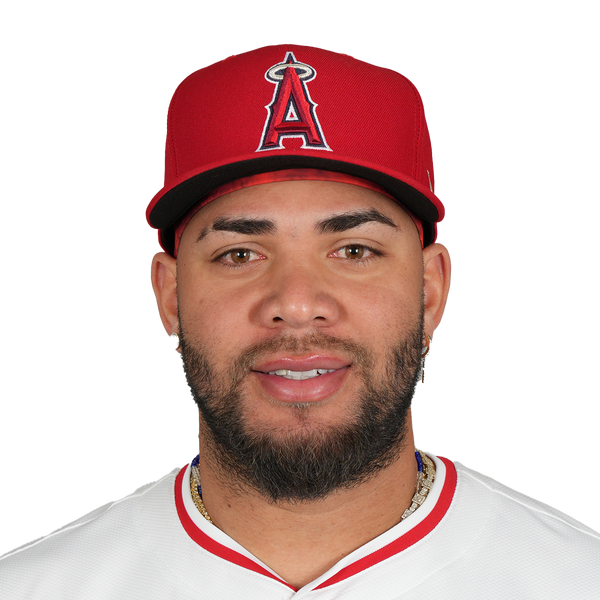
The best time for the Pirates to trade Bednar would have been when he was an All-Star in 2022 and 2023 with plenty of team control left. But he’s at least pitching better this year than last, currently posting the best FIP of his career while reclaiming the closer role in Pittsburgh. He’s striking out more than a third of opposing hitters and is showcasing the best walk rate of his career. Put simply, he’s been better than his still-good mid-threes ERA.

Hurt now, and on a team that’s straddling .500 in a weak division, Tyler Mahle may not get traded at all. The Rangers could go on a run, or this shoulder fatigue could grow into something worse.
Even if those things get resolved in a manner that would incentivize a trade, there’s the fact that Mahle’s peripherals are poor. His strikeout rate, walk rate, stuff, and projections all point to fairly massive regression. Most teams would consider him a back-end option.

While Hoskins has been better this season than last, he still hasn’t returned to the level of production he consistently reached while in Philadelphia. He still walks a good amount and can take good pitchers yard, the way he did in an outstanding NLCS back in 2022 with the Phillies.
Even if they’re close to contending, the Brewers may be motivated to move Hoskins to save the $4 million buyout on a 2026 mutual option that is unlikely to be exercised.

Hays is on the injured list with a bruised foot, so interested teams will need to see him healthy before any offers are made. But he hit for average and power before the injury, and a career-long ability to mash left-handed pitchers could make him especially appealing to contenders lacking right-handed thump.

Urías is one of the success stories from Baltimore’s rebuild, a waiver-wire pickup who played his way into an everyday role while contention was far from the club’s mind. He’s been a solid if unspectacular infielder since 2021, consistently producing about 10 percent better than league average at the plate and earning one Gold Glove at third. He represents a less exciting if safer option at the hot corner than someone like Yoan Moncada.

Look past the ERA that starts with a five and everything else about Detmers is intriguing. His strikeout rate has jumped every year of his career. He’s got above-average Stuff+ on four different deliveries as well as above-average Location+. He would not be the first pitcher to leave the Angels and improve in an organization with more resources at its fingertips. And an enterprising team might think of Detmers as a reliever this year with the chance to return to the rotation next season.

(Top illustration by Will Tullos / The Athletic;Photos by Dylan Buell, Kylie Bridenhagen, Jasen Vinlove / Getty Images)