
After the Justin Ishbia timeline to takeover was announced, the most popular sentiment from Sox fans was “Why do we have to wait?”
According to information released by the White Sox, the earliest Ishbia can buy Jerry Reinsdorf’s controlling stake in the team is in 2029 and the process could go as far as 2034, when Reinsdorf is 98. (The Sox were careful to note the deal could also just get squashed in the future.)
I reported there could be a multiyear grace period when I broke the news in February. We know Reinsdorf doesn’t want to give up control. He loves going to the park every day and thinks he can help make the Sox’s situation better. (We all have our delusions.)
Now, 20,000 Sox fans would buy season tickets if it meant a change in leadership right away, but I think it’s in Ishbia’s best interest to have a slower build-up.
Why? Well, for one, he’s already putting money into the team, which gives him an entrance into the team’s business dealings. Most minority owners were allowed in the dining room and that’s it.
The team noted Ishbia “will make capital infusions into the White Sox as a limited partner in 2025 and 2026 that will be used to pay down existing debt and support ongoing team operations.”
This is obviously aimed at putting the team in a better financial position while Jerry and Justin look to solidify the future stadium plans. The team’s current lease at The Rate with the Illinois Sports Facilities Authority ends after 2029, and Reinsdorf wants to move.
More importantly, why would Ishbia want to take over now? The team can’t spend its way out of its current state. General manager Chris Getz’s bets on prospects have to cash in to build a foundation. And after the 2026 season, the Collective Bargaining Agreement between the owners and players expires.
Everyone expects a drawn-out labor battle between players and owners — the 2027 season could be affected — and if I were Ishbia, I’d want to stay out of it and come out clean on the other side. We saw how Reinsdorf’s actions in the 1994 mess affected his business. Attendance at Sox games cratered and didn’t improve for a decade. A World Series title run helped until the shine of that wore off.
Ishbia has time to learn the game, so to speak, while baseball settles its labor issues.
By the time he takes over, a new CBA will be in effect and we’ll know where the Sox will be playing. What’s four to nine more years among friends?
Leo Lerner, an old Chicago neighborhood newspaper publisher, was known to have said that if someone dropped a nuclear bomb on the Loop, the lead of his front-page story the next day would be about how many windows broke in a North Side corner from the aftermath.
I was reminded of our hyperlocal focus after Sunday night’s big Rafael Devers trade.
The next day on Chicago sports radio, I heard a conversation that reminded me of my initial thoughts when the Boston Red Sox pulled off a mid-June shocker, trading Devers and his contract to the San Francisco Giants.
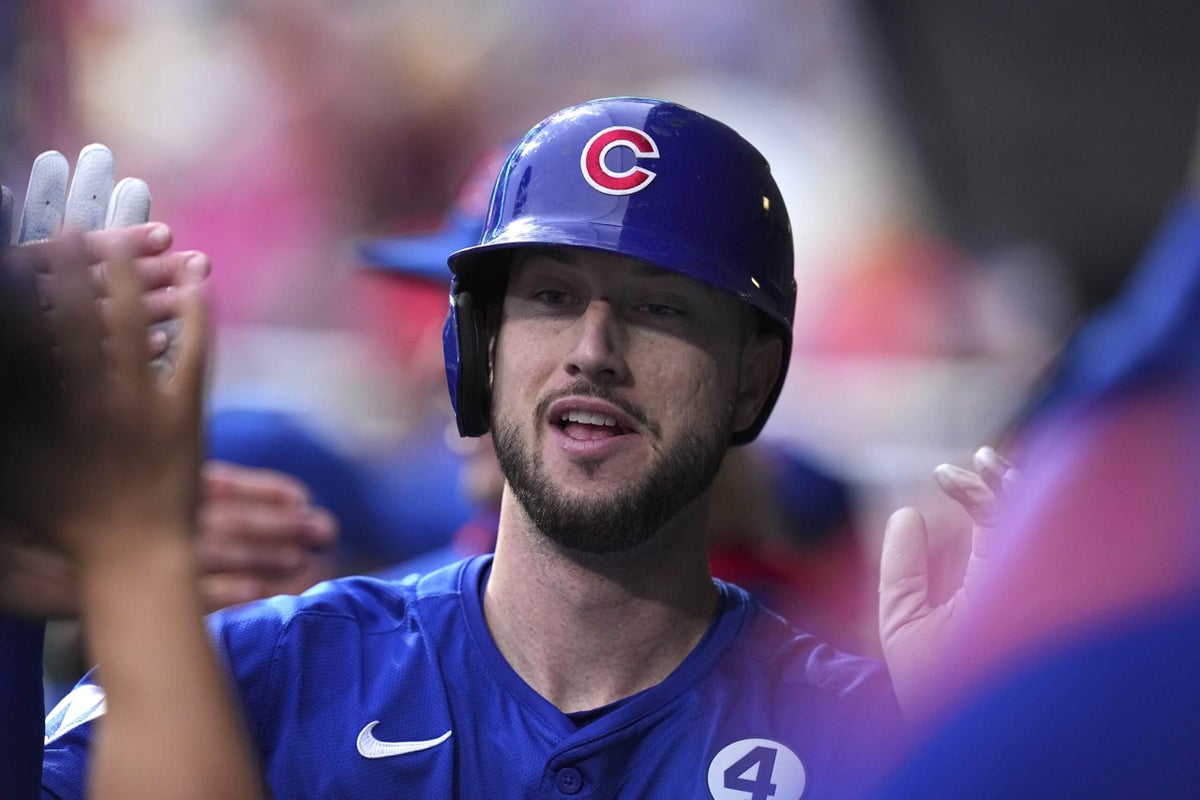
How will this affect the Cubs signing Kyle Tucker?
The answer: Who knows? The Giants were looked at as a contender for Tucker, but now they have Devers’ contract, which pays him between $27.5 million to $31 million between now and 2033 (with deferrals). Would the Giants bid for what looks to be an even bigger long-term contract?
The Red Sox could be a possibility, but as longtime baseball reporter Tom Verducci said on 670 The Score on Monday afternoon, the Devers trade might just force Boston to sign Alex Bregman to an extension.
So maybe it won’t make a lick of difference. The ball, of course, is in Tom Ricketts’ court anyway. The Cubs have the money and space to sign Tucker to the biggest deal in franchise history. By his actions (and inaction), Ricketts has made budgets and payroll a central part of any discussion about the team, so it’s going to be part of the story.
It’s not time to fret about the future right now, given the Cubs’ success in the present. Tucker has been everything the Cubs hoped for as he’s putting up MVP numbers on a World Series contender. He is currently second to his teammate Pete Crow-Armstrong in All-Star votes among NL outfielders.
Give credit to team president Jed Hoyer, the Cubs are in contention for the best record in the National League with a payroll believed to be the seventh highest in the NL. Hoyer, who is also on an expiring contract, should have plenty of wiggle room to add salary at the deadline if he wants to acquire pitchers with significant salary commitments. The better the Cubs do, the more money the team makes. That’s just Cub Math.
So, if the success of the team continues, the ballpark will be full in September and playoff money will follow. With labor strife on the horizon, Ricketts will be backed into a corner to spend on a modern-age superstar contract, and it shouldn’t matter if Boston or San Francisco are bidding too.
Billy Donovan will keep getting paid.
Marc Stein, who now writes a Substack newsletter, just reported that the Bulls and Donovan are working on a contract extension.
The Bulls are in the process of extending coach Billy Donovan’s contract, league sources tell @TheSteinLine.
Donovan, of course, was one of five coaches under contract that the Knicks sought permission to speak to.
More NBA from me: https://t.co/zUF9RvJwNI
📷: @CHGO_Bulls pic.twitter.com/FLQoDx6k33
— Marc Stein (@TheSteinLine) June 15, 2025
This would be Donovan’s second contract extension since signing an initial four-year deal believed to be worth upwards of $24 million in the fall of 2020. The first extension was revealed two years later. I write “revealed” because the team didn’t properly announce it.
Why? Who knows. Among EVP of basketball operations Artūras Karnišovas, GM Marc Eversley and president Michael Reinsdorf, Donovan is the only one who regularly speaks to the media.
Karnišovas talks after or before big events, though he doesn’t do much to engender confidence in his front office. Eversley, who was billed as an up-and-comer when he got hired here, is scheduled to address the Bulls’ status after the NBA Draft on June 25. The team is scheduled to pick at No. 12.
My only question for either of them is the one I’ve been asking for a year now: How could you not get a first-round draft pick from the Thunder, who have roughly a hundred of them, in addition to Josh Giddey when you traded Alex Caruso, who is now “Carushowing” in the NBA Finals? I feel like Frank Costanza talking to George Steinbrenner whenever it comes up.
Stein reported Donovan had another year left on his deal and the Knicks came calling to see if they could interview him to replace Tom Thibodeau, who also happens to be the last successful coach in Chicago. The Bulls rejected the request, which makes an extension the next logical step.
Donovan is better at his job than anyone in the organization this side of Benny the Bull, but his Hall of Fame C.V. hasn’t meant much in terms of actual success for the Bulls, who are 195-205 in Donovan’s five years here. They made the playoffs once, in 2022, and lost to Milwaukee in the first round, 4-1. Since then, they’ve made the Play-In Tournament three times as the ninth or 10th seed and won a total of two games, failing to advance to the real playoffs and losing to Miami three straight times.
Donovan’s Bulls have been so consistently mediocre, they haven’t even been at .500 past the first week of November — you know, when the season starts — in the last three seasons.
Under Donovan, the team isn’t a joke, but it isn’t relevant either.
He’s a good coach and an engaging guy, though, and I know a little about what’s really valued in the Bulls organization. A little personality goes a long way.
I don’t think they should’ve let him go, though I was kind of hoping Donovan would leave and go to a better organization where he could win a little before his career ends.
But it seems like he likes his situation in Chicago. Who wouldn’t? He’s a millionaire in a world-class city and he doesn’t have pressure to win more than 39 games a season. That’s a good gig if you can get it.
(Photo of Kyle Tucker: Mitchell Leff / Getty Images)