
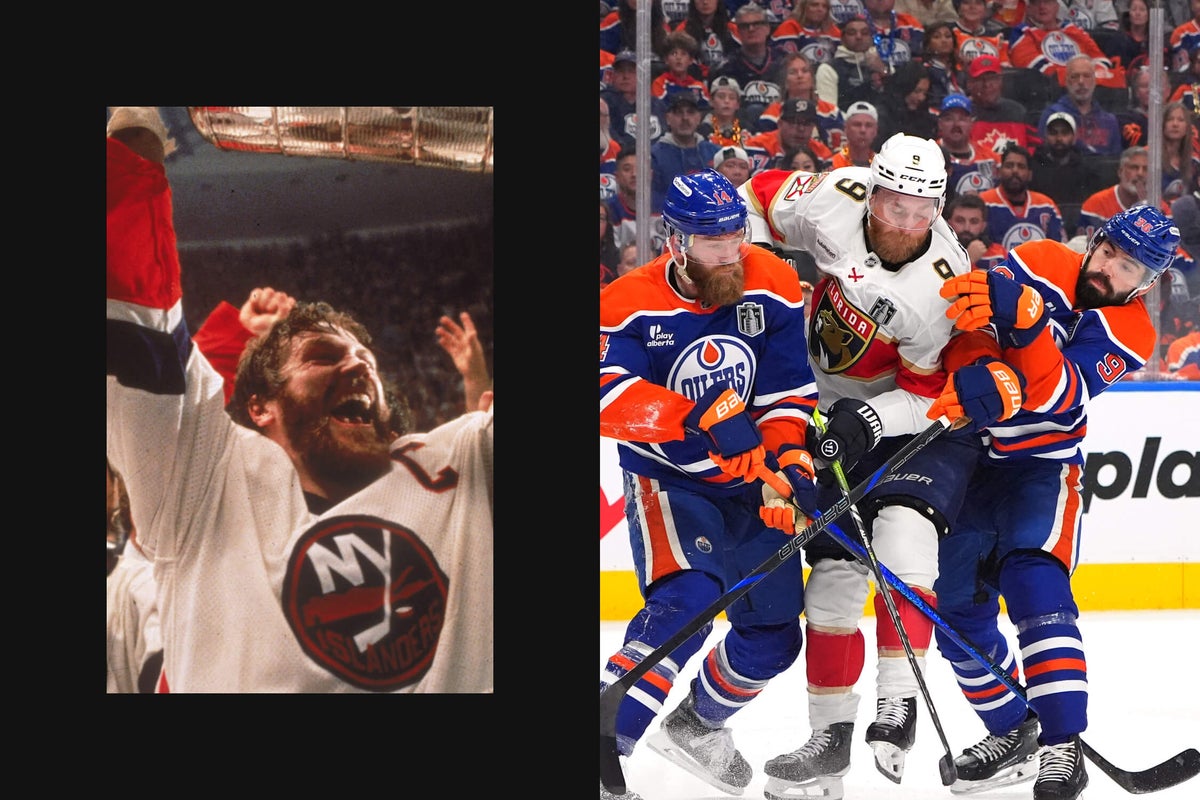
Every tradition starts somewhere. However, the presumed inventors of the NHL’s most famous postseason ritual disagree on its origin story.
Consensus holds that the New York Islanders stumbled upon the stubble-turned-scraggly process of not shaving during the 1980 Stanley Cup playoffs, the first of their four consecutive championship runs. Denis Potvin, a Hockey Hall of Fame defenseman and captain of those dynastic Islanders, recalled a cross-country series against the Los Angeles Kings in the first round, a dizzying best-of-five affair that the Islanders won in four games over five days. Players never picked up the razors for a practical reason.
“All we wanted to do was eat and sleep between games because it was so demanding,” Potvin said. “I just let the beard grow. I know a bunch of other guys did the same thing, the guys who could grow them. We kept winning, and it just kept going on.”
Those Islanders would triumph in their next 15 postseason series before falling in the 1984 Cup Final to the Edmonton Oilers. By then, the playoff beard had taken on a life of its own. “We were too tired to shave,” Potvin said. “Then we just didn’t.”
The tradition goes something like this: Players shave the night before, or even the day of, their playoff opener. They don’t shave again until their team is eliminated or the Cup is won.
“That’s part of it, you know?” Potvin said. “To win the Stanley Cup is a miserable two months. The beard is a reminder of how much you have to put into it.”
There are exceptions, such as Oilers defenseman Darnell Nurse, who has forgone the playoff beard this year because he grew one when Edmonton lost the 2023-24 Cup Final in seven games to the Florida Panthers. But for the most part, players on every Cup champion for going on five decades have gone without shaving — all because the Islanders kept winning while growing out their beards during the early 1980s.
“The first person I remember putting us with the beards was Stan Fischler,” said Ken Morrow, a defenseman with those dynastic Islanders.
Fischler, a longtime chronicler of the NHL and specifically its New York/New Jersey clubs, wrote a story about the Islanders and their beards “at some point during our run,” Morrow said.
“But I don’t recall it becoming quite as popular for other teams to grow beards until later in the decade. And now, of course, every team does it. But I don’t think we had a conversation about it, at least not that first year.”
Morrow didn’t grow a beard during the 1980 playoffs. He already had one when he joined the Islanders after winning the famous “Miracle on Ice” gold medal with Team USA at the Winter Olympics in Lake Placid, N.Y. — even though he couldn’t believe that the late United States coach Herb Brooks allowed him to keep his facial hair.
“Guys shaved back then; that’s just the way it was,” Morrow said. “I had my beard when I came to the Olympics camp. When I made the team, Herbie asked me if I wanted to keep it, and I said I did.
“So maybe I’m the wrong guy to ask. I had my beard when our playoffs started. I kept it after they ended, and for years after I wore a beard.”
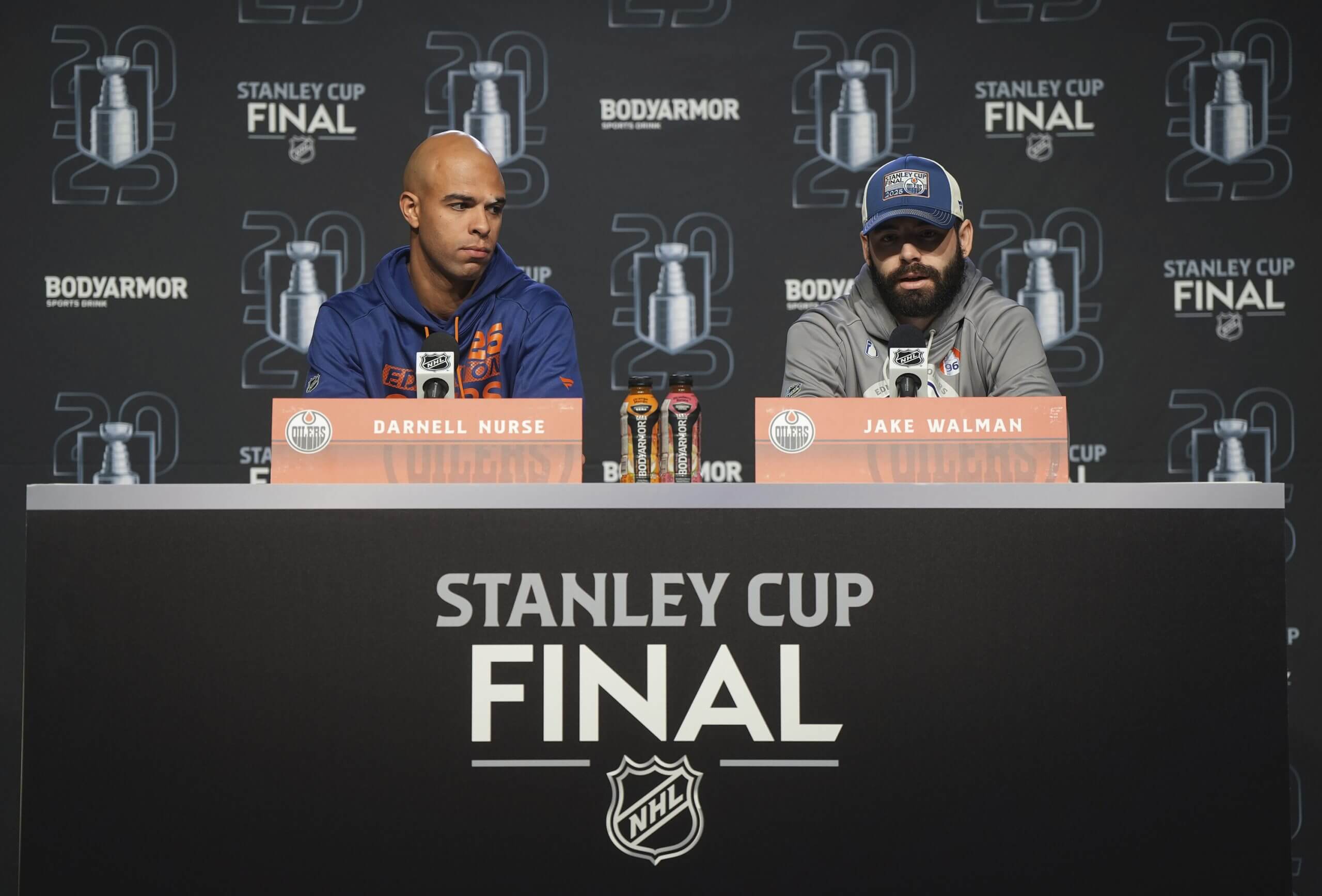
The Oilers’ Darnell Nurse, left, forewent growing a playoff beard this year. The same cannot be said for teammate Jake Walman. (Darryl Dyck / The Canadian Press via AP)
Bryan Trottier, a Hall of Fame center who spent 15 of his 18 seasons with the Islanders, was a mustache man at the time before converting to fuller facial hair. He is aware of the mythology surrounding his Islanders and the playoff beard, but is unsure how much of it is true.
“What’s the saying: ‘When fact becomes legend, print the legend?’ There might be a bit of that with us and the playoff beards,” Trottier said. “Our guys grew beards. Were we the first ones? I don’t know.”
Trottier advised inquiring with Ed Westfall. A defenseman-turned-winger, Westfall finished his 18 years as an NHL player with the Islanders, retiring the season before Cup celebrations became an annual way to spend summers on Long Island. He had transitioned to broadcasting Islanders games when they won the Cup for the first time in 1980.
Full disclosure: Westfall is not a fan of beards.
“When I played, they didn’t wear beards in the playoffs,” Westfall said. “If I remember that year, 1980, it was, ‘I’m not going to shave until we win the Cup or lose a series.’
“But I didn’t think much of it, not because I wasn’t a player anymore, just because I didn’t like beards and that was a personal thing.”
Westfall said he and Trottier have often debated whether the 1980 Islanders truly pioneered playoff beards. Both men said their Islanders teams in the mid-to-late 1970s also had players who didn’t shave during the playoffs. But, as the saying goes, winners write history, and…
“Those teams didn’t win the Cup,” Westfall said, laughing. “When you win and the players have beards, well, there you go — it’s a tradition, I guess.”
Though Morrow couldn’t point to a specific teammate who led the playoff beard charge in 1980, he remembers everybody being on board to shelve the razor blades entering the 1981 playoffs. “Don’t mess with what’s working,” he said.
“You had Potvin with the deep red beard at the end of our first Cup year,” Morrow said. “It’s still a great image. And we kept winning. I guess players on other teams saw the pictures of these bearded Islanders players with the Cup and thought, ‘That’s what you do.’”
Scotty Bowman’s Montreal Canadiens preceded Al Arbour’s Islanders as the NHL’s resident dynasty in the 1970s. Those Canadiens players didn’t sport beards, but some, such as Larry Robinson, wore sideburns, though not specifically for the playoffs.
If the Canadiens boasted an air of regality, the Islanders reflected a grittier fan base, Potvin said. The latter’s dynasty was followed by that of the Wayne Gretzky-led Oilers, whose younger members could barely sprout whiskers at the beginning of their run. By the time the 1990s arrived, the playoff beard had become synonymous with the Islanders of the early 1980s, whether or not they were the originators.
“In a way, it helps people remember us,” Potvin said. “When Pittsburgh won with (Sidney) Crosby when he was young, and he couldn’t grow a beard because he was so young, so many people talked about our teams. Now you see almost all players grow beards for the playoffs.
“So I guess it will always go back to us. And I did it. I grew my beard.
“But I couldn’t wait to shave it after we were done every year. I haven’t worn a beard since. It’s not comfortable.”
(Top photos: Bruce Bennett and Brian Babineau / Getty Images)