
The Cubs had existed as a National League franchises for 76 seasons as the 1952 season began.
And in all that time, 1876-1951, they had been no-hit just three times. Chick Fraser of the Phillies did it in 1903, Hall of Famer Christy Mathewson of the Giants no-hit the Cubs in 1905, and Fred Toney of the Reds did it in 1917. The latter had been known for a time as the “double no-hitter” because Jim “Hippo” Vaughn of the Cubs had thrown nine no-hit innings that 1917 day, but allowed a hit in the 10th and the Cubs lost. Today Vaughn’s effort is not an official no-hitter.
By 1952, the shine of the 1945 NL pennant had long since worn off and the Cubs had lost 90 or more games three of the previous four seasons. Still, in 1952 they got off to a great start and on June 14, after defeating the Braves 3-1, they were in second place in the National League, four games behind the leading Dodgers, and 15 games over .500 at 34-19.
They would not reach 15 games over .500 again until 1967.
Coming into the June 19 game against the Dodgers at Brooklyn, though, the Cubs had lost their previous four games, a doubleheader sweep by the Braves and then dropping the first two of a scheduled three-game series in Ebbets Field.
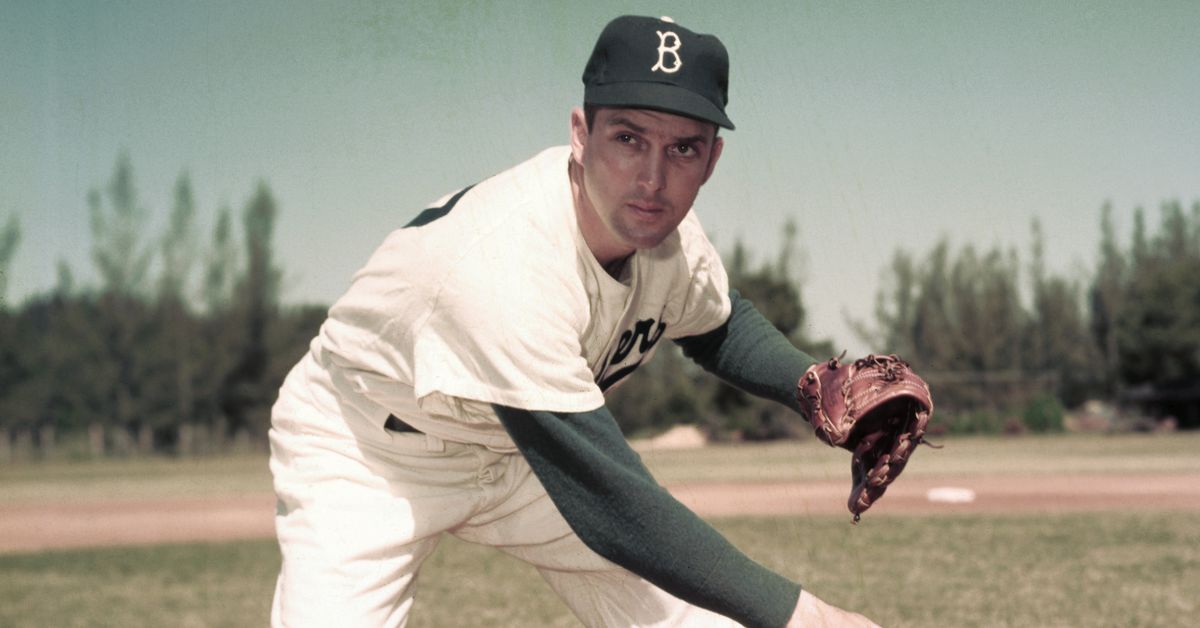
Warren Hacker, one of the Cubs’ better pitchers, was to face Carl Erskine on Thursday, June 19, an afternoon affair.
After the Cubs went out 1-2-3 in the top of the first, Dodgers hitters teed off on Hacker in the bottom of the inning. With two out, Roy Campanella hit a two-run homer and Carl Furillo followed with a solo shot to make it 3-0. Former Cub Andy Pafko’s homer in the second made it 4-0.
The Cubs finally managed a baserunner in the top of the third, a two-out walk by Willie Ramsdell, a pitcher who had relieved Hacker.
Ramsdell would turn out to be the only Cubs baserunner of the game, one baserunner from perfection for Erskine. The Dodgers scored once more in the eighth on an RBI single by Campanella to make it 5-0, and after that Erskine stood three outs from immortality.
Bob Ramazzotti, the first Cubs hitter in the ninth, grounded to third. Phil Cavarretta, in what would turn out to be his final year as Cubs player/manager, batted next and flied to center. The final Cubs chance to break up the no-hitter fell to Eddie Miksis, a former Dodger who had come to the Cubs in the Pafko deal.
Miksis grounded out to short and Erskine had his no-hitter. Irving Vaughan of the Tribune reported Erskine threw 103 pitches, which he characterized as “high for such a performance” (that surely wouldn’t be considered so today!), and also noted that the game had been interrupted for 44 minutes in the top of the fourth inning, rain termed by Vaughan as having “hurricane proportions. The grounds crew had to sit on the tarpaulin to prevent it from ballooning away.” Just 7,732 attended, possibly in part because of the weather.
It was the Cubs’ fifth loss in a row. They would stretch that streak to nine before winning, and fell out of contention. They finished exactly at .500, 77-77, and had to win their last two games to do it. It was the Cubs’ only non-losing season between 1947 and 1962.
The Cubs have been no-hit only three times since Erskine’s gem. Jim Maloney threw a 10-inning no-hitter in 1965, Sandy Koufax threw his perfect game three weeks after Maloney’s no-no, and Cole Hamels did it in 2015, after the Cubs had set a MLB record for the most consecutive games not being no-hit, 7,920. The seven no-hitters against the Cubs are the fewest for any of the “Original 16” teams.
Carl Erskine’s no-hitter happened 73 years ago today, Thursday, June 19, 1952.