
Image courtesy of Rob Broder, Public domain, via Wikimedia Commons
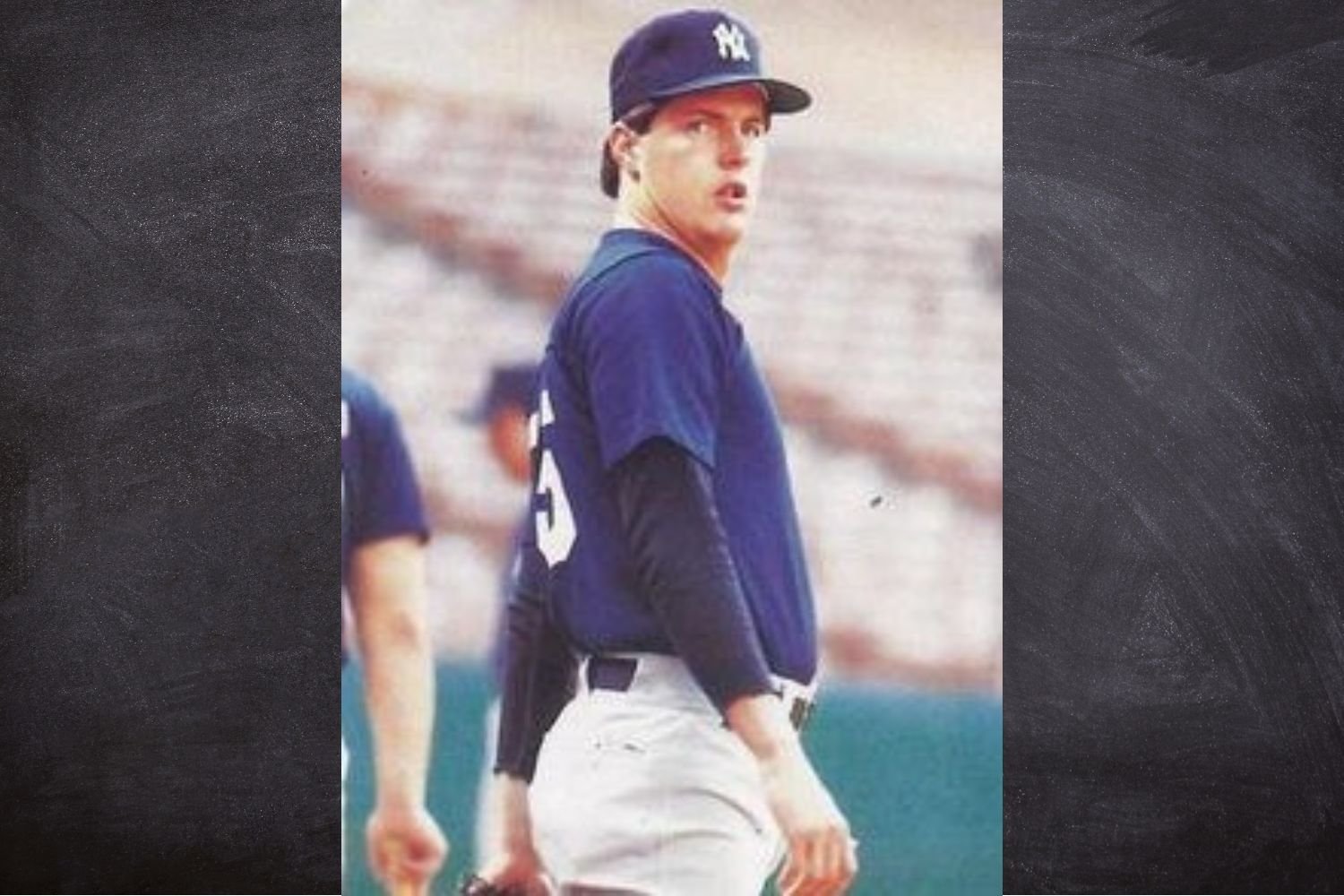
Bob Tewksbury was a crafty control pitcher who had his best years in the early 1990s with the St. Louis Cardinals, finishing third in NL Cy Young voting in 1992. He closed out his career with the Twins, reliably holding down a rotation spot for bad teams in 1997 and ’98 before retiring. Though hardly a star during his time in Minnesota, Tewksbury provided veteran leadership, strike-throwing prowess, and one unforgettable eephus duel at the Metrodome — earning him a place in Twins lore. He was recently kind enough to share some perspective and memories for Twins Daily’s readers.
Tewksbury had a career year with the Cardinals in 1992. He went 16-5 with a 2.16 ERA, finishing third in NL Cy Young voting. Despite his success, Tewksbury allowed four runs in the All-Star Game that summer.
Well, I got the first three guys out on nine pitches. I thought I was out of the game, because the people who generally pitch two innings are the starting pitchers. Bobby Cox came up to me. I had only thrown nine pitches. He asks if I want to go back out there. So I’m like “ehh okay.” I had two outs and a guy on second, but I didn’t get out of the inning. In large part, mentally I wasn’t ready to go back out there. I thought I was gonna be one and done. It was kinda my own fault.
But it was a great experience. Something I’ll always treasure, and to say that I was an All-Star. There’s a lot of people that play in the big leagues who never made an All-Star Game. So I’m really proud of that.
The National League veteran wound up in Minnesota in 1997, partly due to the 1994 strike.
It was kind of of byproduct of the ’94 strike. That was my free agent year. And so, I probably would’ve signed a three year contract with one team. But because of the strike, I ended up signing one year with Texas. And then one year with San Diego. And then two years with Minnesota. I definitely preferred the National League to the American League, just because I had spent so much time there. But I had a great experience in Minnesota. I played with some great people, and it’s a great organization.
The Twins had a very young pitching staff in the late-90’s, and Tewksbury tried his best to help them grow.
Brad [Radke] was good. His fastball, curveball, changeup mix was as good as anyone in the league. He was just a really good competitor and a good pitcher. LaTroy [Hawkins] was a guy I spent a lot of time with. I think if you contacted LaTroy, he might share that I had a positive influence on him. I heard him say that publicly, which was really nice. There were some good young arms. Everyday Eddie [Guardado] too.
His most memorable moment in a Twins uniform came on June 28, 1998 in an interleague game against the St. Louis Cardinals. Facing Mark McGwire in the middle of his historic 70 home run season, Tewksbury got him out twice with eephus pitch that was clocked in the low-40’s.
We had prearranged in the scouting meeting that if I got the first two hitters out in that game against the Cardinals, I was gonna throw the eephus to McGwire. That was the game plan. All the pitchers who normally hung out in the clubhouse until the second inning or so came running down the stairs of the Metrodome because they wanted to see. It was great fun, and then I did it again the next time up. I think he popped to [Scott] Stahoviak one time, and then he hit a little weak ground ball.
[McGwire] sent me a note after that. He really enjoyed it. He had a lot of fun trying to hit that. And I really felt like an entertainer throwing it. You know, the crowd loved it. It was fun. It was something that not many people do. It was a great time.
Tewksbury made his living as a control artist, leading the league in walks per nine innings twice (1992 and 1993). The league has changed since he retired, focusing more on power arms.
It’s a byproduct of training and technological development, along with analytics. Improved body functioning, and all those things that come with human movement. Specific training, and all the video stuff that they have. What we used to do just on feel and feedback is now kind of quantitative. They can tell you what’s going on, and how to manipulate the ball. There’s also increased injuries…look at Noah Syndergaard. I don’t even know if he’s still pitching. Tremendous power guy. [Jacob] deGrom has had two Tommy John‘s.
I think with anything, there’s pros and cons. If you can develop these power pitches, you develop swing and miss pitchers. It’s gonna help your pitching staff. The problem is trying to keep those guys healthy, because of the stress and what it does to the body.
He played for some of the game’s best managers, which included five World Series winning skippers; Lou Piniella, Whitey Herzog, Joe Torre, Bruce Bochy, and Tom Kelly.
I came up with the Yankees and Lou [Piniella]. Lou didn’t like pitchers when he was a hitter, and he didn’t like them as a manager. Unless you threw hard. I made the team because I pitched 20 consecutive scoreless innings in spring training. So they kinda had to take me. Well, they didn’t have to. But they chose to. He was hard on young pitchers.
When I went to the Cardinals, Whitey [Herzog] was there for a short time. And then Joe [Torre] came in. Joe was probably the best guy I played for. He believed in me as a pitcher. He helped me believe in myself, and just had a great demeanor with players. He had a great career himself, and knew the game. Joe was a really impactful person in my life as a player.
And then I had the late Johnny Oates in Texas, who was just a baseball lifer. Taught you how to play the game the right way. And that was great. I was only there for a year.
[Bruce] Bochy was just beginning his managing career. I don’t think he knew he would turn into a Hall of Fame manager this many years later. Just a nice guy, strong and calming presence who knows the game and is good with people.
And then, you know, TK [Tom Kelly] obviously had great success. He was definitely a veteran player’s manager. He could be hard on the younger players. Ask [David] Ortiz and Todd Walker, [Corey] Koskie and all those guys. But he was really positive. Knows the game. The Twins fundamentals were probably the best in baseball for a long time, because he made that a priority.
After retiring, Tewksbury has had a second career as a mental performance coach.
I just always had an interest in that. I had read all of Harvey Dorfman’s books, and was always studying physiology and the impact of that on the game. So I went to graduate school and got a job with the Red Sox, and I’m still doing it. I have private clients now. A couple of big league guys. I don’t work for any team, but I’m still working in baseball. I just got off the phone with a couple of college guys [before this interview]. It’s keeping me busy. It’s a lot of fun. I enjoy helping people.
I never had this resource as a player. It was never talked about. When I started doing this, the people who hadn’t been exposed to it who had been in the game for awhile really weren’t into it. But it’s definitely grown. It’s needed, and I think it’s gonna continue to grow. It’s been a good career for me.
Tewksbury had a brief acting career, playing himself in “The Scout.” It starred Brendan Fraser, Albert Brooks, and several big league players as themselves.
[The experience] was boring. Unfortunately, it was due to the strike in ’94. The footage that they had at Yankee Stadium, I think it was the Tigers, they had dark hats. And I guess they needed a National League team with dark hats. The Cardinals were one. I was the starting pitcher, and Ozzie [Smith] was Ozzie. So they asked us to come fly into New York, film the scene, and fly home. I flew into New York, and got to the stadium at noon time. That scene in the movie was filmed at like 1:30 in the morning. So it was a lot of sitting around doing nothing. And then I flew home the next morning. It was interesting to see how they filmed things, but it was quite boring to sit at Yankee Stadium for 12 hours basically doing nothing.