
Earlier this week, the Yankees pulled off the feat of scoring 10 runs in an inning. Austin Wells’ grand slam capped off the massive frame that began with the Yankees losing and ended with them winning a bit of a laugher.
Considering that in general, the average runs per game a team scores is under 10, doing that in one inning alone will lead to wins most of the time. The winning percentage isn’t quite 1.000, though. One Yankees game from 1912 shows that to be the case.
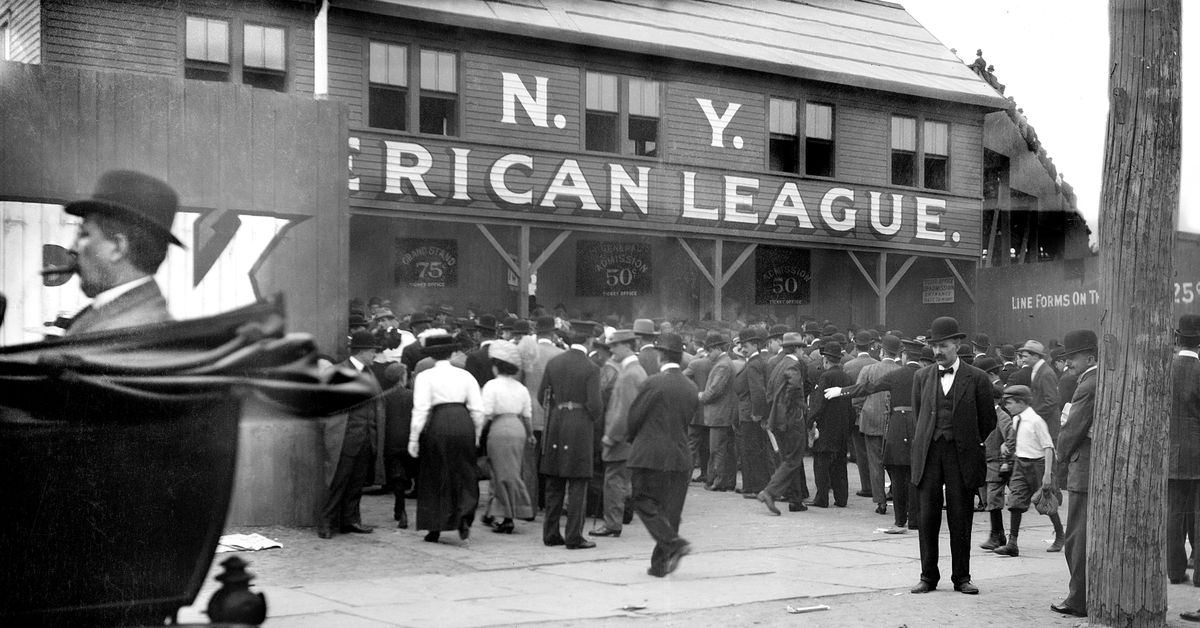
The then-New York Highlanders were frankly miserable in 1912. In the first and only season under manager Harry Wolverton, the team went 50-102 and finished in last in the American League, a franchise-record 55 games behind the champion Red Sox. The 1908 team lost 103, so they hold that low-water mark, but this 1912 club actually had a worse winning percentage at .329 — a club record. They were still a couple years out from Jacob Ruppert, Ed Barrow, Miller Huggins, and (of course) Babe Ruth beginning to change things.
While it was still too early in the season to figure out how bad, by May 3, 1912, the Highlanders were already pretty ugly. At 4-10, they were already falling off the pace in the AL, and it didn’t seem like that day’s game against Connie Mack’s defending champion Athletics in Philadelphia was going to do anything to change that.
Ray Caldwell took the mound for New York that day, and things got bad pretty quickly. Caldwell hit the first batter he faced, before allowing the first four batters to reach base safely. After a walk, two more hits (one of which was a triple), an error on Caldwell on a bunt, and a wild pitch, the A’s of “$100,000 Infield” fame had sent 11 batters to the plate in the inning, having scored seven runs in the game’s opening frame. They followed that up by sending eight batters up in the second inning, scoring another three runs. Mercifully, Caldwell exited the game after that, having given up 10 runs in two innings. (Although, only eight went down as earned, so that’s good?)
The score got to 11-0 before the Highlanders finally gave some sort of answer. It wasn’t a terrible one, either. Thanks to five hits in total, New York put up five runs in the inning. Unfortunately for them, that was immediately answered by three more A’s runs, as another error cost them again. In total, Philadelphia added four further runs off reliever George Shears. That left the Yankees down a gargantuan 13 going into the top of the ninth. As a reminder, no MLB team has ever come back to win by down by that margin, especially so late in the game.*
*Cleveland came pretty close in their shocker over 116-win Seattle in 2001 though, successfully coming back from down 12 in the seventh.
To start the ninth, the Yankees got a single and a walk before Hack Simmons brought home one run with a single. After another walk, A’s reliever Roger Salmon got one out, albeit on a Roy Hartzell grounder that did score another run. Two more walks added yet another run, and even in the olden days of “let ‘em pitch,” that led to Mack making a change and replacing Salmon with Lefty Russell.
Russell got Gus Fisher to hit a groundball to start off, but future Yankee Home Run Baker committed an error, plating another run and keeping the train moving. Pinch-hitting in the pitcher’s spot, Bert Daniels added another single, meaning the Highlanders’ lineup had batted around. Although the 1912 lineup wasn’t exactly Murderers’ Row, you’d still rather them up than the bottom of the lineup, and they did their job.
Guy Zinn drew a walk, which was followed by a bases-loaded triple from George McConnell. When Simmons recorded his second RBI single of the inning in the next at-bat, suddenly the Highlanders were within three runs, having scored 10 in the inning.
While three runs with only two outs to work with is still a hard deficit to overcome, it’s far from impossible. Especially when you seem to be seeing the pitcher quite well, the last thing you want to do in that circumstance is something stupid that hastens the end of the game. Naturally, that’s exactly what happened.
As Birdie Cree struck out, Simmons raced for second base. A’s catcher Ben Egan threw the ball to Eddie Collins, who tagged Simmons out for a double play and the end of the game. After all that, the game ended on a strike ‘em out, throw ‘em out double play.
Scoring 15 runs on 14 hits and 10 in one inning should be plenty enough to win one game of baseball. You just shouldn’t allow 18 runs on 16 hits, while committing seven errors. The 1912 Highlanders were very bad.
Resources
New York Times, May 4, 1912