
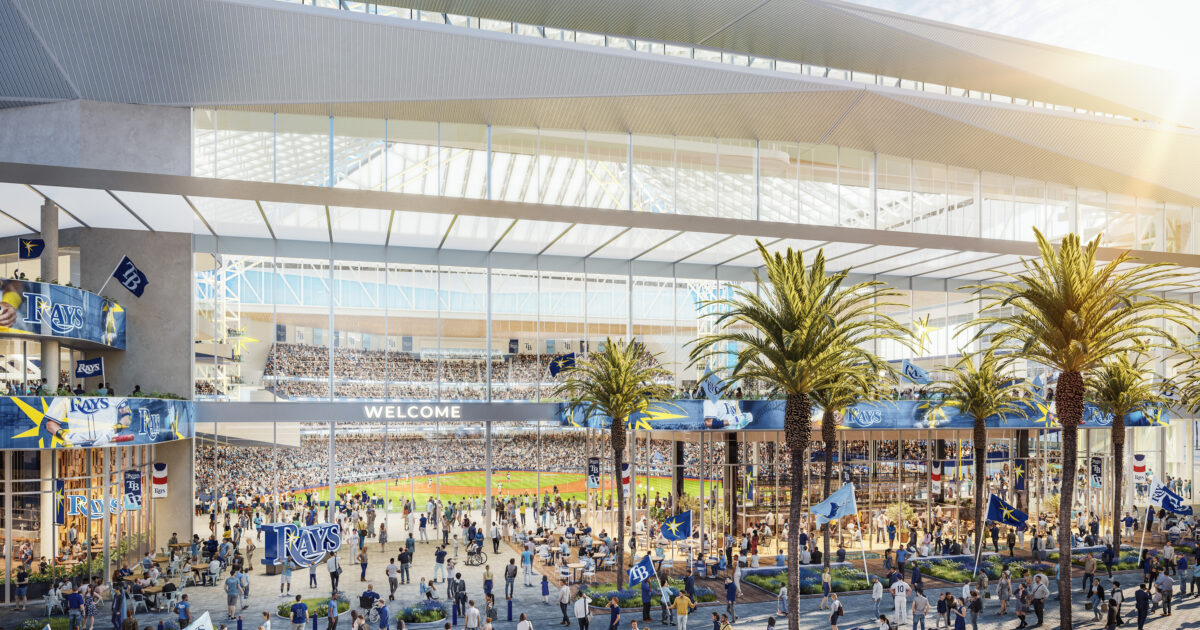
Pinellas County commissioners delayed a critical vote Tuesday night just hours after the Tampa Bay Rays sent a somber letter stating the Commission’s previous inaction has jeopardized a generational project.
Commissioner Brian Scott believes the team “might be looking for a way out” of an arduous and, apparently, tenuous agreement approved under a different board in July. The letter, penned by team presidents Brian Auld and Matt Silverman, said the commission’s Oct. 29 decision to postpone approving a bond issuance negated plans to open a new ballpark for the 2028 season – and the Rays could not afford additional associated costs “alone.”
The commission voted 6-1 to postpone the bond vote again, this time until Dec. 17. However, the decision may have saved the deal as Scott, a proponent, thought the measure would fail after reading the room.
“To be clear, we did not vote to kill the deal, nor should a three-week delay in a 30-plus year commitment be a deal killer to begin with,” Scott said. “As much as I really just want to vote and get this done today, I don’t think it’s there.”
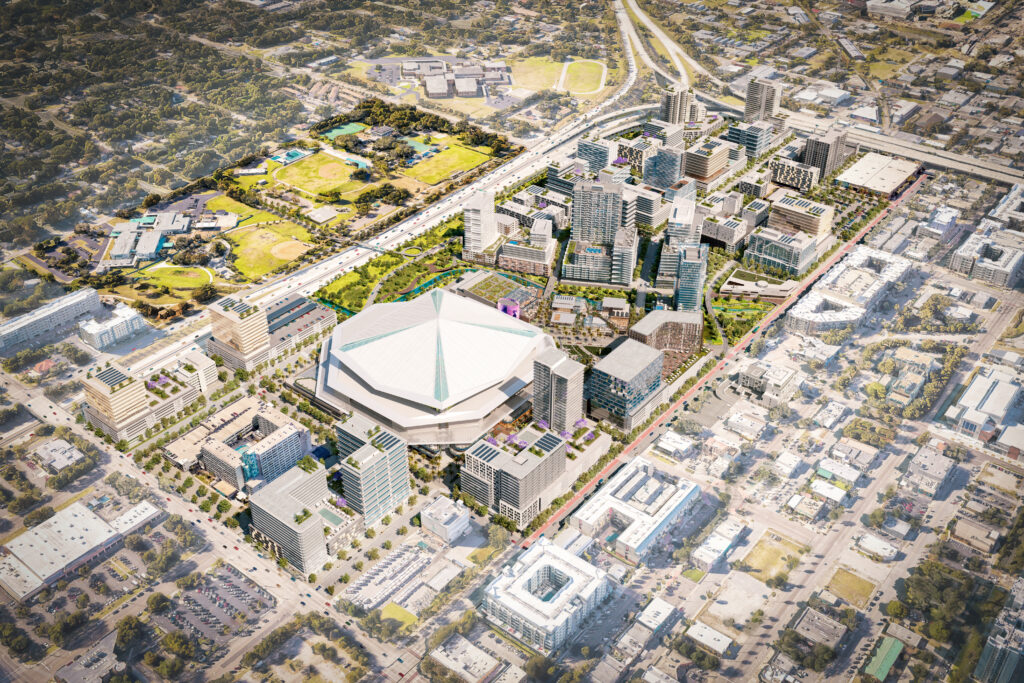
A new Tampa Bay Rays stadium would anchor the Historic Gas Plant District’s redevelopment. Rendering: Hines/Tampa Bay Rays.
The bond issuance will finance the county’s $312.5 million contribution to Tropicana Field’s $1.37 billion replacement in St. Petersburg. The new ballpark would anchor the $6.7 billion Historic Gas Plant District redevelopment project.
The funding stems from heavily restricted Tourist Development Tax revenue accrued through overnight stays. The commission was, and still is, reluctant to approve the bond issuance in the wake of back-to-back hurricanes.
The team’s letter states they suspended work on the stadium and redevelopment projects. They called the bond issuance a formality and said it was “known and accepted” that approval was needed before the Nov. 5 election to meet the previously agreed upon 2028 timeline.
The Commission has since replaced two ardent supporters with newly elected commissioners Vince Nowicki and Chris Scherer. Nowicki was adamantly opposed to the deal, while Scherer struck a somewhat softer tone.
Commissioners Dave Eggers and Chris Latvala voted against the proposal in July. The project needs four yes votes from the seven-person board.
Cold feet?
Scott said the deal is so beneficial to the area that those upset over the team’s perceived lack of communication should vote in favor. He noted owner Stuart Sternberg told him, “Our cost estimates have all gone in the wrong direction, and we are on the hook for all cost overruns.”
Scott said that “was the first indication I had that the Rays might be having second thoughts.” He suggested that Sternberg either wants to renegotiate the deal or end it altogether and “hang the failure on the county commission, particularly our newest members.”
“You guys were just sworn in last night – this very may well be the biggest vote of your political career,” Scott added. “This is not about Stu Sternberg; this is about a $6.5 billion project … that will be generationally transformative.”
Auld and Silverman attended the meeting and, in the letter, pledged to “listen carefully” but not answer questions. A team spokesperson said the Rays would not offer any additional comments.
Much of the debate before the first bond postponement centered around where the team would spend the 2025 season after the Trop suffered over $55 million in damages during Hurricane Milton. The Rays will play at George M. Steinbrenner Field in Tampa.

Hurricane Milton caused over $55 million in damage to Tropicana Field. Photo: Will Vragovic / Tampa Bay Rays.
Much of Tuesday evening’s discussion centered on the initial agreements previously approved by the commission and St. Petersburg City Council. Mayor Ken Welch, who has remained steadfast in his desire to repair the Trop and see the new stadium to fruition, said he appreciated the county’s partnership and discussion in a prepared statement.
“We believe the economic fundamentals and the long-term benefits of the agreements approved in July by all parties remain valid,” Welch said. “We are focused on … fulfilling our obligations under the existing use agreement. We will continue to work with our partners towards that successful outcome.”
What’s ahead?
The Rays will contribute over $700 million to a new stadium and cover any additional expenses. Administrator Barry Burton noted the team, rather than the city, would be responsible for operational, improvement and insurance costs.
“We shifted all the risk,” he continued. “What’s happened at Tropicana Field would be 100% on the Rays. They get the revenue, so it becomes their business.”
In October, Assistant County Attorney Donald Crowell said the county and city must complete the bonding process by March 31. He clarified Tuesday that there is no specific timeline in the agreement.
However, Crowell said there are “practical repercussions” to delaying the issuance. The Rays wrote that they fulfilled their required obligations, including completing 50% of design documents and securing financing.
“While we are focused on preparing for a unique 2025 season, we stand ready to work on a new solution with any and all partners to preserve the future of Major League Baseball in Tampa Bay for generations to come,” Auld and Silverman said.
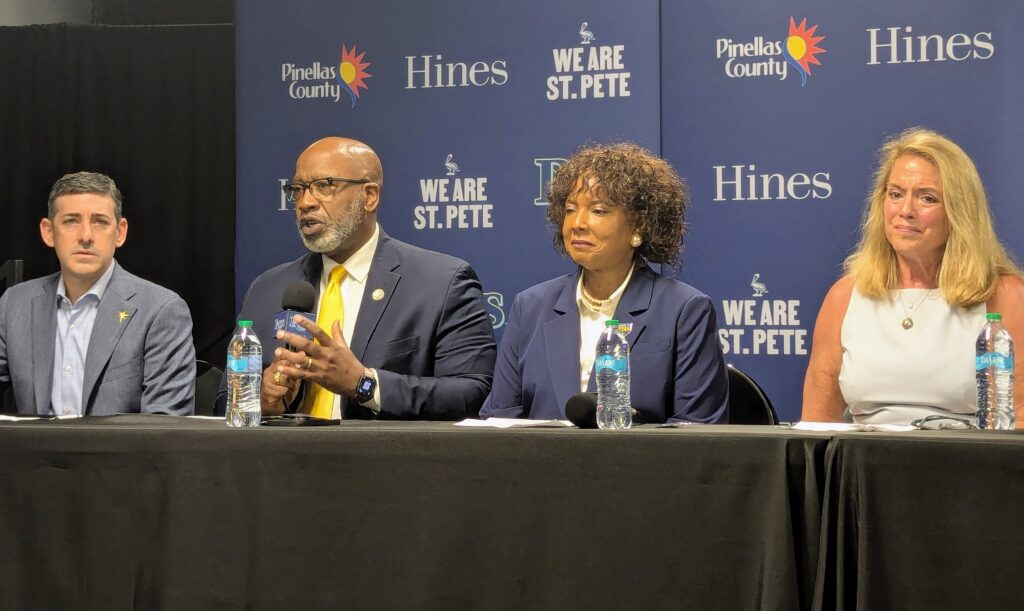
From left: Rays president Matt Silverman; St. Petersburg Mayor Ken Welch; City Council Chair Deborah Figgs-Sanders; and Pinellas County Commission Chair Kathleen Peters celebrate local officials approving a new stadium deal in July. Photo by Mark Parker.
Commission Chair Kathleen Peters, who oversees the Tourist Development Council (TDC), said the county’s bed tax coffers have only declined 1% from a record-breaking 2023. Commissioner Renee Flowers reiterated that state law prevents the money from going toward storm recovery efforts or infrastructure improvements.
Nowicki noted that a TDC survey found just 3% of tourists visited the area solely to attend Rays games. Peters said that equates to over 470,000 people.
She believes Pinellas has become a top tourist destination due to its “whole package.” Peters said losing baseball would create “a void in what we have to offer, and I don’t think we can ever get that back.”
The county’s stadium agreement is separate from the City of St. Petersburg’s redevelopment deal. Administrator Rob Gerdes said repairing the Trop by the 2026 season and a new stadium opening in 2029 “could actually be perfect.”
Nowicki questioned if the Rays could back out of the stadium agreement and still redevelop the surrounding property, which was sold at a discount to facilitate both projects. While Gerdes said team and city officials have not discussed that possibility, he said it is a valid concern.
“My family lost three businesses as a result of the Trop that is sitting there right now,” Flowers said. “I see this as a huge opportunity to not only right the wrong but to give a community that has been struggling for a very long time to be a part of and embrace something.
“This is their moment.”
The commission received 206 pages of emails in favor of the projects and 83 opposed. Peters said the delay would allow the new commissioners to read through the correspondence and talk to additional stakeholders.