
The 2025 MLB Draft kicks off on Sunday as part of MLB’s All-Star weekend in Atlanta. Here’s what to know about the annual event, including the top prospects, the most recent first round projection, history of the event and more.
When is the draft?
Day 1: Sunday, July 13 at 6 p.m. ET (broadcast live on ESPN and MLB Network)
Day 2: Monday, July 14 at 11:30 a.m. ET (streamed live on MLB.com)
Wait, didn’t the draft used to be longer and over three days?
Yes to both questions! For those who have followed the MLB Draft for many years, this two-day, 20-round format will feel bite-sized.
That said, though significantly shorter than its 50-round heyday, the MLB Draft still boasts the most number of rounds (20) of any of the drafts for the four major U.S. sports — at least for now.
MLB has been chipping away at the size and scope of its draft for years, trimming it from 50 rounds to 40 in 2012 and from 40 rounds to 20 rounds in 2021 (there was a five-round draft in the pandemic-shortened 2020 season). There is talk that the league will be pushing to cut the draft even further — perhaps down to 10 rounds — when the next collective bargaining agreement is negotiated.
For the first time, the 20-round draft will take place over two days instead of the standard three. Day 1 of the draft will run through the end of Round 3, a change this year as the first day had typically ended after the Competitive Balance Round B picks and any compensation picks that followed Round 2. That change has been made to accommodate a suddenly supersized Day 2, which will run from Round 4 until the end of Round 20.
Typically teams that were looking to take a player who slid out of the first two rounds and sign him to an overslot bonus* would take those players in Round 3, which was the start of Day 2 of the draft and therefore allowed teams and agents to get on the same page in terms of potential bonus demands after Day 1 ended. It will be interesting to see if those “overslot” selections now happen in the fourth round since that will be the start of Day 2, or if they will remain mostly in Round 3.
* More on what “overslot” means further down
Who are the top prospects in the class?
According to The Athletic’s MLB Draft expert Keith Law, the top prospect in this year’s draft is Oklahoma high school shortstop Ethan Holliday.
If that name sounds familiar, it’s because Ethan is the younger brother of Orioles second baseman Jackson Holliday, who was the No. 1 pick out of high school in 2022 (they are also the sons of former MLB All-Star Matt Holliday). They would be the first brothers to both go 1-1 in MLB Draft history, though just because Ethan is the top prospect doesn’t mean he’ll go No. 1. Law has the Washington Nationals selecting LSU left-hander Kade Anderson in his latest mock draft. In that mock draft, Holliday lands with his dad’s original organization, the Colorado Rockies.
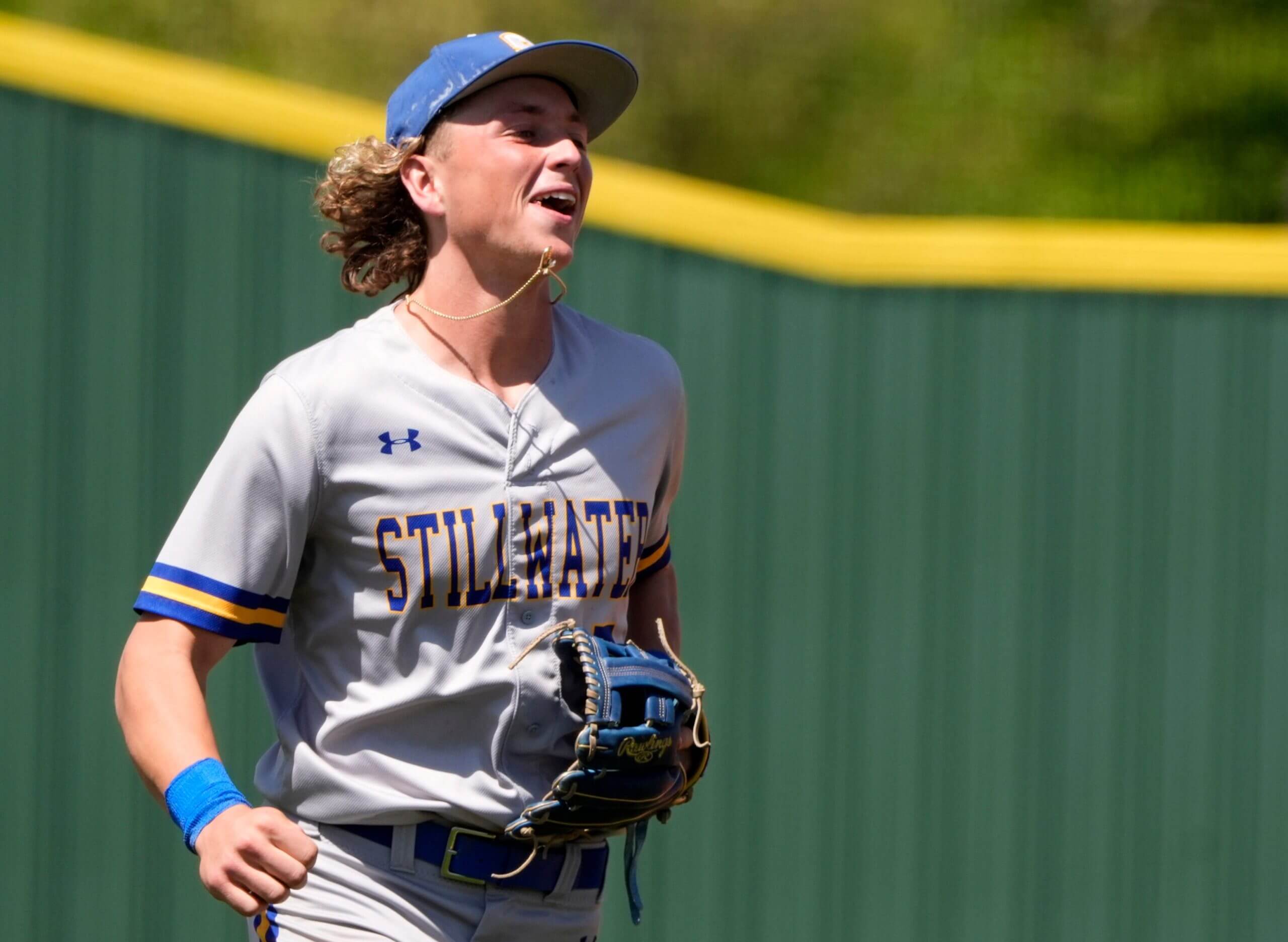
The top prospect in this class is Oklahoma high school shortstop Ethan Holliday. (Sarah Phipps / The Oklahoman / USA Today Network via Imagn Images)When does my favorite team pick?
Depends on the round. The draft order for the first round was set at the top by the MLB Draft Lottery, which took place last December at the Winter Meetings. The Washington Nationals won the right to select first. Thanks to penalties for exceeding the luxury tax threshold, the New York Yankees, New York Mets and Los Angeles Dodgers had their first picks moved down 10 slots and out of the first round. Their first picks come at picks 38, 39 and 40, respectively. Other teams lost picks in rounds after Round 1 for signing free agents that had been extended qualifying offers.
There are extra picks after the first, second, third and fourth rounds based on various compensation and incentive programs built into the CBA. Starting in the sixth round, the draft order is set by a complicated formula that includes the team’s overall record in 2024 and when it was eliminated from the postseason (if applicable).
To view the full draft order, click here.
Can my team trade draft picks?
Yes! Sort of. Teams can trade Competitive Balance round picks, but those trades have to be made before the draft (so no draft-and-trade scenarios like in the NBA).
What are draft bonus pools?
While there are no salary caps in baseball for MLB rosters, there are caps on what a team can spend for its draft bonuses each year. Every draft pick is worth a specific “slot” amount through the first 10 rounds. Teams add up the slot values for their top-10 round picks and that equals their draft bonus pool cap. Teams that have extra picks have extra-large bonus pools. Teams that lost picks for signing free agents have smaller pools. The Baltimore Orioles have the largest pool in this draft, while the Yankees have the smallest.
Here are the draft bonus pools for this year, courtesy of MLB.com:
Bonus pool amounts
TeamAmount
$19,144,500
$17,074,400
$16,656,400
$16,597,800
$15,723,400
$15,187,400
$14,238,300
$14,088,400
$14,068,000
$13,138,100
$12,794,700
$12,653,000
$12,409,300
$12,169,100
$11,836,800
$10,991,300
$10,990,800
$10,917,800
$10,563,500
$10,314,600
$10,198,100
$9,636,800
$9,081,100
$9,031,300
$8,403,300
$7,849,400
$7,181,500
$6,569,100
$5,465,900
$5,383,600
Teams can divide that bonus pool among those top-10 round picks however they choose to, but if teams exceed the draft bonus pool allotment by 5 percent, they have to pay a 75 percent tax on the overage. Any team that exceeds the bonus pool by 5.01-10 percent is penalized with paying a 100 percent luxury tax and losing their first-round pick in the next year’s draft. Penalties get even stiffer after that. Teams regularly exceed their bonus pools, but no team has gone over the 5 percent threshold since the draft bonus pool system was implemented in 2012.
Teams that fail to sign a top-10 round pick lose that slot value toward their bonus pool, so every player taken in the top-10 rounds is generally expected to sign. However, last year there were four top-10 round picks (including two second-round selections) who didn’t sign. It is not unusual for teams to select college seniors in the back half of the top-10 rounds and sign them to very small bonuses so they can apply those savings toward overslot bonuses for other picks. Those seniors don’t have much negotiating leverage since they typically can’t return to school.
Players selected after the 10th round can be signed for up to $150,000 without the bonus being applied toward the pool allotment. Any amount above $150,000 is applied toward the bonus pool. Any draft-eligible player who isn’t selected can sign with a team after the draft as an undrafted free agent for a maximum of $150,000.
How does a player qualify for the MLB Draft?
If a player is a resident of or student in the United States, Canada or Puerto Rico, that player is eligible to be selected in the MLB Draft if the player is:
1) a high school graduate not currently enrolled in a four-year college who is at least 17 years old, or a player who dropped out of high school at least a year prior to the draft, or whose high school athletic eligibility has already expired
2) a community college or junior college student
3) a student at a four-year college who a) is either three years removed from first enrolling in college, or b) is or will be at least 21 years old within 45 days of the draft.
Will I see these players in minor league games this season?
Yes, in some cases. College position players typically report to Low-A or High-A affiliates after signing. Some college pitchers do, as well, though many of them have thrown so many innings during their regular season that teams shut them down from throwing in games until their fall instructional league camps or the following spring.
High school players are less likely to debut this season in the minor leagues because they would typically play in the Rookie-level leagues or in a short-season league, but MLB has changed the schedule for Rookie-level leagues so they now end before Aug. 1 (the draft pick signing deadline) and they eliminated the short-season level in 2021. Those younger players will generally instead get acclimated to professional baseball at their teams’ minor league complexes and perhaps get into games in fall instructional league settings, though some will be pushed up to Low A.
It is rare, but also possible that a player selected in this draft will make his major-league debut before the end of this season. The most recent example of a draft pick debuting in his draft year was Nolan Schanuel, who was the Los Angeles Angels’ first-round pick in 2023 (No. 11). Teams are moving prospects through the minor leagues faster than ever and several prospects from this year’s class could be on a fast track.
Where can I get more in-depth coverage of the draft?
Glad you asked! We will have a live blog for both days of the draft here at The Athletic, and a complete collection of our draft coverage can be found here.
(Top photo of the start of the 2024 MLB Draft: Richard Rodriguez / Getty Images)