
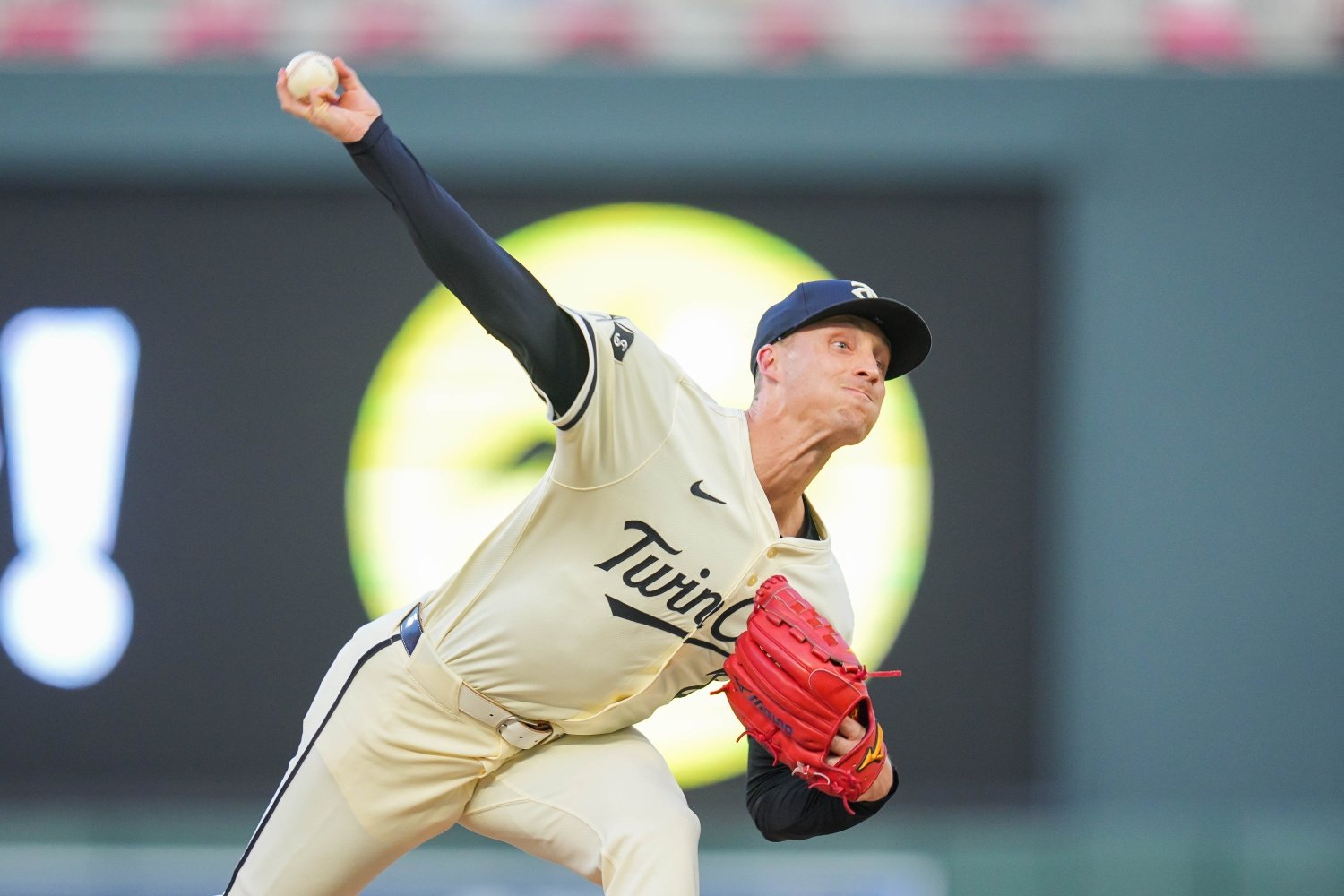
As MLB’s trade deadline looms, your 2025 Minnesota Twins grow increasingly likely to undergo their first substantial sell-off since parting ways with then-ace starting pitcher José Berríos and beloved slugger Nelson Cruz at the 2021 trade deadline. Veteran players in the final season of their contracts (Harrison Bader, Danny Coulombe, Willi Castro and Chris Paddack) are the most likely candidates to depart from the land of 10,000 lakes. Yet, if the club were to push the envelope and undergo a genuinely significant change, Twins Territory could be subject to witnessing fan favorites like Jhoan Duran, Griffin Jax, or Joe Ryan bid adieu to 1 Twins Way.
Trading any of those high-value, controllable hurlers is a longshot, but the Twins could find themselves in a unique position to test new methods of operation come August. If they’ve essentially pivoted toward next season by then, team decision-makers should consider revisiting a roster shakeup they were exploring early last offseason: converting Griffin Jax back into a starting pitcher. For those who don’t remember (amid the emotional whirlwind that has been the first half of the 2025 regular season), Jax and the Twins were contemplating converting the starter-turned-reliever back into a starting pitcher. Ultimately, the 30-year-old elected to stay in the bullpen in late January.
Despite possessing a subpar 4.12 ERA, Jax has performed well as Minnesota’s primary set-up reliever, generating a 1.91 FIP and 64-to-10 strikeout-to-walk ratio while possessing some of the best raw stuff in the sport. Pitching backwards, the hard-tossing righty has been able to effectively attack hitters of either handedness, utilizing his elite sweeper and changeup. Jax still possesses a well-above-average fastball velocity. However, the pitch has been hit hard this season, resulting in him using it less (16% of the time) than ever.
Another reason Jax’s fastball usage rate is down is that he has implemented a sinker and cutter this season—pitches he’s used a combined 13% of the time. The Air Force product naturally utilizes his sinker as a fastball variation to move in on right-handed hitters, and the cutter as a fastball variation to dive in on left-handed hitters. Considering he now has three fastballs, Jax is functionally using his fastball at 29% of the time, which resides in the same ballpark as his prior usage rates. With what is essentially a three-pitch mix while being able to add extra horizontal movement to his fastball variations, Jax possesses the diverse arsenal necessary to transition into a starting pitcher.
In the past, Jax has mentioned that he is an adrenaline-based pitcher, meaning he believes he thrives in high-leverage scenarios and can add more velocity and movement to his pitches. While this is likely one factor behind his significantly improved velocity and movement profiles on his breaking and offspeed pitches since turning into a reliever, there is reason to believe he makes more mistakes due to the rush of adrenaline he endures, like misplaying balls that should be easily fielded or overthrowing first base on what should be routine plays for a major-league pitcher.
Again, Jax possesses the arsenal and frame necessary to stick in the rotation, and if the club elects to part ways with Paddack at the July 31 deadline, a rotation spot could open up for Jax. Barring further injury, the impending return of Pablo López and Zebby Matthews will crowd the starting rotation. Yet, with uncertainty surrounding when or if Bailey Ober will rejoin the mix and performance concerns surrounding David Festa and Simeon Woods Richardson, there could be more space to maneuver Jax back into the rotation than previously anticipated.
Jax departing from the bullpen would meaningfully thin the unit. Yet, with fellow high-leverage arms Duran, Louis Varland, and Brock Stewart also performing well, the club could absorb the impact of losing one of their late-inning right-handed throwers. They could stretch him out slowly over the balance of the season, getting him up to four innings per appearance or so by late September. That would give him a solid platform of volume, so that he’s not artificially limited in terms of seasonal workload come 2026. Minnesota still has multiple years of team control left for frontline arms López, Ryan, and (hopefully) Ober. Yet, adding another possible ace to the mix would further bolster Minnesota’s chances of returning to the postseason, while mitigating the growing pains younger arms like Festa, Woods Richardson, and Matthews are still enduring at the major-league level. It could also make it easier to stomach trading one of those pitchers, be it this month or this winter.