
Sports Media Watch presents thoughts on recent events in the industry, starting with Major League Baseball’s improving ratings, and if the league will be able to capitalize.
All of the twists and turns concerning Major League Baseball’s ESPN rights deal have to an extent overshadowed what has been a successful year in the ratings. Coming off of the momentum from last year’s Dodgers-Yankees World Series — the most-watched since 2017 — ESPN’s Sunday Night Baseball (1.71M) is having its most-watched season since 2017, FOX is having its most-watched since 2021 and TBS (382K) is having its most-watched since 2015.
An obvious driving force behind the numbers is the sheer number of quality big market teams. Last year’s Dodgers-Yankees World Series followed a Dodgers-Mets NLCS, and those three teams are again in the playoff hunt. If that was not enough, the Cubs are leading the NL Central. In the New York teams, the Dodgers, the Cubs, and the Phillies, MLB has five title contenders located in the nation’s four largest media markets.
But is that really all a league needs for success? Marquee, star-studded teams in the nation’s largest markets?
“I think there’s more to it,” ESPN analyst Eduardo Perez said in a media availability last week. “Look how well [Sunday Night Baseball] rated in Detroit, right?”
Indeed, the Twins-Tigers Sunday Night Baseball game last month delivered an audience of 2.02 million viewers — the third-largest of the season on the ESPN networks, behind only Dodgers-Yankees in June and Yankees-Mets in May.
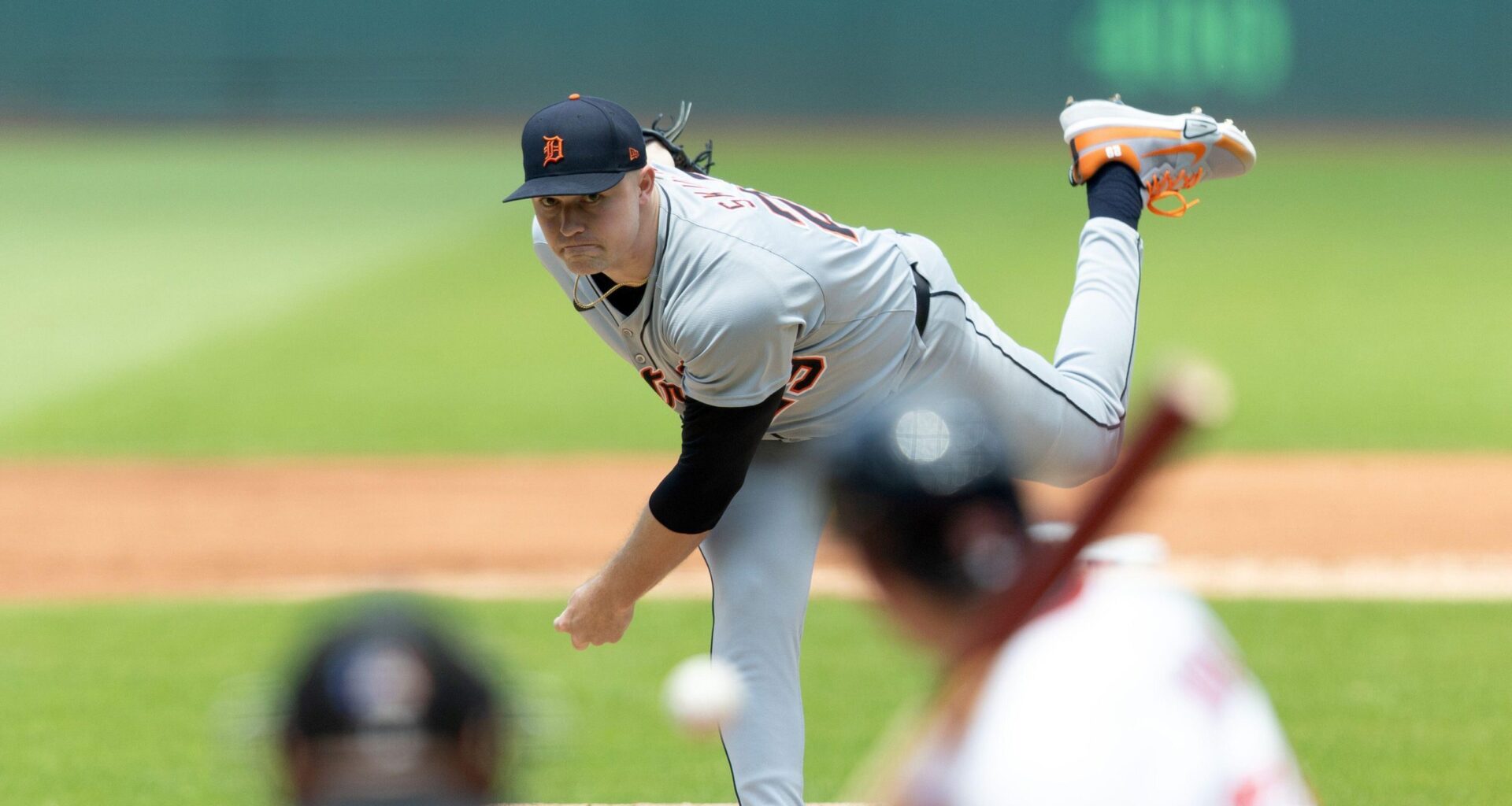
The Twins-Tigers game featured Detroit P Tarik Skubal, one of the newer stars Perez and Sunday night colleague Karl Ravech cited as a driving force behind the gains. “If Tarik Skubal is going to attract that many people, that is a massive success for Major League Baseball,” Ravech said.
From Skubal to the Pirates’ Paul Skenes, baseball is in the relatively unfamiliar position of having a number of well-known new stars — no small feat given the relatively low profile of college baseball as compared to basketball and football. (Sunday’s first round of the MLB Draft is unlikely to have drawn even half the audience of its NBA counterpart, much less the NFL.)
“I think the influx of young players into the game has changed things dramatically,” Ravech said. “When you have Paul Skenes pitching, that’s a must-see moment, you know? With what Judge and Ohtani are doing, those are must-see moments, but we’ve seen from the Texas success — with [Rangers OF] Wyatt Langford, guys that come right out of college and have great success — that’s stuff you can glom onto.”
“Who thought Pete Crow-Armstrong was going to be that star this year?” Perez said of the Cubs CF who is starting in Tuesday’s All-Star Game. “And he’s exciting. Even when the ball is not hit to him, you want to see what he does on his jumps.”
Big markets and young stars are always a winning combination when a league needs a proverbial shot in the arm, but even that does not seem to fully explain why the vibes surrounding MLB are so different than even just a handful of years ago.
At the risk of straying too far into the domain of anecdotal evidence, the complaints about the state of the game — the grumbling about the all-or-nothing cycle of homeruns and strikeouts — seem to be muted this year. Compare that to the all-season onslaught the NBA had to deal with concerning the three-point shot.
Could it be that MLB, and its much-maligned commissioner Rob Manfred, made the right moves in changing the rules of the game?
“Look, as somebody who has covered the game doing Baseball Tonight and now the play-by-play stuff for three decades, there’s no question the game was going in the wrong direction,” Ravech said. “It was slow. When we went into those seven-inning double-headers [in the COVID-shortened 2020 season], you wouldn’t believe the number of players that loved the idea because the game had some pace. There was some urgency added to innings three, four, and five that in a general nine-inning game prior to the rule changes, it never felt that way.”
One does not want to overstate the good times; Sunday Night Baseball viewership is up a modest six percent. But in 2025 sports television, a merely slight decline is considered a success story. By that measure, anything generating even modest gains qualifies as a hit.
MLB does not provide an across-all-networks average audience, so comparisons may not be entirely apples-to-apples — but from the NHL (-12%) and NBA (-5%) to even the mighty NFL (-2%), the most recent regular seasons have posted declines from the prior year, much less the multi-year highs MLB is experiencing for its three primary national television packages.
It may seem somewhat incongruous that the good times are occurring at the same time MLB struggles to sell national media rights for anything other than bargain basement prices. But media rights are determined by more than just a single year of television ratings, and MLB has a long history of devaluing its national media rights — from today’s cut-rate deals with Apple and Roku to the ill-fated revenue sharing agreement with ABC and NBC 30 years ago (known as “The Baseball Network”).
One might contrast baseball’s trajectory in the ratings with that of the NBA and marvel at the latter league’s massive media rights haul, but it is not so hard to understand. One league prioritizes national television and the other does not, and while there are other factors — the NBA’s younger audience, higher viewership floor and dominance during a less competitive time of year — that is the fundamental difference.
For all the attention being paid to the expiring ESPN deal, if baseball wants to truly capitalize on the momentum it has had the past year or so, the 2028 media rights deal will be crucial. Specifically, MLB will need to completely shift its approach toward national TV, which Manfred on Monday indicated is in the cards.
“We want to sell more games nationally,” Manfred said on “The Pat McAfee Show.” “We think it’s good for our exposure, more broadcast exposure, big game exposure. We also believe that the buyers that are out there are going to be national buyers, particularly the streaming companies. … We’ve got to sell more nationally.”
Until that is the case, there will be a limit on just how much MLB can capitalize on growing interest in the sport. To be frank, that is nothing new in sports TV — but usually leagues get quite a bit more money for sacrificing reach than MLB has thus far.
Plus: Amazon NBA hirings, NHL schedule, FS1 future
Amazon’s hirings last week of former TNT NBA analyst Brent Barry and the Charlotte Hornets announcer duo of Eric Collins and Dell Curry were the latest indication that the streamer plans to give NBA coverage a different look when it debuts this fall. Combined with NBA broadcasting newcomers Dirk Nowitzki, Blake Griffin and Steve Nash, the Amazon broadcasts figure to bring something fresh to an NBA television landscape that had become stagnant.
Because Amazon has no real sports division as of yet, the streamer has had to be more creative than incumbent ESPN or fellow newcomer NBC, both of which were able to depend more on their own pre-existing rosters. Outside of pre-existing talent, ESPN”s only change of note next season is licensing TNT’s “Inside the NBA” — and NBC, save for Carmelo Anthony (and Michael Jordan, depending on what is role actually is), has also relied mostly on familiar names from TNT.
Amazon also has its fair share of familiar TNT voices, but the streamer has been left an opening to be at least somewhat cutting edge — a lane that has largely been untouched on NBA broadcasts since the early Barkley days at TNT.
The NHL announced its opening night tripleheader on Monday, with the defending champion Panthers set to begin their pursuit of a third-straight Stanley Cup in a 5 PM ET window on ESPN. That is no surprise given Florida has yet to show it can move the needle in three-straight trips to the Cup Final. (Much as the recent NBA Finals Game 7 says little about the drawing power of the Pacers or Thunder, the Panthers’ Cup Final Game 7 last year was not an indication of their popularity).
What does it say that the defending champions get the 5 PM ET window while a pair of teams that missed the playoffs — Pittsburgh and New York — get the primetime slot? Perhaps that the league could sorely use a resurgence by quite a few teams who missed the playoffs last season.
Rather than coming up with more disposable morning shows for its cable channel, Fox Sports should give serious consideration to an entirely new strategy for Fox Sports 1. The network gave “The 1 For Fun” about 15 minutes before switching gears to ’embrace debate’ — and the sell by date on that strategy has long past.
Somehow, CBS Sports has managed to sustain a daily news and highlights show for its 24-hour fast channel that seems to have generated at least modest success. Given the numbers FS1 has drawn of late for its embrace debate shows, it is hard to imagine a return to news and highlights faring any worse. Perhaps it’s time to call Jay and Dan back from Canada. Or maybe getting into the licensing game would be a better option; “The Dan Patrick Show” does not have a linear TV partner (if its Peacock deal even permits one).
Whatever the solution, the status quo has clearly not been working for some time.