
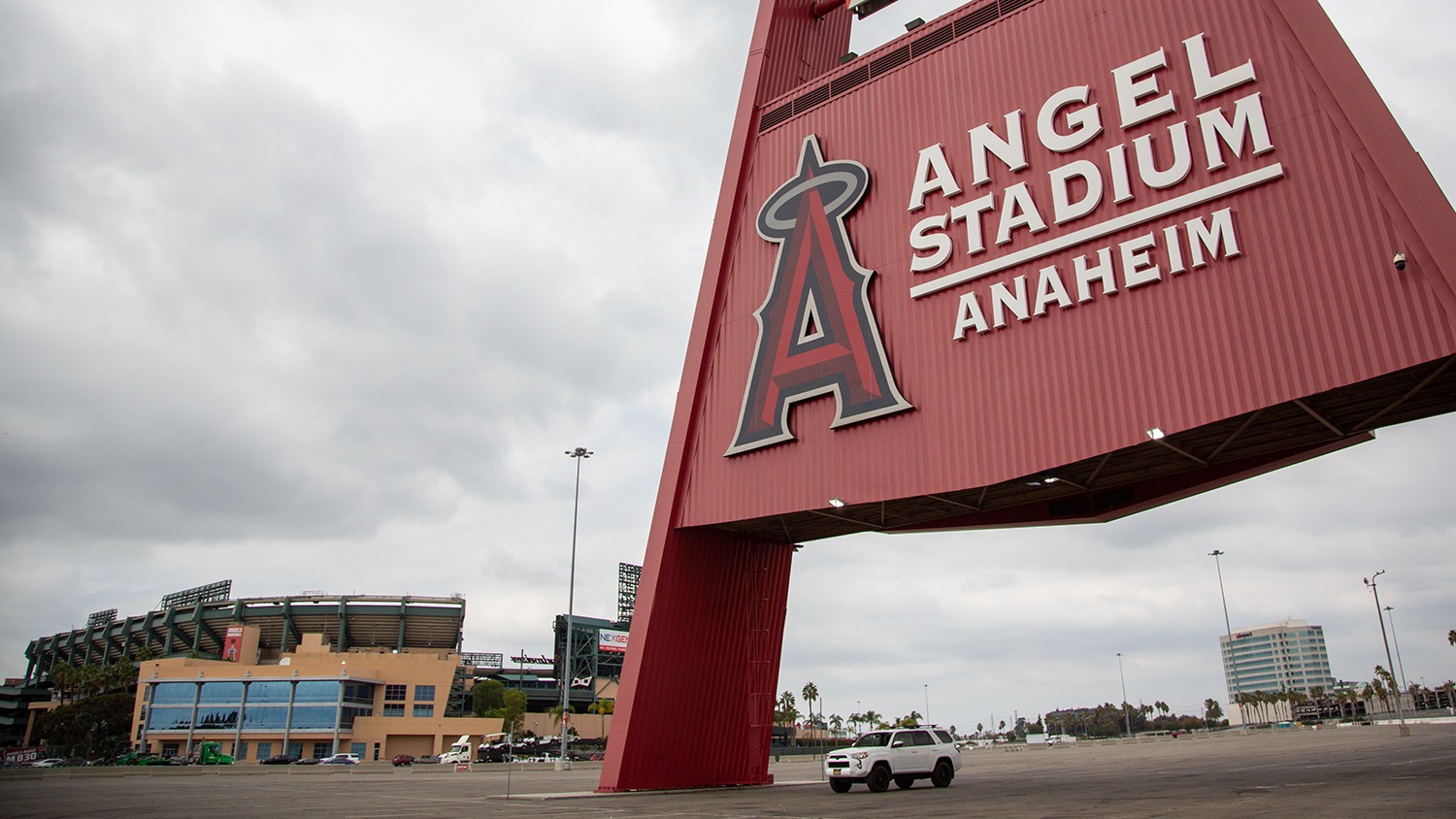
Anaheim officials don’t know if Angel Stadium is trashed according to a new state audit, which found the city’s lease with the Los Angeles Angels of Anaheim keeps staff from seeing how the city taxpayers’ biggest asset is maintained.
“Because of the stadium lease agreement’s terms and Anaheim’s general inaction, the city does not know the physical condition of Angel Stadium, which could need hundreds of millions of dollars in maintenance and repairs,” auditors wrote.
California Auditor Grant Parks also found the lease severely limits how much revenue Anaheim makes from the public stadium.
To read the full audit, click here.
City officials and the Angels can’t even agree on whether the city is allowed to inspect the stadium, and the Angels claim that taxpayers owe them over $36 million for how much they’ve spent on a stadium they do not own.
While auditors explicitly stated they found no evidence that the Angels violated the terms of the lease, they say the city needs to step up its oversight, including forcing the team to let them conduct regular examinations of the stadium.
“Anaheim should negotiate with Angels ownership or seek to obtain a court order allowing it to perform physical inspections of the stadium on an annual or bi-annual basis,” auditors wrote.
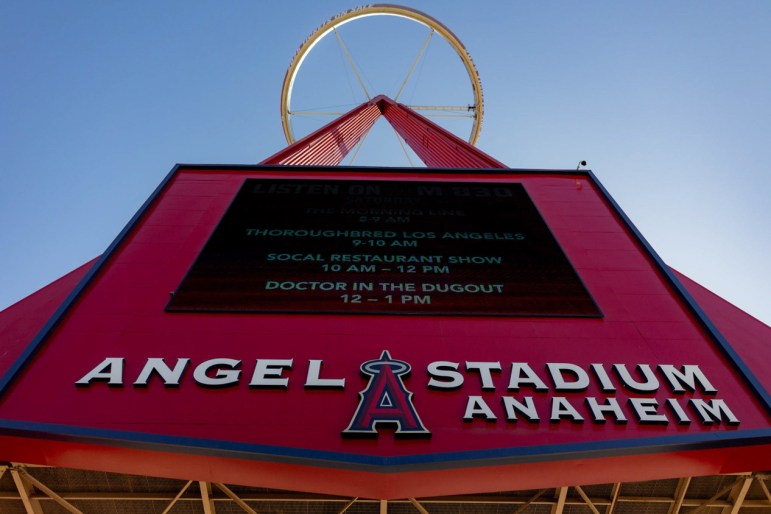 The Iconic “A” signage at Angel Stadium is lit up in Anaheim, Calif., on Feb. 25, 2025. The ballpark has been home to the Los Angeles Angels since 1966.
Mayor Ashleigh Aitken and the rest of the city council did not respond to requests for comment Thursday.
City Manager Jim Vanderpool said in a March 10 letter to auditors that they agree with recommendations to clarify language in future leases regarding the city’s right to inspect the stadium and requiring maintenance inspection reports from the Angels.
He also agrees with recommendations to audit Angels’ financial records related to revenue from the stadium – as well as for physical inspections by the city to verify maintenance work done by the ball club and to publicly post the findings of those checks for residents.
“While the City leadership team continues to review, clarify and validate all the draft findings contained within the report with the State Auditor team, the City of Anaheim has no objection to and welcomes the recommendations put forward by the State Auditor,” reads Vanderpool’s response to the audit’s findings.
The findings come after a state audit request from State Assemblyman Avelino Valencia and State Senator Tom Umberg last fall into whether the Angels have lived up to their end of the lease when it comes to revenue sharing and maintenance.
In a Thursday statement after this story was published, Umberg said the audit confirms the Angels are operating under a “sweetheart deal” that doesn’t in any way benefit the stadium’s owners – Anaheim taxpayers.
“The audit uncovered that, unbelievably, the worse the Angels do, the less they need to pay in rent (the city’s share of revenue is tied to attendance). The failure of the Angels to put a decent product on the field means that the city is basically paying the Angels to play baseball in their stadium,” reads Umberg’s statement.
“Any discussions of further lease extensions with a losing sports franchise that refuses to publicly associate their name with Anaheim while exploiting the city and endangering its residents should be dramatically reshaped.”
Valencia, a former Anaheim City Councilman who was critical of the failed stadium sale, said the lease leaves Anaheim vulnerable.
“The state auditor’s findings on Anaheim’s lease agreement with Angels ownership are deeply alarming and frustrating. This agreement, meant to safeguard the city’s interests, has instead left Anaheim vulnerable to significant risks and missed opportunities,” Valencia said in a Thursday statement after this story was published.
He also said it might be time for city officials to get a judge involved.
“The agreement lacks a requirement for Angels ownership to provide regular updates on the stadium’s condition. Anaheim must act immediately, whether by negotiating a separate agreement or seeking a court order, to ensure it has the ability to properly monitor and protect its own property,” Valencia said.
Angels Spokeswoman Marie Garvey said the team will continue investing in the stadium.
“The Angels have and will continue to invest millions in the Stadium to enhance the fan experience.”
In a Major League Baseball article last month, Team Owner Arte Moreno said he put millions of dollars in the stadium annually.
“But I’m not going to put $200 or $300 million into a stadium that a city owns without any of their participation. Maybe we’ll get a new mayor and council that wants us to stay,” Moreno was quoted as saying.
The city has not reviewed the work the Angels claim to have completed according to the audit.
Auditors say the Angels want the city to reimburse them for maintenance costs.
“Angels ownership believes that it is entitled to receive reimbursement from Anaheim for any excess spending balance at the end of lease term. Although Anaheim disagrees with Angels ownership’s interpretation of the lease agreement, it has not resolved this disagreement,” auditors found, adding city officials haven’t verified the work done at the stadium.
“Further, Anaheim has not verified the work for which Angels ownership claimed to have used the capital reserve funds,” auditors wrote. “Verifying this work is critical because Angels ownership claims that such excess spending equals nearly $36 million.”
What’s the Actual Condition of Angel Stadium?
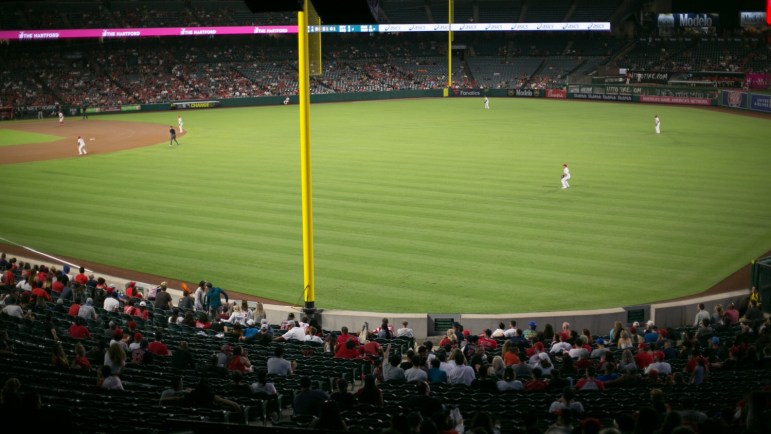 The Angels vs Cleveland Indians game on September 9.
Their report comes two years after the city commissioned a study to determine the state of the stadium that was initially estimated to take two months.
It’s still unclear when that study will be completed.
[Read: How Long Does it Take to Figure Out If Angel Stadium is Trashed?]
The study – when completed – will mark the first time city officials formally inspected the stadium since it was last renovated 25 years ago according to auditors.
The state audit came on Opening Day of the Major League Baseball season, and also lands a day before a federal judge is scheduled to sentence disgraced former Mayor Harry Sidhu, who pleaded guilty obstruction of justice for deleting records surrounding stadium negotiations.
Federal investigators say Sidhu destroyed emails about stadium negotiations, including one containing critical information he sent to a team consultant.
[Read: Will Disgraced Former Anaheim Mayor Harry Sidhu Serve Prison Time?]
Sidhu also spearheaded the lease’s reinstatement in January 2019 after the Angels terminated the lease in October 2018. At the time, he billed the move as a temporary one-year lease extension.
Shortly after the corruption scandal broke in May 2022, City Attorney Rob Fabela publicly said city officials might be able to nullify the lease if any wrongdoing was found in connection with the sale negotiations.
On Feb. 5, city officials announced that Angels Baseball extended that lease to 2032.
At the same time, top city staff privately met with Angels executives and a real estate consultant in January to discuss a state law regarding selling public land – sparking questions if another land sale is in the works.
City officials adamantly denied any negotiations about the stadium.
[Read: What’s the Future of Angel Stadium?]
“While there are no stadium leases or other talks underway, the report makes recommendations for any potential future stadium lease,” reads a statement posted on the city’s website.
Auditors Find Stadium Lease Chokes Off Revenue
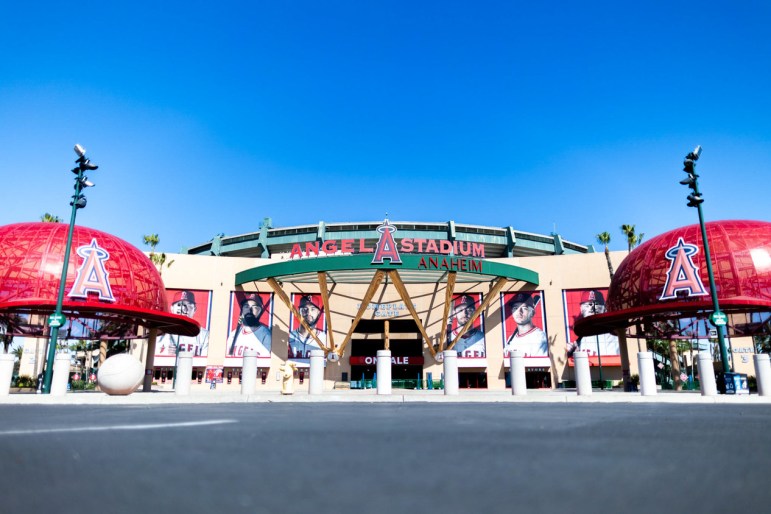 The marquee sign at Angel Stadium is lit up in Anaheim, Calif., on Feb. 24, 2025. The ballpark has been home to the Los Angeles Angels since 1966. Credit: KADE MCKENNA, Voice of OC
For years, city leaders claimed that Angel Stadium is a staple of the city that helps pull in millions in tax dollars despite the city not making much from ticket sales each year.
[Read: Angels Make $100 Million a Year at Stadium While Anaheim Barely Gets a Slice]
Auditors say that overall, that lease agreement is not paying out.
“Between 1996 and March 2025, Anaheim realized approximately $415,000 in net revenue from its lease agreement with Angels ownership, not including $20 million in expenses Anaheim incurred to help pay for the stadium’s renovations,” auditors wrote.
California auditors also found that city officials haven’t made many efforts to make sure the Angels are honoring their promises to pay out a portion of the ticket sales.
“Although the city’s goal is to perform audits of Angels ownership’s records every three to four years, it has not adhered to this schedule,” auditors wrote. “In the last 12 years, it has only performed two audits.”
But staff don’t review the city’s portions of revenue from parking and other non-baseball events according to auditors, and have only reviewed the Angels’ own records twice in 12 years.
“According to the acting audit manager, the delay in conducting the next audit is due to multiple factors including the pandemic, other audit priorities, and lack of staffing,” auditors wrote.
Auditors said that their own limited review found no issues with under payment from the Angels under the lease, but that they’d actually overpaid by $95,000 in one year, which the city would need to refund the team.
Is Angel Stadium a ‘First Class’ Ballpark?
Under the lease originally signed nearly 30 years ago, the Angels are responsible for maintaining the property at “first class professional level.”
“Tenant will maintain the Baseball Stadium in good condition and repair subject to ordinary wear and tear at its sole expense,” reads the lease. “The standard of maintenance to which Tenant will adhere in the maintenance of the Baseball Stadium will be at least equal to first class professional baseball stadium.”
Auditors spoke to the city’s financial accounting manager, who said the city doesn’t review any of the work the Angels do on the stadium after greenlighting it.
“He explained that city staff follow up with Angels ownership for any information about the expenses they need, such as missing supporting documentation, or clarification of invoice discrepancies,” auditors wrote.
“However,” they continued. “Anaheim does not inspect the completed work to verify that Angels ownership used the funds as described, and that the work meets the standard of a first-class stadium. “
Related