
The third Wild Card berth is becoming a blight on the trade deadline—perhaps more with each passing year. As teams wrestle with the question of whether to buy or sell, many stay astride the fence (or refuse to consider relocating to the selling side) much longer than they did under any previous playoff format. Purists are well within their rights to rebuke the new system as one that treats middle-of-the-pack demi-losers like champions, but teams know that the playoff dollars still fill up the coffers either way—and that most fans aren’t purists, anyway.
Thus, as teams like the Chicago Cubs scour the trade market in search of help in multiple departments of their roster this month, the pickings are slim. By any reasonable reckoning, the Twins need a bit of a shakeup, and they’re not in any position to hope for more than a road Wild Card series this fall. Yet, they’re not fully committed to selling, thanks to a string of three series wins before the All-Star break. The Royals just traded for Adam Frazier, which more assuredly reflects a general confusion within the organization than signals either a buying or a selling posture, but they certainly haven’t declared themselves open for business. The Rangers, the Guardians, the Reds, the Diamondbacks and even the Angels remain in various states of self-delusion; the number of teams who are ready and willing to talk about trading present value for the hope of more in the future can be counted on one hand.
We knew it would be this way; this is the new annual dance. Even 13 days before the deadline, clarity is promised to no one, and easy, early-2000s-vintage buyer-and-seller trades aren’t in vogue anymore. The Cubs, however, are among the handful of teams who can’t afford to simply hope the right such deal burbles up by accident in the shadow of the deadline near the end of the month. They’ve already begun engaging teams about trades that would break out of the traditional box for July moves, by doing some one-stop shopping and/or by swapping current big-leaguers out for others.
Sources familiar with talks identified the Diamondbacks and the Athletics as teams with whom the Cubs have discussed multi-player deals in which they would check off more than one box on their shopping list. All permutations of such moves differ from one another, but the broad rationale for this approach is as follows:
The Cubs have spent the last four years trying to build a sustainable winner, which means not mortgaging the farm every time they’re in a winning position.
They have money to spend at this deadline—perhaps as much as $15 million they can add to the payroll, which is the equivalent of about $35 million in full-season salary for the players in question.
By bundling a veteran on an expensive deal with another player on a cheaper contract or with more team control, the Chicago front office is hoping to find a discount on the players they acquire. Taking on two players in a trade makes it incrementally easier to send back prospects who require 40-man roster spots, and taking on money always greases the skids.
Other front offices are aware of those reasons why the Cubs might prefer such deals, too, of course. Trades like those have become very rare over the last decade-plus, because many front offices believe they get more for players by moving them individually in almost all cases. If the needle could be threaded, though, it could be a game-changer in the NL Central.
The obvious names who might be involved in a deal like this with the A’s are Luis Severino, Luis Urías and Mason Miller. Two-thirds of a year into a three-year deal worth $67 million, Severino has become a distraction in West Sacramento, not by being a bad guy, but by not shutting up about how lousy the conditions and circumstances of the team’s extremely temporary home are. Though the Athletics need to keep their payroll above a certain threshold to avoid a bare-knuckled fight with the MLB Players Association and the loss of their revenue-sharing recipient status, Severino has begun to look like an unappealing way to spend those dollars. His surface-level numbers look ugly this year, but the Cubs could happily slot him into the back half of their rotation if they got a little bit of cash in the deal to offset his salary.
Urías, of course, is a former Brewers infielder who played under Craig Counsell for multiple seasons. He’s made a significant swing change since then, though, and is hitting .239/.320/.363 this year. That would be underwhelming for a third baseman, but the Cubs are already getting very underwhelming output from Matt Shaw and from similar bench pieces Jon Berti and Vidal Bruján.
The big catch, of course, would be Miller. One of the hardest-throwing pitchers in the sport, he also sports a wicked slider and has struck out over 40% of opposing batters since the start of 2024. He’s issued a few more walks this year than last and his ERA isn’t as pretty as it was in the past, but Miller belongs on any list of the 10 most dominant relievers in the league. He’s under team control for four seasons beyond 2025, though he’ll be arbitration-eligible for all of them as a Super Two player. Teams are calling about Miller, and don’t feel as roundly rejected as they were last summer.
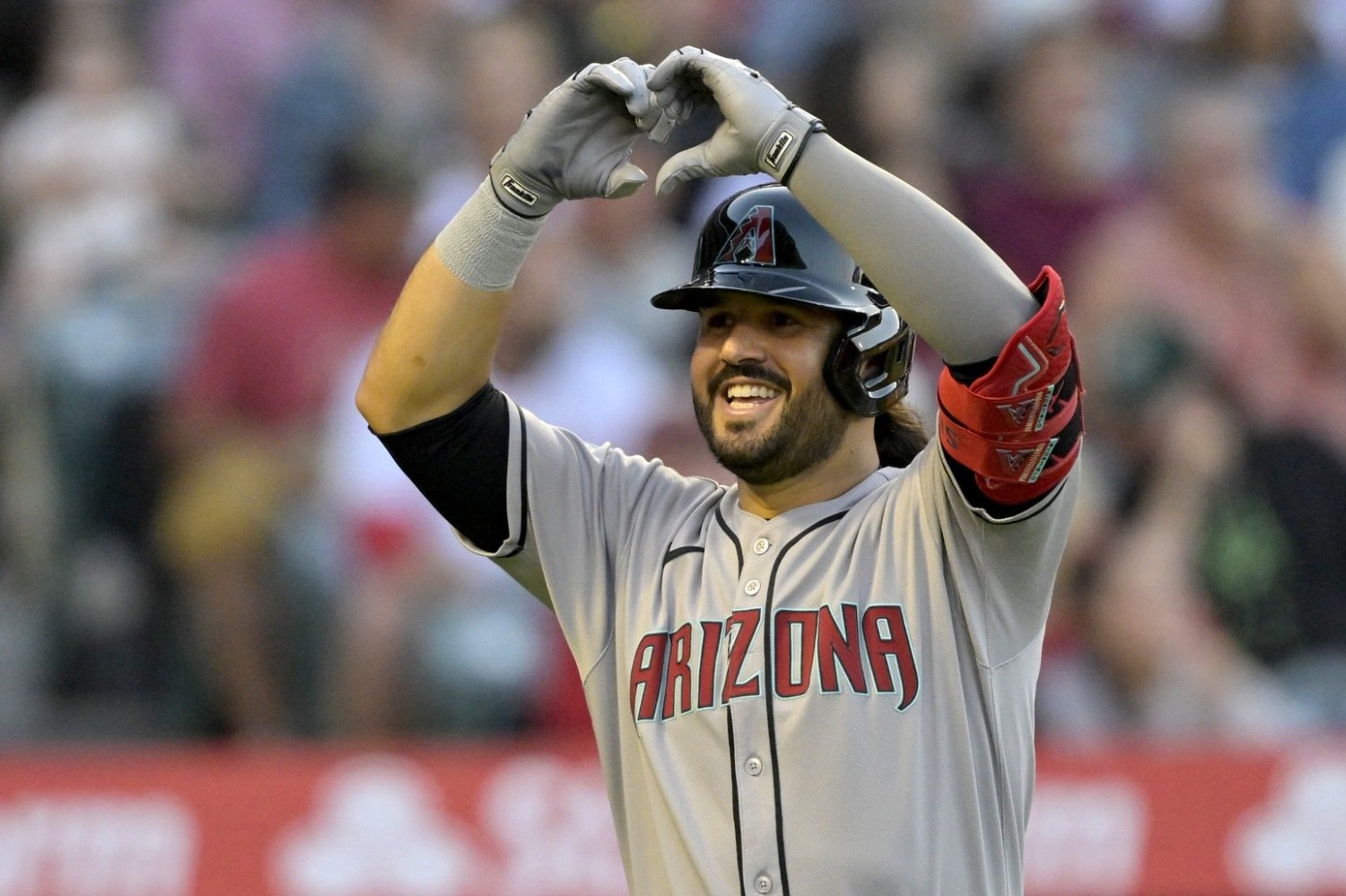
A multi-player trade with Arizona, meanwhile, would almost certainly center on Eugenio Suárez, plus either Zac Gallen or Merrill Kelly. It’s been a brutal season for Gallen (one reason why Arizona is even leaning toward selling at the deadline), but his stuff is still interesting and the remnants of the great pitcher he’s been for much of his career still peek out from time to time. He would be one solid potential addition to the Cubs rotation, and Kelly (by means of having had a better year thus far) might be an even more exciting one at this point. Meanwhile, Suárez would be a major offensive upgrade over Shaw at the hot corner and would make the team’s lineup almost impossible to navigate.
A deal combining any two of Gallen, Kelly and Suárez would cost the Cubs a heavy prospect price, but the one-stop shop could be worth it. Right now, that kind of deal feels more far-fetched than a multi-piece swap with the A’s, but if the Cubs were willing to deal one of their top tier of young non-stars (Cade Horton, Owen Caissie, Shaw, or Kevin Alcántara), that could change.
Similar deals bundling Jhoan Duran or Joe Ryan with Willi Castro or Chris Paddack, of the Twins; Seth Lugo and Carlos Estévez or Jonathan India; and Mitch Keller with David Bednar or Ke’Bryan Hayes make varying levels of sense, too. However, there’s no indication yet that the Cubs have found traction with Minnesota, Kansas City or Pittsburgh on this kind of trade. Trading for multiple players from one team (each of whom would individually improve the Cubs’ chances to reach the World Series) would make even trading Caissie, Moisés Ballesteros, Cade Horton or Jefferson Rojas palatable, while for the sellers, getting access to that caliber of prospect has been a priority in all talks with the Cubs.
Something big will happen before the July 31 trade deadline. The big question is what shape the Cubs’ biggest move will take. Since their needs exceed their means, creativity could be in order.