
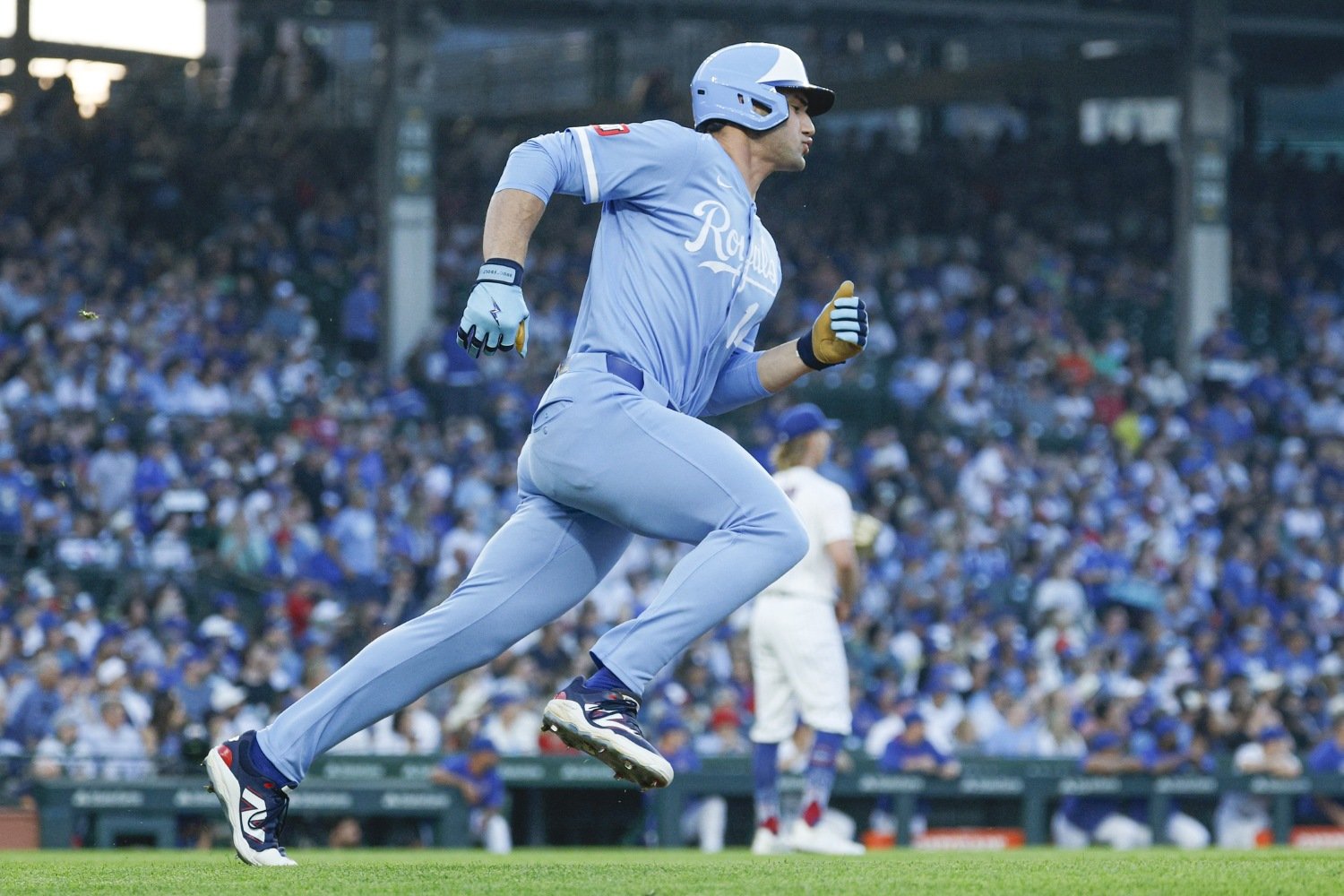
A little over three weeks ago, I made one of my occasional appearances on the excellent Wrigleyville Nation podcast. One thing I said during our conversation on that show was that if Ben Brown made another bulk appearance for the 2025 Cubs, it would mean something had gone horribly wrong. Monday night, they finally felt they could delay the inevitable no longer, and tried Brown again. Not only did they get blown out (thanks especially to Brown getting rocked by the historically inept Royals offense), but the Brewers won their late game, pushing Milwaukee into sole possession of first place for the first time this year.
That was a fitting way for the transfer of power to happen. Ever since a day or two after I made that doomed pronouncement on the podcast, it’s been increasingly clear that this would happen—the reemergence of Brown, in the wake of the injury Jameson Taillon suffered during between-starts work the same week of the aforementioned show, and the Brewers catching the Cubs. With Taillon down, keeping Brown away would have had to mean consistently starting Jordan Wicks or Chris Flexen until the team could find some reinforcement for the starting rotation.
What they should have done, of course, was go get that reinforcement right away—and, to give the limited credit due in this case, they did try to do so. The Cubs have been one of the two or three most active teams in the league in terms of trade discussions, sources in front offices throughout the game agree, and that’s been true since the beginning of this month—even while other clubs were more focused on the MLB Draft and were somewhat hard to engage. Nonetheless, the team’s failure to get anything done reflects two real problems—one very specific, and thus relatively small, for it can’t last any longer; and one very general, very big, and very troubling.
The small, specific problem that’s almost done being one is the misgiven confidence the organization has had in Brown as a starter. He won the fifth starter job over Colin Rea during spring, when he shouldn’t have. He has been given more chances than either his performance or his arsenal merits, and because they were unduly confident in him, they didn’t go and reinforce their starting depth in a meaningful way after Javier Assad and Justin Steele (then Shota Imanaga) got hurt early in the season. While the Brewers were making a sagacious little move to pick up Quinn Priester, the Cubs were still rolling loaded, snake-eyed dice on Brown and his two pitches—one of which just isn’t very good, except in an aesthetic sense.
Happily, they can’t persist in that particular delusion any longer. Brown was farmed out to Iowa with a 6.13 ERA in 16 appearances and almost 80 innings. After a month’s reset during which he only pitched in two games, he came back to the majors and watched that number rise to 6.48. His trade value is regrettably shot, but the team will surely wise up and move him to the bullpen (probably with another stint in Iowa to acclimate to that role) or throw him into a trade over the next nine days. It was foolish to have come into this season so ready to give him the ball for extended outings, but that error has become such a searing wound that it will probably cauterize itself.
The much bigger problem, and the one that doesn’t appear as easy to fix, is that Jed Hoyer (and, to some extent, the ownership and business operations staff supporting him) is bad at acknowledging when they’re in a position of weakness and resigning themselves to making deals without leverage. Hoyer is so value-focused that he misses opportunities to make the team better, not once or twice a year, but six or seven times. We saw the team hold onto Willson Contreras at the 2022 trade deadline, rather than take the best deal they could make for him. We’ve seen them pull out of multiple trades based on medicals or final details (going all the way back to Hoyer’s first offseason in charge, when a trade that would have sent Kris Bryant to the Mets was scrapped at the last second, and coming forward to this past offseason, when two different deals for young starters fell apart). We’ve seen Hoyer fail to manage upward and gain the flexibility needed to finish contracts for (among others) Alex Bregman and Tanner Scott, and fail in his capacity as a salesman to win over those players on the terms his bosses did authorize.
Never for a moment would the Cubs have considered giving up what the Brewers did for Priester. They didn’t have a tradeable draft pick, anyway, but that’s not really the point. Milwaukee was in a tough situation, and when they got Priester from the Red Sox, most of the baseball world raised an eyebrow. Especially devoted Brewers fans nearly raised torches and pitchforks; the trade felt like an overpay. Firstly, though, the team badly needed some kind of competent starting pitching help. And secondly, they had chosen their target carefully, and they rapidly finished his development even while running him out every fifth game as a starter. Scouting, player development, and an aggressive, decisive executive netted the team a pitcher who has already given them 95 innings of a 3.33 ERA and is under team control through 2030.
That Hoyer won’t overpay, ever, is why the Cubs are in second place, and why they gave the ball to Brown again (behind the thin cover of an opener) on the night when they dropped from the top of the Central. It has to change, and fast, because the Cubs are in a position of weakness now. Nine days from the trade deadline, they’re playing from behind, and the team they’re chasing is hotter, deeper, and more well-rounded than they are. Chicago needs to make a major upgrade, and yes, Hoyer will have to overpay for it. Whether he has the stomach for that remains to be seen. What happens when he shies away from taking the necessary risks involved in running a winning team, we just saw.