
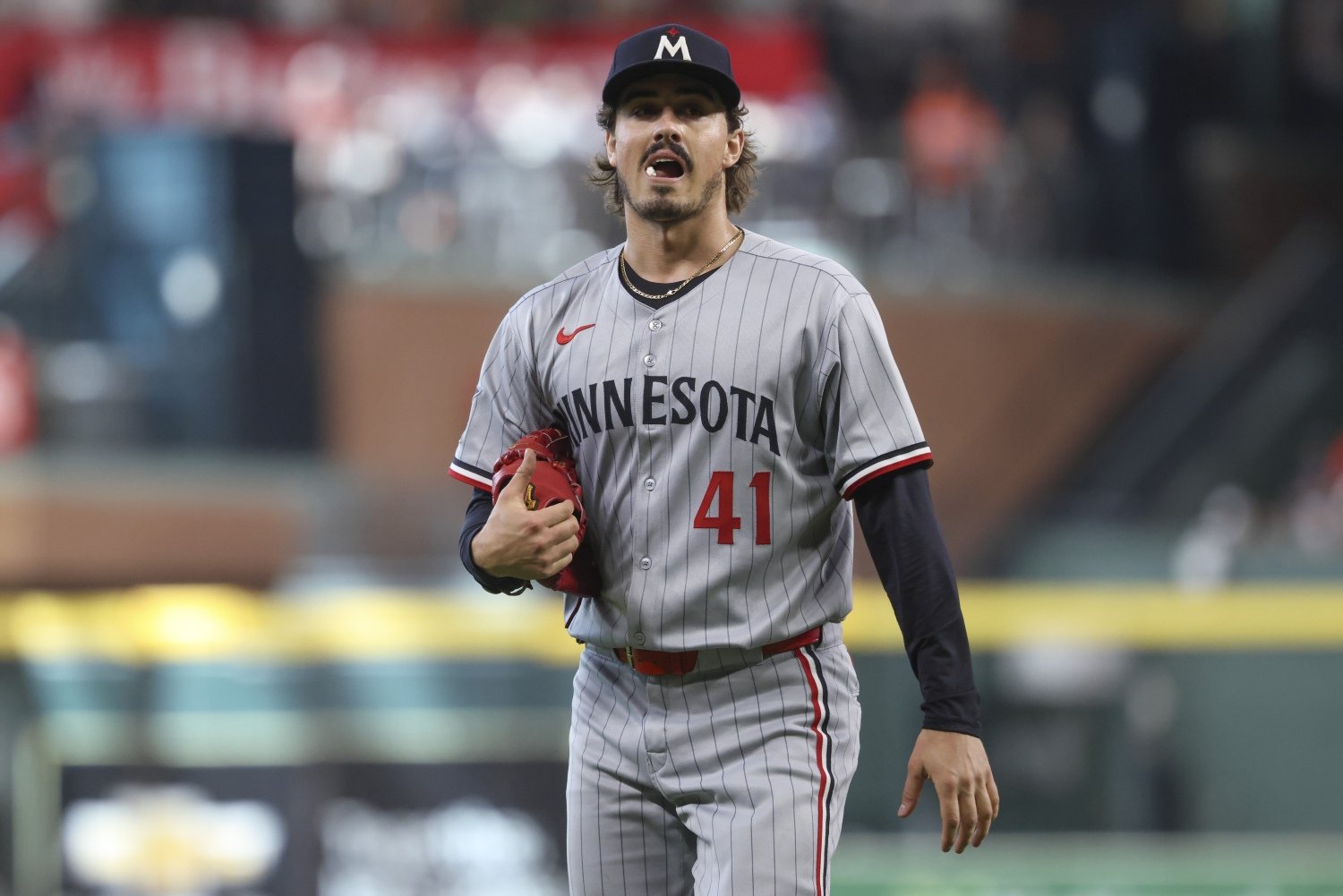
Coming out of the All-Star break, your 2025 Minnesota Twins continue to stumble. The club has lost three of its first five games, sinking to a mere 17.6% chance of earning an AL Wild Card spot, according to FanGraphs. Eight teams in the American League have better odds, and four of the six playoff spots seem completely sewn up. The Twins’ best-case scenario is a road Wild Card Series.
With the 2025 season all but lost, the Twins are seemingly becoming more open to the idea of selling come next week’s trade deadline, as reported by MLB insider Jon Heyman below:
The front office “seriously listening” to offers on veterans with expiring contracts in Danny Coulombe, Harrison Bader, and Willi Castro is an unsurprising development. Yet, Heyman, noting that the club “will listen” to offers on star closer Jhoan Duran and All-Star starting pitcher Joe Ryan constitutes a noteworthy shift in how President of Business and Baseball Operations Derek Falvey and General Manager Jeremy Zoll appear to perceive Minnesota’s short- and medium-term ability to compete in the AL.
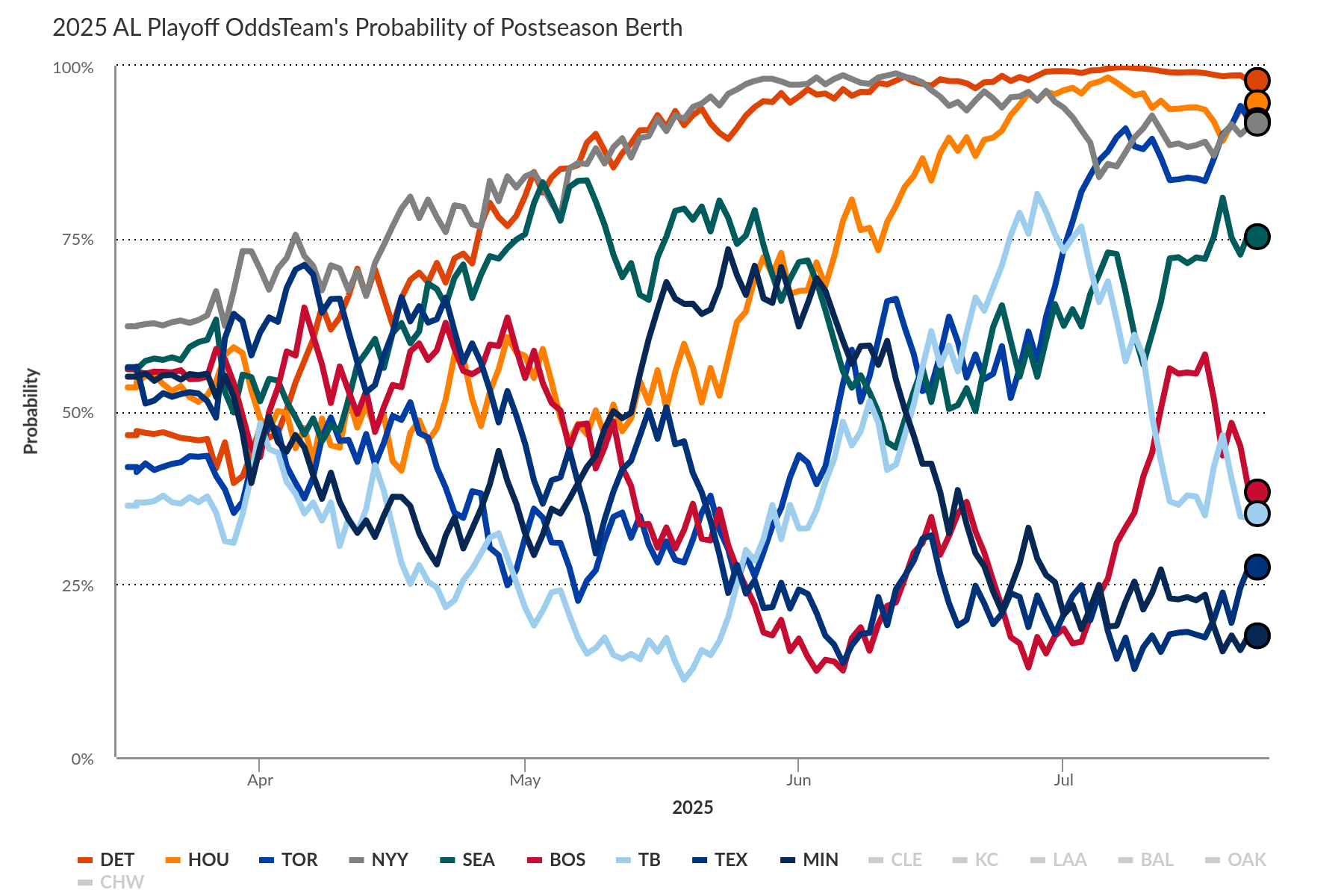
Although taking this approach to the trade deadline can be seen as an admission of failure or inadequacy, it is nevertheless the correct approach for the front office to take. Minnesota’s core is critically flawed, and significant changes are needed. That being the case, the front office would be wise to trade one or more of their core pieces, with Ryan being the apple of pursuing teams’ eyes.
Ryan has blossomed into an ace with Minnesota this season, generating a 2.63 ERA, 3.13 FIP, 0.90 WHIP, and 132-to-32 strikeout-to-walk ratio over 116 1/3 innings pitched and earning the first All-Star nod in his career. The 29-year-old achieved his best first-half performance by sporting the most effective four-seam fastball in baseball, tweaking his breaking and offspeed pitches, and significantly decreasing his proclivity to allow home runs. Indeed, he’s yielding a career-best 1.01 home runs per nine innings pitched (HR/9).
Under team control for two and a half more seasons at below-market rates set by the league’s salary arbitration system, Ryan has become an increasingly sought-after trade deadline prize. Given Heyman’s report, he is more available than previously thought. Ryan has been credibly linked to multiple teams, including the Boston Red Sox and New York Mets. However, no organization makes more sense as a destination for Ryan than the Chicago Cubs.
Sitting at 60-41, Chicago stands tied with the Milwaukee Brewers atop the NL Central. They’re near-locks to make the playoffs, but there are several similarly strong teams in the National League and they could easily slip to the second or third Wild Card without some reinforcements.
Much of Chicago’s success has been driven by its formidable offense, which ranks first in team Wins Above Replacement at FanGraphs (fWAR) and second in team wRC+, only behind the New York Yankees. Their starting rotation, however, is not the strength the team hoped it would be before the season began. According to FanGraphs, the Cubs have the eighth-worst starting rotation, according to fWAR, while ranking 12th in team ERA and 22nd in team FIP. Veteran left-handed starters Shota Imanaga and Matthew Boyd function as viable top-of-the-rotation arms, but without Justin Steele (who underwent Tommy John surgery in April), they’re at least one high-end hurler short of a postseason-ready starting staff.
That being the case, the club would be wise to acquire Ryan. Again, Minnesota would need to be blown away by an offer to justify parting ways with their beloved ace. Despite possessing a mid-tier farm system, Chicago has the top-end prospects necessary to appease Minnesota’s demands. Here’s the essential framework of a possible deal.
Chicago receives: right-handed starting pitcher Joe Ryan
Minnesota receives: catching/first base prospect Moisés Ballesteros, right-handed pitching prospect Jaxon Wiggins
Ranked as Chicago’s top prospect, according to North Side Baseball, Ballesteros would headline Chicago’s return package to Minnesota. He struggled in 18 plate appearances with the Cubs earlier this season, but the left-handed hitting prospect has excelled in Triple-A Iowa, hitting .339/.397/.500 with 24 doubles, eight home runs, and a 130 wRC+ over 348 plate appearances.
MTZxTVJfWGw0TUFRPT1fQWdJRUFWd0VCMU1BQ0ZCUUFnQUhVdzhIQUZoWFdnQUFBd0FNQlFjQkNBQlRVUU1E.mp4
While excelling at the plate at Triple-A, the 21-year-old has registered 426 1/3 innings at catcher, 19 innings at first base, and 24 games started at designated hitter. Given that Minnesota will be thin at catcher and first base next season, with the impending departures of Christian Vázquez and Ty France, the Cubs’ top prospect could receive ample opportunity with Minnesota in 2026.
Possessing a near-elite max exit velocity, strikeout rate, and zone swing rate, Ballesteros possesses the plate discipline and hard-hit tool necessary to hit at an above-average rate at the major-league level. There is reason to believe the 21-year-old will blossom into an above-average major-league hitter in the very near future.
Ballesteros would be an exceptionally valuable acquisition for Minnesota, especially given the aforementioned uncertainty surrounding the club’s short- and medium-term future at his two primary positions, catcher and first base. There are concerns over whether “Big Mo” will be able to stay at catcher long-term. If he can, though, he’s a future All-Star, and even if he’s restricted to first base and designated hitter, Minnesota would considerably benefit from obtaining a young, controllable bat of his caliber. FanGraphs lead prospect analyst Eric Longenhagen only graded 18 prospects this year as having at least a 40-grade present hit tool; a 50-grade (average) future hit tool; and a 50-grade future game power tool. Six of those players are already established big-leaguers, two-thirds of the way into the season. Of the other 12, Ballesteros is the fourth-youngest. He has a bat that can be special, especially if his approach can be refined and/or he can catch on at least a part-time basis.
Drafted 68th overall in the 2023 MLB Draft out of the University of Arkansas, Wiggins has quickly moved through Chicago’s farm system, progressing from starting last season with the Cubs’ Complex League team to earning a promotion to Double-A Knoxville this May. The hard-throwing righty has excelled in Knoxville, generating a 2.25 ERA, 2.11 FIP, and a 48-to-15 strikeout-to-walk ratio over 62 1/3 innings pitched.
According to North Side Baseball, Wiggins slots in just four slots below Ballesteros as Chicago’s fifth-ranked prospect. The 23-year-old’s fastball is near-elite, possessing a 70-grade value on FanGraphs’s 20-80 grading scale. He complements his exceptional fastball with an above-average slider and changeup. Sporting a three-pitch mix, Wiggins is similar to Ryan in that he relies heavily on his plus fastball while utilizing an array of effective secondary pitches.
Similar to concerns surrounding Ballesteros’s viability at catcher, there is some fear that Wiggins could need to transition into a reliever due to control issues. Still, Wiggins possesses frontline stuff, and there is reason to believe he could quickly join Minnesota’s pitching staff, potentially becoming a primary contributor alongside Ballesteros early next season. Again, Twins decision-makers will justifiably need to be blown away to part ways with Ryan. They’d probably need a small third piece included even to accept these two impressive pieces. Yet, receiving one of the best-hitting high-minors prospects in baseball and a hard-throwing arm who could be ready to join a major-league rotation early next season could be enough for Minnesota to send Ryan to Wrigleyville, as Chicago attempts to return to the World Series for the first time since 2016.