
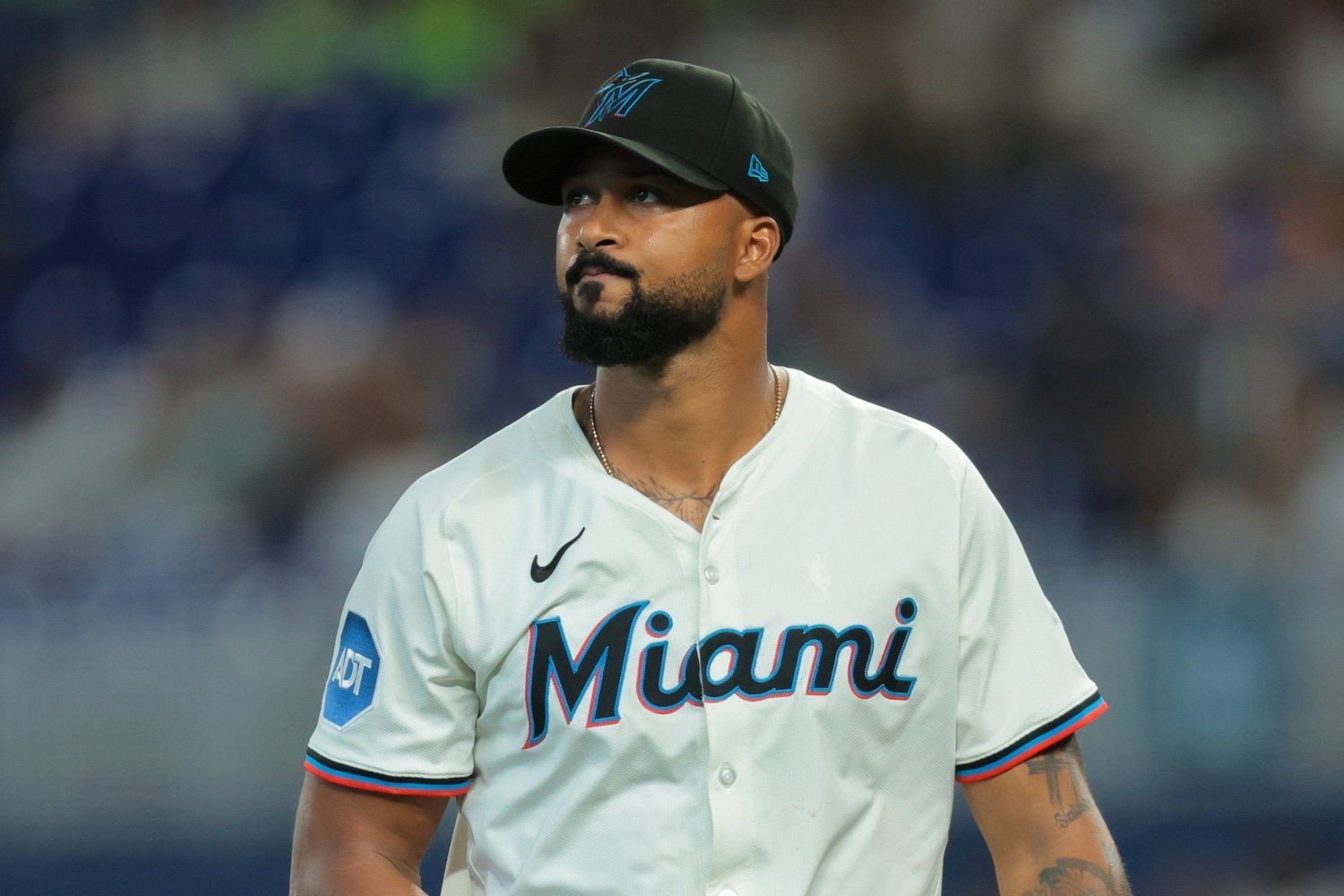
The Miami Marlins need to get this right. They did on December 14, 2017, shipping Marcell Ozuna to the St. Louis Cardinals for a package headlined by Sandy Alcantara. Things have come full circle—leading up to next Thursday’s MLB trade deadline, the Fish will be listening intently as suitors inquire about Alcantara.
What should the Marlins do with the revered right-hander? It depends on the following factors.
Who could you get in return?
Alcantara is under club control through the 2027 season, content with living in South Florida and proud to serve as a veteran presence on a very young team. There is zero pressure on the Marlins to trade him now unless they deem it to be an efficient baseball move.
There really isn’t any precedent for a pitcher with such poor recent results getting traded for a rich prospect haul. On the other hand, front office thinking has rapidly evolved. Alcantara’s appalling 6.66 ERA this year is not a deal-breaker. Opposing teams are unbothered by how much the Marlins have struggled to prevent runs with him on the mound—it’s solely about what they forecast him to do moving forward with their own infrastructure. Therefore, his 4.48 FIP and 5.00 xERA are more relevant to his valuation, and the Marlins can point to how much his control has improved since the beginning of June, which has dropped his FIP to 3.60 over his last nine starts.
The dream scenario would be emulating the 2017 José Quintana trade in which the Chicago White Sox acquired both Eloy Jiménez and Dylan Cease from the Cubs (along with two lesser prospects) despite the durable Quintana being in the midst of an uneven season. The Marlins simply wouldn’t be able to refuse upside like that—Jiménez and Cease were considered 60-grade and 55-grade prospects, respectively.
But what if Alcantara only entices offers akin to last winter’s Jesús Luzardo deal? The Marlins made a bold bet on Starlyn Caba, a far-from-the-majors, defense-first, 55-grade talent. That should be the bare minimum they consider taking back for a former Cy Young Award winner who has established he’s healthy again.
The risk of standing pat
There is more to Alcantara’s ineffectiveness than bad luck and a small sample size. He has allowed more hard contact and induced fewer swinging strikes than ever before. Also, pitcher health is notoriously unpredictable. There are countless examples of guys who had “workhorse” reputations in their 20s, only to fade fast in their 30s (Sandy turns 30 in September).
I laid out the “dream scenario” above. What about the worst-case scenario: Are the Marlins prepared to potentially get nothing in return for Alcantara?
Externally, their farm system quality is regarded as above-average, but not elite. There is sufficient interest in Alcantara to make a deal prior to the deadline that significantly closes that gap. It would be irresponsible to assume that will still be the case next offseason. We simply don’t know what the rest of the 2025 holds for him.
What is the Marlins’ window of contention?
The Marlins have been a genuinely competitive team since Eury Pérez rejoined their starting rotation—they have the fourth-best record in MLB during that span (.632 winning percentage). But can they sustain that elite play for the remainder of the season? That’s literally what it would take to maybe sneak into October with 87 wins.
There is an important distinction between being competitive and being contenders. The Marlins would need to leapfrog five National League teams to qualify for October baseball, and most of those teams will be upgrading their personnel prior to the deadline. Aside from Alcantara, you can count on one hand the number of players on this roster who have even experienced a full-length season at the major league level. Accounting for their brief and spotty track records and the club’s minus-54 run differential, both FanGraphs and PECOTA currently estimate Miami’s playoff odds at less than 1%. A potential Detroit Tigers-esque run this year is so improbable, it isn’t part of the Alcantara trade calculus.
This is about how the organization views 2026. Integrating top prospects Joe Mack and Jakob Marsee should elevate their defense, and you could be looking at the deepest rotation in the league with the additions of Thomas White and Robby Snelling. With Alcantara still in the fold and the investment in a veteran corner infielder, maybe that would be enough to win consistently from the get-go.
How would you reallocate Alcantara’s money?
It’s fair to wonder if the Marlins would be fine relying on a combination of Eury Pérez, Edward Cabrera, Ryan Weathers, Braxton Garrett, Janson Junk, Max Meyer, Adam Mazur, Robby Snelling, Thomas White and Valente Bellozo to start games for them next season. All of their 2026 salaries combined would be less than the $17.3 million that Alcantara is guaranteed. “A little spending could go a long way” to supplement those young arms, as Aram Leighton of Just Baseball wrote last week.
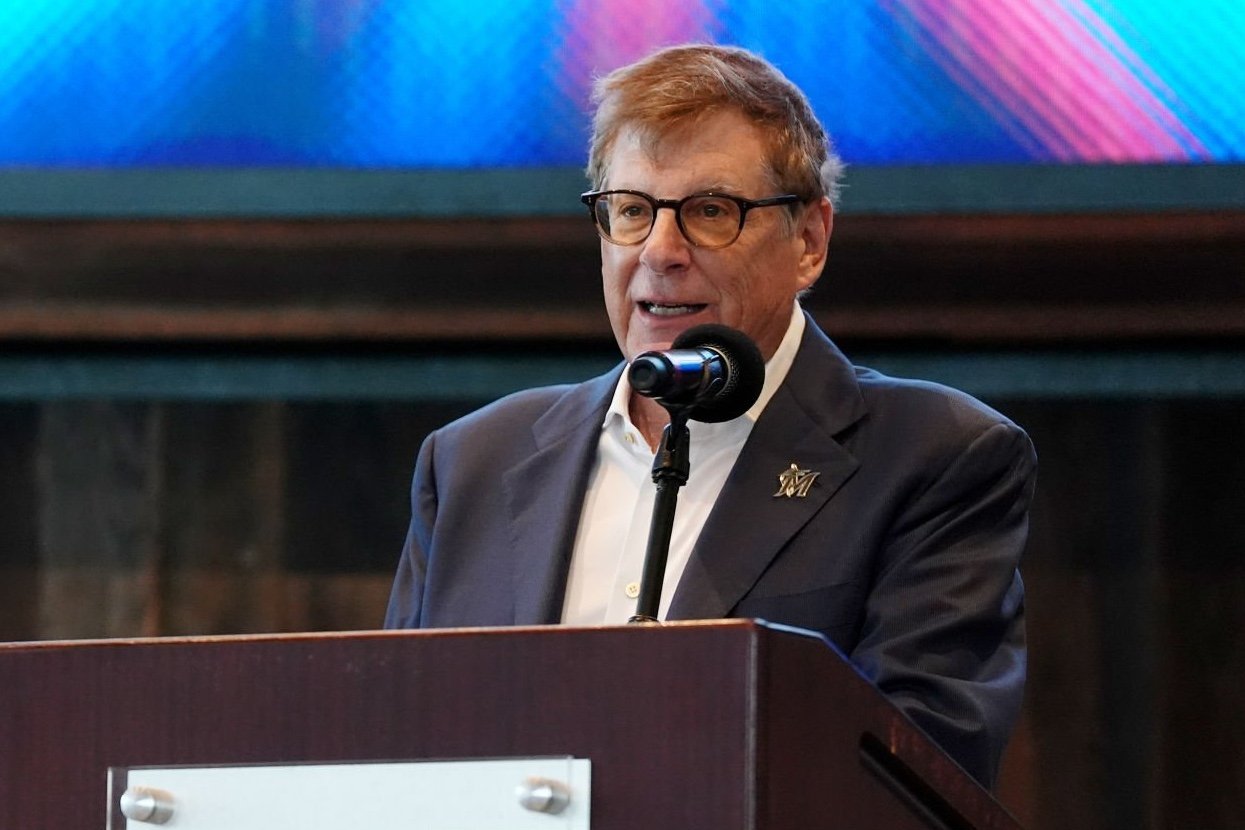
An Alcantara trade is unacceptable unless every cent he was owed (and then some) goes toward reinforcing other areas of the Marlins roster. Given the franchise’s low hit rate on free agents, perhaps that money facilitates contract extensions or veteran trade acquisitions instead. President of baseball operations Peter Bendix must have a plan for this and the cooperation of principal owner Bruce Sherman beforehand.
How would you explain it to the fanbase?
Bendix’s biggest issue since taking over the Marlins front office has been public messaging. He has asked for fans to trust him without divulging the specifics of his long-term strategy. He has inflated expectations for newly acquired players while showing little affection toward those who have already produced at the highest level.
Bendix has traded popular Marlins before, but this is different. Alcantara peaked as the best pitcher in the world and his name is near the top of numerous all-time franchise leaderboards. While it was clear in 2024 that a shake-up was needed, the Fish are firing on all cylinders as this year’s deadline approaches. Trading Alcantara multiple years in advance of free agency to a team with championship ambitions and only getting back players with little-to-no MLB experience—that would be challenging to navigate.
Sherman’s cheapness is inexcusable, but the reality is that the Marlins are struggling to keep up with most other organizations in terms of local revenue. The baseball ops department is partially responsible—through their actions and explanations—for motivating people to spend on their fandom (season ticket plans, merchandise, etc.). If Bendix pulls the trigger on this, some uncharacteristic transparency could go a long way.