
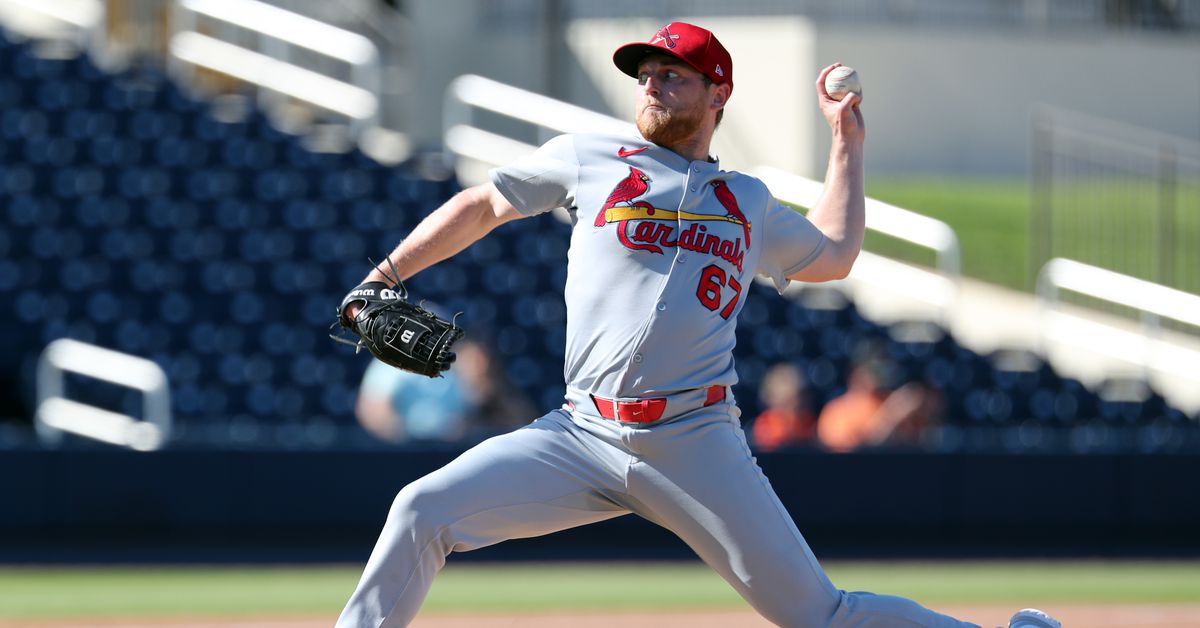
The Detroit Tigers made a trade on Thursday, acquiring left-handed pitcher Bailey Horn from the St. Louis Cardinals in exchange for cash considerations. The Cardinals had designated the 27-year-old pitcher earlier in the day after signed pitcher Phil Maton, their first free agent signing of the offseason.
This is Horn’s second time as a Tiger this offseason. The former White Sox and Cubs prospect finished the 2024 season with the Boston Red Sox after making 18 appearances with them last summer. The Tigers claimed him off waivers from Boston early in the offseason, but designated him for assignment to open a 40-man roster spot for Gleyber Torres when they signed the second baseman back in late December. The Cardinals picked him up, and now flip him back to the Tigers.
The former Auburn left-hander has been a strikeout machine throughout his four years of pro ball, but has never put things together in the command department. Even at the Triple-A level Horn has struck out 28-29 percent of hitters he’s faced, but continues to walk about five hitters per nine innings in two years of work at the highest minor league level.
The Tigers had an open spot on the 40-man roster, and so Horn has been added to their roster and optioned to minor league camp.
Horn average 95 mph with a fourseam fastball that is a bit cutterish, producing below average ride out of a high three-quarters arm slot. That pitch appears to have a little seam-shifted movement that gives it some late sinking action despite looking like a riding fourseamer out of his hand. He gets a good amount of ground balls from it though he gives up plenty of line drive contact as well, but hitters trying to lift it often pop it up. He backs it with two high spin breaking balls.
The main weapon is an 82 mph sweeper that draws plenty of whiffs, and a lesser used tilting curveball at 78-79 mph that plays like a slower version of the sweeper but with more depth than horizontal break. He does a pretty good job mixing them to give hitters two different movement profiles that look similar out of his hand. Horn will also use a high 80’s cutter to try and tie up right-handed hitters inside.
Overall it’s a pretty intriguing pitch mix, but Horn’s command problems go way back and no one has really been able to help him solve them. He’s been a full-time reliever since 2022, but continues to issue too many walks to be useful at the major league level. The stuff is just funky enough to think the Tigers probably have some ideas for adjustments to make, and Horn hasn’t exactly been with top pitching development organizations in his career, so we’ll see if they can help him unlock something.
The Tigers circling back to acquire Horn again says they like him. It may also be a sign of concern with Andrew Chafin. The veteran lefty started out well, but his velocity hasn’t started to work its way back to the Chafin’s usual 91-92 mph, and he’s sprayed the ball quite a bit in his last two outings. As he’s on a minor league deal, the Tigers can take some time to get him right, but Chafin presumably can opt out of the deal sometime in late April or May if the Tigers don’t think he’s ready to contribute at the major league level.
If Chafin struggles to get up to speed after signing late in the offseason, and the Tigers decide they need another lefty to pair with Tyler Holton in the bullpen, Sean Guenther, Lael Lockhart Jr., or even converting Brant Hurter to relief are all better options than Horn right now. Perhaps they can get their new left-hander sorted out with some work in minor league camp and make him a viable option this year.