
1/3
Swipe or click to see more
GREGORY FISHER-IMAGN IMAGES
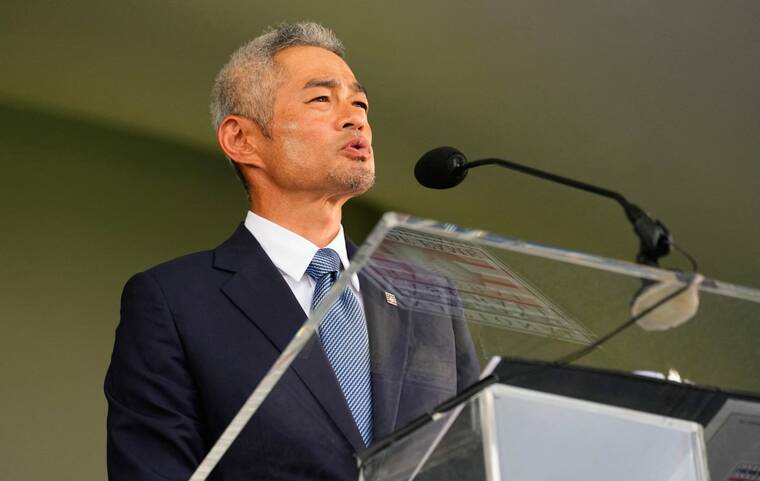
Hall of Fame inductee Ichiro Suzuki makes his acceptance speech during the Baseball Hall of Fame Induction Ceremony at the Clark Sports Center on Sunday.

2/3
Swipe or click to see more
GARY A. VASQUEZ-US PRESSWIRE
Seattle Mariners centerfielder Ichiro Suzuki runs to second base in the first inning against the Los Angeles Angels at Angel Stadium in Anaheim, Calif.
3/3
Swipe or click to see more
RICK SCUTERI-US PRESSWIRE COPYRIGHT RICK SCUTERI
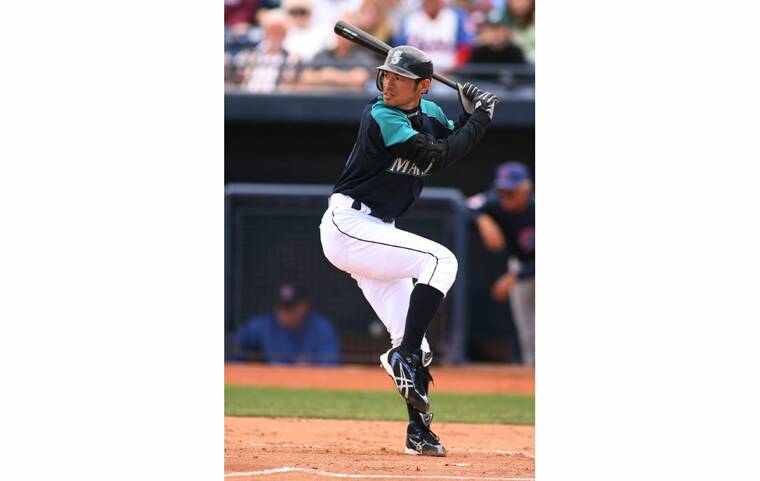
Seattle Mariners right fielder Ichiro Suzuki against the Chicago Cubs in the first inning at Peoria Sports Park, in March 2006.
Ichiro Suzuki, a remarkable hitter with dazzling speed and arm strength, not only broke stereotypes during a career played across two continents but also blazed a trail for a generation of Japanese-born players in Major League Baseball.
Suzuki, who proved his abilities despite starting his MLB journey at a relatively advanced age, became the first Japanese-born player inducted into the Baseball Hall of Fame during a ceremony in Cooperstown, New York, on Sunday.
Arriving from the Orix BlueWave of the Pacific League in Nippon Professional Baseball as a 27-year-old major league rookie with the Seattle Mariners, Ichiro wasted no time showing that his talent and determination translated on MLB diamonds.
The slender Ichiro, with an unorthodox high leg kick to time his swing in the batter’s box, turned routine ground balls into short infield singles with his speed down the line and made baserunners cautious with his strong arm in right field.
Suzuki announced himself with an electric 2001 season in which he hit .350 to win the batting title with a rookie record 242 hits while swiping a league-leading 56 bases in sweeping Rookie of the Year and American League MVP honors.
The batting title/stolen base double had last been achieved in 1949 by fabled trailblazer Jackie Robinson, the man who broke the color barrier as MLB’s first African American player.
Don’t miss out on what’s happening!
Stay in touch with breaking news, as it happens, conveniently in your email inbox. It’s FREE!
Suzuki, who had won seven batting titles in a row and three straight Pacific League MVP awards in Japan, was just getting warmed up in the majors and quickly became a household name in Seattle.
Following a strict daily practice routine and stretching regimen, Suzuki was a model of high level consistency during a 19-year MLB career that also included stops with the New York Yankees and Miami Marlins.
He went on to post a record 10 consecutive seasons of at least 200 hits, reaching his zenith in 2004 when he stroked 262 hits to break an 84-year-old major league record set by George Sisler as he claimed another batting title with a .372 average.
By the time he retired, Suzuki was a 10-times MLB All-Star who held the record for the most hits by a professional baseball player, including his time in Japan, with 4,367.
Including his 1,278 hits for Orix in Japan, the claim has been made that with his major league hits total, Ichiro has surpassed the late Pete Rose, who is MLB’s career hits leader with 4,256.
“He’s a guy who comes around once in a lifetime,” Hall of Famer Derek Jeter, who was a teammate of Suzuki’s when the Japanese outfielder played with the Yankees from 2012 to 2014, once said. “No one’s ever seen anybody like him. And to be quite honest, we probably won’t see anybody like him again.”
Suzuki, who during his career smashed the perception that only Japanese pitchers were good enough to excel in MLB, not only inspired a generation of players but also prompted clubs to more aggressively scout and sign hitters from Japan.
His rise to stardom while playing in MLB opened the door for fellow Japanese hitters like Hideki Matsuyama while current Los Angeles Dodgers two-way standout Shohei Ohtani has also referenced him as an inspiration.
“Growing up, Ichiro was for me the way that I think some kids, some people, look at me today,” Ohtani told GQ magazine in 2023. “Like I’m a different species. Larger than life. He was a superstar in Japan. He had this charisma about him.”