
CINCINNATI (WXIX) – Five years ago, the Cincinnati Reds signed Mike Moustakas to be their second baseman and had an outfield that consisted of two of the worst corner defenders in MLB in Nick Castellanos and Jesse Winker. When a 2020 Reds team with a lineup built out of sluggers made it to the playoffs, they didn’t score a run.
Three weeks after that series ended, Nick Krall took over as the lead decision maker in the Reds’ front office. An organizational shift of priorities then went into place. There’s a reason why the Reds are now known as the team with so many shortstops. In just about every market, the Reds are putting a big priority on defense, speed and versatility.
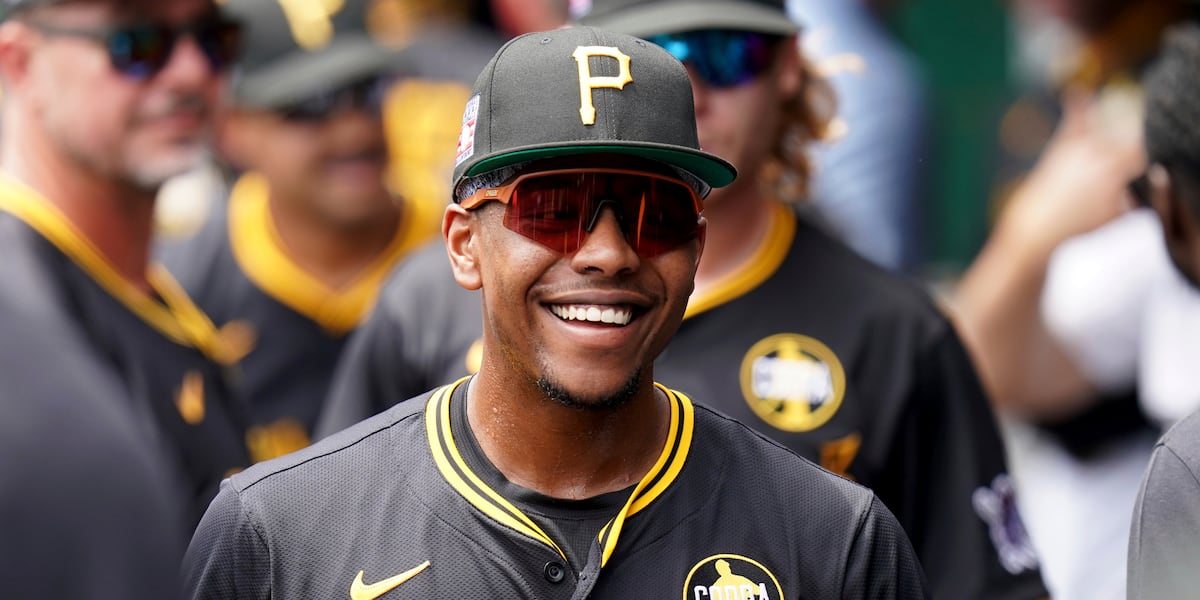
On Wednesday, the Reds acquired third baseman Ke’Bryan Hayes from the Pittsburgh Pirates and dealt an intriguing Low-A prospect in Sammy Stafura plus reliever Taylor Rogers.
With the move, Krall tripled down on the organizational priorities that have been guiding the Reds for the last five years.
“Look at last night’s game,” Krall said, referring to a loss vs. the Dodgers that was decided by missed plays in the field from the Reds. “Defensive plays are the difference in the game. Everyone loves the idea of getting a bat. If you can prevent the runs, you’re going to win games, too.”
It’s the Reds’ boldest trade deadline move since 2019, and it’s also their riskiest. Hayes was a league-average hitter in 2023. But between the 2024 and 2025 seasons, Hayes has the flat out worst OPS in all of MLB among hitters with at least 600 plate appearances. Hayes is now the Reds’ highest-paid position player, and he’s on an eight-year, $70 million deal that goes through 2030.
The flip side is that he’s the best defensive third baseman in MLB.
“He might be the best defender in baseball,” Terry Francona said. “If not, he’s right there. He’s that good. We’re trying to find ways to get better. Sometimes, it might not be the sexiest move but we care so much about trying to play clean baseball. This will be a huge step in that direction.”
In many different areas, the Reds prioritize defense, athleticism and versatility as well as the ability to work quality at-bats. A few weeks ago, those characteristics separated first-round pick Steele Hall on the Reds’ draft board. That strategy has led the Reds to Matt McLain, Noelvi Marte (now a right fielder), Spencer Steer and Edwin Arroyo.
Hayes’ OPS over the last two seasons is 40% below league average. What does his OPS have to be over the next five years for this to be a successful deal for the Reds? Twenty percent below league average? Ten? Exactly league average?
Krall is hopeful that a change of scenery plus some encouraging underlying metrics can help Hayes turn a corner offensively.
“He hits the ball hard,” Krall said. “He has good swing decisions. The walks and the strikeouts are there. He doesn’t chase a lot. He doesn’t swing and miss a ton. He’s above average in both. He hits down on the ball a lot. Trying to use the opposite field. We’re going to try to lengthen his swing a little bit and get him to drive the ball like he was two years ago.”
Hayes’ offensive profile, his long-term contract and a back injury in his history, which Krall said the Reds researched and cleared, makes this deal far from a sure thing.
Hayes now essentially joins the Reds’ young core, and he’s under team control for longer than Elly De La Cruz. While Hayes has a lot to prove at the plate, an infield defense of Spencer Steer, Matt McLain, De La Cruz and Hayes should be fantastic, especially as De La Cruz gets more consistent.
From a structure standpoint, this is starting to feel more like the teams that Francona managed in Cleveland. In 2022, a very young Guardians team had four gold glovers, a few great starting pitchers and won 92 games.
“It was impactful,” Francona said. “We didn’t hit the ball out of the ballpark very much, but we won 90-something games because we didn’t beat ourselves.”
Krall and Francona have alignment on what winning baseball looks like.
The 2025 Reds have a much different identity than David Bell’s Reds.
“They’re getting used to me and some of the things that I preach,” Francona said. “It’s a little different from before. They were ultra aggressive and ran into some outs but created some chaos. I don’t want to make as many outs on the bases. They’re doing a better job of that.”
One big problem with the Hayes trade is the fact that Rogers was attached. Even though Rogers wasn’t contributing and the bullpen looks improved with Luis Mey coming up from Triple-A, including Rogers in the deal indicates how little financial flexibility the Reds have to work with.
Hayes is making $7 million, and the Reds were paying Rogers $6 million.
“We needed to (include Rogers) because we were able to make the salary swap about equal for this year,” Krall said. “That was something that was big for us.”
Operating with such little payroll flexibility is a difficult task. It’s a big reason why the Reds’ top prospects are viewed as untradable. The Reds need to develop their stars from within because the front office doesn’t have another way to acquire those types of game-changing players. So trading for Eugenio Suárez never seemed realistic.
While, by Francona’s admission, the Hayes trade wasn’t sexy, it was well received by a clubhouse that was clamoring for the front office to do something.
“This is a big time pickup, man,” closer Emilio Pagán said. “Five years of control with a guy who plays defense like that with the upside offensively. It’s a big move. This is a move that I feel like all 30 clubs are trying to make. You get a guy who can impact you for now and years to come. He fits the same timeline, per se, as some of our younger guys This is building a roster. This is building a team that’s sustainable to win year in, year out. It’s exciting.”
Spencer Steer emphasized the impact that improving the team’s infield defense can create.
“It’s pretty obvious — when we play clean baseball, we’re good,” Steer said. “We just swept the Rays, and we played really good defense and played the game the right way. I don’t recall us hitting many homers and we found ways to win ball games. If we’re playing clean baseball and playing the right way, we’re a tough team to beat.”
The infield looks set with Steer, McLain, De La Cruz and Hayes.
Krall said that top prospect Sal Stewart, a third baseman, “needs to keep playing, growing and grinding with what he’s doing… He’s going to be a big part of this club at some point.”
The outfield almost has one too many guys. Marte will get a long look in right field. TJ Friedl is the center fielder. Austin Hays has the second-best OPS on the team. If those three players are all in the lineup every day, that only leaves one DH spot for Gavin Lux, Will Benson and Jake Fraley. Those three hitters are all also left-handed, and the Reds don’t have an impact right-handed bat on their bench.
It seems more likely, though, that the Reds bolster their pitching depth between now and the trade deadline on Thursday. The plan to add a second “Nick Martinez” style of versatile pitcher makes a lot of sense, providing the Reds the rotation depth they desperately need as well as a guy who could help out the bullpen late in games in September. They also have enough flexibility to simply acquire a true middle reliever (preferably left-handed) or a No. 5 starter.
The Hayes trade doesn’t fix the Reds’ biggest weakness and give the team the power bat they lack. The Reds are taking a chance.
But at the end of the day, they did something much more meaningful than any move they made in 2020, 2021 or 2023.
“The front office has been aware of some of the things we need to be better at as a club,” Pagán said. “They’ve addressed those needs. Obviously as a player, I’m pumped. But just as a fellow fan in Cincinnati, they’re listening. They’re aware. They’re doing what we as players and fans are asking them to do. It’s an exciting move for sure.”
2025 WXIX