
I had trouble sleeping on Thursday night.
My mind was in that weird place where thoughts and conversations, real or imagined, were rushing past me at every turn, like I was walking through a thunderously loud carnival during a torrential downpour and just trying to get through to the other side.
I was feeling anxious due to the whiplash of the Minnesota Twins’ tumultuous sell-off just before the trade deadline on Thursday afternoon.
I flipped to the other side of the pillow (a foolproof tactic to find comfort for us snoozy boys). No luck. My mind was still in the carnival, and the roller coasters were really roaring this time. I kept hearing these snippets of half-developed thoughts. A constant feed of transaction notifications, numbers on countless lists and rankings, and arguments with nobody in particular.
This is the effect that one’s anxiety can have after investing so much time and attention into something that is now stripped to the studs.
So, instead of trying to take in all of Minnesota’s deadline transactions simultaneously, I sat in my bed and tried to swallow them each on their own merits. And I think I came to this conclusion:
These moves on their own are tough pills to swallow, certainly, but most have a reasonable argument to be made that they served a purpose. But when taken all together, these developments become a lethal choking hazard.
Let’s start with the backbreaker. The move that sent Carlos Correa back to Houston wasn’t about making the club better, but the books cleaner. There’s no way to spin this as anything but the clearing of significant dollars owed to the biggest free agent acquisition this franchise has ever seen. This is based on the general eye test, and the minimal return they received, 26-year-old reliever Matt Mikulski and his 5.68 ERA at High-A, where he’s three years older than the average player at that level.
If the Twins had made all of the same moves leading up to Thursday and kept Correa in tow, there is an argument to be made that the club was looking at a blueprint of contention in 2026 while still bringing in decent prospect talent.
Thinking honestly, the trades of any impending free agent were to be expected, and the returns are pretty standard for recent trade markets. So let’s take those out of the equation, just because their departures were so widely accepted.
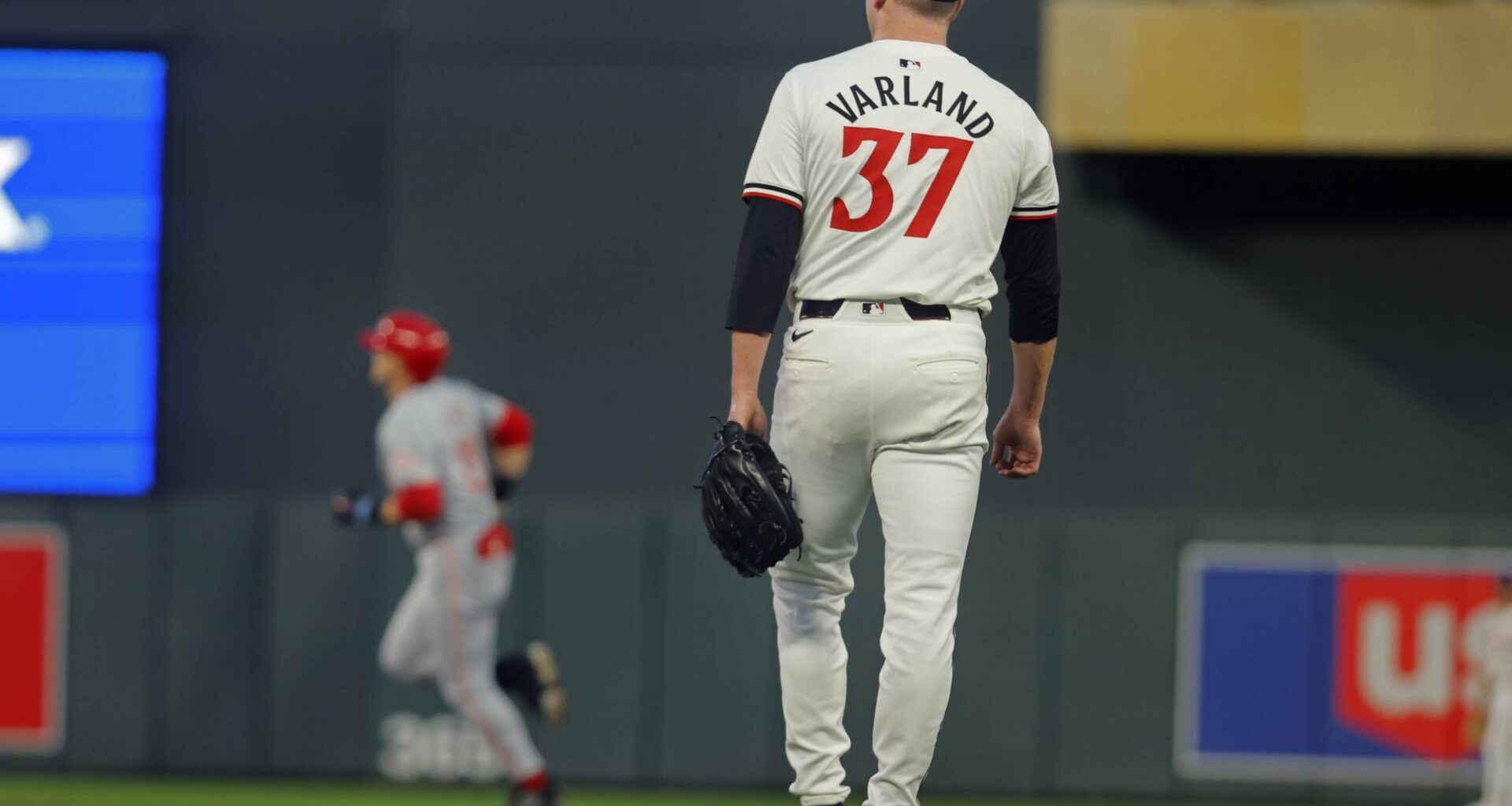
After that, they shipped away four standout relievers in separate deals. However, they returned mostly higher-end talent, especially compared to the impending free agents. Jhoan Duran returned Eduardo Tait (now listed as Minnesota’s No. 4-ranked prospect according to MLB Pipeline) and Mick Abel (No. 6). Griffin Jax got the Twins an MLB-ready rotation piece in Taj Bradley. They swapped Louie Varland for Kendry Rojas (No. 7) and Alan Roden, who recently graduated from prospect status and should be in the mix for considerable playing time going forward.
The Brock Stewart swap is the only one that remains a true head scratcher for me. They only got struggling left-handed outfielder James Outman in return, who probably sits third on the depth chart for playing time behind Trevor Larnach, Matt Wallner, and DaShawn Keirsey Jr. Besides that trade, I could see each of these transactions being relatively justifiable on their own.
But when made all together, it’s incredibly hard to stomach, especially given that they all had at least two more years of club control. While the Varland move was certainly unexpected, it wasn’t out of bounds. If the Twins had conviction that they were selling him at an opportune time in exchange for two pieces that they truly had conviction in, that’s just the price of poker. But the fact that it came after trading away Duran, Jax, Stewart, and (to a lesser extent) Danny Coulombe meant that the cupboard was now practically bare. And it’s hard to talk up the dinner menu when there’s nothing in the pantry for the evening.
So after coming to terms with the fact that the biggest disappointment came from Correa’s departure, and that the impending free agents netted what was to be expected, and the other remaining moves only included relief pitchers that returned decent talent in a seller’s market, I was finally able to get some sleep on Thursday night.
I wonder if Derek Falvey, the Twins’ front office and ownership group can say the same.