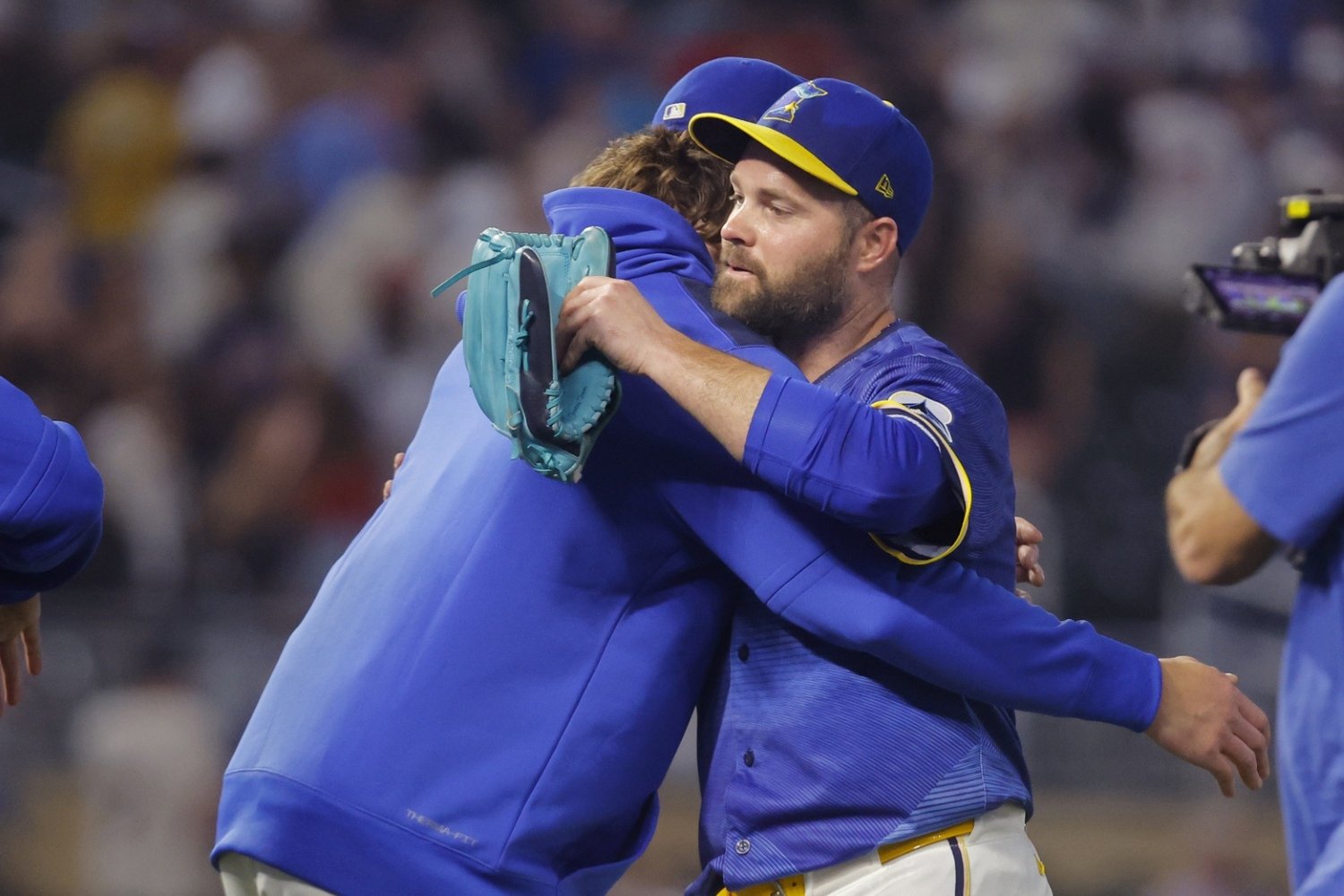
When the Minnesota Twins signed Danny Coulombe this offseason for just $3 million, it barely made a ripple. A 35-year-old left-handed reliever returning to his old team after a solid year in Baltimore? Most fans saw it as a minor move—maybe a steady veteran to round out the bullpen after Caleb Thielbar left in free agency, but nothing more.
Instead, Coulombe has been one of the most valuable and consistent arms on the roster.
He hasn’t allowed a run yet this season. His strikeout rate is a career-best 32.8%. Lefties are hitting just .148 against him. Righties? Even worse, just .133, with 10 strikeouts in 30 at-bats. He’s walked one batter. One. And the Twins have used him in all kinds of spots: to get a single tough lefty out, to clean up late-inning messes, and most recently, to lock down the heart of an opposing lineup in a high-leverage ninth inning.
That outing, on Sunday against the Giants, might have been his finest yet. After Griffin Jax had just coughed up the lead, Coulombe entered a tie game and faced the 9-1-2 hitters in San Francisco’s order, with a seven-game winning streak on the line. He struck out Christian Koss and Willy Adames, before stranding the go-ahead run at second by inducing a fly ball from Jung Hoo Lee. The Twins would go on to win in extras—but without Coulombe stepping up in the biggest moment, that opportunity might never have come.
Coulombe doesn’t overpower anyone with velocity—his fastball averages just 90 MPH—but he works with five different pitches, all of them effective. He keeps hitters off-balance by mixing speeds, eye levels, and locations. His cutter is his bread and butter, thrown about 35% of the time and generating swing-and-miss roughly 30% of the time. It’s the foundation of his approach and keeps hitters guessing.
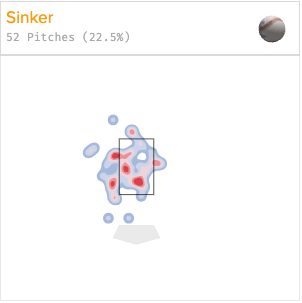
The pitch that’s been most intriguing this year, though, is his sinker. Coulombe has increased its usage from 14% last season to 23% in 2025. What makes it so unusual isn’t just the volume—it’s the location. Coulombe is almost exclusively throwing the sinker to the glove side, a highly unconventional strategy, especially for a left-hander.

To understand why that’s noteworthy: a sinker is a pitch that typically has “arm-side” movement, meaning it runs in toward batters on the same side of the plate (e.g., a lefty pitcher facing a lefty batter). Most pitchers use this movement to jam hitters and induce weak contact to their arm side. For a southpaw, that means the first-base side of the dish, in on lefties and away from righties. But Coulombe is defying convention by commanding his sinker to the glove side—away from same-sided hitters—essentially treating it more like a cutter or backdoor fastball. It’s a tough pitch to execute, but when done well, it can freeze hitters.
TUF2ZTNfWGw0TUFRPT1fVndKV1hWd0RWQUFBREZRQlZnQUhCQThGQUFBQlV3Y0FBd0JYVmdzTkFRRlNDUVlE.mp4
Batters are hitting just .133 against his sinker this year, and against lefties, where he’s using that backdoor approach, Coulombe is throwing the sinker more than any other pitch. Left-handers are hitting just .100 against it. It’s truly becoming a weapon, especially against lefties.
“It’s a pitch that I think really plays with my other stuff really well,” he said Saturday. “Being able to command it backdoor to lefties is generally a pretty good pitch. So I feel like if I execute it, good things generally will happen.”
That precision didn’t come naturally—it came through reps.
“I think for most guys, we just don’t practice it,” Coulombe explained. “It’s something that actually we really opened up last year when I was with the Orioles, was, ‘Hey, let’s target it. Let’s move the catcher out, and then let’s practice it a lot.’ A lot of guys say they can’t do it, but it’s like, ‘Have you actually tried, and have you spent time doing it?’ Because in my opinion, there’s guys on this team that have really good command that don’t do it, and I’m like, y’all should try. It’s a good pitch, if you can execute it.”
The data backs it up, and it fuels the commitment.
“Just seeing the data on it, ‘OK, if I can get it to that spot, it plays really well,’ then I’m going to practice that every single day.”
Coulombe’s value to the Twins goes beyond the numbers. With a bullpen full of electric but relatively young arms like Jhoan Duran, Cole Sands, and Louis Varland, his presence has been a steadying one. He’s not just getting outs—he’s modeling preparation, poise, and execution. Rocco Baldelli made that clear when asked about what Coulombe has brought to the club.
“He’s been awesome, and he’s brought a ton of character, personality and leadership to the clubhouse,” Baldelli said. “It’s been a pretty good signing. It’s something we were excited about at the time … He’s been phenomenal.”
The original vision for Coulombe may have been a lefty-on-lefty matchup guy, but he’s earned a much larger role.
“I thought of him as a very versatile guy,” Baldelli said. “But also, you can just pitch him. You can send him out there against anyone. He has the stuff and the ability to locate to get righties out. He’s been kind of a stopper in a lot of ways.”
It’s easy to overlook a 35-year-old soft-tossing reliever with a $3-million deal signed in January. But there’s nothing quiet about what Danny Coulombe is doing for the Twins right now. He’s been one of the best relievers in baseball. and one of the most important players on this team. And he’s doing it as part of a bullpen that’s become one of the best in baseball.
Minnesota currently leads baseball in bullpen fWAR and, since April 20, Twins relievers own a 2.56 ERA, third-best in the league. Coulombe’s incredible performance, his ability to get hitters out on both sides of the plate, the versatility in his pitch mix, and his ebullient veteran presence have been driving forces behind the group’s dominance.
He was signed to quietly fill a left-handed void. Instead, he’s become one of the loudest reasons for optimism as the season marches on.