
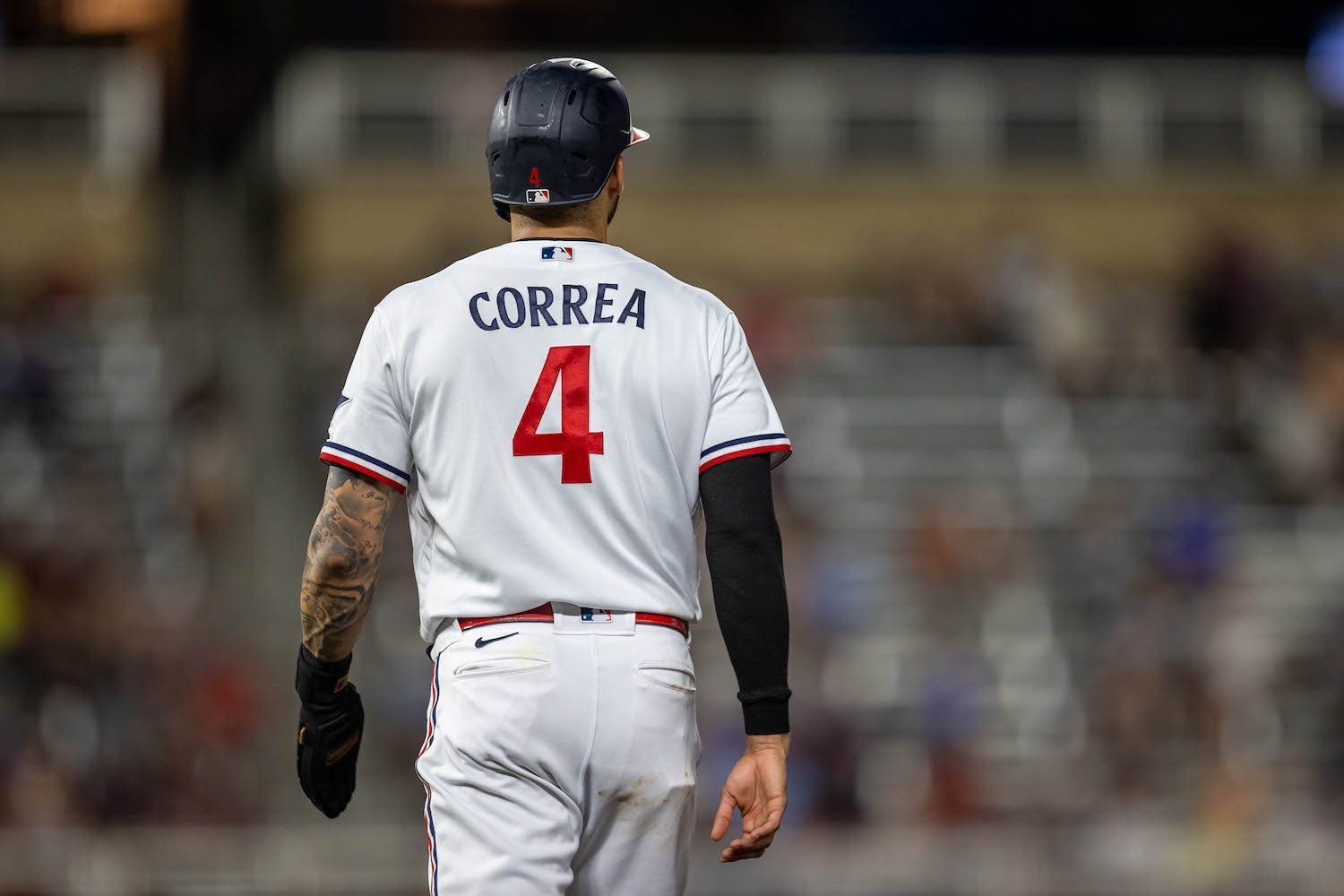
Carlos Correa sat in a quiet room at Target Field and listened as Derek Falvey laid it out plainly. “The direction we are going,” Falvey told him (as reported by The Athletic), “is not the one you signed up for.”
It was a pivotal moment, one that confirmed what Correa had likely suspected for weeks. The Minnesota Twins were no longer building around him. They were turning the page.
Correa’s departure at the 2025 MLB trade deadline marks a seismic shift for the Twins, not just in roster construction but in franchise identity. The 30-year-old shortstop, once the crown jewel of Minnesota’s spending spree, was dealt back to Houston in a deal that signaled a full-scale teardown. And in a series of candid quotes, Correa pulled back the curtain on the conversation that ended his time in the Twin Cities.
“When he told (me) that we were going to go into rebuild mode,” Correa said, “I said then I deserve to go somewhere where I have a chance to win and my kids can watch me go out there in the playoffs and perform. He agreed with me and he said out of respect for me he would get to work.”
The mutual respect between Correa and Falvey has been well documented. They first connected in 2022, when Correa surprisingly signed with Minnesota after the lockout-delayed offseason. That partnership survived an opt-out and a flirtation with the Giants and Mets, culminating in a six-year, $200 million pact that appeared to solidify the relationship for the long haul.
But while the shared goal was always to bring a title to Minnesota, that dream unraveled quickly over the last two seasons.
A Shift in Direction
The 2025 Twins opened the year with playoff expectations, buoyed by a veteran core and roster that was projected to finish near the top of the AL Central. Instead, they cratered. Poor health, inconsistent offense, and clubhouse tension left them buried in the AL Central standings by midsummer.
Ownership’s ongoing negotiations to sell the team have only added to the murkiness. Though manager Rocco Baldelli’s 2026 option was picked up months ago, his job status now feels tenuous. The once-promising roster looked more and more like a team running in place. By the time Correa met with Falvey in late July, the Twins were six games under .500 and 12 games back in the division. The writing was on the wall.
That included honoring Correa’s preference, something that had been lingering behind the scenes.
“I’ve been asking the Twins to play third base for the last two years,” Correa admitted. “But it was not aligning because of how we were constructed. When Falvey told me the Astros wanted me for third base, I was like, that would be perfect.”
Many of these quotes are frustrating for Twins fans to hear because they point to how the front office and the team’s highest-paid player were misaligned. He was supposed to be the player who changed the team’s fortunes. Instead, the Twins are paying the Astros $30 million to take his contract off the books.
The Fallout
In the hours following Correa’s closed-door meeting, the team fell apart on the field. A 13-1 drubbing at the hands of Boston turned chaotic. A confused sequence involving Willi Castro and visible frustration from setup man Griffin Jax told a bigger story than the box score could. Later that night, the team dealt closer Jhoan Duran to the Phillies. That was only the beginning.
On deadline day, Falvey executed a dramatic overhaul. Ten players from the Twins’ 26-man roster were traded, including several bullpen arms and multiple starters. While the club held on to young talents like Joe Ryan, the deadline marked the most aggressive sell-off under the Falvey regime.
The return? A collection of controllable arms, toolsy outfielders, and infield depth. Falvey’s message was consistent: this was about the long-term future. It echoed the message he gave Correa just days earlier.
Correa’s return to Houston is as much about fit as it is about familiarity. He joins a contender in search of stability on the left side of the infield. The Astros plan to deploy him at third base, a position he has been quietly lobbying to play. After years of battling injuries and adjusting his game to support his lower body, the move to the hot corner could extend his career and help improve his performance.
For the Twins, this is a turning point. With the front office operating under tighter financial constraints and a shifting organizational mandate, this summer’s moves reflect a broader shift in vision. The Correa years are officially in the rearview.
And as painful as the departure is for fans, Falvey’s decision to handle it openly with transparency and respect provided a rare moment of clarity in a confusing season.
Correa came to Minnesota to win. Unfortunately, those winning moments were few and far between.
What do you make of Correa’s quotes as he exits the Twins? Leave a comment and start the discussion.