
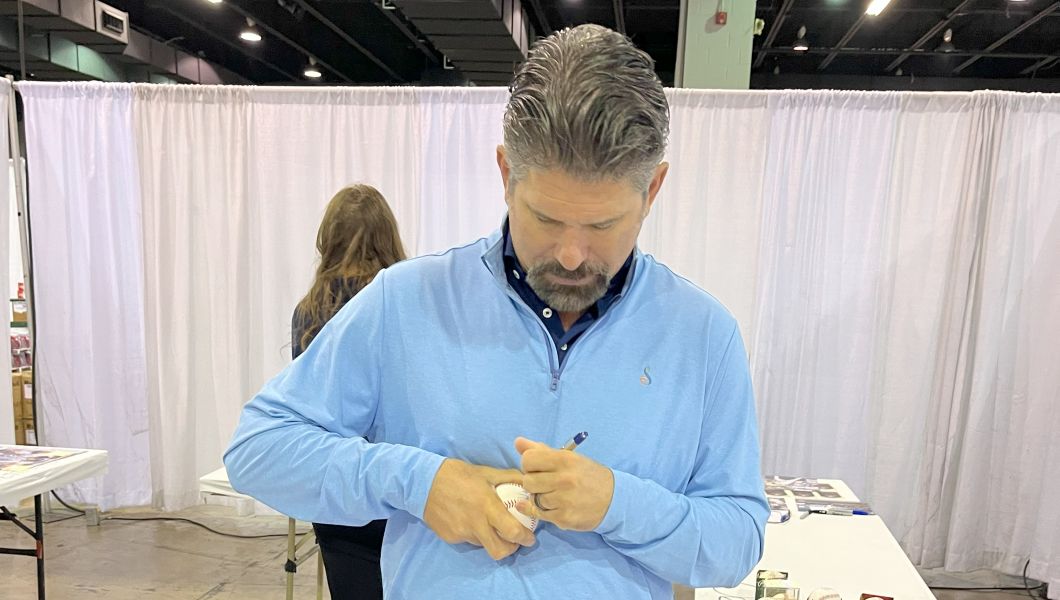
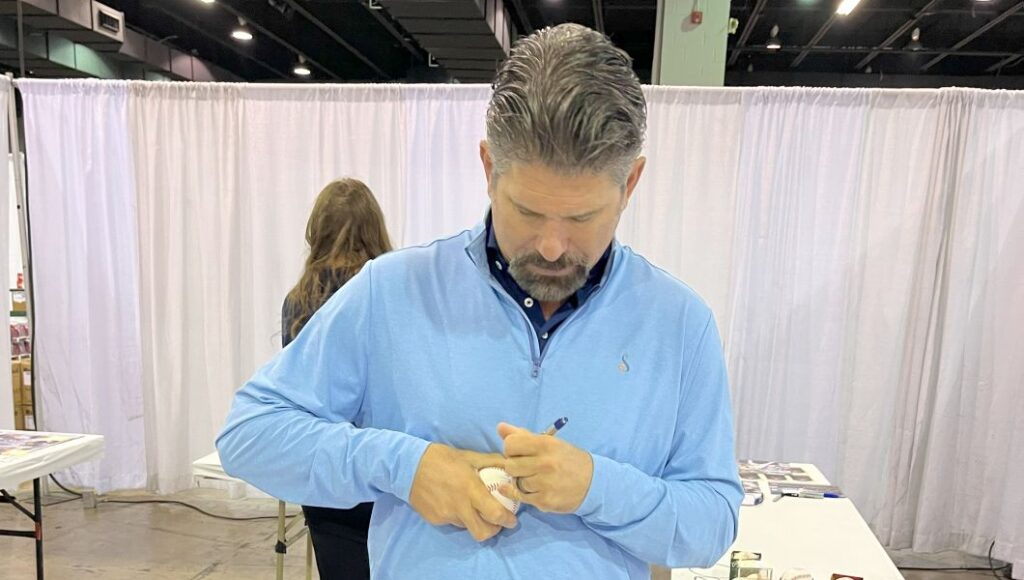
ROSEMONT, Illinois – Growing up playing sports, there is seemingly always one person that is just more naturally gifted than everyone else. What makes someone special is how they turn their raw talents into amazing abilities that capture national attention for years on end. For the people in the Knoxville (Tenn.) area, and at Central High School, that person was Todd Helton. Helton honed his God given athleticism into a Hall of Fame career on the diamond that also included some collegiate highlights under center playing SEC ball.
An All-American baseball player in high school, Helton was also named Gatorade Player of the Year in baseball and football for the state of Tennessee in 1992. During his junior year with the Volunteers, he was named a starter over then true freshman quarterback Peyton Manning after a knee injury suffered by Jerry Colquitt. As fate would have it, Helton was effectively “Wally Pipp-ed” by Manning after suffering his own knee injury, putting all attention back on baseball.
Sticking to America’s national pastime proved to be a successful decision. Helton was named National Collegiate Baseball Player of the Year in 1995 (Dick Howser Trophy) with the Vols. A deserved reputation as an outstanding hitter, Helton set school records on the mound picking up 11 saves with an 0.89 ERA as a junior. For his collegiate career at the plate, a .370 batting average with school records in home runs (38) and RBI (238) were posted.
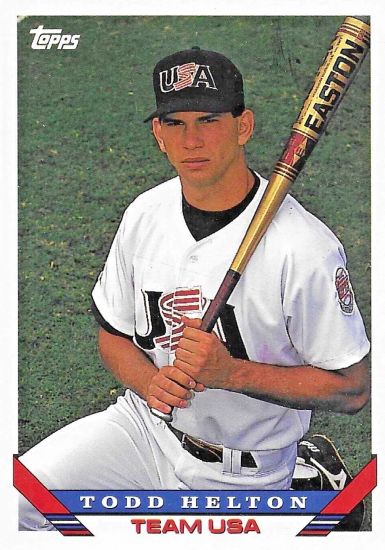 1993 Topps Traded #19T Todd Helton USA RC
After being drafted in the second round of the 1992 MLB Draft by the San Diego Padres, Helton was drafted a second time in 1995, this time as the eighth overall pick by the Colorado Rockies. After two seasons in the minors, Helton made his MLB debut in August of 1997 playing left field going 2-4 with a dinger.
During his rookie season in 1998, Helton slid over to first with Andres Galarraga off to Atlanta. Helton tore it up, hitting .315 with 25 homers and 97 RBI. The rookie campaign started a string of 20 or more home runs for eight consecutive years topping out in 2000 with 42 and 49 in 2001. The other streak started, 10 years of hitting .300 or better. His best statistical season was in 2000, Helton batted .372 (MLB leader) with 147 RBIs (MLB leader), 59 doubles, and 216 hits with an 8.9 WAR.
The career spanned until 2013, all with the Rockies, accumulating five All-Star selections, three Gold Glove Awards, and four Silver Slugger Awards. In 2024, Helton received 79.7 percent of the votes being selected into the Baseball Hall of Fame.
In between appearances and signing memorabilia at the 2025 National Sports Collectors Convention, Helton answered a few questions about today’s game and his Hall of Fame career.
Interview
Because of the location of Coors Field, some former MLB players try to make it sound like playing for Colorado is easy for a hitter, taking away from an individual’s success there. But there are ballparks like Yankee Stadium with a short right field and Fenway with the Green Monster that give advantages to their players without the backlash. Do you think it is warranted for people to downgrade playing at Coors Field?
“I mean, I’m not gonna sit here and say that Colorado is a bad place to hit, because it’s not. I don’t think it’s so much the home runs. You know, it’s when you look out and you see how big the outfield looks, you get kind of in a good place hitting-wise.
“Mentally, it just makes it a lot easier to hit doubles and find some loop-base hits. There are some gaps, right? You can really take advantage of those things.”
Since your retirement from the game, pitching strategies have changed. Unfair question, but how do you think you would perform against today’s pitchers based on the strategies used by MLB managers?
“You know, I really haven’t thought about that. Sure, I’d be all right. I know you would. If you thought about it, maybe you’d do better. I don’t know. With the averages down, the way they are, I mean, I figured I’d probably win some batting title – multiple batting titles.
“It looks like guys are going harder, but I don’t believe it’s that much harder than what the gun says, to be honest with you. I mean, they still got to throw it over the plate. If they throw it over the plate, you can handle it.”
How closely do you still follow Major League Baseball?
“I really don’t watch that much baseball anymore. I do still help out with the Rockies, with their minor leagues.”
What was the best hitting advice you received or best advice you’d give to the young readers developing their game in Little League, Babe Ruth, and in high school?
“The best hitting advice I got was from Tony Gwynn (San Diego Padres). He called me over, you know, out of the blue, and just told me… he said, ‘Where do you look at when you’re trying to pick up the ball?’
“And I said, ‘Well, I envision his release point up there.’
“And he said, ‘That’s not right.’ Then he said, ‘Todd, if you’re doing that, your eyes are wandering. They’re not fixed on one thing. If you start at the bill of their cap, and when they release then you should shift your eyes over.’ It was the best advice I ever got for hitting.”
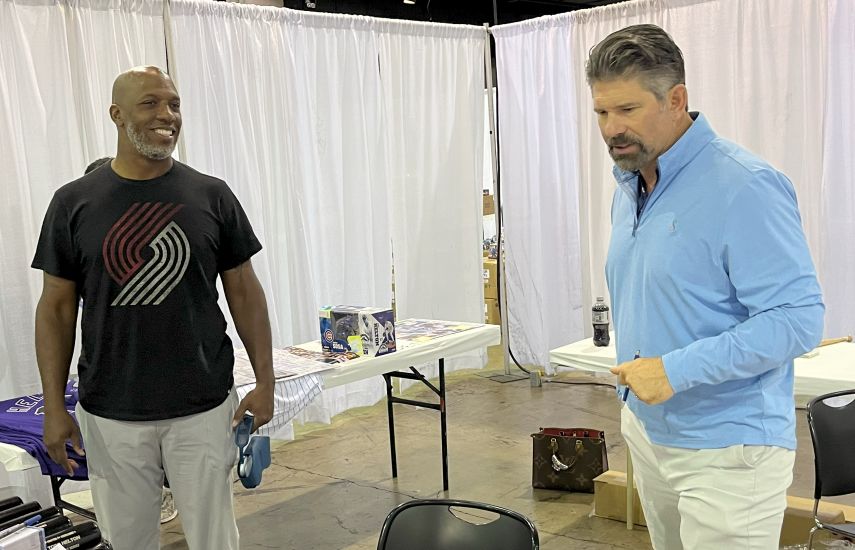 Portland Trail Blazers head coach Chauncey Billups and Todd Helton meet at the 2025 NSCC