
Welcome back to BCB After Dark: your coolest spot for night owls, early risers, new parents and Cubs fans abroad. Sorry that we closed for a few days for remodeling. But we’re back with a new bar and a remodeled stage. We still have the same tables, and one is still available. The hostess will seat you now. Let us know if you need anything. Bring your own beverage.
BCB After Dark is the place for you to talk baseball, music, movies, or anything else you need to get off your chest, as long as it is within the rules of the site. The late-nighters are encouraged to get the party started, but everyone else is invited to join in as you wake up the next morning and into the afternoon.
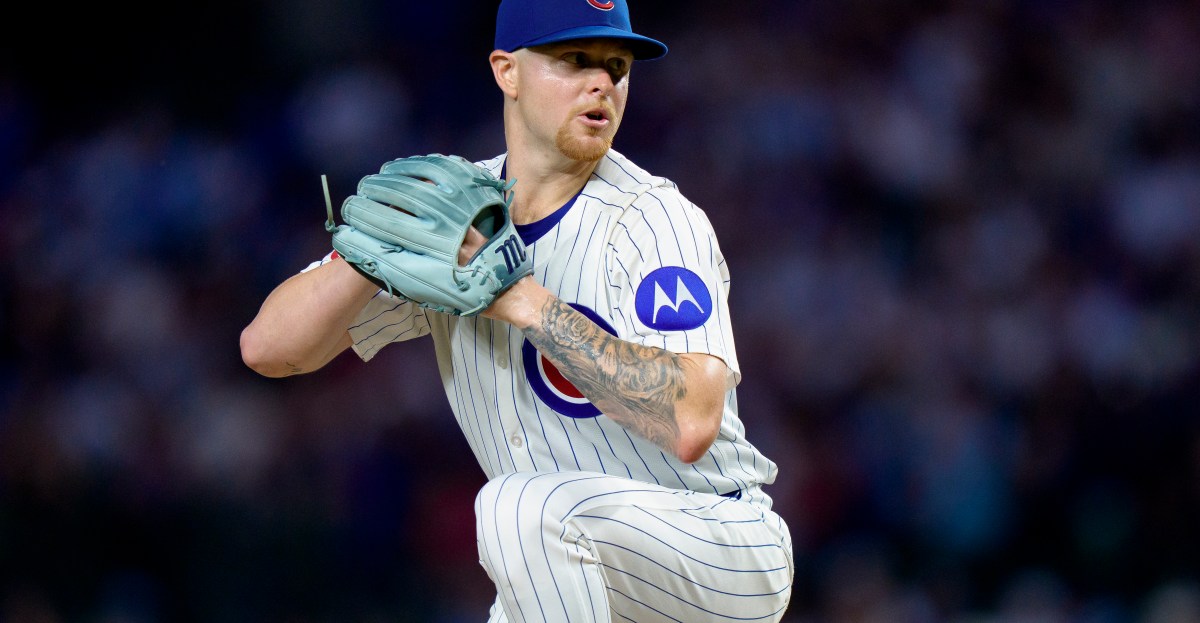
Today the Cubs snapped out of their funk and downed the Cincinnati Reds, 6-1. The Cubs got another 5.2 scoreless innings out of Cade Horton and an Immaculate Inning out of Andrew Kittredge. Seiya Suzuki, Dansby Swanson and Ian Happ homered.
Last time we met was near the end of the trade deadline and I asked you about the deal for Michael Soroka. That served as double-duty for both announcing the deal and having an After Dark topic. Unfortunately, or maybe fortunately, our poll software didn’t carry over to the new site so I have no idea how you voted. The topic didn’t age well anyways.
Here’s the part where I play music and talk movies and I have the long-promised essay on Rififi. But you’re free to skip that if you want. You won’t hurt my feelings.
It always blows my mind that at 88 years old, Ron Carter is still one of the best bassists in the world. Here his is this past May with drummer Florian Arbenz and his twin brother, pianist Michael Arbenz.
Rififi (Du rififi chez les hommes in French) is the 1955 film that stands as the greatest heist film of all time. Directed by blacklisted American Jules Dassin, Rififi, along with director John Huston’s 1950 film The Asphalt Jungle, created the structure of the heist film as we know it today. It’s the epitome of the phrase “often imitated, never duplicated.” It has certainly never been improved upon.
Rififi is the story of a jewel heist, the men who pull it off and the aftermath of the crime. Standard stuff, to be sure, but it was new when Huston and Dassin did it in the fifties. The main protagonist in Rififi is Tony (Jean Servais), although mostly he’s called by his nickname “le Stéphanois.” He’s fresh out of prison for a previous heist that he pulled with Jo “The Swede” (Carl Möhner). Jo didn’t go to prison because Tony didn’t rat on him, and Jo is grateful for that. He got married, had a kid, named the kid Antonio after Tony and made Tony the godfather.
Jo and his Italian friend Mario (Robert Manuel) come to Tony with a plan to do a smash-and-grab robbery at a jewelry store. Tony rejects it out of hand, but after thinking about it overnight, decides that there’s no point in risking going back to prison for the small stuff that Jo and Mario are planning. Instead, Tony proposes a giant heist of the store. They bring in a safecracker in César “le Milanais,” played by Dassin himself under a pseudonym because the actor they hired never showed up. (Dassin said the producers and the actor got their wires crossed.)
The thing that everyone remembers about Rififi is the heist scene in the middle. It’s 28 minutes of near-silence. There’s no dialogue and no music. The only sound is the soft footsteps of the gang and the muffled sounds of the safecracking tools. The whole thing is a tense, hypnotic dance of crime that you’ll never forget after seeing it. There’s more to Rififi than just that scene, but that is what lifts the movie to a level among the all-time greats.
The rest of the film involves the aftermath of the crime. A rival gang finds out that Tony and his friends pulled the heist and want to steal the money from them. The leads to a violent confrontation between the two sides and a kind of redemption arc for Tony. Servais had been a big romantic lead in French cinema in the thirties, but World War II and a drinking problem left him playing minor roles after the war. The war and booze also changed his looks from dashing to hard and craggy—perfect for a role like this one. Servais plays le Stéphanois as a hardened criminal whose moral code teaches you just one thing: you don’t snitch. He also finds joy in only one thing and that’s playing with his five-year-old godson. The rest of the film, he’s cold, hard and mean.
Dassin had been blacklisted in the US and was down on his luck in Paris. He hadn’t directed a film since 1950’s Night and the City and his attempts to get jobs in Europe were constantly frustrated by the US State Department threatening retaliation to anyone who hired him or agreed to work with him. But producer Henri Bérard was a big fan of Dassin’s The Naked City and asked him to direct Rififi. Dassin needed the work, but he agreed only after he was allowed to re-write the screenplay, as Dassin found the novel Rififi was based on to be awful and racist. (François Truffaut, who was still only a film critic in 1955, said “Out of the worst crime novel I ever read, Jules Dassin has made the best crime film I’ve ever seen.”)
In the history of cinema, there are few directors who shot cities as well as Dassin. The Naked City gets all the attention for being the first major studio film ever shot entirely on location, and Dassin certainly captured the energy of New York like no one else ever had and arguably since. But Dassin did the same for the still-rubble-torn London in Night and the City and he does it again for Paris in Rififi. But unlike Alfred Hitchcock, who liked to go to famous monuments to give his films a sense of place and grandeur, Dassin shot the common neighborhoods where people actually lived and breathed in those three films. You’re not going to see the Eiffel Tower or Arc de Triomphe in Rififi, but the streets of Paris are just as much a character in the film as any other. The city doesn’t look fancy, but it looks great. This isn’t the “City of Lights” that we see in several other films. It’s a gritty city that matches a gritty film.
If you don’t know what the mid-century French slang term “Rififi” means, Dassin helpfully includes a scene in a nightclub where a performer explains it in song. It was a very clever touch added by Dassin.
Despite being banned in many countries because the authorities thought it taught criminals how to pull off a heist, Rififi was a major international hit. It even managed to be a hit in America, despite Dassin refusing to change his credit to a pseudonym. (United Artists released it under a pseudonym, though.) The success of Rififi was a major blow against the blacklist.
Despite being much copied, Rififi holds up today. Maybe it’s not the high-tech puzzle of a heist that you’re used to from films like Ocean’s Eleven, but it’s the film that set the prototype for such later heist films. You can’t really understand the construction of a modern heist film without being familiar with The Asphalt Jungle and Rififi. And no one other than Dassin has ever dared to shut off most of the sound for 28 minutes like he did in Rififi.
Here’s the trailer for the restoration of Rififi.
Welcome back to everyone who skips the music and movies.
Cade Horton got the win today and extended his scoreless innings streak to 23 1/3 innings. Horton has not allowed a run in five of his last six starts since the calendar turned to July.
I think everyone agreed that the Cubs needed to add a strong starting pitcher at the trade deadline for the playoffs. They didn’t, and the one they did add got injured after two innings.
But tonight’s question is maybe the Cubs have had that elite starting pitcher there all along in Horton? If the rumors are true and the Cubs didn’t acquire a quality starter at the deadline because every team was insisting on getting Horton or Matt Shaw back in return, then maybe the Cubs aren’t in as bad shape as we thought? Maybe in Horton, Imanaga and Boyd, the Cubs have three quality starters who can shut down a playoff opponent in six games of a seven-game playoff series?
No, the Cubs don’t have that fourth starter, but there aren’t many playoff teams that can throw four aces in a series. Even the Dodgers had to go to a bullpen game last year’s World Series. The Cubs have Colin Rea who isn’t terrible and there’s a strong possibility that Javier Assad and Jameson Taillon will be back soon. The Cubs even said the injury news on Michael Soroka was relatively good. So it’s not like they won’t have options for a fourth starter.
But that’s not what we’re asking you about tonight. Tonight’s question is if the Cubs are facing the Phillies in Game one of a playoff series, how confident are you if the starting pitcher is Cade Horton?
I picked the Phillies because that’s whom the Cubs would play if the season ended tonight, but it could be any team. I trust that most of you are believers in Shōta Imanaga and Matthew Boyd, but do you believe that Cade Horton is that starting pitcher who can win the Cubs a game in the playoffs?
On the positive side, Horton has been brilliant lately with that 23 1/3 inning scoreless streak. But there are other less positive numbers. His strikeout totals—59 in 19 1/3 innings—don’t exactly scream “ace,” although Horton had been getting a lot more ground balls and weak contact than he did in the minor leagues. The other issue is that when you throw in his minor league numbers, Horton has thrown over 108 innings this season already. He only threw 88 1/3 innings in 2023, which is his career-high. The Cubs have said that Horton isn’t on a strict innings limit, but you have to wonder how much more he can take. Will Horton have anything left in October? Will he only be able to give the Cubs three or four innings, thus taxing the bullpen in a short series?
So if a five is “If Horton is the starter, I feel like the Cubs will probably win” and if one is “Wait ‘till next year,” how are you feeling with Cade Horton starting Game One of a playoff series?
We’ve got new polling software and they’ve told us it’s temporary until they can replace it with something better. So I hope this works for everyone. If it doesn’t work for you, I’m sorry. Let us know.
Thank you so much for stopping by tonight and being patient throughout our remodel. But we’re very glad to be able to host you again. Please get home safely. Let us know if we need to call a ride for you. Recycle any cans and bottles. Tip your waitstaff. And join us again next time for more BCB After Dark.