
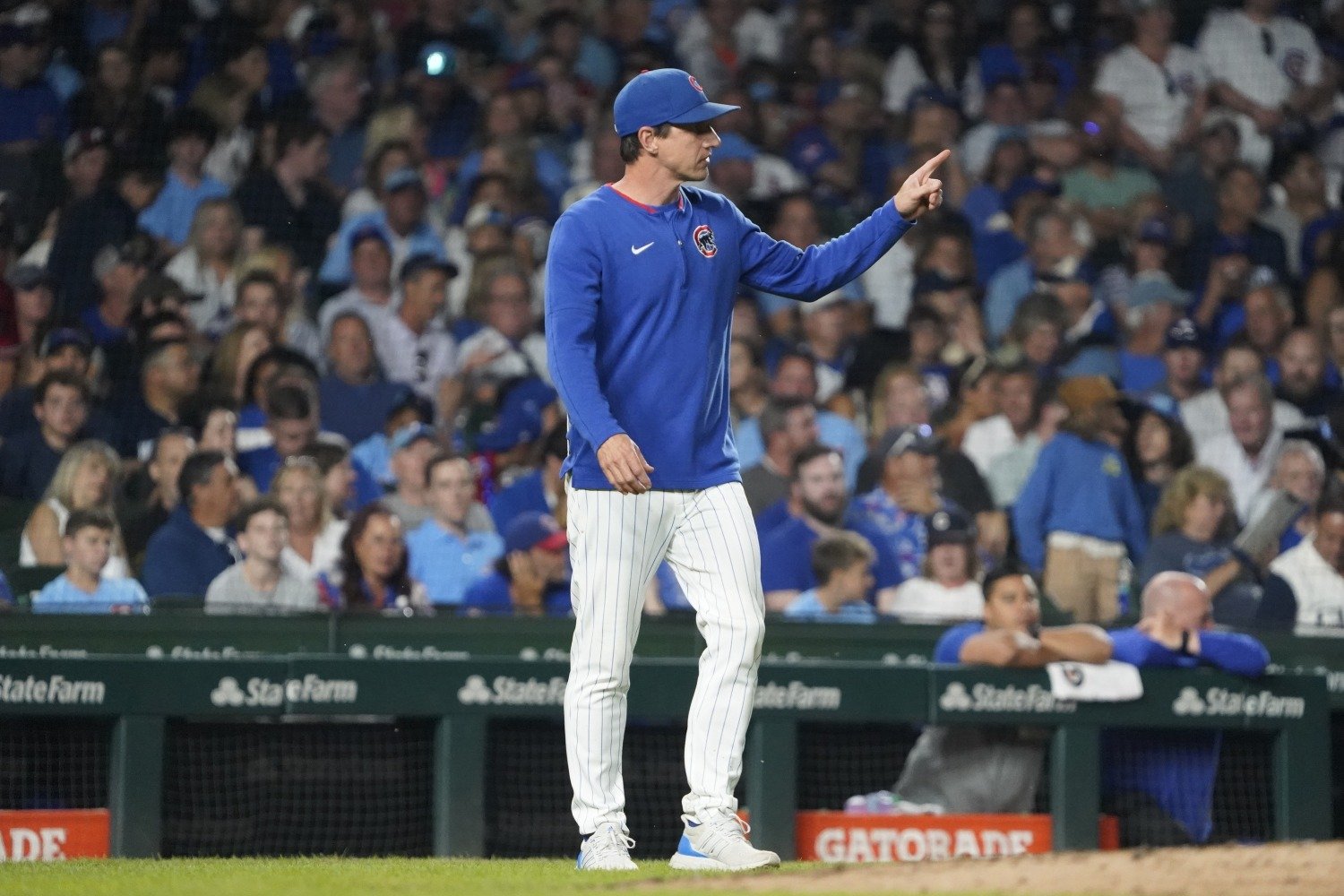
This is what you want, as a baseball executive. Jed Hoyer tried to spend bigger money and land more established relievers this winter, failing to sign Tanner Scott and bringing in the failed project that was Ryan Pressly. However, through good work by the front office to scour the minor-league free agent market, trade for players who were out of chances in their old homes, and develop existing options, the team now has a strong corps of options to get high-leverage outs when needed and protect leads.
Daniel Palencia‘s emergence as a sturdy relief ace has been not only welcome, but desperately needed. The low-wattage free-agent deal the team gave to Caleb Thielbar has paid huge dividends. They scooped up Brad Keller as a flier on a minor-league deal, and he’s become their chief setup man. They also made small trades to acquire Ryan Brasier and Drew Pomeranz in the spring. Once summer came, they upgraded again, this time by dealing for Andrew Kittredge and Taylor Rogers. As I discussed yesterday, with Jameson Taillon and Javier Assad returning to the starting rotation, Ben Brown becomes another potential weapon in short relief.
That’s eight names. Braiser hasn’t been quite trustworthy, and he’s fifth on the list for right-handers, so let’s consider him a fringy arm and a non-factor. The other seven, though, make up the kind of bullpen teams want to have when they get to October. They can give teams many different looks, which not only makes for uncomfortable at-bats for opponents but gives Craig Counsell myriad matchup choices in the middle and late innings. They also have an element of that overpowering nastiness you want from a playoff pen, especially in the persons of Palencia and Keller.
There are two ways pitchers can differ from each other, thereby “giving the other team different looks” within a game. First, there’s how you throw. This means handedness, of course, but it also means arm slot and position on the rubber. If possible, forcing a batter to change the release point on which they’re trying to lock in from one at-bat to the next is always valuable. The Cubs can do that well, now that they’ve added Rogers and Kittredge to their mix.
.png.c09b73b39e4069bcd3b77b01489480fc.png)
Thielbar is a short guy who comes from close to straight over the top, on the third-base side of the rubber. Pomeranz is much taller and works with a classic three-quarters slot. The nice thing about Rogers, in this specific group of lefties, is that he works from a low three-quarters angle. He’s as tall as Pomeranz, but doesn’t pitch like it. If an opposing lineup has a pocket of lefty batters on whom Counsell wants to make life tough, he can go to Pomeranz one trip through and Rogers the next.
Kittredge brings a different dynamic than Keller or Brown, because both of those two are very tall and stay that way through their deliveries. Kittredge stands just 6-foot-1 and works deep into his legs in his delivery, so his release point is much lower than those of his compatriots. It’s pretty similar to Palencia’s, really, but now, let’s look at the other way in which pitchers can offer different looks: what they throw. This is about velocity and pitch mix, but it’s also about pitch shape.
.png.83685a6d6bd24ba893bd1bbfc1093225.png)
Rogers brings a whole different set of movement patterns to the mound, relative to Pomeranz and Thielbar. The latter two aren’t radically different from one another in this regard, except that Thielbar has more breaking ball variations than Pomeranz does, but remember, they’re very different in how they throw. A few chances to discern Pomeranz’s curve from his fastball doesn’t prepare a batter well at all for the challenge of doing the same thing with Thielbar, at his higher slot but lower release height.
The righties vary a bit less in how they throw, but look at how different their stuff profiles are. Brown’s four-seamer is all about carry. Keller’s is really a high-powered cutter. Kittredge leans mostly on a sinker. Meanwhile, Palencia has a run-ride heater that looks nothing like any of the others’. The relationship of each guy’s heater to their main breaking ball is unique, with different tilt and spin differences. There’s not much overlap among these seven arms, once you study both ways in which pitchers can change what a hitter sees.
If Counsell often had the luxury of handing a lead to this group of arms, the Cubs would be cruising toward the postseason and still nipping hopefully at the heels of the Brewers in the NL Central. Alas, it hasn’t gone that way. In only half of the team’s 24 games since the break has the bullpen inherited a tie game or a lead (not counting long relief appearances, like Brown’s two recent ones behind Assad and Michael Soroka). They haven’t been perfect even in those situations, but the fact that the starting rotation and the lineup can’t conspire to give them a lead with which to work is much more troubling than any stumbles they’ve had in terms of holding those leads.
The bullpen is the place where the spotlight shines brightest, when the pennant race heats up. Relievers get a disproportionate share of attention in October, and the Cubs have that part of their roster figured out (for the moment). Right now, though, it doesn’t matter. They’re not playing well enough in the other, larger, more important areas to make their relief depth the kind of advantage that makes a difference.