
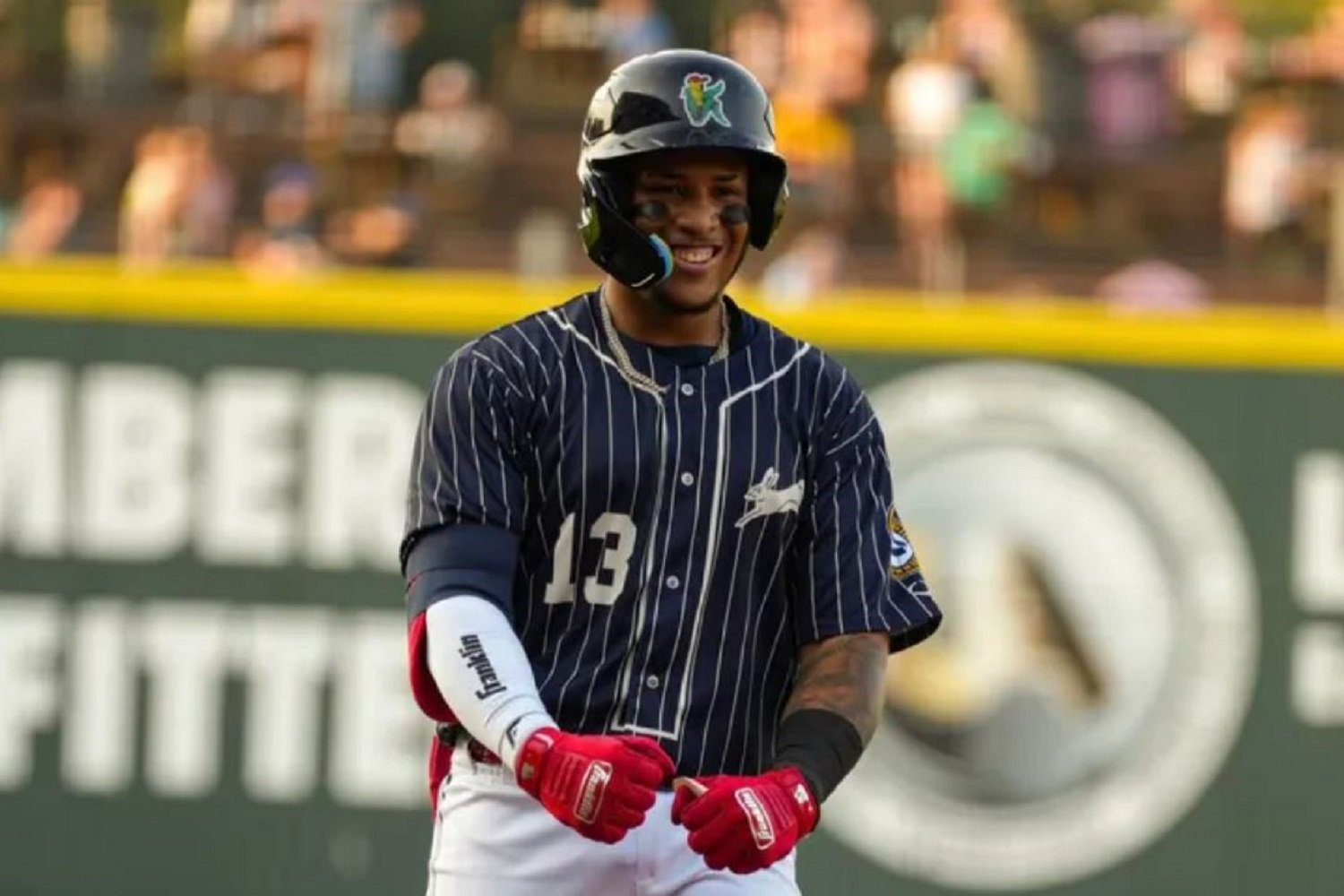
It’s easy to slot Walker Jenkins at the top of Minnesota’s prospect rankings. The 2023 first-round pick has already established himself as one of the premier prospects in all of baseball, combining elite hitting ability with the chance to be a franchise cornerstone. But once you move past Jenkins, the conversation becomes much more interesting. Four players all have legitimate cases to sit just behind him, so here’s a look at the pros and cons for each.
Eduardo Tait – C
The Case For: The Twins aggressively targeted catching depth at this year’s trade deadline, and Tait has emerged as the most exciting young backstop in the system. He’s already shown an advanced approach at the plate for his age, and there’s real upside in his bat-to-ball skills. If he sticks behind the plate, he could be a middle-of-the-order catcher, something every franchise covets. ESPN and MLB Pipeline recently updated their top prospect lists, and Tait is ranked second on both.
The Case Against: That “if” is a big one. Scouts have long debated whether Tait’s defense will allow him to stay at catcher long-term. If he’s forced to move off the position, his bat may not be enough to carry a premium ranking compared to other prospects who project at more valuable defensive spots. Tait has a premium bat for a catcher, but sliding him to first base or designated hitter would be a disappointing long-term outcome.
Luke Keaschall – INF
The Case For: Keaschall has done nothing but hit since joining the organization, and fans have been witness to his playing style at the big-league level. He was recently named the AL Player of the Week. His plate discipline and ability to spray line drives across the field give him one of the highest offensive floors in the system. Even without big power, his consistency could make him a regular in the Twins’ infield for years.
The Case Against: While his bat-to-ball skills are excellent, Keaschall’s swing speed limits his ability to drive the ball with authority consistently. That means he’s unlikely to add much over-the-fence power, which caps his ceiling. He looks more like a steady contributor than a potential star, and that’s why some rankings might move him down their list. Currently, Twins Daily has him ranked as the organization’s second-best prospect even after the trade deadline.
Kaelen Culpepper – SS/3B
The Case For: Culpepper has quickly climbed the ladder since being drafted in 2024. His combination of speed, athleticism, and contact ability makes him an exciting player to dream on. He’s held his own against advanced pitching this season, and his athleticism gives him defensive flexibility. During the 2025 season, he has answered many of the questions that surrounded him when the team drafted him. He has one of the fastest-rising stocks in the Twins system this year and will enter next season as a national top-100 prospect.
The Case Against: The question is where that flexibility will land him. While Culpepper has been developed as a shortstop, some evaluators see his long-term defensive home at third base. If that shift happens, he’ll need to continue to hit for more power to profile as an above-average regular at the position.
Emmanuel Rodriguez – OF
The Case For: Rodriguez entered the year as Minnesota’s consensus No. 2 prospect, and the reasons are clear. He’s a true on-base machine with plus power, and when healthy, he’s shown flashes of being an impact outfielder at the big-league level. Few in the system can match his combination of patience and pop.
The Case Against: Health remains the story. Rodriguez has battled injuries throughout his professional career, and each time he seems to be building momentum, he’s sidelined again. Evaluating a player who’s rarely on the field is difficult, and that uncertainty has opened the door for others to leapfrog him in the rankings.
There’s no debate about who sits atop the Twins’ system; Jenkins is in a tier of his own. But the debate for No. 2 is where things get interesting. Tait’s ceiling as a catcher gives him a strong case, but his defensive future is uncertain. Keaschall has already impacted the big-league roster, but his lack of power could hold him back from stardom. Culpepper’s athleticism is exciting, though his long-term position may shift. And Rodriguez remains the most talented of the bunch, if he can stay healthy.
It’s a good problem for the Twins to have: multiple legitimate contenders to sit right behind Jenkins. How the organization ranks them says a lot about how they balance ceiling, risk, and positional value.
Who would you rank as the Twins’ second-best prospect? Leave a comment and start the discussion.
Interested in learning more about the Minnesota Twins’ top prospects? Check out our comprehensive top prospects list that includes up-to-date stats, articles and videos about every prospect, scouting reports, and more!