
1901
While the most prodigious team entering the major leagues in this year, the White Sox still could not avoid major controversy before the summer was out.
Two Sox players were suspended after attacking umpire Jack Haskell in the fourth inning of a 8-0 loss at Washington. When Senators third baseman Bill Coughlin drew a walk to fill the bases on a disputed ball-four call, White Sox shortstop Frank Shugart punched Haskell, and starting pitcher Jack Katoll beaned Haskell in the leg during the fight. Both players were not only ejected by Haskell, the only umpire on the field, but the Washington, D.C. police intervened and both players were arrested.
Clark Griffith was summoned for emergency relief — in 1901, White Sox starters finished 110 of 137 games, so a bullpen was a nascent concept — and immediately served up a bases-clearing triple to Billy Clingman.
Katoll was suspended for 11 games and Shugart for 23. Katoll returned in September strong, appearing in six games with a 2.49 ERA. Shugart, on the other hand, returned in mid-September, hit just .171 to finish the season, and was blacklisted from MLB after the season.
1915
The White Sox acquired Shoeless Joe Jackson from Cleveland for $31,500 (almost a million today) along with pitcher Ed Klepfer, outfielder Braggo Roth and a player to be named later. Klepfer had seen scant time with the White Sox in 1915 but pitched to a 2.84 ERA (109 ERA+) in three games, and would improve in Cleveland (2.09 ERA despite a 1-6 record in eight games). Roth, just 22, had started out fairly well in left field and at third base during his first full season in Chicago (.734 OPS, 117 OPS+) but exploded once he got to Cleveland (.906 OPS, shifting exclusively to center field). Though he clouted just seven home runs, Roth led the AL in round-trippers in 1915. (Yes, Bill Melton in 1971 winning the first-ever White Sox home run title is only partially true.)
Klepfer and Roth were no middling players, combining for 14.4 WAR over their five full seasons (two Kelpfer, three Roth) with Cleveland. (And on Valentine’s Day, 1916, the trade was completed when the White Sox sent little-used left fielder Larry Chappell east.)
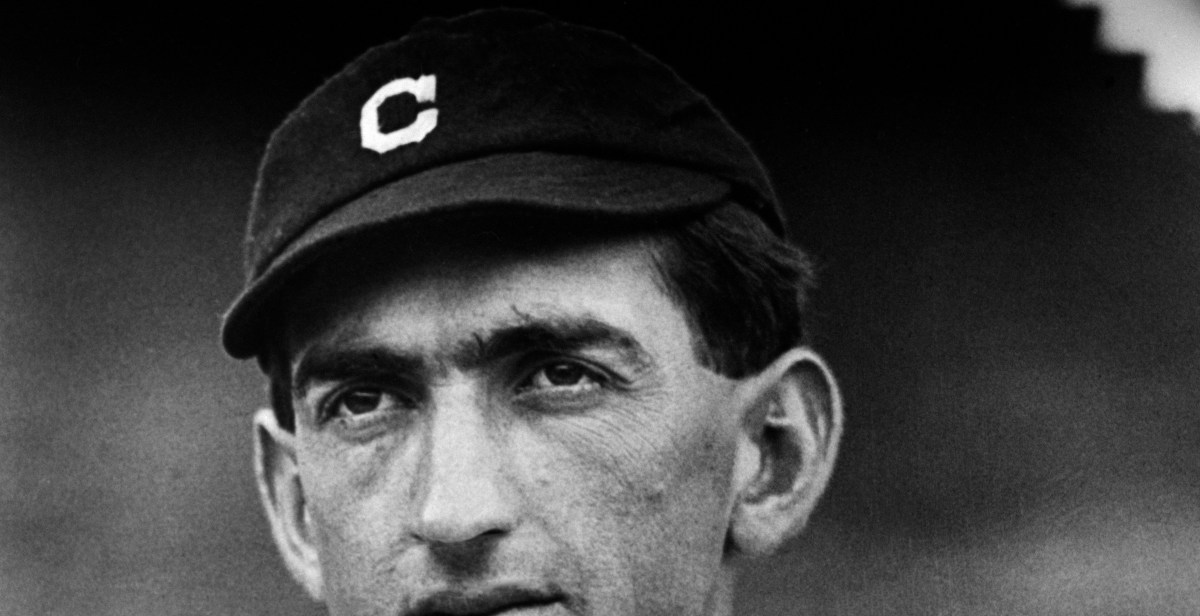
However, the prize of the trade was Jackson, who already built the foundation of a Hall of Fame career in just four full seasons in Cleveland (finishing no lower than ninth in MVP voting each year). Though he would similarly play just four full seasons with the White Sox (losing almost all of 1918 to World War I), Shoeless Joe continued his strong play on the South Side, combining for 27.8 WAR while still peaking as a superstar. All his promise was lost, however, when ensnared in the Black Sox scandal, Jackson was banned for life from MLB after the 1920 season. He was just 33 years old.
Jackson, despite the “Black Sox” scandal, is still considered one of the greatest hitters in baseball history. Babe Ruth said he modeled his swing after Jackson’s, and Ty Cobb said Jackson was the best hitter he ever saw. Joe hit .356 for his career in the major leagues.
1926
Ted Lyons fired a no-hitter in beating Boston, 6-0, at Fenway Park. The Red Sox only had two baserunners in the game, one on a walk and the other on an error by shortstop Bill Hunnefield, who fumbled a ground ball and then threw high to first base.
Lyons, a future Hall-of-Famer, won 260 games in a 21-year career, all with the White Sox. His No. 16 was retired by the club in 1987.
1933
Despite sitting in sixth place in the AL, 25 games out of first, and 16 1⁄2 behind the second-place Yankees, the White Sox battled New York to a 3-3 tie … over 18 innings!
Neither team scored all game, until the top of the ninth when Lou Gehrig put the Bombers ahead with an RBI single. Red Kress answered that scoring tap with a sacrifice fly to tie it in the bottom half.
The game went back to zeroes until the 12th, when the Yankees plated two. Faced with certain defeat, the White Sox again rallied, scoring twice on a one-out Evar Swanson single. But New York wriggled out of the rally with an inning-ending double play, and neither team scored again.
Herb Pennock went 10 innings in relief for New York, in fact blowing the save in the ninth inning for them, while Red Faber went seven innings in relief of Milt Gaston, who threw the first 11 and faced 43 batters.
While the tie game still ranks in a tie for the 10th-longest game in White Sox history, it is NOT the sole, longest tie in team annals — the South Siders tied at Baltimore, 1-1, in 1959 and 6-6 hosting these same Yankees (Highlanders) in 1903.
1959
It was Nellie Fox Night at Comiskey Park, as in the midst of a pennant race, the White Sox honored their second baseman and future Hall-of-Famer. Fox was given a new boat, shotgun and other presents, and teared up when he spoke to the home crowd. He’d go on to become the American League’s MVP in 1959, hitting .306 with 70 RBIs.
On this night he went 0-for-3 with a run scored in a 5-4 win over Washington before almost 37,986 fans.
1973
White Sox pitcher Stan Bahnsen took a no-hitter into the ninth inning against Cleveland. After getting the first two outs, former Sox outfielder Walt Williams got a ground-ball single to left, past third baseman Bill Melton. Inexplicably, Melton was playing in, anticipating a possible bunt from Williams — who later said that under no circumstances would he try to break up a no-hitter by bunting late in the game.
Stan then got the final out, finishing with a one-hitter and striking out four in the 4-0 win.
2005
The White Sox tied their club record by hitting four home runs in a single inning, in this instance the fourth. It happened off of the Yankees’ Randy Johnson in a 6-2 win at U.S. Cellular Field. The four who went deep were Tadahito Iguchi, Aaron Rowand, Paul Konerko and Chris Widger. Iguchi, Rowand and Konerko went back-to-back-to-back.