
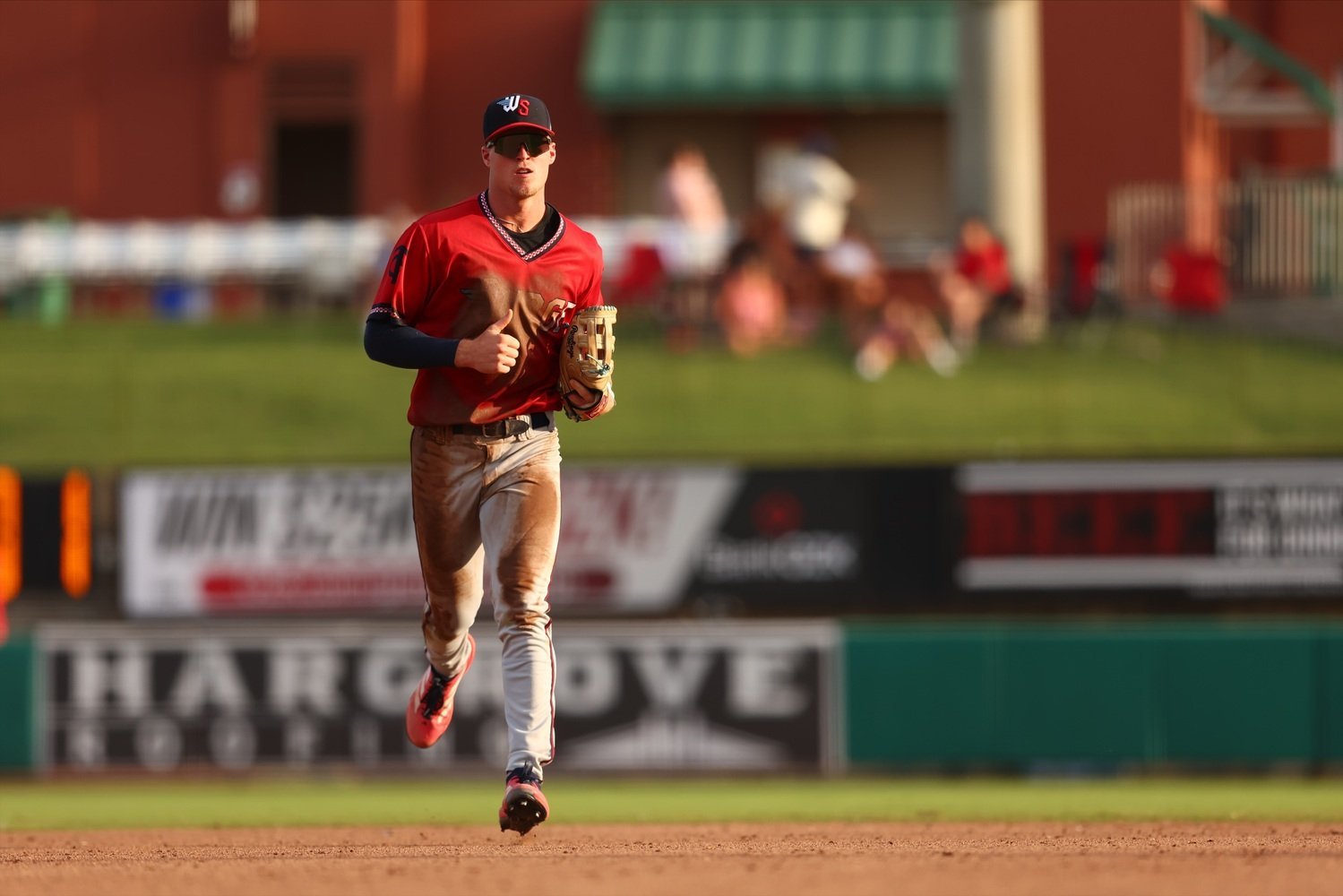
The Minnesota Twins find themselves in an interesting spot when it comes to their crown jewel prospect, Walker Jenkins. The 20-year-old outfielder has handled everything the organization has thrown his way. His strong showing at Double-A Wichita has positioned him for a late-season bump to Triple-A St. Paul, setting the stage for a pivotal spring training next year.
The question becomes: can Jenkins break camp with the big-league club in 2026?
The Path Forward
Minnesota has taken a patient approach with its position players in recent years, preferring to give them plenty of at-bats at each level. But Jenkins has looked like an outlier since the moment he signed. His bat speed, pitch recognition, and advanced approach scream “big-league ready” sooner than most recently drafted players. If he carries that success into a late-season Triple-A stint, he’ll enter Fort Myers next March with the chance to push his way onto the 26-man roster.
The Twins’ outfield picture also creates opportunity. Injuries and inconsistencies have left room for a cornerstone to emerge. If Jenkins’ bat proves too loud to ignore, the organization may have no choice but to let him skip the final developmental checkpoints and see how he handles major-league pitching right away.
Is He Ready?
Jenkins has already shown in 2025 that his bat is ahead of the curve. Through his Double-A season, he’s posted an OPS north of .880 while limiting strikeouts against advanced pitching (17.9 K% vs. 14.3 BB%), a sign of his mature approach at the plate. He also flashed the all-around game that made him a top five draft pick, with steady defense in the outfield and improved baserunning instincts (12-for-16 in stolen base attempts).
Simply put, he hasn’t just held his own, he’s looked like one of the best players on the field most nights, which is precisely the kind of performance that forces an organization to consider skipping the usual development timeline. Since July 18, he is hitting .362/.436/.574 (1.011) with six doubles and four home runs.
The Twins haven’t had a prospect of Jenkins’ caliber in quite some time. Royce Lewis and Byron Buxton were in the same category of prospect, but injuries slowed their progress in the minors. That made it less likely for them to start the year on the big-league roster, and it also gave the Twins more service time control. Joe Mauer was the last prominent Twins prospect to make the jump from Double-A to the majors the next season. Those are some big footsteps to follow, but the Twins may have another incentive to move quickly with Jenkins that didn’t exist when Mauer was a prospect.
Prospect Promotion Incentive Factor
The Collective Bargaining Agreement added another wrinkle for teams making decisions with elite prospects. The Prospect Promotion Incentive (PPI) was created to encourage teams to promote their top players when they’re ready, rather than holding them down for service-time manipulation.
The rules are clear: to qualify, a player must rank on at least two of the three major preseason Top 100 lists (MLB Pipeline, Baseball America, ESPN), retain rookie eligibility, and make the Opening Day roster. If the rookie accrues a full year of service time and finishes in the top three of MVP or Cy Young voting or wins Rookie of the Year, the team earns an extra draft pick.
It’s happened four times since the system was implemented:
On the other side, the Pirates missed out when Paul Skenes debuted in mid-May 2024 despite winning Rookie of the Year. His late arrival cost Pittsburgh a valuable selection. The Twins will have every incentive to give Jenkins a real chance next spring. If he makes the team and lives up to expectations, Minnesota could end up with an extra draft pick as a reward, an opportunity no front office should take lightly.
Balancing Act
Of course, this all comes down to readiness. The Twins can’t force the issue to chase a draft pick. A player’s confidence and long-term development come first. However, some teams may value the service time aspect and team control over a player compared to the extra draft pick. But Jenkins’ profile puts him in rare territory as a big bat that is polished beyond his years for a big-league team that has struggled to find an offensive spark for the past two seasons.
If he hits the ground running in Triple-A this September, fans should keep their eyes on Fort Myers next March. Jenkins could give Minnesota a cornerstone outfielder for the next decade and potentially a bonus draft pick in the process.
Can Jenkins break camp with the club next spring? Leave a comment and start the discussion.
Interested in learning more about the Minnesota Twins’ top prospects? Check out our comprehensive top prospects list that includes up-to-date stats, articles and videos about every prospect, scouting reports, and more!