
The Cubs made a flurry of roster moves ahead of the August 31 deadline to get players into the organization in order for them to be eligible to play in the postseason, with the expansion of the active roster on September 1 looming over everything. Most notably, multiple reports said they were finalizing a deal with long-time Cleveland Guardians first baseman Carlos Santana, after he was released earlier in the week. They also claimed pitcher Aaron Civale from the White Sox, whereupon he will slide into their bullpen mix. Civale is now on his third team of 2025.
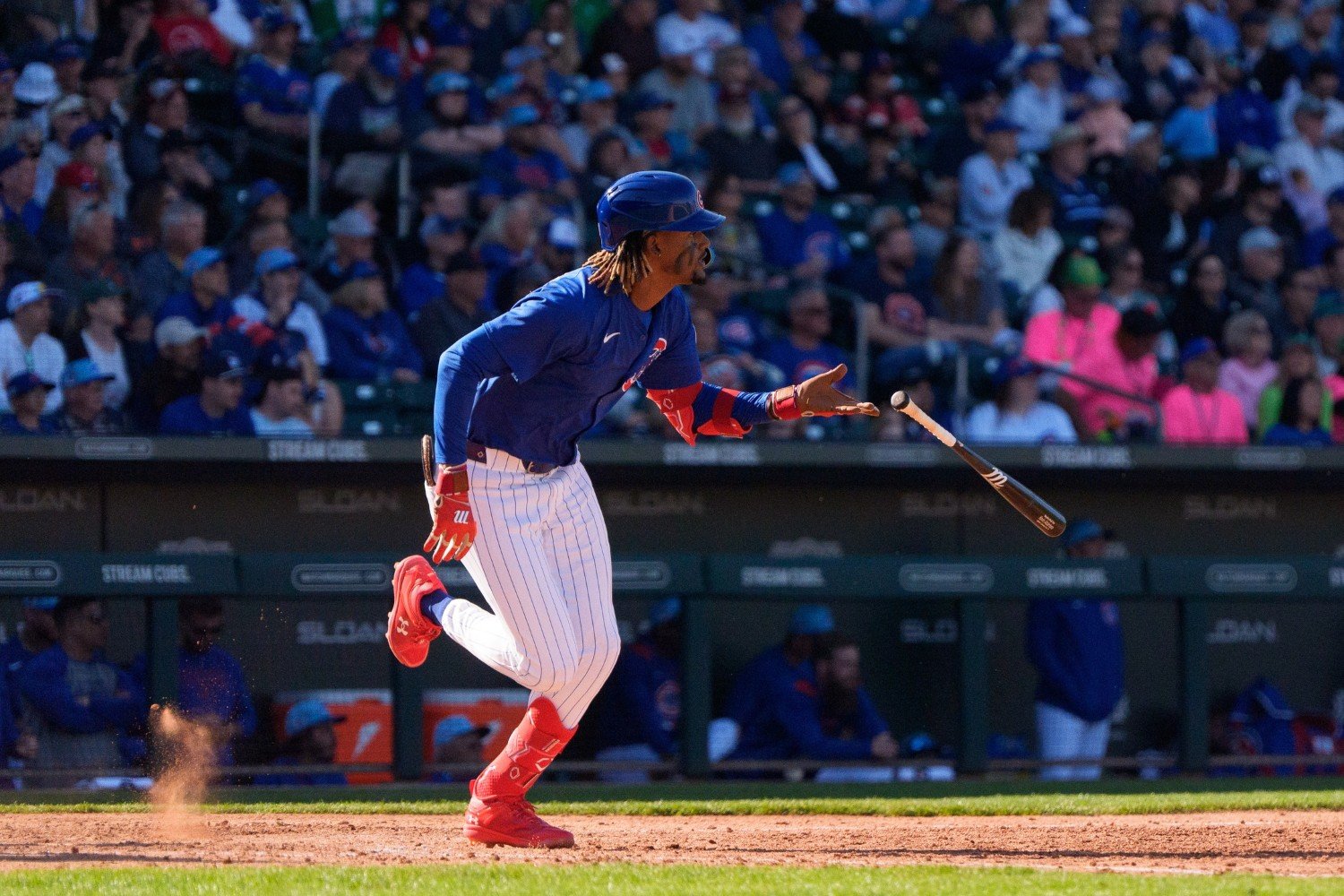
Reliever Porter Hodge was recalled Sunday (but will probably be optioned Monday), while Jordan Wicks was sent down and Tom Cosgrove designated for assignment. The most interesting move, however, might be the purely internal one. Outfielder Kevin Alcántara is being called up for his first taste of big-league action in 2025, and top prospect Owen Caissie is being sent down. Making sense of all these moves will take some time; but here is a quick look on the Alcántara call-up, specifically:
On August 24, I wrote about potential September call-ups and highlighted Alcántara as an option. The team’s fifth-ranked prospect has an .818 OPS this year at Triple-A Iowa, with 17 homers and 10 steals. With Caissie being optioned, this replaces a left-handed bat with a right-handed one, and adds more speed and defense. Unlike Caissie, Alcántara can handle center field if Pete Crow-Armstrong needs a break. (Ok, Crow-Armstrong definitely needs a break; he’s batting .211/.261/.366 since the All-Star break. The ‘if’ is more about whether Craig Counsell will actually give him one.)
Willi Castro does his best to cosplay as an outfielder, but he should really be kept in the infield. Hopefully, Alcántara will be getting those outfield reps over Castro. Caissie made his debut on August 14, and got 25 plate appearances before being optioned. If that is a blueprint for what we can expect from Alcántara, it is fair to wonder if this is bad for his development. Getting regular at-bats with Iowa is arguably better for the long-term outlook, but his speed and defense are valuable for a team that will need to play hard through Game 162 to avoid falling out of the top Wild Card spot.
Alcántara has earned this look, too. He’s batting .283/.364/.500 since the start of June, and an incredible .319/.398/.604 against lefties this season. It’s hard to make the case that Crow-Armstrong should start ahead of him against southpaws the rest of the way, but at the very least, Alcántara earned a shot at occasional pinch-hitting duties.
In theory, Ian Happ would be the one to relinquish some playing time to Alcántara, but he has an .861 OPS in his last 30 games. Counsell would have to get creative (or at least awfully diplomatic) to give Alcántara much playing time, and that’s not even taking into account the 39-year-old switch-hitter who might be joining the fold. Alcántara is an exciting young player who has earned an extended look, but this certainly won’t be that. This might, indeed, be more about Caissie and Alcántara’s service time than about either’s playing time.
Because Caissie (who came up to stop the gap after Miguel Amaya was hurt) debuted before August 16, if he’d stayed on the roster the balance of the year, he’d have lost Rookie of the Year eligibility for 2026. Likewise, if Alcántara (who got five days of service last year) had come up any more than a week ago, he’d have ended up crossing the 45-day barrier and losing that eligibility. Instead, both players will now go into next year as rookies. Whether they’re members of the Cubs at that point or whether they’ve been traded elsewhere, their team will have the chance to collect a draft pick via the prospect promotion incentive (PPI) system if either takes home a Rookie of the Year Award in 2026. All they have to do is put either player on their Opening Day roster next spring.
This little switcheroo signals that the Cubs place at least some value on that option. It would arguably have made more sense to call up Alcántara three weeks ago, and it only arguably makes sense to pull this switch now. It’s defensible on other grounds, but this gives the team two chances to try to claim a PPI pick (or to trade them this winter with that possibility attached as a bonus for suitors) for the price of one roster spot.