
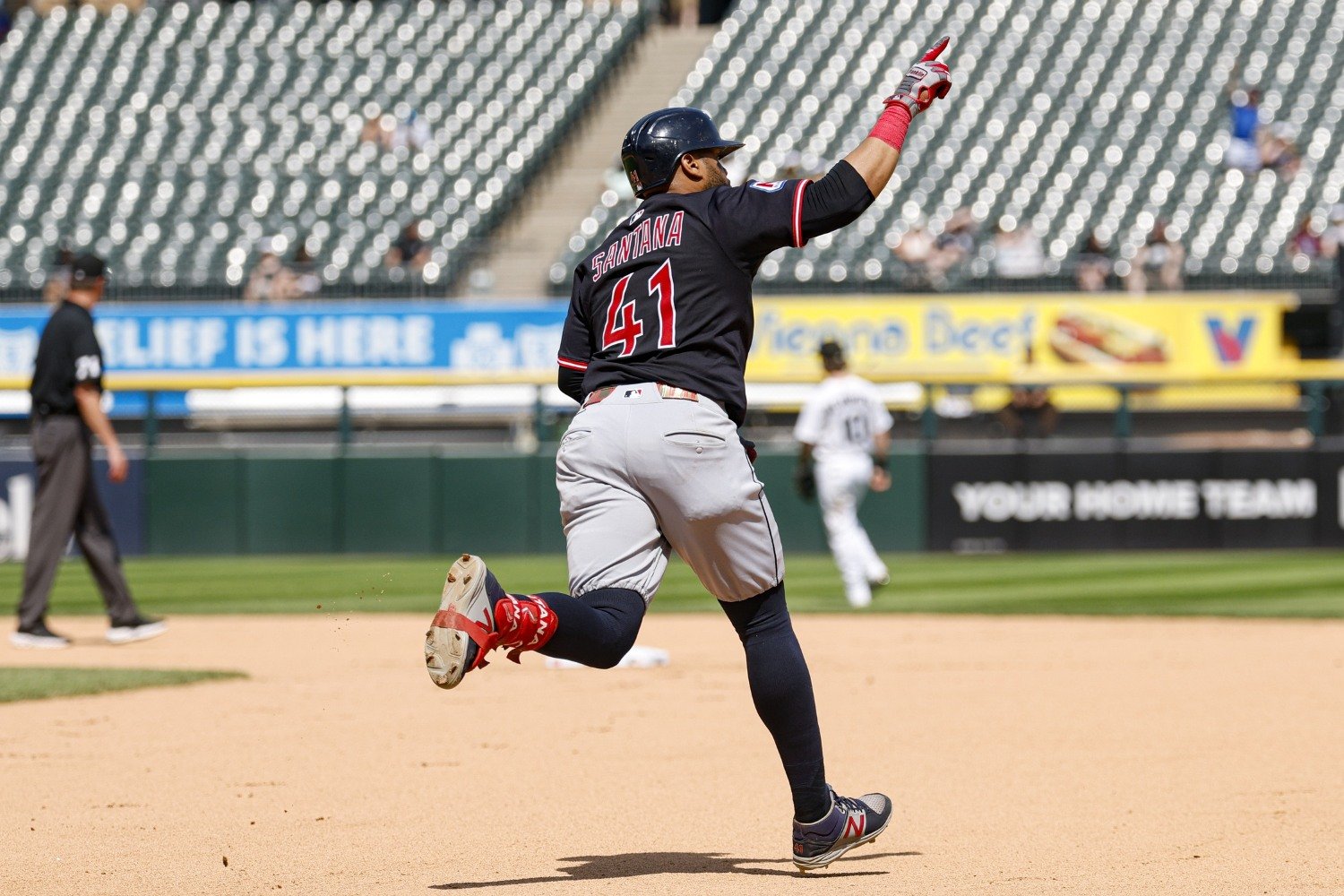
Carter Hawkins knows Carlos Santana; they overlapped in Cleveland. Craig Counsell knows Santana; he managed him in the second half of 2023. Willi Castro knows Santana; they played the 2024 season together with the Minnesota Twins. Aaron Civale, Caleb Thielbar, and Colin Rea have all been teammates, too. Santana is one of the game’s most universally beloved veterans, yet another signing that affirms the Cubs’ strong belief in the value of relationships and of clubhouse chemistry—and in the significance of proverbial skins on the wall.
It will be easy to enfold Santana into a veteran-led and veteran-stuffed clubhouse, but how to fit him into the daily plans on the field is a bit thornier a question. Arguably the best defensive first baseman in the league, Santana can always provide that value as a glove man, but he becomes the third first baseman on the roster. He’s a career .274/.372/.447 hitter against left-handed pitchers, but in a down season at age 39, he’s shown major cracks even in that skill. He’s hitting just .235/.328/.353 this year versus southpaws. At that rate, he’s no meaningful upgrade over Justin Turner, and he’s certainly not going to start ahead of Michael Busch against righties—save, perhaps, to rest Busch once or twice if the Cubs find themselves in a comfortable position over the final week.
That’s the bad news. The good news is that Santana’s bat speed, swing path and contact numbers are little changed from last year, even against lefties. He’s done two things a bit too often this year, for his profile. First, deeply uncharacteristically, he’s chasing a bit more outside the strike zone.
.jpeg.38a4880ebdf3f16899239e9d9b6528e3.jpeg)
Plenty of hitters would be happy to be chasing just 25% of the pitches they see outside the zone, but Santana’s extreme patience was a huge part of his success for a decade and a half. To see that trait wobble might indicate that age is catching up to him, even if he can get his bat up to speed just as well when he does fire. The other thing he’s done too often this year, from the right side, is hit the ball straight up in the air.
.jpeg.47dd0c04e7a26b12dd0d2a50cc74a9ed.jpeg)
That can be fluky, though, of course, and most of those problems came in the first half. Santana hasn’t lost the ability to strike the ball well or the ability to lift it against lefties, so if he reins in his plate discipline even by a tiny increment, he should be helpful. Turner (2 Defensive Runs Saved, according to Sports Info Solutions) and Busch (0 DRS) can’t keep up with Santana (11) even at this advanced age, so whenever he is in the game for defense, he’ll be a noticeable upgrade.
There’s also some tactical value to unlock, here. Santana might be a more trustworthy bat against left-handed pitchers than Kevin Alcántara, in Counsell’s view, so perhaps there will be times when he’ll pinch-hit for Pete Crow-Armstrong before giving way to Alcántara for late-game defense. He might also bat for Reese McGuire at times, letting Carson Kelly filter in thereafter.
Santana will certainly be good for the internal vibes of the team, which are already good. Whether he’ll add material on-field value depends on whether he’s in full-fledged decline or just had some bad luck in the small sample of a partial season’s platoon splits. As the Cubs gear up for the postseason, however, he makes as much sense as anyone they could have brought in to round out their expanded September bench. The versatility of Castro and the athleticism of Alcántara make it easier to fit him in, too.