
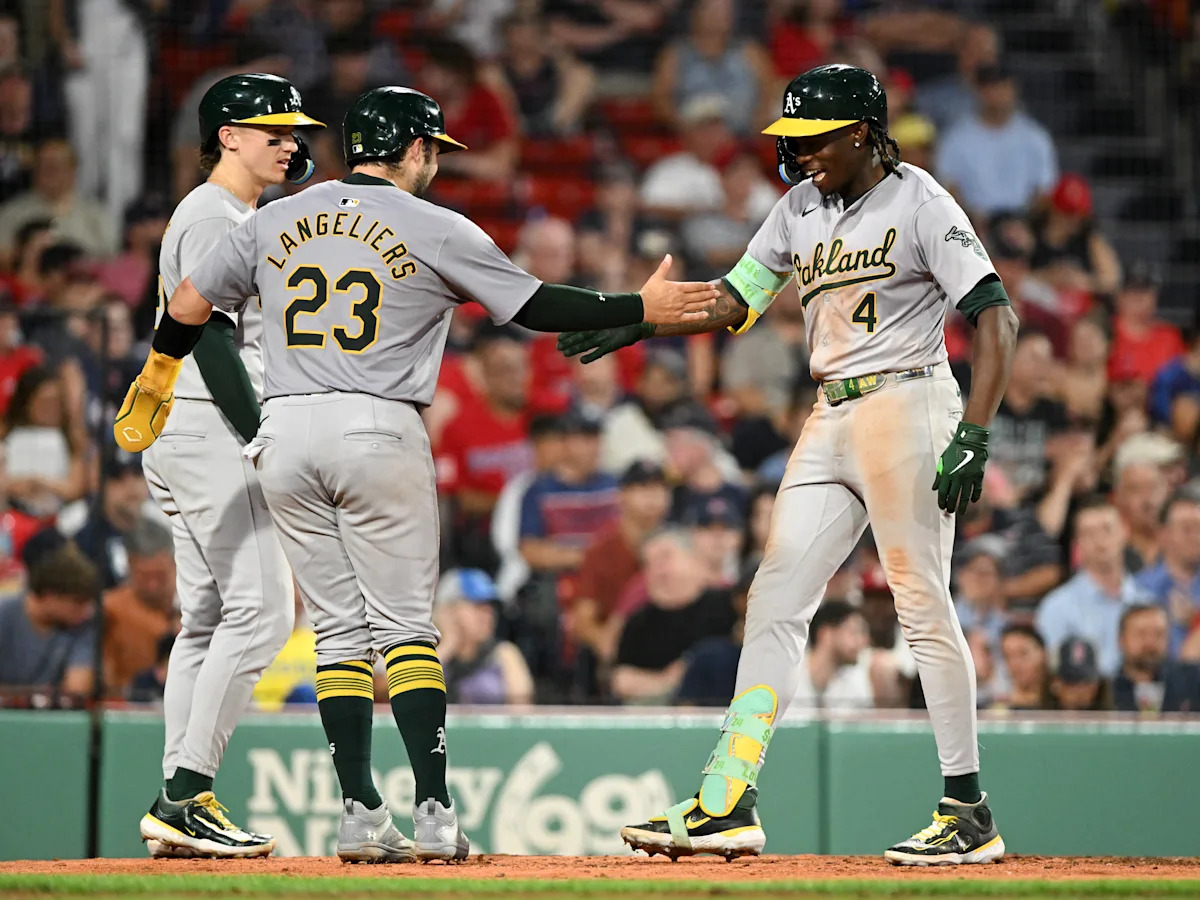
We’re in the final month of the season! The Athletics’ first year in Sacramento predictably did not yield a playoff appearance as the rebuild continues. One extremely bad month sunk the team’s chances at contention as they actually held their own for large chunks of the season. They had winning records in April, July, and August but that 7-21 May record is tough for any team to overcome.
The goal was always the future though. Winning records in three of the five months (I’m not counting March) is an encouraging sign that this squad might actually not be as far away as some people think. Lots of graduations from the farm happened this year, graduations of players that should be key building blocks as the organization tries to get out of the basement and back to October. Still lots of work to be done however and there are still some key things to watch over the final month of the season that could and will affect the 2026 season.
Advertisement
1. Can anyone fully claim a starting rotation slot for next year?
The club has used 13 different starting pitchers this year. More than they probably hoped to use entering the season. A couple of those (Justin Sterner and Grant Holman) were relief pitchers acting as openers but the majority of the starters the Athletics have used this season are true starting pitchers. The season-opening starting rotation only has one remaining member. Health, ineffectiveness and a trade have helped to put the A’s in this unenviable position, and things aren’t looking all that encouraging on paper heading into next season if the goal is contention.
That’s on paper though. The club is in a much better spot after watching lots of their young arms make their big league debuts and get their feet wet. The club has used seven rookie starting pitchers this year: Jacob Lopez, Gunnar Hoglund, JT Ginn, Jack Perkins, Joey Estes, Luis Morales and Mason Barnett. That’s an entire starting rotation-plus right there. And that’s not even considering the possible returns of Luis Medina and Ken Waldichuk, who should both be depth options early on next season after essentially missing this year due to injury. It’s been a mixed bag among the group but at least they’re getting experience that’ll help them next season, and the A’s are getting answers about who is ready to contribute.
Entering next season the only guaranteed names to be in the starting rotation would be Luis Severino, Jeffrey Springs, and Lopez. Veterans Severino and Springs could very well find themselves on the trade market this offseason though and Lopez has an elbow injury that we’ll all have to worry about all offseason now. Morales has impressed so much that one would think he’s likely earned at least a head start on a starting slot. Perkins has held his own and Ginn has shown flashes, but neither are locks for next year and ideally they’d be depth options to start the year. With the state of the pitching there looks likely to be at least a few open rotation spots going into next spring and a strong finish to the year could give a young arm a leg up over his competition. Will anyone impress over the final month?
Advertisement
2. What will the final record look like?
It was no secret that patience would be required during this rebuild. In Sacramento for the first of three years, October baseball isn’t a priority for the front office for the next couple of seasons until the move to Las Vegas (and even then?), so expectations were always fairly low entering the year. The club got out to a better-than-expected start though and that got people wondering if the A’s were maybe, possibly, perhaps ahead of schedule? Maybe not this year, but would there be playoff baseball in Sacramento in the near future?
And then reality hit once the calendar turned to May. The pitching staff fell apart, the bats went boom-or-bust, and the playoff hopes that every team begins the year with quickly faded thanks to a pair of massive losing streaks. What started out as a pleasant surprise start quickly turned into dejection and acceptance that, oh yeah, this team is still young and rebuilding. This is where patience comes in.
The Athletics currently sit at 63-75, which is good for the fourth-worst team in the American League ahead of the Minnesota Twins, Baltimore Orioles, and Chicago White Sox. That’s actually an improvement in the standings from where they were just a couple of weeks ago. The A’s are finishing the season hot and it’s helping us rise the standings. Not helping next year’s draft position, but at this point it’s time to start seeing some progress at the big league level and we’re getting that, especially from the position player side of things.
Advertisement
The Athletics are within sniffing distance of fourth place in the AL West, just two games back of the Los Angeles Angels in the division. Considering that they’ve spent over $200 million on their roster, the A’s should feel good about themselves compared to their southern rivals. Third place in the division wouldn’t have seemed out of the question either until the weekend sweep we just suffered at the hands of the Rangers. The club has 24 games left and would need to go 18-6 to finish .500. That might be a bit of a stretch but with the way the club is playing right now getting close to that even record would be massive. They avoided 100 losses last year, and this year they’re approaching the .500 mark. I’d call that progress.
3. Three 30-homer bats? Five 20-homer players? 100 RBI’s? A 20-20 threat? Milestones to watch
With just 24 games left the players are running out of time to hit some big milestones. The club currently has four players with 20 or more home runs, their most since they had seven in 2019. They could be welcoming another name to that group if outfielder Lawrence Butler can swat two more long balls. He’s been averaging just over three homers a month so he should be able to get there but hopefully he doesn’t wait around. That’s not the only notable homer goal the A’s have right now. The club also has three players inching closer to the 30-homer plateau in Shea Langeliers (29), Brent Rooker (27) and Nick Kurtz (27). Langeliers and Rooker look nearly certain to cross that threshold but with Kurtz’s injury the jury is still out on if the club will get to that trio of 30-homer bats. The last time the A’s did that was also back in 2019.
Langeliers could also be writing his name in the Athletics’ history books if he can finish the season extra strong. The Athletics’ starting catcher is just six home runs away from tying Terry Steinbach’s A’s single-season home run record from a catcher at 35 long balls, and seven home runs would give him sole possession of the record. It’s worth remembering that ‘Bangeliers’ also missed about a month of the season back in June, right when the ball was flying in the hot summer air. He’d have that record by now if he didn’t miss time but there’s still a chance he could break that record.
Advertisement
While the single-season rookie homer record from Mark McGwire won’t be going down, Kurtz could still claim second place. Before McGwire it was Jose Canseco’s record with 33 long balls as a rookie. Kurtz is just six home runs away from that benchmark and even with the late start to the season and injuries, he’s still within reach of eclipsing Canseco’s mark set in 1986. Not bad company to be in, even if he doesn’t quite eclipse Canseco’s rookie mark.
Butler meanwhile could be the first Athletic to join the 20-20 club since Coco Crisp in 2013. He got close last year, falling just two stolen bases shy but he should be able to get there this time around. The 25-year-old didn’t quite follow up last year’s scorching second half with a massive breakout but Butler has still been one of the more productive outfielders in the American League and he’s only wrapping up his first full year as a major leaguer. There’s more in the tank with regards to Butler.
Shortstop Jacob Wilson looks likely to set a new franchise-record for rookie batting average while also likely finishing second in AL ROTY voting behind teammate Nick Kurtz. And a massive finish from Rooker would get him to 100 RBI’s, but that’s going to be a reach even for him. He’s 21 shy from 100 so he’d have to average an RBI a game more or less.
There isn’t much in the way of records or benchmarks on the pitching side of things however, but with the youth of the staff that’s to be expected. Jeffrey Springs is just 19 punchouts away from 500 career K’s but all the milestones this season will be coming from the bats.