
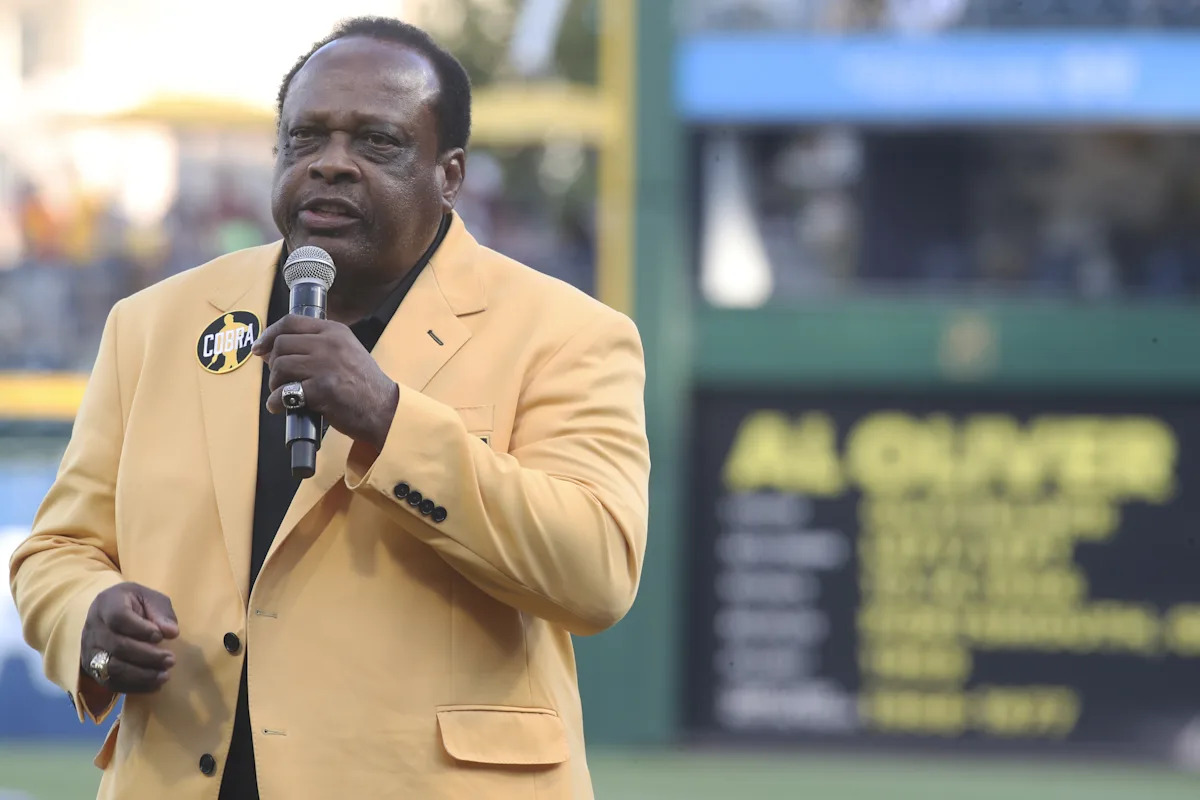
It has been 54 years since the Pittsburgh Pirates made history when manager Danny Murtaugh fielded the first ever all black and latino lineup in baseball history. Over half a centrury later, and that lineup is being recognized with the unveiling of a marker commemorating that team, seated on General Robinson Street the site of Three Rivers Stadium.
The ceremony that took place on the North Shore was attended by the Pirates, members from the Heinz History Center, as well as state and local officials. Al Oliver, Dave Cash, and Manny Sanguillen are the last surviving members from that team, and they too were in attendance sharing fond memories of their teammates that hey made history with.
“This is history,” Oliver said. “When you bring back all of these minority players and look at each player, each player took something to that field. Each player gave something different. None of us was the same, but we had one of the greatest teams that had ever been assembled.”
“It means a lot,” Cash said. “There’s a lot of people who didn’t get to witness it, the other six who passed away. Without them, we couldn’t have accomplished this. It’s a great honor that the Pirates decided to do something like this. A lot of times, you play the game for a long time and you never really get the recognition that you should have. The Pirates have rolled out the red carpet. They have recognized the importance of it.”
The significance of this group of players was a huge stepping stone for Major League Baseball, and for America as a whole. It didn’t happen overnight but there was certainly new views on race relations being formed in the country. Pittsburgh Mayor Ed Gainey who was a guest speaker at the event took the opportunity to comment on how this team helped change baseball and communities all over the country, and the enduring legacy that this team leaves.
“The story of how the Pittsburgh Pirates was the first team to have an all-Black and Latino lineup and to be able to have it on a marker here today speaks volumes of how far we’ve come when we’re talking about building organizations, building industries where we’re all celebrated, where we all have an opportunity to flourish,” Gainey said.
The lineup that day had Doc Ellis on the mound, Sanguillen at catcher, Oliver at first base, Rennie Stennett at second base, Jackie Hernandez at shortstop, Cash at third base, Willie Stargell in left field, Gene Clines in center field, and Roberto Clemente in right. This late season contest against the in-state rival Philadelphia Phillies ended in a 10-7 victory, and was a huge spark for the team heading into the postseason. The 1971 Pirates would go on to win the 1971 World-Series against the highly favorited Baltimore Orioles in a classic seven-game series.
Of course though, this Pirates’ squad is remembered for much more than championship hardware, as they went on to change the game and take another step towards furthering diversifying baseball. In 1971, 15.5% of players were Black and 10-11% were Latino, with Pittsburgh’s ball club having 13 minority players on its roster. Anne Madarasz from the Heinz History Center spoke about the cultural shift that the MLB would experience following the 1971 season.
“This lineup represented so much more than just numbers,” Madarasz said. “It represented a commitment to elevate the best talent in baseball. The Pirates’ lineup demonstrated in a visual and meaningful way that an organization could be largely minority in its makeup, leadership and culture and be successful.”
Pennsylvania Sen. Wayne Fontana was another one of the guest speakers for the ceremony and he highlighted the fact that the members of that team and other minority players on ball clubs across America had to deal with intense racism and harsh treatment on their journeys to becoming Major League players, and yet were able to rise above it in incredible fashion.
“This lineup was a message, not just to baseball, not just to Pittsburgh, but to the entire country that race should not play a role in determining who should and could play baseball,” Fontana said, “or do anything else, for that matter.”
Sports really are the ultimate equalizer in the world. When a ballplayer steps on that field, it doesn’t matter where they’re from, what color their skin is, or what their personal beliefs are. The only thing that matters is if they have the ability to play, and the 1971 Pirates along with other trailblazers like Jackie Robinson and Masanori Murakami proved that perfectly. It is because of their bravery, courage, and ability that we have the privilege to enjoy America’s past time no matter what we look like, and that is an incredible gift that was paid for through lots of heartache and sacrifice. The future of baseball is bright because of those in our past that rose to the occasion when others said they couldn’t, and they never gave up.