
The Mariners want the megaphones gone, too.
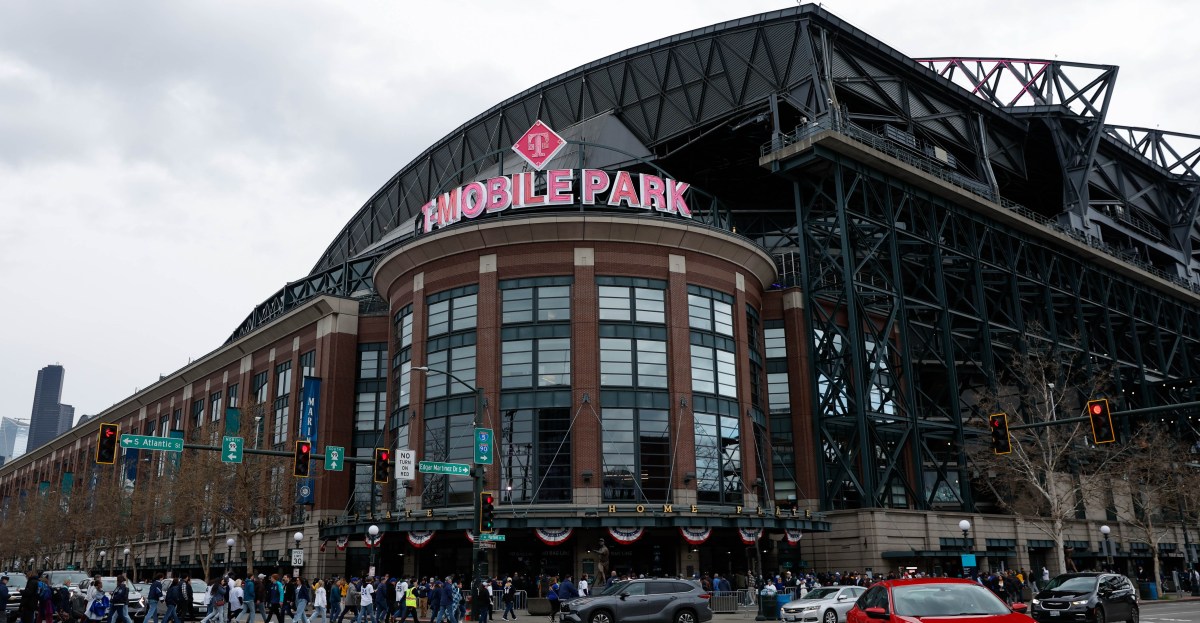
Mariners’ Deputy General Counsel Christian Halliburton briefed the Ballpark Public Facilities District on Monday on a plan to stop “a small army” of megaphone-wielding preachers from verbally assaulting fans outside T-Mobile Park. The preachers have long accosted crowds at venues across Seattle, but Halliburton noted a recent uptick in both volume and aggression before Mariners’ games, calling them “dangerously loud and frankly unreasonable.”
“We’re seeing more of the coordinated actors showing up, we’re seeing louder and louder messages,” he said, “and unfortunately they’re becoming more and more aggressive and really singling individuals out with truly hateful messages.”
The Mariners have worked for months on a bill they hope to get in front of Seattle City Council in the near future. Their proposal would ban amplified sound before and after events at T-Mobile Park and other high-traffic venues in the city.
The city already regulates noise in public space, and the team believes the volume generated by the megaphones to be illegal. A news report from FOX 13 Seattle in July showed the megaphones reached 122 decibels, which is much higher than the limit allowed in the city during the day. But volume isn’t the only consideration in the law – duration, location and direction matter, too. Enforcement would require a serious legal and administrative lift, only to hand down small fines that might not deter a group.
“Right now, whether civil enforcement or a police officer, they really have to ask ‘how easy is it going to be for me to not just cite this person but get prosecution enforcement on the back end?’” Halliburton said. “The existing legislation is enforceable, but it also would take a high-level of commitment. We’re trying to make their lives easier.”
The Mariners’ proposal would target the use of “amplified sound devices” and define times and places where those devices are banned. It would create an escalating tier of financial penalties, and repeat offenders could lose their equipment. The proposal is meant to be narrow enough that the city could enforce it, Halliburton said.
“There’s no ambiguity about whether or not you’re in a place where this behavior is permissible, there’s no ambiguity about whether or not this is the right time for you to be spewing your hateful messages,” he said of their plan.
The proposal would not fully ban the right to preach outside T-Mobile Park, he said. It would, however, prevent an organized group from using unchecked volume to berate a captive audience in close proximity. The volume and rhetoric can make for a miserable experience for both fans and workers, who have limited choice in ignoring the preachers before a game.
One fan has turned to subversion. Bennett Haselton, the founder of Circumventor and Peacefire, has shown up to most home games this summer with a sign that says, “Hey Cal, can you take a Big Dumper in this guy’s megaphone” — an arrow points to the preachers. He wears ear protection while following them around before the game, hoping to distract from their message. He said he just wants “everyone to see that someone came out, someone is pushing back against the ugliness that they’re saying.”
“I think for a lot of people, when they see and hear these guys, it’s a reminder of a really hurtful time from their childhood,” Haselton said. “And to be able to turn it from that into a laugh for them, that’s what makes it worth it.”
The Mariners chose the legislative route after other failed attempts stop the preachers. They looked into whether they could prosecute the group for harassment and assault, but that’s a difficult case to make and not necessarily a long-term solution, Halliburton. They also tried to approach the group directly.
“That has not worked,” Halliburton said. “You can’t reason with them. It never makes a difference. At times, they respond by just getting more aggressive, more hateful, and turning the volume up.”
The Mariners worked with the city to draft the potential bill. They have not seen the final draft, and the bill has not been introduced in the Seattle City Council. Their goal is to get it passed in time for the 2026 season.
Fans will notice new signs outside T-Mobile Park with a QR code that returns a form seeking comment on the noise. Those who have submitted complaints with the team — and there have been many this year — will be notified if there’s an opportunity to provide the city with verbal or written testimony.
Halliburton said the bill is not guaranteed to pass but expressed optimism with the plan in the outlook.
“We’re going to make sure there is no question about any of the facts, there is no question about the nature of the experience, and that the magnitude of the problem is well understood. We believe the council cannot help but see that this is a legitimate response to something that should not be going on and really needs to be stopped as soon as possible.”