
As fans, it’s easy to lose sight of player development. We forget that players can make significant strides both in the offseason and during the year. Too often we fall into the trap of thinking, “this is who they are.” That mindset might stick with established veterans, but for younger players, it’s an unfair way to evaluate growth. We love to label players quickly, but development doesn’t move that fast.
Pitching has become more predictable with the rise of analytics. Teams can track spin rate, pitch shape, and scouting data to know where and when to throw. Those tools provide real insight into development and strategy. Hitting, though, still carries an intangible factor. Bat speed can be measured, exit velocity can be trained, but there are qualities in great hitters—moxie, timing, poise—that can’t be neatly bottled up.
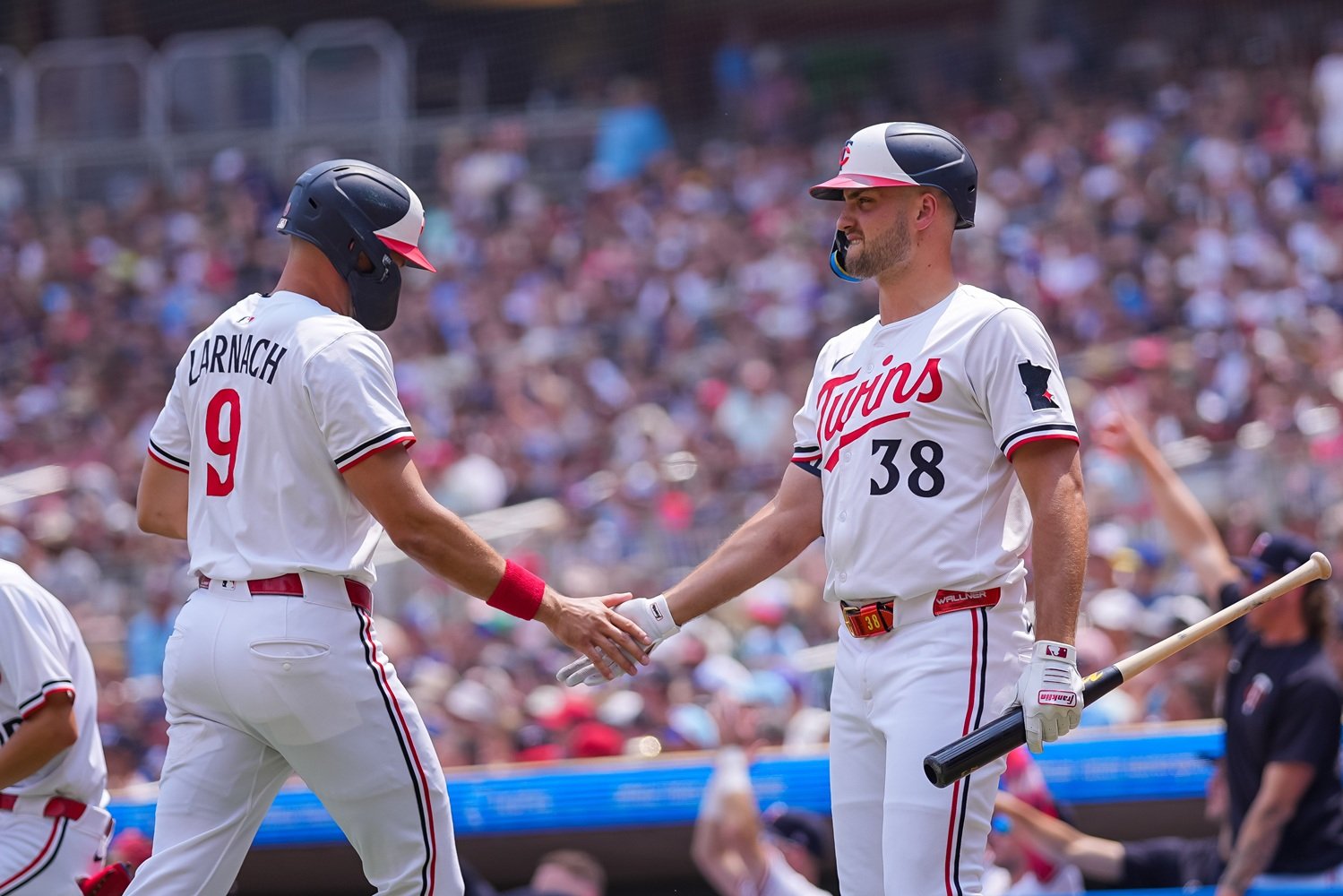
That brings us to the Twins, who find themselves in a tricky spot. Their lineup has too many bats that feel interchangeable, especially when paired with limited defensive skills. Matt Wallner and Trevor Larnach stand out as key names heading into 2026. Wallner profiles as a walk-or-homer hitter, but he’s struggled with runners in scoring position. High-spin fastballs up in the zone expose holes in his swing, and the Twins have paid for it.
Larnach, meanwhile, seems to thrive in areas where Wallner falters. He’s shown a knack for driving in runs and mixing in power. The question for him is whether he can push his OPS higher by finding more consistent hard contact. I may be biased—he and the OSU crew ended my Gophers’ run in the 2018 NCAA tournament—but there’s something about his game that suggests he can deliver in key moments.
Looking ahead, it feels like more of a toss-up than most think. Wallner has the raw numbers, but when he’s pitched tough in the zone, results are inconsistent. Larnach has some of those unquantifiable “it” factors that surface in big spots. The wrinkle: Walker Jenkins has already reached Triple-A and could be in the outfield mix by next season. That leaves the Twins with three similar left-handed corner bats entering 2026.
So who claims the spot? On paper, Wallner is the safer bet. But if you’re looking for intangibles and upside, Larnach is a strong candidate. Wallner also carries more trade value—teams see the raw power and numbers. A trade could make sense, especially if the front office wants to clear space for Jenkins.
It’s not the popular move, but it might be the pragmatic one: cash in on Wallner while his value holds, bet on Larnach to step forward as a run producer, and make room for the future centerpiece of the lineup—Walker Jenkins.