
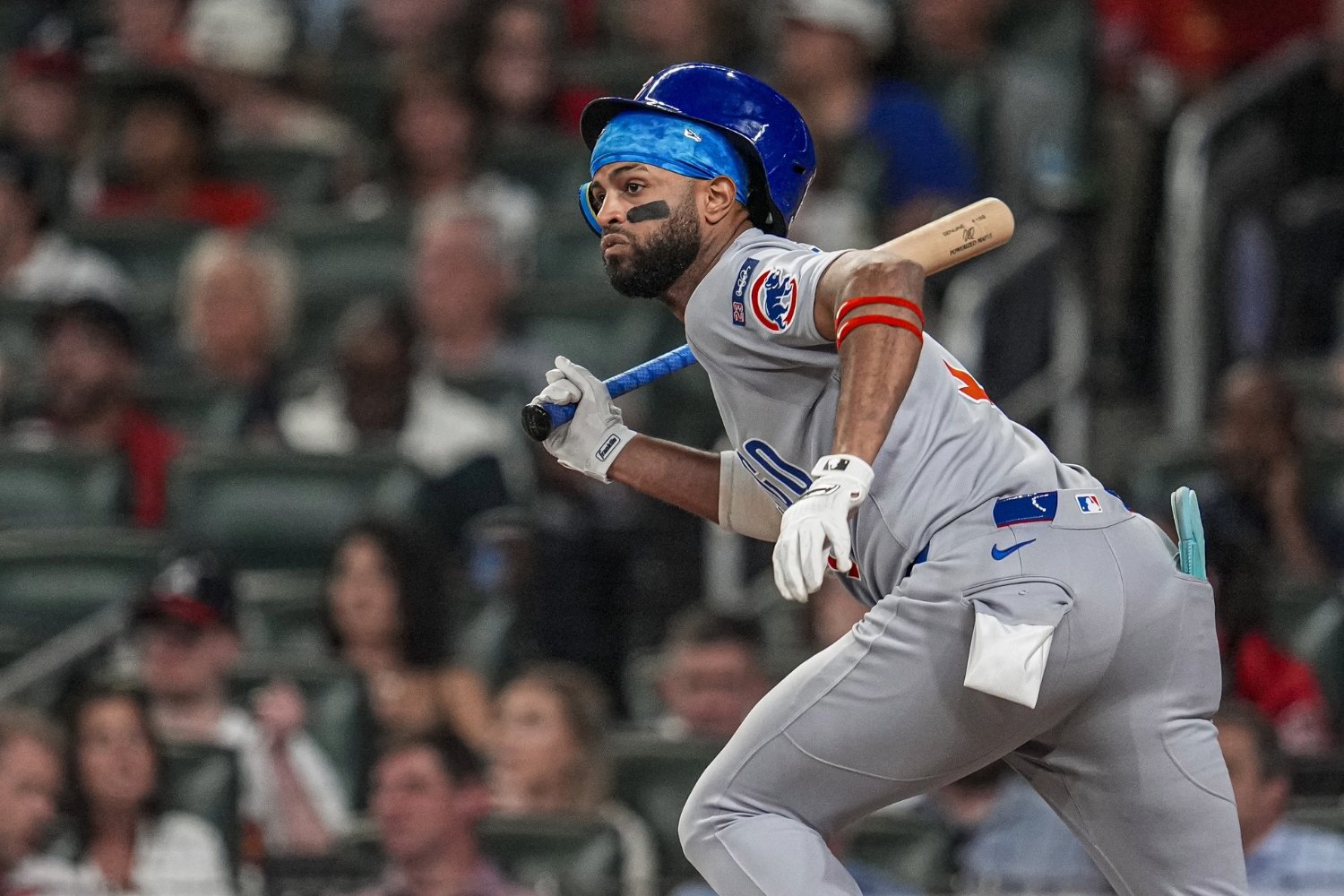
To say that Willi Castro‘s bat has regressed since joining the Chicago Cubs would be a severe understatement.
The utilityman slashed .245/.335/.407 as a member of the Minnesota Twins, checking in at a 108 wRC+ prior to the trade that sent him to the North Side. While Castro has helped to stabilize the bench—logging time at second base, third base, and all three outfield spots—the bat hasn’t made the trip quite yet. His batting line as a member of the Cubs comes in at only .188/.266/.259. His wRC+ sits at 52. That’s not terribly surprising; much of Castro’s value is derived out of his versatility, after all. That bat has, historically, been prone to some ebbs and flows.
But, for a team without Kyle Tucker at present due to a calf injury, Castro is starting to find his way in generating value on the other side of the ball.
That’s not to say that Castro is the full-time right fielder in the Cubs’ lineup sans Tucker. But it is notable that a team that has had Owen Caissie and Kevin Alcántara on the roster at various points in the last month has rolled Castro out there seven times in his last 10 appearances. That slate of games runs back to September 2, the point at which the team was first without Tucker.
Since that mark on the calendar, Castro has gone for a slash of .269/.441/.308 with a 132 wRC+. The slugging is indicative of the fact that we’re still not seeing much in the way of impact from Castro (not that we expected to), but there’s one key component of his game that is driving his success over these last 10 games: his plate discipline.
It’s important to note that “approach” and “discipline” at the plate are not interchangeable concepts. Approach speaks to the ability to work a walk, yes, but it’s also about parlaying a keen eye into quality contact and, as such, a certain level of impact on the box score. Castro isn’t offering that. What he is offering, though, is the pure ability to work a walk due to an increased level of plate discipline.
Castro’s walk rate since September 2 sits at 20.6 percent. Only six hitters with at least 30 plate appearances over that small-ish sample have a higher rate over that span. That list includes names like Kyle Schwarber (21.4 percent), Aaron Judge (21.2), and Shohei Ohtani (20.7). In short, Castro’s ability to draw a walk in this stretch that is approaching two weeks of play sits as legitimately elite. It doesn’t appear to be an overly complicated process, either.
The following is Castro’s swing rate over the course of the 2025 season:
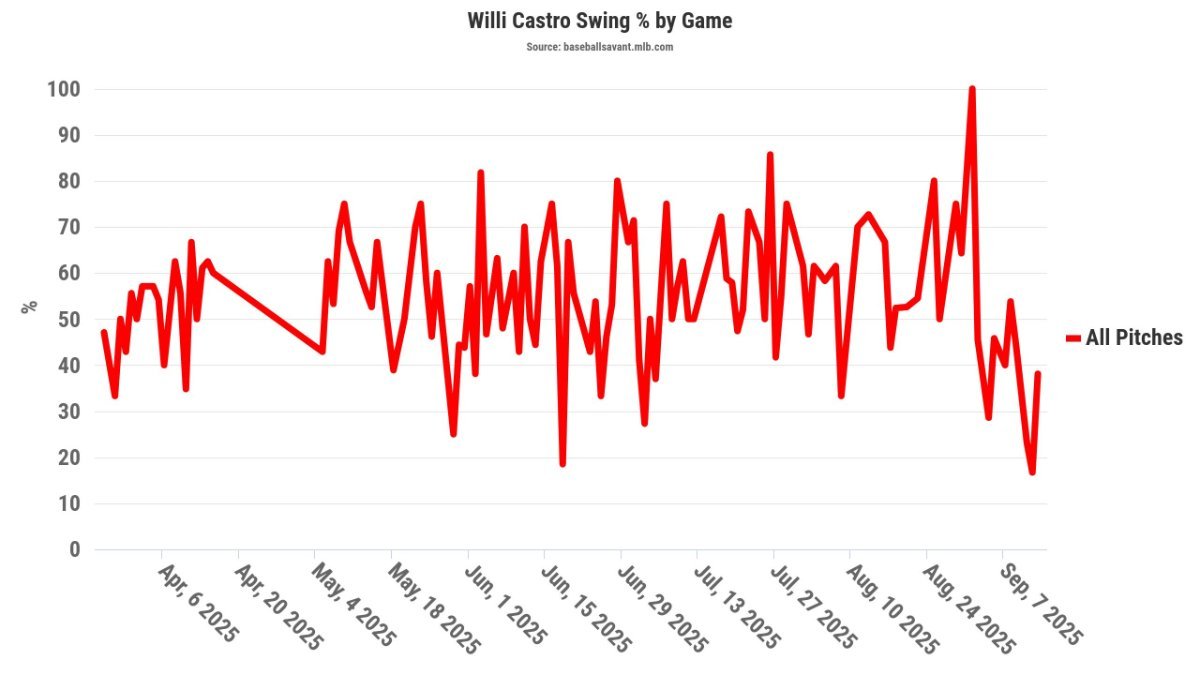
You’ll note the rather significant dip in the rate at the tail end of it. Since this isn’t a rolling graph but rather one that illustrates individual games, this does speak to the idea that he’s really tamped down his free-swinging habits since stepping into regular right field duty. Unsurprisingly, his chase rate has fallen along with it:
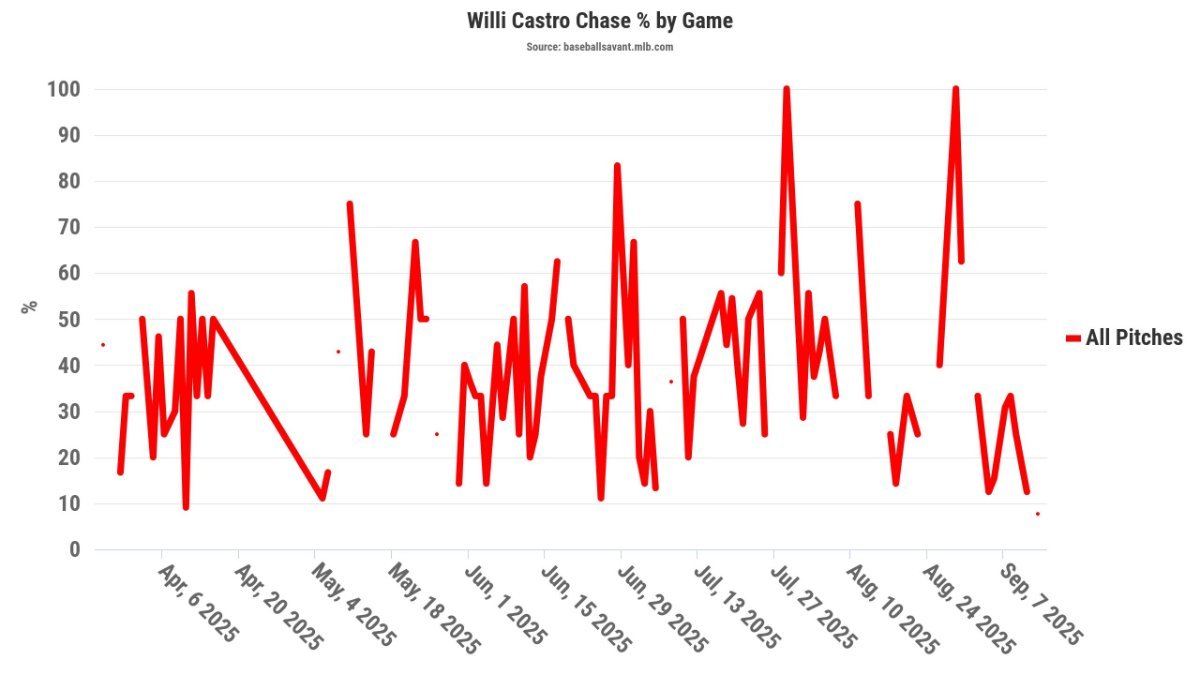
The two visuals make it very clear that Castro is demonstrating a much more assertive command of the zone as a hitter. He’s swinging less overall, but he’s specifically been able to reign it in on pitches outside the strike zone given that minimal chase rate over the last 10 days. Interestingly, though, he hasn’t been able to utilize it in a manner beyond simply drawing walks.
And that’s where the distinction lies. Willi Castro has not registered a hard hit ball in play despite the more valuable outcomes since stepping into more regular duty in Kyle Tucker’s absence. Not that there isn’t value in what Castro is doing at present; he’s drawn a walk in each game he’s played as a right fielder (save for the first one on September 2). He’s also scored four runs over this stretch as a result of him being more of a fixture on the basepaths since Castro is, technically, an above-average baserunner (0.6 BsR per FanGraphs).
There is, also, a certain reality attached to this in that if Willi Castro is this type of hitter at the plate, then he presents the Cubs with tremendous value. This is a guy with a career ISO of .140 and a wRC+ of 96. His walk rate for his career is under seven percent. The Cubs acquired him because he’s a versatile defensive player on a shallow bench who can hit a little bit. Not the other way around. So, he doesn’t actually have to do more than he’s doing right now.
Sure, an approach that manifests in frequent quality contact and impact in any given night’s box score would be nice. But the Cubs have that elsewhere (at least on paper). Castro’s plate discipline yielding walks by the bushel, in conjunction with his solid on-base skills, make this version of him somewhat ideal for the Cubs as the postseason draws closer.