
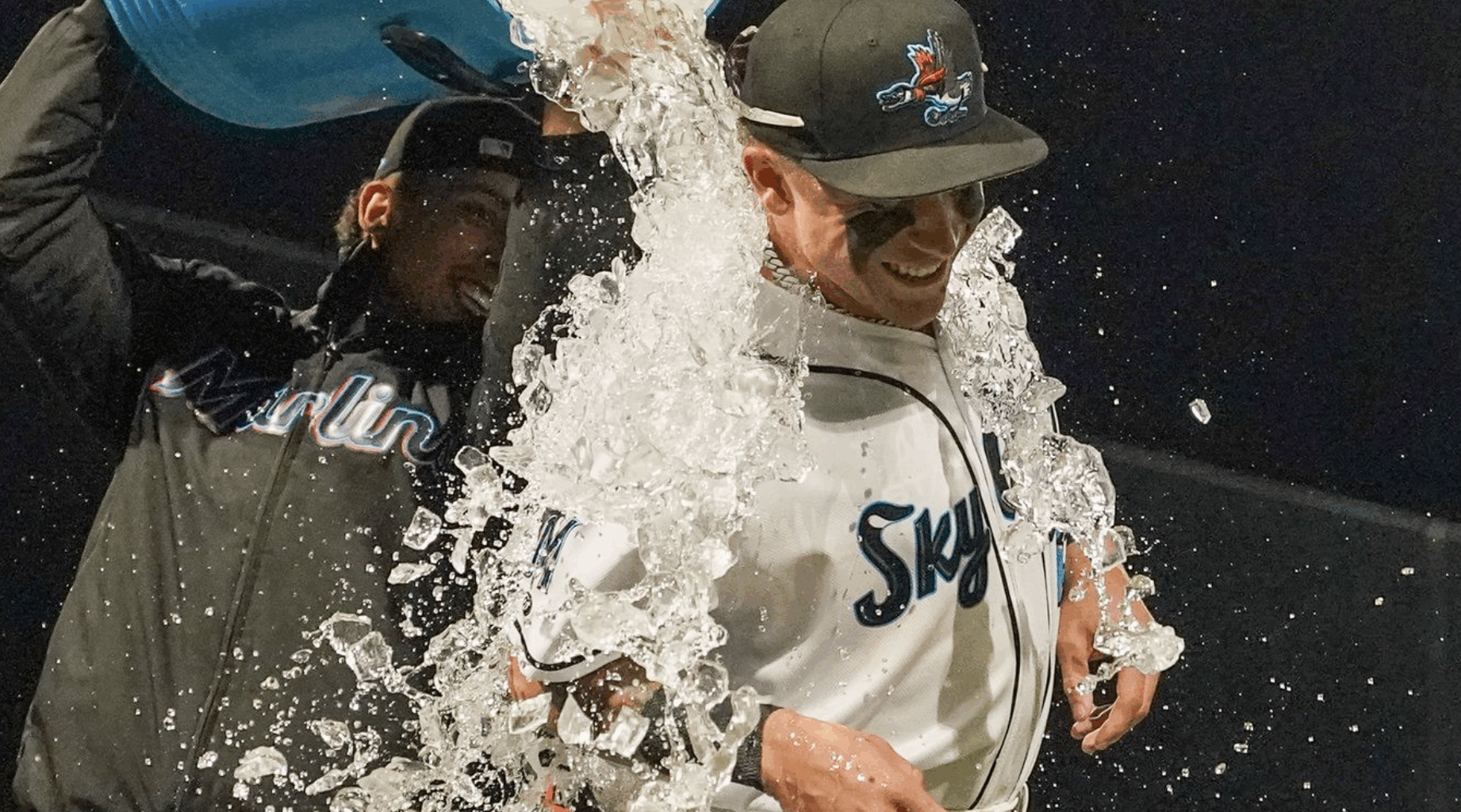
Maybe the tide really is turning for the Miami Marlins.
Well, not the Marlins, per se. At least not yet. More so, it’s looking up for the Jupiter Hammerheads, Beloit Sky Carp, Pensacola Blue Wahoos, Jacksonville Jumbo Shrimp, and their complex league teams in Jupiter and the Dominican Republic.
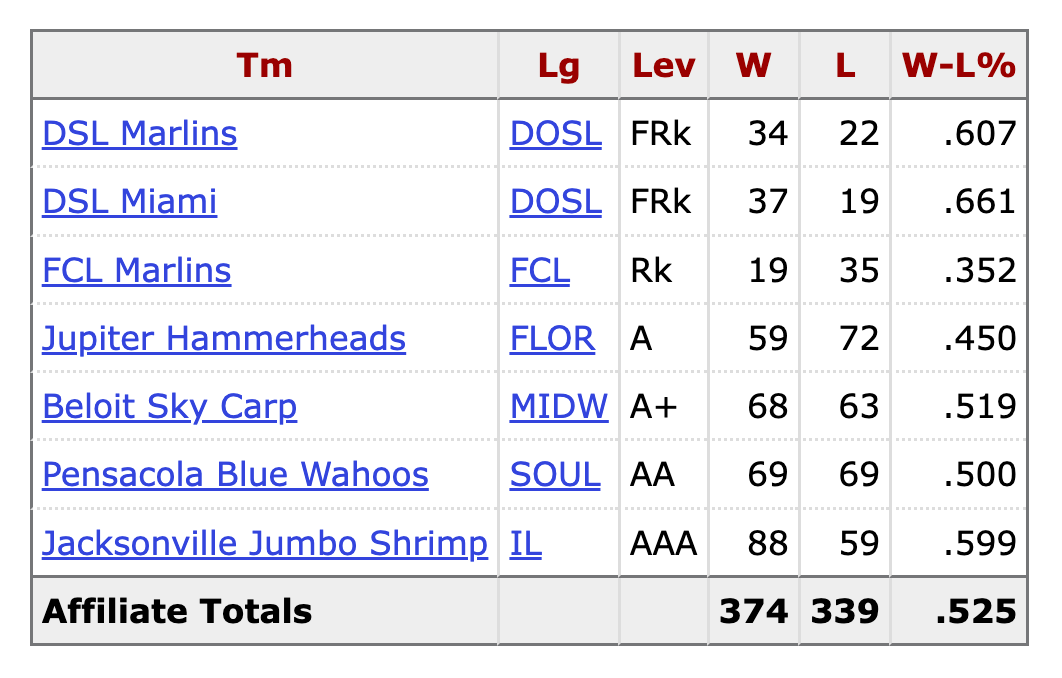
Entering the final weekend of the Triple-A regular season, the seven Marlins minor league affiliates have combined for a .525 winning percentage (a 374-339 combined record). To put that in perspective, their farm system hasn’t performed that well in the standings since 2008.
Of course, winning isn’t what’s important when you’re trying to develop young players. But it is a byproduct of having multiple layers of talent at each position.
Let’s go back to a couple of years before that aforementioned 2008 season. The year is 2006, and the Marlins were deploying their youth movement at the major league level, much like they are doing in 2025. Baseball America had seven Marlins—Jeremy Hermida, Hanley Ramirez, Scott Olsen, Anibal Sanchez, Yusmeiro Petit, Josh Johnson and Chris Volstad—on their Top 100 prospects list. Volstad was the only one in this group that spent more than a couple of months in the minors that year, with Sanchez and Petit being called up mid-season, and the rest being major league regulars from the beginning.
This left the minor league system barren for the time being.
Of the top 10 players by plate appearances across the farm, there were only four future major leaguers: Robert Andino, Brett Carroll, Jason Wood, and Edgar González. If you extend it to the top 20, you still get an underwhelming list of Mike Kinkade, Eric Reed, Jai Miller, and Brad Davis.
The farm system put up a .450 winning percentage that year. The Hammerheads—then a High-A team—were an abysmal 55-80. They were led offensively by Miller and Davis, with Carroll playing there for a little over two months before going to Double-A Carolina. None of their top five pitchers by innings made it to the majors in their career.
The Carolina Mudcats went 61-79, with Carroll and González being the only two future major leaguers in their lineup. Kevin “Smoke” Randel, who was recently let go after spending his entire professional baseball career with the Marlins org in various roles, led that team with 12 home runs. The only starting pitchers that eventually made the majors were Aníbal Sánchez and José García, who made five relief appearances for the Marlins that year.
Fast forward to 2008, when Marlins affiliates finished a combined 399-361.
Across the entire system, each of the top seven players by plate appearances eventually made it to the majors. And, with respect to the 2006 group, this collection of guys was far more impressive. The farm was littered with talent up and down the affiliate ladder: future MVP Giancarlo Stanton in Low-A; future Rookie of the Year Chris Coghlan in Double-A, along with Cameron Maybin and Gaby Sanchez; Logan Morrison in High-A; and Bryan Petersen and Scott Cousins making stops everywhere in between.
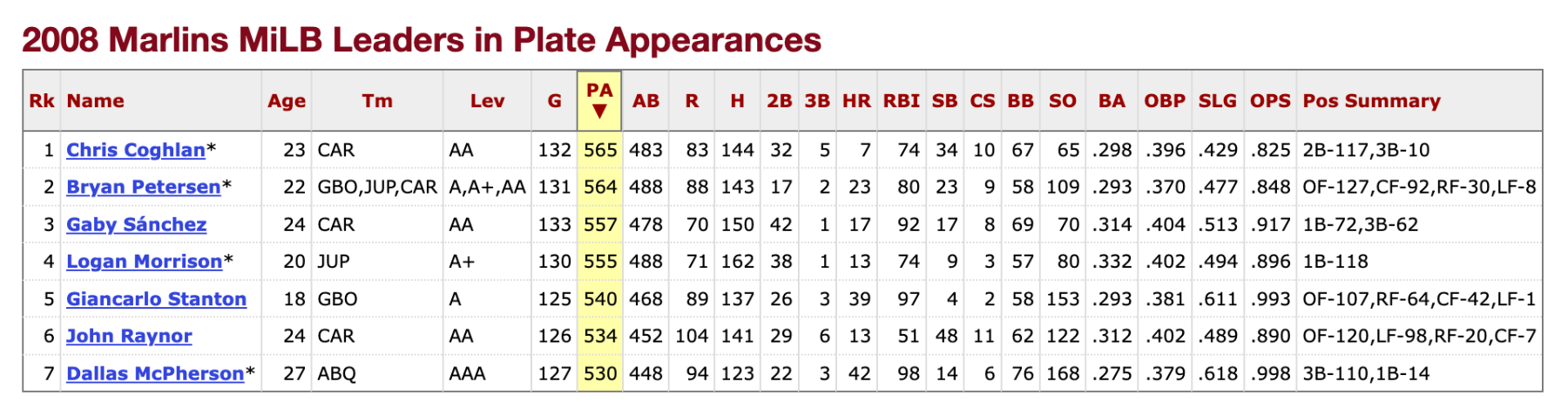
The 80-60 Mudcats rotation was anchored by five future major leaguers of varying success, including Volstad and Rick van den Hurk. The Low-A Jamestown Jammers went 47-29 with Tom Koehler and Dan Jennings in their rotation.
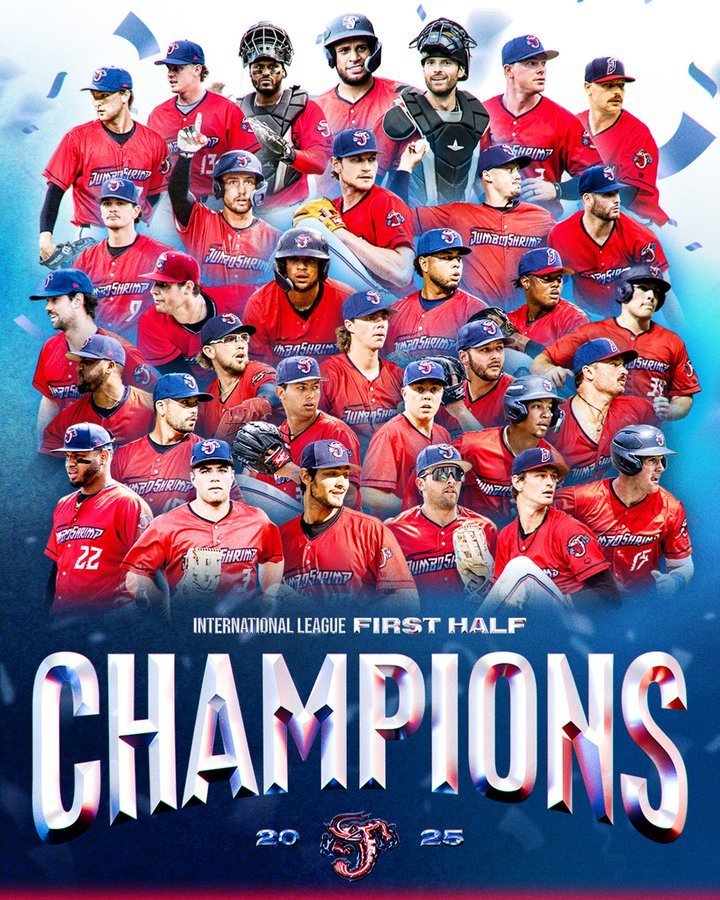
Now, in 2025, the Marlins minor league affiliates are being led by players acquired from multiple scouting and development regimes. Joe Mack, drafted in 2021, has emerged as one of the best catching prospects in baseball with Triple-A Jacksonville. Robby Snelling, acquired by president of baseball operations Peter Bendix in a trade last year, has a 2.51 ERA between Double-A and Triple-A. Next week, Mack and Snelling will attempt to propel the Jumbo Shrimp to the International League championship.
Evaluators have raved about the youngest talent in the Marlins pipeline as well—prospects who played in the Dominican this past summer. Both of Miami’s DSL teams ranked in top five in their league in OPS and stolen bases, while their pitching staffs cracked the top three in strikeouts.
Will these team stats trickle up to the major league level? Time will tell. But seeing in-season call-ups like Jakob Marsee, Agustín Ramírez and Heriberto Hernández hit the ground running against MLB competition has to be encouraging as we look ahead to the next wave of reinforcements that’ll arrive in 2026.
Interested in learning more about the Miami Marlins’ top prospects? Check out our comprehensive top prospects list that includes up-to-date stats, articles and videos about every prospect, scouting reports, and more!